Most adult children of toxic parents grow up feeling tremendous confusion about what love means and how it’s supposed to feel. Their parents did extremely unloving things to them in the name of love. They came to understand love as something chaotic, dramatic, confusing, and often painful—something they had to give up their own dreams and desires for. Obviously, that’s not what love is all about.

Loving behavior doesn’t grind you down, keep you off balance, or create feelings of self-hatred. Love doesn’t hurt, it feels good. Loving behavior nourishes your emotional well-being. When someone is being loving to you, you feel accepted, cared for, valued, and respected. Genuine love creates feelings of warmth, pleasure, safety, stability, and inner peace.

Susan Forward, Toxic Parents, p381 (via mxnotmrdarcy)

This also applies to survivors of abusive relationships.

(via rapeculturerealities)

So real

(via kimberlyxjane)

I read this and all I can think about are my niece and nephew. 

(via fuckyeahlgbtqblackpeople)

Attachment Disorder

onlinecounsellingcollege:

Attachment disorder is where a child or adult is unable to form normal healthy attachments. This is usually due to detrimental early life experiences – such as neglect, abuse, separation from their parents or primary caregivers (after six months of age and before three years of age), frequent change of caregivers, and lack of responsiveness from their caregivers.

Symptoms vary depending on age. In adults, they fall under one of two categories – either avoidant or anxious/ ambivalent personalities. These are summarized below.

1. Avoidant

· Intense anger and hostility

· Hypercritical of others

· Extremely sensitive to criticism, correction or blame

· Lacks empathy

· Sees others as untrustworthy and unreliable

· Either sees themselves as being unlovable or “too good” for others

· Relationships are experienced as either being too threatening or requiring too much effort

· Fear of closeness and intimacy

· Compulsive self-reliance

· Passive or uninvolved in relationships

· Find it hard to get along with co-workers and authority figures

· Prefers to work alone, or to be self employed

· May use work to avoid investing in relationships

2. Anxious/ Ambivalent

· Demonstrates compulsive caregiving

· Problems with establishing and maintaining appropriate boundaries

· Feels they give they give more than they get back

· Feels their efforts aren’t noticed or appreciated

· Idealizes people

· Expects their partner to repeatedly demonstrate their love, affection and commitment to them, and the relationship

· Emotionally over-invests in friendships and romantic relationships

· Are preoccupied with close relationships

· Overly dependent on their partner

· Believes that others are out to use them or to take advantage of them

· Fears rejection

· Is uncomfortable with anger

· Experiences a roller coaster of emotions – and often these are extremes of emotion

· Tends to be possessive and jealous; finds it hard to trust

· Believes they are essentially flawed, inadequate and unlovable.

seashellies:

I had an interesting conversation with thornedlily Sunday night/early Monday morning that I wanted to share with you guys (their permission has been granted). This metaphor was new to me but the revelation was not, even though it was new to her.

Topic was depression.

I confided to her that I can feel my depression rearing its head for another black bout. She then compared depression to a wild, unbroken young horse that you have to coax back into its stall with a carrot. I found that analogy brilliant and told her so. She laughed and then said you could go crazy with the analogy if you wanted. Like braiding glitter into the horse’s hair and keeping the spiders away from it to keep it happy.

But really, that analogy works! Depression isn’t just this dark infection that you can never walk away from. It’s flexible. It’s fluid. With depression you have to learn what ‘breed’ you have. You need to learn what triggers it to arise in you. You need to learn to resist the impulse to collapse into it and feed it along. You need to learn if and how you can head off a bout. You need to learn what proactive coping mechanism works for you be it medication, therapy, or other, or all of the above. You need to learn to open yourself up instead of shutting yourself away.

So yeah… if a glittery mane and no spiders are what tames your horse by all means break out the tinsel and braid some in. Spider-proof that stall and then close the door and walk away. At least until you can feel the wildness breaking free again.

I’m not even trying to be ablest. I’m telling you to be proactive about your depression. I learned this lesson early and from necessity. My mom is 50 and she’s just now trying to learn this lesson after living the life of an addict. The struggle I see in her trying to learn this at her age, changing her entire life, relearning everything she thought she knew about herself and her mental illness… it’s heartbreaking. I have other family that never learned it at all and they’re miserable living miserable lives. At this point they’re too deep in their misery, too used to it to try and climb out. I want to save as many people as I can from the fate of black life lived in misery. You CAN walk away from depression. Sometimes for good, and sometimes just for a little while, but you have to figure out how to tame it in the process if you let it run wild it’ll shit all over your life. I promise you, you will come out stronger for it.

Don’t believe me? Watch this.

jumpingjacktrash:

:

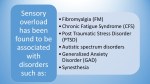
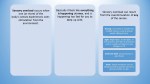
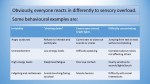
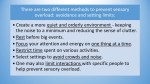
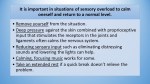
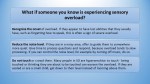
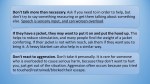
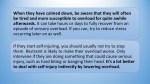
Sensory Overload and how to cope.

(click on images to zoom)

this is very good advice. being autistic, i’m susceptible to overload, and do my best to keep my environment restful so i’m better able to deal with the outside world when i need to, but sometimes shit happens. the number one thing i wish people knew about overload is: don’t get between me and the door. usually i catch it in time to politely excuse myself ‘for a cigarette’ but sometimes, like if i get cornered one of those people who stands too close and wears too much perfume and talks too loud and completely ignores disengagement signals, i can end up in a hurry to get away from the stimulus, and even a little panicky. so like… don’t block my path on my way out, okay?

also, don’t follow me outside and keep talking. don’t try to participate in my spindown. don’t demand reassurance every thirty seconds. don’t make it about you. i’ve got this. i don’t need your help. i just need you to stop making it worse.

Links Related to Borderline Personality Disorder (BPD)

glegrumbles:

Not Norse-related, but a collection of my writings on BPD that are personally relevant and perhaps useful to others, particularly if they want to understand me better or communicate with me better.

bonesandblood-sunandmoon:

Not feeling sick “enough”

Never compare yourself to anyone, in any part of life. Your struggle is not someone else’s struggle. Even if you have the same diagnosis, it will not treat you both the same and you will not react the same to it. Your symptoms will not be equal, nor will your treatment. When you have the flu, you are not less ill because someone else somewhere has cancer. You are still sick and still need to be taken care of and treated. Not attempting suicide doesn’t mean you’re not depressed “enough”. Not stealing a car & having 17 sexual partners in a night doesn’t mean you’re not manic “enough”. You are you and you deserve to be taken care of and to be OK.

– FAQ page of fuckyeahbipolarowl.

Optimism in the dark places

realsocialskills:

Sometimes, people who want to see themselves as optimistic say things like this to suffering people they encounter:

  • “Look on the bright side!”
  • “Cheer up!”
  • “It can’t be that bad!”
  • “It’s ok.”
  • “Smile, you’ll feel better!”
  • “You have so much to be grateful for.”

Sometimes people who say this kind of thing mean well, but it’s still degrading. It’s degrading because:

  • Sometimes things really are that bad
  • Refusing to acknowledge that doesn’t help anything
  • And when you try to insist to someone who is going through something awful that it can’t be as bad as they think, what you’re really doing is refusing to listen to them
  • Telling someone to shut up is neither kind nor optimistic

This is particularly the case if you’re talking to someone in a bad situation that is unlikely to get better, or which is at least unlikely to get better in the near future eg:

  • Someone who has a terminal illness
  • People who are facing systemic oppression of a kind that isn’t going to go away in their lifetime
  • Someone who is trapped in an abusive relationship they see no way out of

I think that there’s another kind of optimism that is much more helpful:

  • Acknowledge that things really are that bad
  • Don’t try to smooth them over
  • Identify things that make life worth living
  • Work on building and recognizing love (including, love people enough to acknowledge how bad things are without pressuring them to sanitize them for you)

I don’t talk about my illness so that you will feel sorry for me. I talk about it so you will know what I’m going through, why I am the way I am. I don’t want your pity. I want your understanding.

And sometimes, I talk about it because I had a bad day and just like you, talking about the bad thing makes me feel better. It just so happens I have a lot of bad days and my illness is usually at the core of it.