“The Specials” reality series coming to the OWN

Really not digging the title at all, but otherwise could be interesting, depending on how the rest of it is presented. 

“The Specials” reality series coming to the OWN

1. Trauma permanently changes us.

This is the big, scary truth about trauma: there is no such thing as “getting over it.” The five stages of grief model marks universal stages in learning to accept loss, but the reality is in fact much bigger: a major life disruption leaves a new normal in its wake. There is no “back to the old me.” You are different now, full stop.

This is not a wholly negative thing. Healing from trauma can also mean finding new strength and joy. The goal of healing is not a papering-over of changes in an effort to preserve or present things as normal. It is to acknowledge and wear your new life — warts, wisdom, and all — with courage.

2. Presence is always better than distance.

There is a curious illusion that in times of crisis people “need space.” I don’t know where this assumption originated, but in my experience it is almost always false. Trauma is a disfiguring, lonely time even when surrounded in love; to suffer through trauma alone is unbearable. Do not assume others are reaching out, showing up, or covering all the bases.

It is a much lighter burden to say, “Thanks for your love, but please go away,” than to say, “I was hurting and no one cared for me.” If someone says they need space, respect that. Otherwise, err on the side of presence.

3. Healing is seasonal, not linear.

It is true that healing happens with time. But in the recovery wilderness, emotional healing looks less like a line and more like a wobbly figure-8. It’s perfectly common to get stuck in one stage for months, only to jump to another end entirely … only to find yourself back in the same old mud again next year.

Recovery lasts a long, long time. Expect seasons.

4. Surviving trauma takes “firefighters” and “builders.” Very few people are both.

This is a tough one. In times of crisis, we want our family, partner, or dearest friends to be everything for us. But surviving trauma requires at least two types of people: the crisis team — those friends who can drop everything and jump into the fray by your side, and the reconstruction crew — those whose calm, steady care will help nudge you out the door into regaining your footing in the world. In my experience, it is extremely rare for any individual to be both a firefighter and a builder. This is one reason why trauma is a lonely experience. Even if you share suffering with others, no one else will be able to fully walk the road with you the whole way.

A hard lesson of trauma is learning to forgive and love your partner, best friend, or family even when they fail at one of these roles. Conversely, one of the deepest joys is finding both kinds of companions beside you on the journey.

5. Grieving is social, and so is healing.

For as private a pain as trauma is, for all the healing that time and self-work will bring, we are wired for contact. Just as relationships can hurt us most deeply, it is only through relationship that we can be most fully healed.

It’s not easy to know what this looks like — can I trust casual acquaintances with my hurt? If my family is the source of trauma, can they also be the source of healing? How long until this friend walks away? Does communal prayer help or trivialize?

Seeking out shelter in one another requires tremendous courage, but it is a matter of life or paralysis. One way to start is to practice giving shelter to others.

6. Do not offer platitudes or comparisons. Do not, do not, do not.

“I’m so sorry you lost your son, we lost our dog last year … ” “At least it’s not as bad as … ” “You’ll be stronger when this is over.” “God works in all things for good!”

When a loved one is suffering, we want to comfort them. We offer assurances like the ones above when we don’t know what else to say. But from the inside, these often sting as clueless, careless, or just plain false.

Trauma is terrible. What we need in the aftermath is a friend who can swallow her own discomfort and fear, sit beside us, and just let it be terrible for a while.

7. Allow those suffering to tell their own stories.

Of course, someone who has suffered trauma may say, “This made me stronger,” or “I’m lucky it’s only (x) and not (z).” That is their prerogative. There is an enormous gulf between having someone else thrust his unsolicited or misapplied silver linings onto you, and discovering hope for one’s self. The story may ultimately sound very much like “God works in all things for good,” but there will be a galaxy of disfigurement and longing and disorientation in that confession. Give the person struggling through trauma the dignity of discovering and owning for himself where, and if, hope endures.

8. Love shows up in unexpected ways.

This is a mystifying pattern after trauma, particularly for those in broad community: some near-strangers reach out, some close friends fumble to express care. It’s natural for us to weight expressions of love differently: a Hallmark card, while unsatisfying if received from a dear friend, can be deeply touching coming from an old acquaintance.

Ultimately every gesture of love, regardless of the sender, becomes a step along the way to healing. If there are beatitudes for trauma, I’d say the first is, “Blessed are those who give love to anyone in times of hurt, regardless of how recently they’ve talked or awkwardly reconnected or visited cross-country or ignored each other on the metro.” It may not look like what you’d request or expect, but there will be days when surprise love will be the sweetest.

9. Whatever doesn’t kill you …

In 2011, after a publically humiliating year, comedian Conan O’Brien gave students at Dartmouth College the following warning:

“Nietzsche famously said, ‘Whatever doesn’t kill you makes you stronger.’ … What he failed to stress is that it almost kills you.”
Odd things show up after a serious loss and creep into every corner of life: insatiable anxiety in places that used to bring you joy, detachment or frustration towards your closest companions, a deep distrust of love or presence or vulnerability.

There will be days when you feel like a quivering, cowardly shell of yourself, when despair yawns as a terrible chasm, when fear paralyzes any chance for pleasure. This is just a fight that has to be won, over and over and over again.

10. … Doesn’t kill you.

Living through trauma may teach you resilience. It may help sustain you and others in times of crisis down the road. It may prompt humility. It may make for deeper seasons of joy. It may even make you stronger.

It also may not.

In the end, the hope of life after trauma is simply that you have life after trauma. The days, in their weird and varied richness, go on. So will you.


Catherine Woodiwiss, “A New Normal: Ten Things I’ve Learned About Trauma”     (via qasaweh)

“It is a much lighter burden to say, “Thanks for your love, but please go away,” than to say, “I was hurting and no one cared for me.””

(via corseque)

I think one thing you can do to help your friends who are depressed is to reach out to them not in the spirit of helping, but in the spirit of liking them and wanting their company. “I’m here to help if you ever need me” is good to know, but hard to act on, especially when you’re in a dark place. Specific, ongoing, pleasure-based invitations are much easier to absorb. “I’m here. Let’s go to the movies. Or stay in and order takeout and watch some dumb TV.” “I’m having a party, it would be really great if you could come for a little while.” Ask them for help with things you know they are good at and like doing, so there is reciprocity and a way for them to contribute. “Will you come over Sunday and help me clear my closet of unfashionable and unflattering items? I trust your eye.” “Will you read this story I wrote and help me fix the dialogue?” “Want to make dinner together? You chop, I’ll assemble.” “I am going glasses shopping and I need another set of eyes.” Remind yourself why you like this person, and in the process, remind them that they are likable and worth your time and interest.

Talk to the parts of the person that aren’t being eaten by the depression. Make it as easy as possible to make and keep plans, if you have the emotional resources to be the initiator and to meet your friends a little more than halfway. If the person turns down a bunch of invitations in a row because (presumably) they don’t have the energy to be social, respect their autonomy by giving it a month or two and then try again. Keep the invitations simple; “Any chance we could have breakfast Saturday?” > “ARE YOU AVOIDING ME BECAUSE YOU’RE DEPRESSED OR BECAUSE YOU HATE ME I AM ONLY TRYING TO HELP YOU.” “I miss you and I want to see you” > “I’m worried about you.” A depressed person is going to have a shame spiral about how their shame is making them avoid you and how that’s giving them more shame, which is making them avoid you no matter what you do. No need for you to call attention to it. Just keep asking. “I want to see you” “Let’s do this thing.” “If you are feeling low, I understand, and I don’t want to impose on you, but I miss your face. Please come have coffee with me.” “Apology accepted. ApologIES accepted. So. Gelato and Outlander?”

#613: How do I reach out to my friends who have depression? | Captain Awkward

P.S. A lot of people with depression and other mental illnesses have trouble making decisions or choosing from a bunch of different options. “Wanna get dinner at that pizza place on Tuesday night?” is a LOT easier to answer than “So wanna hang out sometime? What do you want to do?”

(via startrekrenegades)

Employment for People With Intellectual Disabilities: Lil’ Help?

In the attempt to provide employment for people with intellectual disabilities, the need for assistance involves YOU. Of course, cooperation from businesses is important, but help from laypeople is critical if we are to improve the quality of life of some of our communities’ most loyal and loving members. Employment for people with intellectual disabilities is about a lot more than you might think. In most cases, it’s not about the need for money. People with intellectual disabilities are eligible for government benefits such as Social Security, Medicare and Medicaid. No. Employment for people with intellectual disabilities is about something far more important than money.

Employment for People With Intellectual Disabilities: Lil’ Help?

livingwithdisability:

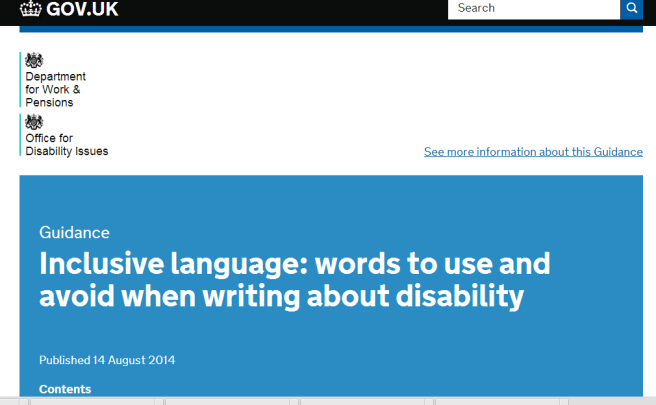
The UK Government has issued some new guidance “aimed at anyone who needs to communicate with or write about disabled people and disabilities.”, it is based on the social model of disability which is preferred by most activists in the UK:

Consider these guidelines when communicating with or about disabled people.

Language guidelines

Not everyone will agree on everything but there is general agreement on some basic guidelines.

Collective terms and labels

The word ‘disabled’ is a description not a group of people. Use ‘disabled people’ not ‘the disabled’ as the collective term.

However, many deaf people whose first language is BSL consider themselves part of ‘the deaf community’ – they may describe themselves as ‘Deaf’, with a capital D, to emphasise their deaf identity.

Avoid medical labels. They say little about people as individuals and tend to reinforce stereotypes of disabled people as ‘patients’ or unwell.

Don’t automatically refer to ‘disabled people’ in all communications – many people who need disability benefits and services don’t identify with this term. Consider using ‘people with health conditions or impairments’ if it seems more appropriate.

Positive not negative

Avoid phrases like ‘suffers from’ which suggest discomfort, constant pain and a sense of hopelessness.

Wheelchair users may not view themselves as ‘confined to’ a wheelchair – try thinking of it as a mobility aid instead.

Everyday phrases

Most disabled people are comfortable with the words used to describe daily living. People who use wheelchairs ‘go for walks’ and people with visual impairments may be very pleased – or not – ‘to see you’. An impairment may just mean that some things are done in a different way.

Common phrases that may associate impairments with negative things should be avoided, for example ‘deaf to our pleas’ or ‘blind drunk’.

Words to use and avoid

Avoid passive, victim words. Use language that respects disabled people as active individuals with control over their own lives.

Avoid

handicapped, the disabled

afflicted by, suffers from, victim of

confined to a wheelchair, wheelchair-bound

mentally handicapped, mentally defective, retarded, subnormal

cripple, invalid

spastic

able-bodied

mental patient, insane, mad

deaf and dumb; deaf mute

the blind

an epileptic, diabetic, depressive, and so on

dwarf; midget

fits, spells, attacks

Use

disabled (people)

has [name of condition or impairment]

wheelchair user

with a learning disability (singular) with learning disabilities (plural)

disabled person

person with cerebral palsy

non-disabled

person with a mental health condition

deaf, user of British Sign Language (BSL), person with a hearing impairment

people with visual impairments; blind people; blind and partially sighted people

person with epilepsy, diabetes, depression or someone who has epilepsy, diabetes, depression

someone with restricted growth or short stature

seizures

Some tips on behaviour

  • use a normal tone of voice, don’t patronise or talk down
  • don’t be too precious or too politically correct – being super-sensitive to the right and wrong language and depictions will stop you doing anything
  • never attempt to speak or finish a sentence for the person you are talking to
  • address disabled people in the same way as you talk to everyone else
  • speak directly to a disabled person, even if they have an interpreter or companion with them

Source https://www.gov.uk/government/publications/words-to-use-and-avoid-when-writing-about-disability/inclusive-language-words-to-use-and-avoid-when-writing-about-disability

Depression is humiliating. It turns intelligent, kind people into zombies who can’t wash a dish or change their socks. It affects the ability to think clearly, to feel anything, to ascribe value to your children, your lifelong passions, your relative good fortune. It scoops out your normal healthy ability to cope with bad days and bad news, and replaces it with an unrecognizable sludge that finds no pleasure, no delight, no point in anything outside of bed. You alienate your friends because you can’t comport yourself socially, you risk your job because you can’t concentrate, you live in moderate squalor because you have no energy to stand up, let alone take out the garbage. You become pathetic and you know it. And you have no capacity to stop the downward plunge. You have no perspective, no emotional reserves, no faith that it will get better. So you feel guilty and ashamed of your inability to deal with life like a regular human, which exacerbates the depression and the isolation.

Depression is humiliating.

If you’ve never been depressed, thank your lucky stars and back off the folks who take a pill so they can make eye contact with the grocery store cashier. No one on earth would choose the nightmare of depression over an averagely turbulent normal life.

It’s not an incapacity to cope with day to day living in the modern world. It’s an incapacity to function. At all. If you and your loved ones have been spared, every blessing to you. If depression has taken root in you or your loved ones, every blessing to you, too.

Depression is humiliating.

No one chooses it. No one deserves it. It runs in families, it ruins families. You cannot imagine what it takes to feign normalcy, to show up to work, to make a dentist appointment, to pay bills, to walk your dog, to return library books on time, to keep enough toilet paper on hand, when you are exerting most of your capacity on trying not to kill yourself. Depression is real. Just because you’ve never had it doesn’t make it imaginary. Compassion is also real. And a depressed person may cling desperately to it until they are out of the woods and they may remember your compassion for the rest of their lives as a force greater than their depression. Have a heart. Judge not lest ye be judged.

Pearl (via psych-facts)

This is seriously the most accurate description of depression. Wow.

(via fake-that-smile-babe)

livingwithdisability:

spoonie-living:

radically-disabled:

spoonie-living:

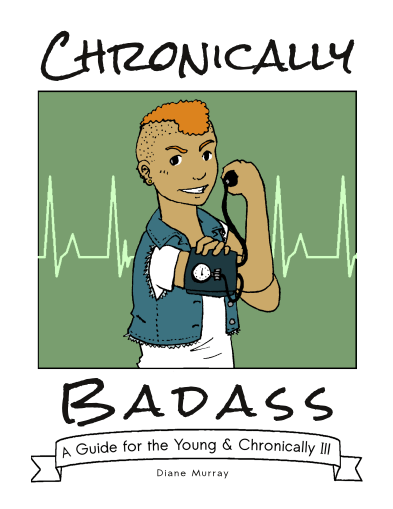
I have a really exciting Spoonie Living announcement for y’all! When I started on my 6-month medical leave from work, one of my goals was to create a zine for new spoonies, to help them hit the ground running as they begin their chronic illness experience. I’m calling it Chronically Badass, and it’s finally done!

Here’s what I cover inside:

  • Spoon theory
  • Getting answers
  • Working with doctors
  • Work & school
  • Friends & family
  • Reactions
  • Mental health
  • Coping strategies
  • Online communities
  • Mobility

It’s free for download right here (although you’re welcome to donate if you like), so be sure to check it out!

Please also reblog and spread the word so others can find and benefit from this zine.

Is there any way to get this without a credit card? I’d love to read it, but not sure how to get it without having a card.

Gosh, absolutely! If you set the amount to $0, the credit card thing will disappear—give it a shot 🙂

Just read this and loved it!

fucknointernetignorance:

thorlokibrother:

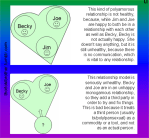
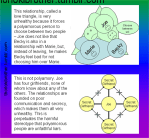
People need to stop perpetuating the myth that polyamory can’t be healthy.

Source

Though I will say, personally, I don’t mind people asking me horrifically intrusive and detailed questions about my sex life and relationships. The only stuff I won’t answer there are any points that one of my partners has asked me to keep quiet about.

-Pete