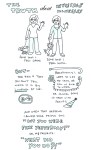
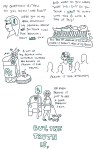
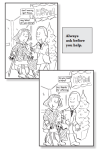
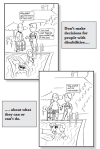
I made a comic about what it feels like (to me) to cope with having an invisible illness and the judgements and accusations that sometimes come with invisible illnesses.
I did it in green ‘cause that’s the color of the Celiac Awareness ribbon Celiac is one of the “imaginary” “all in your head” “stupid” “hypochondriac” invisible illnesses I live with.
So here. Be nice to people in general, because it’s the right thing to do, but if you can’t at least do that then please don’t be an asshole when someone tells you that they have Lupus or Celiac or Fibromyalgia or any of the other things that we live with every day that you can’t see on the surface.
Cheers.
Tag: understanding
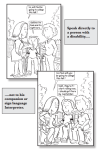
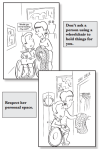
Free for download Disability Etiquette
A great resource for businesses, schools, organizations, staff training and disability awareness programs. You don’t have to feel awkward when interacting with, or when you meet, a person who has a disability. This booklet provides tips for you to follow that will help create positive interactions and raise everyone’s comfort levels.

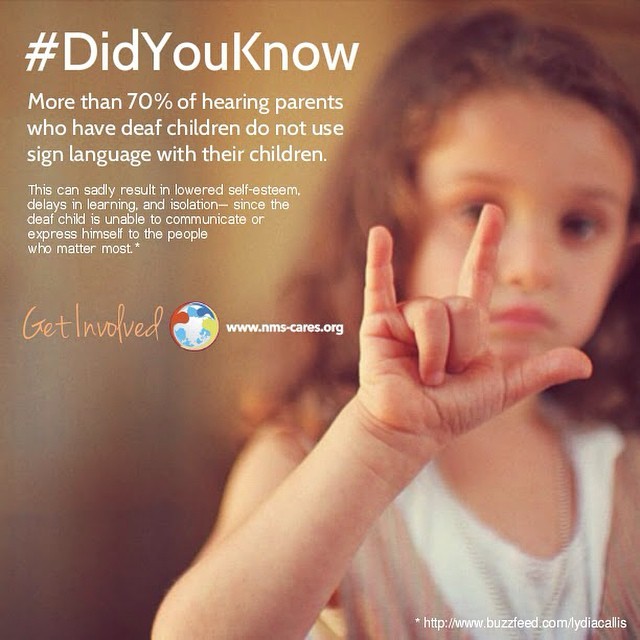
#DidYouKnow #Deaf #DeafAwareness #education #SignLanguage #advocacy #NMSCares
This is actually sadly relevant. I had a lecture this summer about sign languages and Deaf culture and when I was finished, one hearing girl from the audience stayed behind to ask me some more question.
She asked me: “And your parents use sign language, right?” Like it was the most obvious thing in the world and why is she even asking this, of course my parents must know sign language.
“No… They don’t, actually.”
“And how do you communicate, then?”
“Talking?”
“But… isn’t that complicated for you?”
“It is, sometimes.”
“They probably didn’t have time for it…” she said. And I haven’t the heart to tell her that my father was offered sign language courses several times, that I offered to teach them some signs and that they always refused.
But I did told her: “It is not that rare. Most of deaf people I know have hearing parents who don’t sign.”
It’s the sad truth. People are willing to pay for surgeries to “repair” their children, but they are not willing to learn something to communicate with them.
i’d like to add onto this with my own personal experience, too. i was born hearing, but as soon as i was diagnosed as HoH, my parents didn’t do anything to learn ASL. they were quick to put me in classes, but they wouldn’t when i suggested to them that they take the classes with me so that we could learn.
i’ve tried to teach my mom how to sign numerous times, but she always says that “you can’t teach an old dog new tricks,” to which i tell her that she can learn, she just doesn’t want to. which is true. neither of my parents want to learn how to sign, but they want me to be able to hear perfectly so they don’t have to repeat themselves.
little do they know that their frustration with me not being able to hear them would be solved if they would just learn how to sign. maybe signing something to me once instead of repeating themselves four times and then getting mad would be more beneficial.
I’m absolutely shocked at this, it’s never crossed my mind that many parents wouldn’t even try to meet their hard of hearing kids halfway.
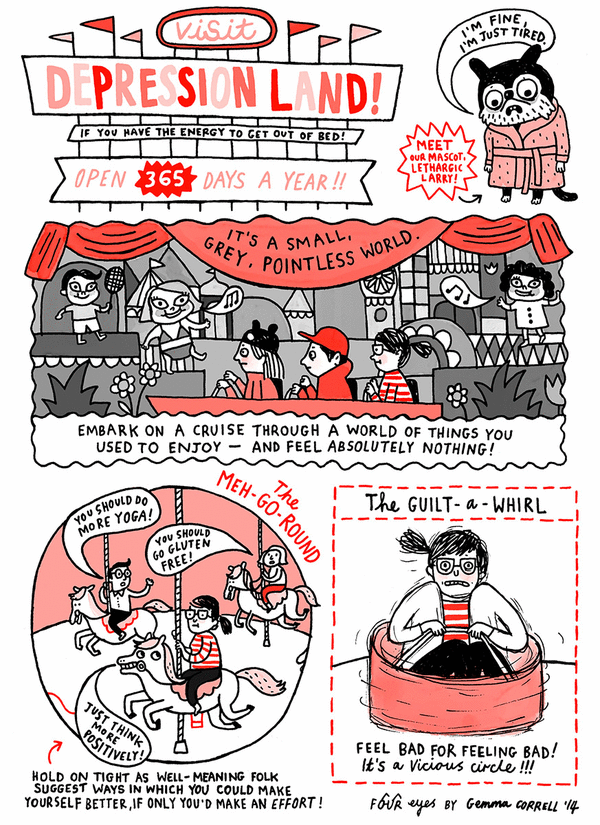
Living with mental illness means that on some days it will be even harder to cope and you might not be able to explain why. It could be because you havent slept enough, because a smell reminded you of feeling sad, or for no reason at all.
This is a reminder that we dont have to justify our feelings or abilities to anyone, just do whats needed to make it to the next day.
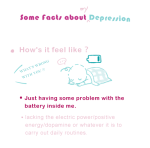
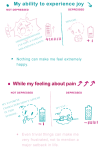
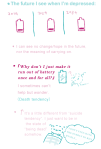
Depression Worksheet
Okay, here’s a good list to pass around. It took me several years to even think about looking up the symptoms of depression, and I think it would have done my good to just be presented with them when I was in my teens, but no one told me…. so, here they are.
- Feelings of helplessness and hopelessness. A bleak outlook—nothing will ever get better and there’s nothing you can do to improve your situation.
- Loss of interest in daily activities. No interest in former hobbies, pastimes, social activities, or sex. You’ve lost your ability to feel joy and pleasure.
- Appetite or weight changes. Significant weight loss or weight gain—a change of more than 5% of body weight in a month.
- Sleep changes. Either insomnia, especially waking in the early hours of the morning, or oversleeping (also known as hypersomnia).
- Anger or irritability. Feeling agitated, restless, or even violent. Your tolerance level is low, your temper short, and everything and everyone gets on your nerves.
- Loss of energy. Feeling fatigued, sluggish, and physically drained. Your whole body may feel heavy, and even small tasks are exhausting or take longer to complete.
- Self-loathing. Strong feelings of worthlessness or guilt. You harshly criticize yourself for perceived faults and mistakes.
- Reckless behavior. You engage in escapist behavior such as substance abuse, compulsive gambling, reckless driving, or dangerous sports.
- Concentration problems. Trouble focusing, making decisions, or remembering things.
- Unexplained aches and pains. An increase in physical complaints such as headaches, back pain, aching muscles, and stomach pain.
I’d like to add that in my experience, and from what I’ve heard from others, if the depression has been going on unnoticed for a long time, you won’t have noticed these ‘changes’, they’ll have snuck up on you and become an unremarkable part of your life…
Along with the concentration problems is psychomotor disruptions – either you’re agitated and constantly moving your hands, flicking your fingers, pulling your hair… or you’re clumsy, like you’re surrounded by cotton wool and your extremities are further away than they used to be, so things like writing and walking become really difficult.
some thoughts about my depression.
my mum asked yesterday so i did this for her.
it may not apply to all people with depression, because different person can have different symptoms.
Yeah….. This sums it up

Neil Gaiman: ‘Terry Pratchett isn’t jolly. He’s angry’
Terry Pratchett may strike many as a twinkly old elf, but that’s not him at all. Fellow sci-fi novelist Neil Gaiman on the inner rage that drives his ailing friend’s writing … [read more] …
Terry Pratchett is not a jolly old elf at all. Not even close. He’s so much more than that. As Terry walks into the darkness much too soon, I find myself raging too: at the injustice that deprives us of – what? Another 20 or 30 books? Another shelf-full of ideas and glorious phrases and old friends and new, of stories in which people do what they really do best, which is use their heads to get themselves out of the trouble they got into by not thinking? Another book or two of journalism and agitprop? But truly, the loss of these things does not anger me as it should. It saddens me, but I, who have seen some of them being built close-up, understand that any Terry Pratchett book is a small miracle, and we already have more than might be reasonable, and it does not behoove any of us to be greedy.
I rage at the imminent loss of my friend. And I think, “What would Terry do with this anger?” Then I pick up my pen, and I start to write.
Slow Dancing With A Stranger: A Caregiver’s Account of Alzheimer’s Cost
The symptoms were hardly noticeable at first. In fact, had Meryl Comer not been a veteran TV news reporter, she might have missed the subtle changes in her husband’s behavior. Even then, she chalked up his sudden lack of focus and lightning-quick temper to job stress: Harvey Gralnick had a prestigious position as a physician and chief of hematology/oncology research at the National Institutes of Health. Two years and countless medical exams later, Comer’s husband finally was diagnosed with early-onset Alzheimer’s. By that time, the disease had already scrambled their lives and dashed their dreams. Gralnick was 57; Comer was just 50.
If Alzheimer’s is about forgetting, Comer’s just released book, Slow Dancing with a Stranger, is about bearing witness to everything Alzheimer’s took from her husband and her family. Equally important, it’s a call to action for women who, as caregivers, are most often Alzheimer’s second victim. What distresses Comer is that there are no better options for women today around care than there were 20 years ago. There are still no disease-modifying drugs or treatments for Alzheimer’s, a fatal neurodegenerative disease that has no cure.
Slow Dancing With A Stranger: A Caregiver’s Account of Alzheimer’s Cost
About 2.6 percent of American adults – nearly 6 million people – have bipolar disorder, according to the National Institute of Mental Health (NIMH). But the disease, characterized by significant and severe mood changes, is still dangerously misunderstood.
Bipolar disorder is vastly different from the normal ups and downs of everyday life, but many have co-opted the term to refer to any old change in thoughts or feelings. The mood swings in someone with bipolar disorder, sometimes also called manic depression, can damage relationships and hurt job performance. It has been estimated that anywhere from 25 to 50 percent of people with bipolar disorder attempt suicide at least once.
Artist Ellen Forney detailed her diagnosis with bipolar disorder in the graphic memoir Marbles: Mania, Depression, Michelangelo, and Me. Forney previously shared her story with us, specifically detailing how her bipolar disorder has affected her creative work.
Below are some poignant pages from the memoir, along with unique commentary into how these panels came to be and what they mean to Forney, in her own words… What Bipolar Disorder Really Looks Like