
For people with depressed mood, memory and concentration difficulties are often a day-to-day reality, greatly affecting job performance and personal relationships. While those with the disorder report that these cognitive problems are some of the most deeply troubling, previous studies have been unable to observe this phenomenon in a laboratory setting. In a study published online in Cognition and Emotion, researchers at the Center for BrainHealth at The University of Texas at Dallas are the first to substantiate memory deficits in individuals with depressed mood. The findings may have implications for the way cognitive deficits are diagnosed and treated in depression.
In the study, individuals with depressed mood show as much as a 12% reduction in memory compared to individuals without depressed mood when depressive thoughts are present, but perform similarly to individuals without depressed mood when depressive thoughts are not present. “The results suggest that individuals with and without depressed mood generally have a similar ability to actively remember information. However, when depressive thoughts are present, people with depressed mood are unable to remove their attention from this information, leading to deficits in their memory,” explained Nicholas Hubbard, the study’s lead author and a doctoral candidate at the Center for BrainHealth under Bart Rypma, Ph.D.
“Depression is an interference phenomenon. Rumination and negative thought-loops interfere with a person’s ability to think. We hypothesize that when individuals with depressed mood are exposed to stimuli, such as a meaningful song or a place that evokes sad feelings, the brain fixates on that and can’t focus on daily tasks such as a phone conversation or completing a grocery list,” explained Dr. Rypma, Meadows Foundation Chair and Associate Professor in the School of Behavioral and Brain Sciences at The University of Texas at Dallas. “In a traditional laboratory setting, external cues that induce depressive thoughts and therefore interfere with cognitive performance are eliminated. In our study, we found a way to incorporate them and observe their effects on memory.”
(please click the link for the complete article)
Tag: understanding

A way people with disabilities are often wrongly percieved as angry
Sometimes disabled people are wrong perceived as angry or hostile when they move like disabled people. It works something like this:
- The most efficient way to do things is often not the socially accepted way to do things
- People with disabilities often have to do things in an efficient way to be able to do them
- In order to be perceived as calm and polite, people are often expected to move in a slow, careful way without making sudden or loud motions
- That’s easy for most people without disabilities, and can be difficult or impossible for people with disabilities
- Sometimes people with disabilities don’t have the motor coordination or strength to move in expected ways. Sometimes pain or illness makes them too exhausted to have the energy to move in expected ways. Sometimes, they have to move efficiently to be able to move at all.
- People with disabilities who have to move in loud, sudden, forceful, or jerky ways are often wrongfully perceived as expressing anger, frustration, or aggression.
- When people make loud, jerky, or sudden motions, they tend to be perceived as rude, angry, or aggressive
- People with disabilities don’t always have the coordination to make the movements in expected ways
- Sometimes, they have to be efficient in order to do the thing.
- This often gets perceived as angry when it isn’t
- This can lead to people with disabilities who are just trying to live their lives being perceived as hostile and excluded
- When a person with a disability is moving in a jerky, sudden, or loud way, it’s important to consider the possibility that it’s disability-related rather than angry
Some concrete examples:
Dropping things:
In most social contexts, it’s socially expected that people who need things to be on the ground put them there without making a sudden noise
- This generally means using your arms to slowly lower the thing to the ground
- People with disabilities often do not have the strength or motor coordination needed to lower things this way
- Sometimes, people who can’t rely on muscles to lower things need to drop them and rely on gravity
- (And some people have to rely on gravity some of the time, eg: when they’re tired, at the end of a long day, when they’re in a particularly draining environment, when they’ve already had to lift and drop the thing several times that day.)
- Gravity only goes one speed, and dropped objects tend to make noise
- Dropping a heavy object rather than lowering it slowly is usually perceived as a sign of anger (and for people without disabilities, it’s generally intended as one).
- People with disabilities who drop things are often not intending it as an expression of anger.
- Often, they drop things because they need them to be on the ground and have no other realistic way of getting them there.
- If a person with a disability is dropping heavy things rather than lowering them, it’s important not to automatically assume that they are doing this out of a show of emotions
- Consider seriously the possibility that they’re dropping things because they need to lower them, and due to disability are not able to do so in the socially expected way.
Another example: Plugging things in:
- The socially expected way to plug things in is to slowly push the plug into the outlet using a steady pressure
- That requires a particular kind of strength and muscle control
- Some people with disabilities can’t do that
- Some people with disabilities have to rely on momentum.
- Relying on momentum involves one sudden forceful movement.
- That can look like punching, and can be perceived as excessive force
- Most people without disabilities only plug things in with that kind of force when they are angry or frustrated
- People with disabilities often plug things in that way because it’s the only way they can do it
- If a person with a disability uses a lot of force to plug things in, don’t assume it’s a display of emotion.
- Consider seriously the possibility that they’re doing it that way because that’s how their body works
In general:
- Some socially expected movements are complicated and difficult
- Sometimes people with disabilities can’t do it in the polite way
- Sometimes, we have to do it in a way that’s more efficient
- That’s often perceived as rude, inconsiderate, or threatening, when it’s really just limited ability to move in expected ways
- No amount of social skills training or knowledge of socially expected behavior will make it physically possible to move in all expected ways
- This can result in people with disabilities being perceived as angry or displaying rage when all they’re doing is moving
- It’s important not to automatically assume that people with disabilities who move oddly are doing it to display anger. It might just be that that’s the only reasonable way for them to do something.
- If you understand this, you’ll be much more able to relate to people with disabilities and include people
- (People with disabilities, like everyone else, sometimes display anger and frustration in physical ways. But they are routinely wrongly perceived as doing so. It is possible, and important, to learn to tell the difference).
tl;dr People with disabilities are often perceived as displaying rage or aggression when they’re just moving. This is because socially expected ways of moving are often very inefficient in ways that aren’t too difficult for most nondisabled people, but can be difficult or impossible for people with disabilities. It’s important to learn to tell the difference between people with disabilities moving efficiently and people with disabilities displaying anger. Scroll up for details and examples.
Dear CP: Relationships with Disabilities…
Congratulations, CP!
You’ve cleared the dating hurdle and are now in a committed relationship. This is the “honeymoon” faze where I bet you are using plenty of pet names, cuddling, and taking so many pictures that you are blowing up your friends Facebook feeds.
Don’t lie, I know you would!
Every love song reminds you of them and things seem perfect. It is going good for now and you should enjoy it because before you know it, that pesky “disability” thing is going to wedge its way in again.I can picture it now….
I am out in public with my super cute, abled, boyfriend. Maybe we are out on a date, or just out shopping, or running errands. We will be holding hands and smiling at each other, minding our own business, when suddenly someone approaches. They look between the both of us and smile cautiously before turning to my boyfriend to say:
“It’s so nice of you to be her caretaker. That is wonderful of you!” My hand tightens around his, fire rising to my face. He looks back to me before responding.
“Actually, I am her boyfriend and I am very lucky.”
The stranger appears embarrassed, confused, and flabbergasted.
“Oh… well… um,” they will mutter some excuse of an apology then make a quick but painful exit.CP, you know what really makes being in a relationship hard when I’ve got you riding shotgun the whole time?
When abled people can’t comprehend that, yes, this attractive, abled person is in fact my boyfriend.
Many still don’t understand how a relationship between a disabled person and an abled person could possibly work. Some even find it completely wrong and disturbing for the disabled to date abled people, or for them to date at all!
Suddenly, I am thrown back into the same whirlwind of questions.
How could you be in a relationship?
What would you be able to offer?
Who would be attracted to you?
Why not date someone who is disabled?
But isn’t he more of a caretaker than a boyfriend?
It’s like I can never escape it, CP! I am constantly having to explain and justify my relationships and my decision not to date within the disabled community.
Sometimes I feel more like a broken record than a person with a disability.Honestly, it is very heartbreaking and damaging.
CP, you hear these questions repeated over and over and suddenly they become….
How can I be in a relationship?
This relationship can’t be real.
What can I possibly have to offer?
They are more a caretaker than a boyfriend.
Who is going to find me attractive?
My disability is not attractive.
Over.
And.
Over.Now I am feeling completely worthless and insecure while I second guess everything in my life. Now I am crying to my boyfriend and he has to and reassure me that yes, I am worthy. Yes, I am attractive. Yes, this relationship is real. It will take a while but, eventually, I will calm down and realize the truth all over again.
At least until the next “incident.”
And while he is staying up all night comforting me and listening to me cry, his heart will break because he can reassure me a thousand times, but he cannot erase all the ableism in the world and he cannot make my disability go away.
He can only help me to realize that I am deserving enough of this relationship.If I am being honest, being in a disabled-abled relationship means that you do things a little different than others but, that doesn’t make the relationship any less meaningful.
So what’s it like being with someone who is disabled?
Well, it depends on the person and the disability, but it is just like any other relationship.
You hold hands.
You kiss.
You stay up all night texting.
Your heart skips a beat when you think of their smile.
You learn all their favorite things.
The only difference is that learning about me and my body also means that they learn about you.Hi, I am really happy to see you, please ignore my involuntary shaking.
I kicked you? No, I am not mad, that’s just my muscle tone.
LOL, that joke was really funny! Ooops, I just drooled a little bit.
I also have this thing called a startle reflex.
Spazzing, it’s ok.Kind of like meet the parents, or meet the child, except it’s more like meet the disability!
CP, this is my boyfriend.
Boyfriend, this is CP.
We are kind of a package deal.CP, I know you make things in life a little difficult and different, but are things really as bad as people make it seem?
Think about it….
I have CP so my boyfriend helps me carry things and open doors.
But when boyfriends open doors and carry bags for their abled girlfriends, it’s called being a gentlemen.
Why is it ok to do these things as a gentlemen, but as soon as it’s to help someone with a disability it is seen as a burden?
Because one is a choice and one is a need?
Wake up! You should WANT to do these things for people whether they have a disability or not. It’s polite and shows you care, and does it really impact your life that drastically?
Seriously, try being the disabled one in a relationship first.
The truth is, there is nothing special about this situation. If I wasn’t in a relationship, I would find a way to carry my own things and open my own doors. What do you think I did before I was in a relationship?
But I do appreciate the help, and I will expect my partner to offer that help if I need it.Now, I am not going to lie and say that having CP is always easy, because it’s not. And I am not going to say that CP will never put stress on a relationship, or cause a few disagreements, but what relationship doesn’t have a few minor issues here and there?
But why does that make my relationship troubles any different than the typical relationship?
Because abled people believe that a disability is an unfortunate burden?
CP, when people think a disability is some embarrassing flaw, they tend to regard any future boyfriend of mine as “Someone very special” or even a hero!
I can hear them now…..
“Oh, she’s your girlfriend? Wow! You are such a strong person to deal with this every day. It is wonderful of you to love her… you are such an inspiration to everyone!”
Ugh! Inspiration barf!
There is nothing special or inspirational about my relationships!
The only difference in my relationships is that one of us has CP and the other one doesn’t!
There is nothing heroic about my boyfriend behaving like a decent human being and treating me like I am equal.
Yes, I applaud him for not being an able-minded idiot, but he is not some badass superman that swoops down and rescues me from my “unfortunate fate.”
He is human and so am I.People think that being in a disabled-abled relationship is so different from a “normal” relationship, but I am about to show you the truth.
In a disabled relationship you may have to carry bags and open doors.
In an abled relationship you open doors and call it gentlemen behavior.
In a disabled relationship you may have to help your partner into a car.
In an abled relationship you’d call this a caring act.
In a disabled relationship you may have to assist your partner with eating.
In an abled relationship you feed your partner and call it romantic.
In a disabled relationship you may have to assist your partner in the shower.
In an abled relationship you shower with your partner and call it sexy.Not all these things necessarily happen in every disabled-abled relationship, but it’s important to realize that while you may need to help your partner with some of these daily things, they happen in every other relationship as well. The only difference is your point of view. So maybe you should change the way you think…
Your partner needs help eating?
Make it a romantic dinner for two, maybe add some flirty eye contact!
Your partner needs you to carry something heavy?
Remember it is polite to help. I am sure they will thank you. You may even earn yourself a kiss.
Your partner needs help in the shower?
Join them and explore your intimacy! Who doesn’t like a sexy, steamy, shower for two?
But remember, in these situations, your partner never “owes” you anything for your help! If you need to be rewarded for good behavior, than you are not mature enough for this relationship!CP, being in a disabled-abled relationship is nothing special. It is not unheard of, or wrong. It is not inspirational and it does not make anyone a hero. It is just like a “normal” relationship. It is unique to the individuals and has its ups and downs. It should be loving and caring and, despite what others think, not focus on the needs of the persons disability. No two people are exactly alike, just like no two relationships are exactly alike. A disability is not a flaw and is not a burden. It is a unique characteristic of the person you love.
Dear CP:
Relationships are difficult.
Whether you have a disability or not.~Love:
Me
You can’t fix yourself, so don’t you dare try to fix someone else. People are not projects. Your words will not cure her depression. Your friendship will not erase his anxiety. Their brokenness is not your opportunity to show off how warm and kind you are. You are not an architect, only a visitor to their house. Come to them on their ground level, love them at their foundations, but do not try to renovate them. Leave your pride out of this.
Something running through my mind last night. (via nonelesstherestless)
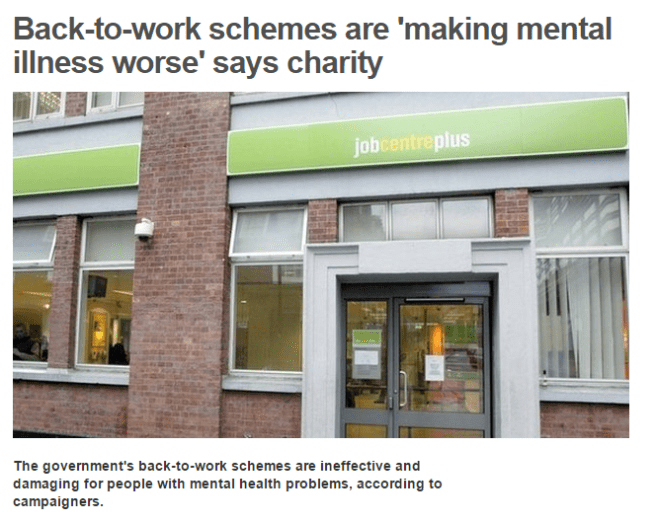
WHO COULD HAVE GUESSED THAT STRESSING OUT A GROUP OF MENTALLY ILL PEOPLE, MAKING THEM JUMP THROUGH A LOAD OF HOOPS TO GET THE BASIC MINIMUM OF SUPPORT, AND THREATEN TO STOP THEIR BENEFITS AND THEREFORE STARVE THEM – IS BAD FOR THEIR MENTAL HEALTH?!
“According to Mind, 83% of people they surveyed said using the programme and the government’s job centre services had made their mental health worse.
Three quarters of those polled said they felt less able to work as a result of being on these schemes, the charity said.
At the same time, the schemes were ineffective for people with mental health problems, as only 5% of people had been helped into work, campaigners claimed.”
[SOURCE]
Yeah, that kind of thing is stupid and never works well. Threatening people doesn’t help them get better.
This seems really awesome. 😀 Funny, informative, and, from what I’ve learned, pretty on the money.
Can this please just be mandatory viewing material for people? This is really basic shit.
(OMG THE DOOR THING. THE DOOR THING.)
(Source: https://www.youtube.com/)
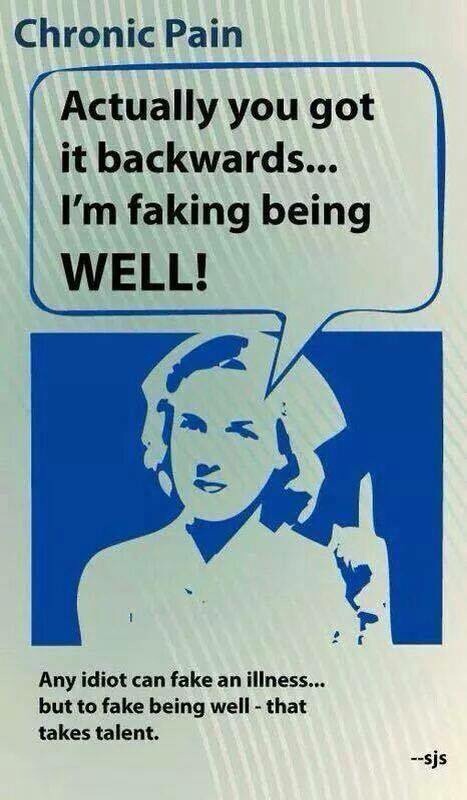
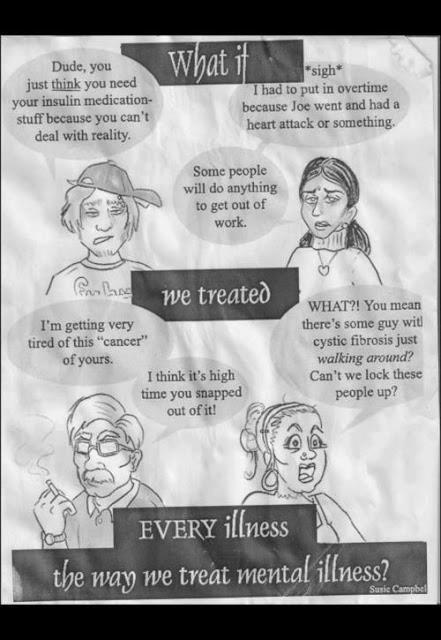
Depression.
Sometimes it’s screaming and crying and smashing plates
Sometimes it’s numbness and quiet and “oh god why am I not dead”
And sometimes it’s getting up anyways and staying alive, even if you don’t want to
It’s not because I’m lazy, I just can’t function sometimes – H.R (via spiralofsadness)
PSA
psychotic means “has a mental illness that causes hallucinations” not “evil person.”
not just hallucinations either, here are some symptoms of psychosis
- Disorganized thought and speech
- False beliefs that are not based in reality (delusions), especially unfounded fear or suspicion
- Hearing, seeing, or feeling things that are not there (hallucinations)
- Thoughts that “jump” between unrelated topics (disordered thinking)
just bc a lot of people aren’t aware of other facets of psychosis
 Holding the Bowl