Yikes! I just learned that there are 4 “A’s” associated with Alzheimer’s. Amnesia, which everyone is familiar with, is of course the memory loss. But as I keep saying, Alzheimer’sis about so much more than memory and these other A’s seem to reinforce thatidea. I had never heard of these terms before (other than amnesia) so they were
certainly new to me.
Agnosia, is when a person can’t quite recognize what an item
is for or is unable to recognize it at all. For example, Laura was helping me
put up some dishes and she held up a spatula and asked “where does this go?”
Glancing over, I said, “top drawer, right of the stove.” Probably too many
words all at once, but she couldn’t get past the stove part. She started to say to herself, “stove, stove,
stove” as she did a 360 in the middle of the kitchen. I realized that she either didn’t see the
stove or if she did, she didn’t recognize it and so I pointed to the drawer and
said, “it goes right there – in that drawer.” But she was hung up now on
finding the stove and she kept looking for it. I had to finally touch the stove
and say “here is the stove and the spatula goes here” pointing to the correct
drawer. She muttered a quick “of course, what was I thinking?” and moved away,
but I could tell that she was both a little embarrassed and frustrated with
herself over the incident.
Aphasia is the inability to use speech correctly. Laura is frequently using general
descriptions now to identify an object as opposed to its name. This makes for a
dangerous game of charades, because I find that I must bite my tongue to keep
from giving her silly answers or get animated when she is trying to tell me
something. The last thing she needs is for me to interrupt her train of
thought. I have to pat myself on my back because I am getting pretty good at
deciphering her descriptions. Her speech is often halting, with many starts and stops and a lot of misdirection. “What are
you looking for Honey?” is a fairly common question these days. “It was right here… you know, the pink one
with…store… makeup… before… it….’ That was it; but it was enough. I was lucky
that she used two fairly key words in there to help me out: Pink and make-up. That
meant she was looking for the pink case where she keeps most of her makeup.
Sometimes I’m not so lucky.
The last ‘A’ is Apraxia. It is when there is a loss of
motor coordination. Laura has trouble now often doing simple tasks such as
buttoning her blouse or signing her name. It’s like she knows what she wants
to do, but can’t get her hands or fingers to cooperate. Sometimes she may reach
for something but miss it entirely or on the other extreme, hit it with her
hand.
Unfortunately Laura has her ticket punched for all of these,
and it is my job to see that she keeps her dignity by not calling attention to
them. Like most other symptoms of Alzheimer’s these come and go and vary in
degree of severity when they are around. Sometimes I marvel in that she can put on a necklace
that has a tiny, tiny clasp. Other times, she calls for help in tying a bow or
is incapable of turning the knob to turn on a lamp.
All of the A’s are bad but we’ll somehow work through them
all, but the one that scares me the most is Agnosia. I’m dreading the day that she not only forgets what the stove is; but forgets who I am
as well.
I get a lot of asks about from undiagnosed chronically ill people about how to get a diagnosis and how to talk to their doctor. These are some articles/resources I’ve found, and I’ll be adding more as I find them. Feel free to add your own! ♥
No one here seems interested in the grimy parts of mental health. Everyone wants to talk about mental illness as quiet introverts drinking tea and nervously stuttering over words. No one ever talks about symptoms like paranoia or hallucinations or hypersexuality or compulsions or homelessness or drug addiction or delusions or psychosis or violent urges. Every time a clearly mentally ill person commits a crime, and someone says, “Hey, maybe this is a sign that we need to improve mental health awareness in this country,” everyone goes to screaming: “This isn’t about mental illness! Mentally ill people aren’t violent!”
But yes, sometimes mentally ill people are violent. Sometimes we are bad people. And even those mentally ill people are in need of advocacy, maybe even more so.
When you post “Protect people with mental illnesses at all costs,” do you mean all of us, or just the cute ones?
I get sick of tumblr’s version of self care, which 90% of the time threads into this beautifully: go pet a fuzzy cute animal! pile up your favorite blankets from childhood and watch disney movies! take a nap! play a game from this list of cute soothings games!
More realistically: go take a shower because it’s been three days. Wash the dishes that have been in the sink since last Friday that you can smell as soon as you open your door because rotting food stinks. Pick all your clothes off the floor because that’s where your entire wardrobe is and you’ve already cried today because you tripped over a sweater and realized the cat puked on it. Call someone who can give you enough courage to pay that bill you’ve been ignoring. Put away the crackers because that’s all you’ve eaten for two days straight. Apologize to the friends who are worried sick about you, and if you can’t at least let them know you are ok and need space.
One of the most empowering types of self-care is responsibility, but tumblr just wants to sit in a closet strung with fairy lights and read their favorite fic.
“Cute” self-care for “cute” mental issues. That’s not reality.
I wear glasses. Can I manage without glasses? Well, yes, probably. I could squint a lot, constantly move up close to anything I want to see, take the bus or a taxi if I want to go anywhere. I could just accept that I’ll never be able to see eagles flying in the sky or whales jumping out of the ocean.
But why? Why try so hard to manage life when I could just put on a pair of glasses? No one would ever suggest a near-sighted person should just work harder. No one would say ‘Maybe that’s just your normal’ to someone that needs glasses. They would say ‘Let’s go to the eye doctor and get you a prescription so you’re able to see again.’
You shouldn’t have to try so hard.
My doctor (paraphrased), when I expressed doubts about going back on an anti-depressant. (via
This is such a good analogy because nobody thinks about it like this. If you wear glasses, you literally need constant use of a medical aid to experience the world like most people do. If it were anything besides glasses, that would be considered a disability. But needing glasses is an extremely common, visible, and accepted form of disability to the point that we don’t even consider it one, we just accept that some people need glasses and that’s perfectly normal and there’s nothing wrong with needing to rely on them.
That is how all disabilities and illnesses should be seen, and how we should look at treatment for them. You have a problem, and you need help dealing with it, and there’s nothing wrong with either of those things. That’s perfectly normal and that’s okay.
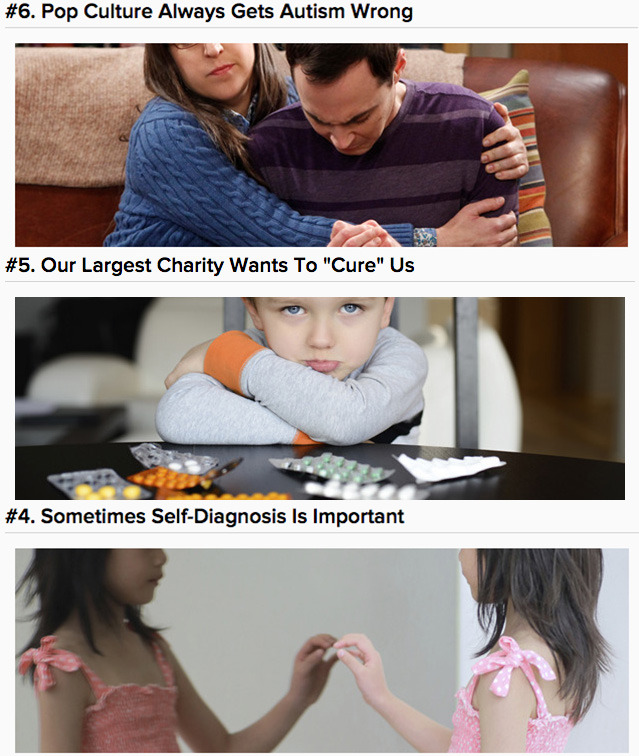
More than one percent of all children born in the United States today have autism. Some people, whom we shall politely refer to as “squealing jackasses” (we have some far more impolite terms ready), blame vaccines for the rise in cases. The real cause of this supposed autism boom is the simple fact that it was first diagnosed in 1943, so we basically only just figured out autism is a thing. We sat down with several high-functioning autistic people and asked them what our readers should know about their condition. Here’s what they said…
Ask their owners to leave without checking to see if the dog is a service animal
Roll your eyes when the dog is a service animal
Ask whether the dog is a service animal when they are clearly wearing a service coat
stop????????????? questioning my wife’s fucking service dog
It doesn’t matter if “other people have tried to bring pets inside,” that doesn’t give you the right to ask illegal questions??
That’s like saying, “Someone hit me with a stick once, so no one can use a walking cane in my establishment because they might hit me with it.”
if you see a dog wearing all of these:
ASSUME SHE IS A SERVICE DOG
Helpful Facts About Service Dogs
They can be any breed.
They may even be other species, such as miniature horses.
They are allowed anywhere the human public is allowed, such as restaurants, stores, markets, hotels, bathrooms, etc.
You do not need to ask if a dog is a service dog, as long as the dog is wearing a clearly-visible jacket.
As an owner/employee of an establishment that someone brings a dog to, you are only entitled to ask two questions. You don’t NEED to ask any. You are allowed to ask two.
The first question: “Is the animal required because of a disability?” NOTE: If it is obvious what the dog does and why it is required, you ARE NOT allowed to ask this question (for example, if the handler is in a wheelchair or also using a red-tipped white cane).
The second question: “What task does this animal perform?” ALSO not required if it’s obvious.
That’s it.
Any more and you are violating the ADA (Americans with Disabilities Act), opening yourself and your business up for a hefty lawsuit.
There are two times you are allowed to ask a service animal to leave. You are NEVER allowed to ask the dog’s handler to leave, no matter what the animal is doing.
The first time you are allowed to ask the animal to step outside: if it is not housebroken, and poses a sanitary risk.
The second time you are allowed to ask the animal to step outside: if it is acting aggressive towards or endangering other patrons.
That’s it.
You are only allowed to charge a cleaning fee if you would normally charge a human for the same fee. In other words, if the dog leaves hair on the floor and you wouldn’t charge a human for shedding on the floor, you can’t charge. If it’s a hotel and you wouldn’t charge a human for peeing in the tub, you cannot legally charge the dog for the same.
You are never allowed to ask for documentation that an animal is a legitimate service animal. This is in part to protect many people who don’t have access to medically-provided dogs, who have trained their own service dogs (perfectly legal and fine), or who can’t carry papers around with them at all times.
You may not ask that the animal perform their task for you. What the fuck, don’t do this. Think of allergy alert dogs—are you really going to wave an allergen in front of someone that might have a deadly allergy just to prove that the dog is “real?” congratulations, your ass is sued.
If you want more helpful facts please hit me up, I’m just really sick and tired of going places with my wife and her service dog only to get the message loud and clear that everyone is nervous and we’re unwelcome, when her dog is the most polite, well-trained, well-MARKED animal you’ve ever seen.
A typical conversation entering 2/3 businesses we went into today:
Person: Ma’am, you can’t have a pet in here. You have to leave. Wife: She’s a service dog. She’s wearing her coat. Person: Oh, sorry. We have to ask. People bring their pets in here sometimes, and we have to ask them to leave, because they’re not allowed. Wife: She’s not a pet, she’s a service animal.
Please spread this. Some people just don’t know. Others think that if they can’t see a disability, it doesn’t exist or need treatment.
Nearly everyone with ADHD answers an emphatic yes to the question: “Have you always been more sensitive than others to rejection, teasing, criticism, or your own perception that you have failed or fallen short?” This is the definition of a condition called rejection-sensitive dysphoria. When I ask ADHDers to elaborate on it, they say: “I’m always tense. I can never relax. I can’t just sit there and watch a TV program with the rest of the family. I can’t turn my brain and body off to go to sleep at night. Because I’m sensitive to my perception that other people disapprove of me, I am fearful in personal interactions.” They are describing the inner experience of being hyperactive or hyper-aroused. Remember that most kids after age 14 don’t show much overt hyperactivity, but it’s still present internally, if you ask them about it.
The emotional response to the perception of failure is catastrophic for those with the condition. The term “dysphoria” means “difficult to bear,” and most people with ADHD report that they “can hardly stand it.” They are not wimps; disapproval hurts them much more than it hurts neurotypical people.
If emotional pain is internalized, a person may experience depression and loss of self-esteem in the short term. If emotions are externalized, pain can be expressed as rage at the person or situation that wounded them.
In the long term, there are two personality outcomes. The person with ADHD becomes a people pleaser, always making sure that friends, acquaintances, and family approve of him. After years of constant vigilance, the ADHD person becomes a chameleon who has lost track of what she wants for her own life. Others find that the pain of failure is so bad that they refuse to try anything unless they are assured of a quick, easy, and complete success. Taking a chance is too big an emotional risk. Their lives remain stunted and limited.
For many years, rejection-sensitive dysphoria has been the hallmark of what has been called atypical depression. The reason that it was not called “typical” depression is that it is not depression at all but the ADHD nervous system’s instantaneous response to the trigger of rejection.
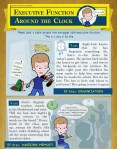
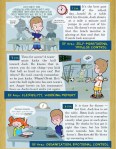
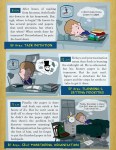
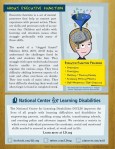
This is for those who don’t understand what executive function is. Even I know what it is after reading this and I can relate to this so much, especially in organization, impulse, and self-monitoring!
It doesn’t mention autism, but I know autistic people tend to be poor at executive functioning.
This is a great illustration of how complex executive functioning really is. “Executive functioning” isn’t just one trait, it’s a whole series of things (some of which aren’t even included here!) Executive functioning is more than just stereotypical “forgot my homework” ADHD cliches; it affects everything from prioritizing the steps involved in running errands to the flow and structure of conversation. And most people have more deficits in some areas than in others, so no two people with EF problems will be exactly alike.
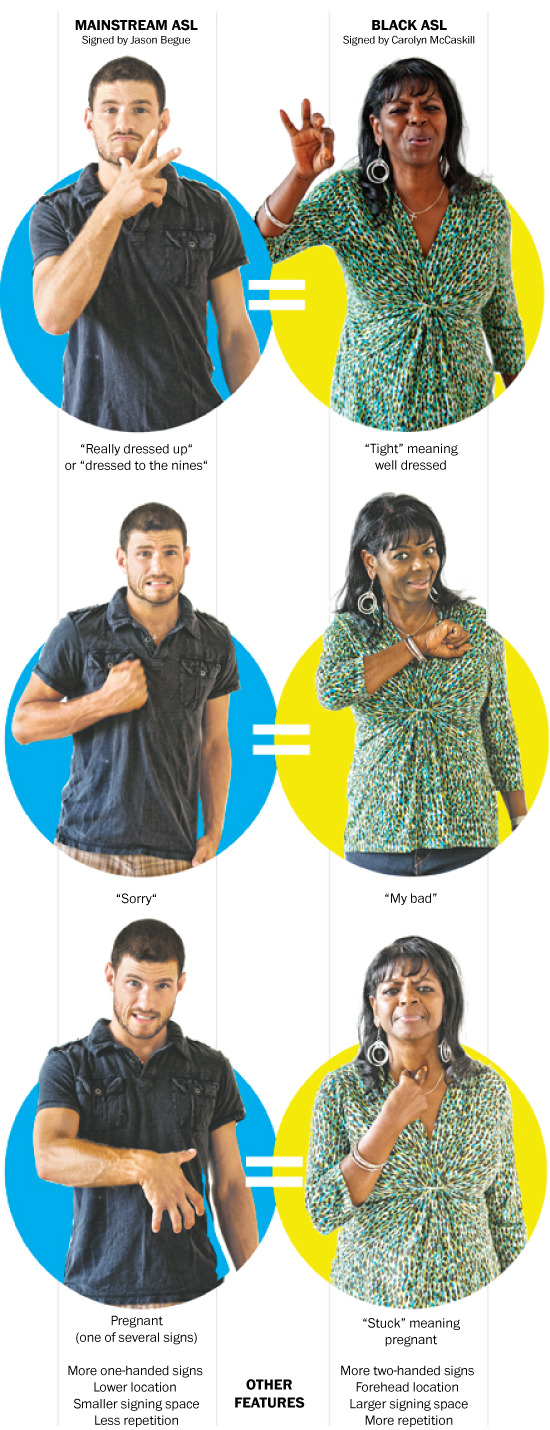
Reader Chris passes along an article about differences in American Sign Language usage between white and African-American signers. Researchers investigating what they call Black ASL found significant variations in signs, signing space, and facial cues. They explain:
Black ASL is not just a slang form of signing. Instead, think of the two signing systems as comparable to American and British English: similar but with differences that follow regular patterns and a lot of variation in individual usage.
They hypothesize that these differences began in segregated learning environments, and continue to evolve in Black social spaces. The whole article is worth a read.
Thanks, Chris, and remember — you can submit Wonk-worthy links through our ask or via email!
ETA, 9/24/12: Many of you have brought up the use of the word “mainstream” in this infographic. Better choices definitely exist, since this word rings of othering. We appreciate your nuanced and attentive readership!
Black folks got they own vernacular in asl also. You learn something new everyday.





 Holding the Bowl