the-real-seebs:

ophidiae:

tinierpurplefishes:

theforcekeepers:

DO NOT DO THIS.

This makes me so angry.

If you work in a movie theater and you do this I have no respect for you.

My younger brother is Type 1 Diabetic.

When we go to a movie theater, we always get him diet soda. If he were to get regular when we asked for diet, we would not give him the insulin he would need for it. If that happens, his blood sugar level could go so high he could go into a coma, go blind, or even die.

If somebody gave him regular soda instead of diet without telling us, that person could be responsible for a nine-year-old being killed or blinded.

Just thinking about that makes me so angry. I get scared every time we take him to a movie in case the people working there saw this picture and decide to do the same thing.

Please signal boost this so people know.

This applies to other things, too. I’m ridiculously sensitive to caffeine, and when I ask for decaf, there’s a reason. If I get full caff sometime when I ask for decaf, I’m probably not sleeping for a day or two, and likely starting to get seriously worried about heart attacks.

THIS. I have so many allergies, it’s not even funny. And yeah, I’ve gotten sick from people screwing up my food. It’s why I almost never eat out anymore, and when I do, it’s at one or two trusted restaurants where the wait staff knows me very well, and are extra careful with my order.

This is possibly one of the most fascinating indirect ways in which I’ve seen the madness of diet culture endanger people’s lives. People get so resentful of the insanity that they will do stuff which blatantly endangers people because they just assume the people are being stupid.
My daughter, who lost her battle with mental illness, is still the bravest person I know

My daughter, who lost her battle with mental illness, is still the bravest person I know

Social skills: noticing when repetition is communication

deadly-voo:

painfulwonder:

littlelionheartedavatar:

darziel:

realsocialskills:

So there’s this dynamic:

Autistic person: The door is open!

Other person: I *know* that. It’s hot in here.

Autistic person: The door is open!

Other person: I already explained to you that it’s hot in here!

Autistic person: The door is open!

Other person: Why do you have to repeat things all the time?!

Often when this happens, what’s really going on is that the autistic person is trying to communicate something, and they’re not being understood. The other person things that they are understanding and responding, and that the autistic person is just repeating the same thing over and over either for no reason or because they are being stubborn and inflexible and obnoxious and pushy.

When what’s really happening is that the autistic person is not being understood, and they are communicating using the words they have. There’s a NT social expectation that if people aren’t being understood, they should change their words and explain things differently. Sometimes autistic people aren’t capable of doing this without help.

So, if this is happening, assume it’s communication and try to figure out what’s being communicated. If you’re the one with more words, and you want the communication to happen in words, then you have to provide words that make communication possible. For example:

Other person: Do you want the door to be closed, or are you saying something else?

Autistic person: Something else

Other person: Do you want to show me something outside, or something else?

Autistic person: Something else

Other person: Are you worried about something that might happen, or something else?

Autistic person: Worried

Other person: Are you worried that something will come in, or that something will go out?

Autistic person: Baby

Other person: She’s in her crib, and the baby gate is up. Is that ok, or is there still a problem?

Autistic person: ok

Holy fuck.

This changes everything.

*leaves for reference*

I babysat an autistic kid for a few years, it’s hard to understand how their brain works sometimes but when you click, everything pays off. patience and love, my friends.

Also works for allistics (is that the right term?) with brain fog, and other neuroatypicals.

EDIT: I deleted my example because I felt like I hijacked the autism post which wasn’t fair of me.

The Likely Cause of Addiction Has Been Discovered, and It Is Not What You Think

positivemotivation:

theheadlesshashasheen-deactivat:

One of the ways this theory was first established is through rat
experiments – ones that were injected into the American psyche in the
1980s, in a famous advert by the Partnership for a Drug-Free America.
You may remember it. The experiment is simple. Put a rat in a cage,
alone, with two water bottles. One is just water. The other is water
laced with heroin or cocaine. Almost every time you run this experiment,
the rat will become obsessed with the drugged water, and keep coming
back for more and more, until it kills itself.

The advert
explains: “Only one drug is so addictive, nine out of ten laboratory
rats will use it. And use it. And use it. Until dead. It’s called
cocaine. And it can do the same thing to you.”

But in the 1970s, a professor of Psychology in Vancouver called Bruce Alexander
noticed something odd about this experiment. The rat is put in the cage
all alone. It has nothing to do but take the drugs. What would happen,
he wondered, if we tried this differently? So Professor Alexander built
Rat Park. It is a lush cage where the rats would have colored balls and
the best rat-food and tunnels to scamper down and plenty of friends:
everything a rat about town could want. What, Alexander wanted to know,
will happen then?

In Rat Park, all the rats obviously tried both
water bottles, because they didn’t know what was in them. But what
happened next was startling.

The rats with good lives didn’t like
the drugged water. They mostly shunned it, consuming less than a
quarter of the drugs the isolated rats used. None of them died. While
all the rats who were alone and unhappy became heavy users, none of the
rats who had a happy environment did.

Yep. Addiction starts and ends with pain. Portugal and Spain proved this when they classified drug use as a medical condition and not a crime.

And any recovered addict will tell you this.

The Likely Cause of Addiction Has Been Discovered, and It Is Not What You Think

safety-officer-barto:

lyinginbedmon:

hyperscraps:

vashito:

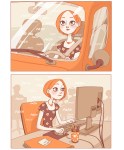
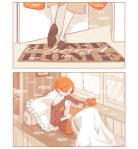
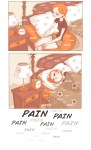
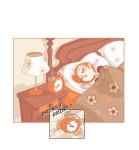
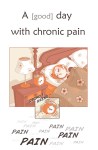
I don’t have chronic pain but this artwork is so nice to look at *^*

Just because we’re not writhing on the floor doesn’t mean we’re not hurting. We’ve just gotten really good at hiding it and functioning with it, otherwise we’d literally starve in our beds.

This also works pretty well for numerous mental disabilities, or just generally for any “invisible” disabilities.

this is the most difficult thing to explain when it comes to depression and anxiety

16 Things I Would Want, If I Got Dementia

dementia-by-day:

dementia-by-day:

Originally written for Alzheimer’s Reading Room.

When you work in dementia care, people tend to ask you a lot of questions. Probably one of the most common questions that I hear is,

“Are you afraid to get dementia when you’re older?”

Honestly, there are many things that scare me much more than dementia does. Don’t get me wrong: dementia is a terrible group of diseases. I’ve been fortunate, however, to see many of the beautiful moments that people with dementia can experience.

Just in case I do get dementia, I’ve written a list of rules I’d like to live by.

If I get dementia, I’d like my family to hang this wish list up on the wall where I live.

  1. If I get dementia, I want my friends and family to embrace my reality. If I think my spouse is still alive, or if I think we’re visiting my parents for dinner, let me believe those things. I’ll be much happier for it.
  2. If I get dementia, I don’t want to be treated like a child. Talk to me like the adult that I am.
  3. If I get dementia, I still want to enjoy the things that I’ve always enjoyed. Help me find a way to exercise, read, and visit with friends.
  4. If I get dementia, ask me to tell you a story from my past.
  5. If I get dementia, and I become agitated, take the time to figure out what is bothering me.
  6. If I get dementia, treat me the way that you would want to be treated.
  7. If I get dementia, make sure that there are plenty of snacks for me in the house. Even now if I don’t eat I get angry, and if I have dementia, I may have trouble explaining what I need.
  8. If I get dementia, don’t talk about me as if I’m not in the room.
  9. If I get dementia, don’t feel guilty if you cannot care for me 24 hours a day, 7 days a week. It’s not your fault, and you’ve done your best. Find someone who can help you, or choose a great new place for me to live.
  10. If I get dementia, and I live in a dementia care community, please visit me often.
  11. If I get dementia, don’t act frustrated if I mix up names, events, or places. Take a deep breath. It’s not my fault.
  12. If I get dementia, make sure I always have my favorite music playing within earshot.
  13. If I get dementia, and I like to pick up items and carry them around, help me return those items to their original places.
  14. If I get dementia, don’t exclude me from parties and family gatherings.
  15. If I get dementia, know that I still like receiving hugs or handshakes.
  16. If I get dementia, remember that I am still the person you know and love.

Pushing this back to the top of my blog! Over 37,000 views on LinkedIn!

chronicallyquirky:

toomanyfeelings:

You can be depressed and not feel sad or blue. Depression can also be a haze of sleepiness, distractedness/obsessiveness cycles, and a twinge of irritability that can be hard to recognize because you might already be a “fiery” person. It can feel like a lazy Sunday that keeps imposing itself for weeks or months.

Can we just… I’ll leave this here.

journeyers-scrapbook:

fairytalewitch:

kar-kat-dennings:

fmnstklljy:

markula:

millennium-lily:

iamcode-deactivated20161109:

And that’s the most frustrating thing about depression. It isn’t always something you can fight back against with hope. It isn’t even something — it’s nothing. And you can’t combat nothing. You can’t fill it up. You can’t cover it. It’s just there, pulling the meaning out of everything. That being the case, all the hopeful, proactive solutions start to sound completely insane in contrast to the scope of the problem.

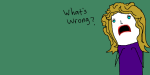
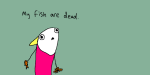
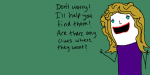
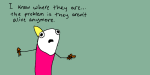
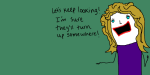
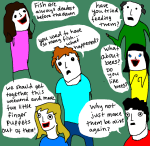
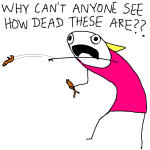
It would be like having a bunch of dead fish, but no one around you will acknowledge that the fish are dead. Instead, they offer to help you look for the fish or try to help you figure out why they disappeared.
(x)

This is actually a really good way to explain it, I think.

I WILL NEVER NOT REBLOG THIS

I’ve seen this reblogged without the original caption before and boy was i confused

Wait, this version of the post misses out what I think is the most important bit of the paragraph

“The problem might not even have a solution. But you aren’t necessarily looking for solutions. You’re maybe just looking for someone to say “sorry about how dead your fish are” or “wow, those are super dead. I still like you, though.”“

dustyroadpunk

My teenage daughter and I started using this as a reference when I was not-helpfully trying to help her with her depression. She will look at me and say, “Mom, the fish are dead.” Or I’ll stop myself and say, “Oh. The fish are dead, aren’t they?” 

And let’s keep credits on this: This is the work of Allie Brosh of Hyperbole and a Half!