The opposite of depression is not happiness, but vitality, and it was vitality that seemed to seep away from me in that moment. Everything there was to do seemed like too much work. I would come home and I would see the red light flashing on my answering machine, and instead of being thrilled to hear from my friends, I would think, “What a lot of people that is to have to call back.” Or I would decide I should have lunch, and then I would think, but I’d have to get the food out and put it on a plate and cut it up and chew it and swallow it, and it felt to me like the Stations of the Cross.

And one of the things that often gets lost in discussions of depression is that you know it’s ridiculous. You know it’s ridiculous while you’re experiencing it. You know that most people manage to listen to their messages and eat lunch and organize themselves to take a shower and go out the front door and that it’s not a big deal, and yet you are nonetheless in its grip and you are unable to figure out any way around it.

Andrew Solomon, Depression – The Secret We Share, TED talks (via feigenbaumsworld)

This is exactly it.

(via bisexualstilinski)

psycholar:

giraffepoliceforce:

museicetc:

Although Reid makes it personal, there’s still an important message here that shows Dr. Reid knows what’s up re: schizophrenia and violence

Fun fact: schizophrenics are literally less likely to commit an act of violence than someone who doesn’t experience mental illness.

We are however significantly more likely to be victims of abuse, addiction, poverty, and suicide.

Schizophrenics don’t need the media constantly telling people we’re a time bomb. We need help and patience. And hugs. And maybe some ice cream.

Reblogging because the ‘fun fact’ is both true and important for everyone to know.

neurodiversitysci:

Los Angeles graphic designer Emily McDowell, who survived Hodgkin Lymphoma, designed the snarky cards she wished she could have received. They’re called “Empathy Cards.”

“The most difficult thing about my illness was the fact that it was so lonely,” she says. One of the reasons was “friends and family either disappearing because they didn’t know what to say or well-intentioned people saying the wrong thing. So one of the most difficult things about being sick was feeling really alienated from everyone that I knew.”

image

image

image

image

These make great gifts for people with chronic illnesses.

(They’re also a great reminder that the average neurotypical person can’t “mind read”).

Discovered via Ilyasaurus (here on Tumblr), I believe. Be sure to stop by her blog, too.

The thing with Anxiety and Depression

musesandlovelydays:

  • You can feel really confident in yourself but when someone comments badly on you, you begin to crumble.
  • You doubt yourself a lot.
  • Your head begins to hurt when you over think.
  • You forget to eat sometimes.
  • You get quiet around friends.
  • You break down more often
  • isolation.
  • You’re confused 
  • You don’t know why your confused because you’re over thinking all the bad decisions you’ve made in your in your life.
  • You forget your value, You forget your worth.

Avoidant Personality Disorder

onlinecounsellingcollege:

Avoidant Personality Disorder (AVPD) is a recognised disorder which is characterized by a hypersensitivity to criticism, intense self loathing and a strong desire to isolate themselves. Sufferers believe that they lack social skills, and feel they don’t know or understand “the rules”. Hence, they tend to avoid social situations to avoid the pain of rejection by others.

People in a close relationship with them often feel frustrated by the person’s tendency to pull away from them and avoid other people. They also find it hard to lead an active social life as the sufferer refuses to go to events such as family gathering, work parties and so on. Also, they may feel pressurised to cut themselves off, too, and live in a bubble with the AVPD person. This can be a source of stress for the person and the extended family.

Although people with AVPD will generally display a number of the traits outlined below, each person is unique and different. (Also, most of us display avoidant traits at times but that doesn’t mean we have AVPD).

Symptoms and traits include the following:“always” & “never” statements; blaming; catastrophizing (automatically assuming a “worst case scenario”); circular conversations (endless arguments which repeat the same patterns); “control-me” syndrome (a tendency to form relationships with people who are controlling, narcissistic or antisocial); dependency; depression; emotional blackmail; false accusations; fear of abandonment; hypervigilance; identity disturbance ( a distorted view of oneself); impulsivity; lack of object constancy (the inability to remember that people or objects are consistent and reliable over time – regardless of whether you can see them or not); low self-esteem; mood swings; objectification (treating a person like an object); panic attacks; passive aggressive behaviour; projection (attributing one’s own feelings or traits onto another); self-hatred; “playing the victim” and thought policing (trying to question, control, or unduly influence another person’s thoughts, feelings and behaviours.)

Specifically, the DSM-IV-TR, defines Avoidant Personality Disorder (AvPD) as being:

A pervasive pattern of social inhibition, feelings of inadequacy, and hypersensitivity to negative evaluation, beginning by early adulthood and present in a variety of contexts, as indicated by four (or more) of the following:

1. Avoids occupational activities that involve significant interpersonal contact, because of fears of criticism, disapproval, or rejection.
2. Is unwilling to get involved with people unless certain of being liked.
3. Shows restraint initiating intimate relationships because of the fear of being ashamed, ridiculed, or rejected due to severe low self-worth.
4. Is preoccupied with being criticized or rejected in social situations.
5. Is inhibited in new interpersonal situations because of feelings of inadequacy.
6. Views self as socially inept, personally unappealing, or inferior to others
7. Is unusually reluctant to take personal risks or to engage in any new activities because they may prove embarrassing.

A formal diagnosis must be made by a mental health professional.

sensorypeople:

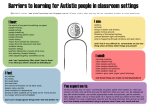
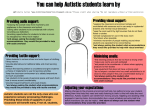
These images are meant for teachers, to help them understand the sensory issues that their autistic students may be dealing with, and to give them tips on helping their students manage these issues in the classroom. However, I think these could also be useful if you need to explain your sensory issues to other people, and to give them tips on how they can help you in general.

Please click the images to see them better.

(Source)

Liesel, Mod.

neurowonderful:

dirtyveganhippy:

stophatingyourbody:

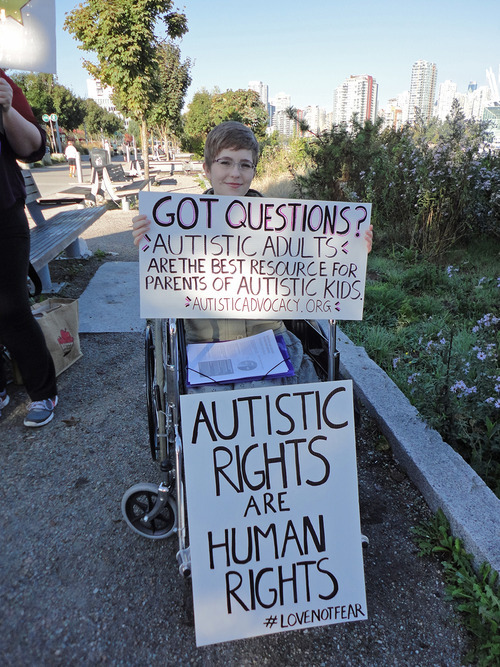
Quick shout out to neurowonderfulWho has been an excellent resource about autism and all around awesome person! Thank you so much for all that you do! I’ve learned so much from you as I’m sure so many more have!

CLICK THROUGH TO HER BLOG http://neurowonderful.tumblr.com/

Be sure to check out her YouTube videos and subscribe https://www.youtube.com/watch?v=ez936r2F35U

neurowonderful is it okay if I share this on Instagram?

That is fine with me!