
“His stimming is beautiful. To get him to stop stimming would require intensive coercion that, even if successful, would likely result in irreparable psychological harm.”
Tag: understanding
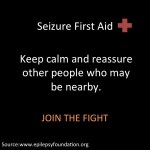
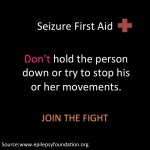

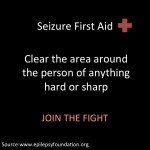

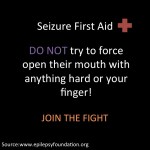
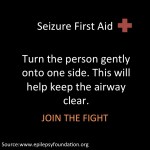
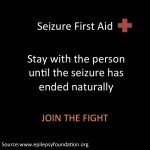
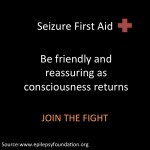
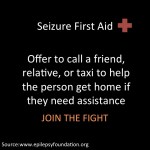
Seizure First Aid.
Learn it. Share it. Know it. Use it.
100% correct medical information on tumblr for once; also consider calling 911 if you don’t know how often the person has seizures and ESPECIALLY if the seizure has lasted 5 minutes or more (which is why the watch is critical)
I have epilepsy so making sure the word is out on how to help people who do have seizures means a lot to me.
Oh my god, accurate epilepsy information. I am so happy, you have no idea.
Accessibility and Convenience Are not the Same Thing
A quick note to all my (amazing) able-bodied allies: be careful when talking about the “curb cut effect” in relation to how accessibility affects people. When you mention “prams, buggies, and bicycles” in the same breath as people with mobility aids, you’re conflating “accessibility” with “convenience”.
When disabled people talk about accessibility, we’re talking about “equal access” not “ease of access”. When something isn’t accessible, we’re not mildly inconvenienced; we’re completely excluded. When the lift isn’t working, we can’t get to work. When public transportation isn’t accessible, we’re not troubled; we’re trapped.
This is why our most vocal supporters call themselves “disability rights activists” not “accessibility advocates”. It’s not about the benefits of accessibility; it’s about the direct, long-term harm a lack of accessibility causes.
Most folks don’t realize that the ADA is not a building code, but is in fact a civil rights law. So, the next time you’re explaining how important accessibility is to your able-bodied friends, don’t just focus on how accessibility makes the most common spaces better for everyone.
Focus on how a lack of accessibility excludes disabled people from even the most common spaces.
This is remarkably good, sharp and both funny, sad, righteous-angering and, well, eye-opening. It’s for the blind and partially-sighted, and just as much it’s for those of us who have never had to think about any of this stuff, and is called “10 Steps to Help You Find the Perfect Job”.
(Source: https://www.youtube.com/)
“Imagine having a child that refuses to hug you or even look you in the eyes”
Imagine being shamed, as a child, for not showing affection in a way that is unnatural or even painful for you. Imagine being forced, as a child, to show affection in a way that is unnatural or even painful for you. Imagine being told, as a child, that your ways of expressing affection weren’t good enough. Imagine being taught, as a child, to associate physical affection with pain and coercion.
As a preschool special ed para, this is very important to me. All my kids have their own ways of showing affection that are just as meaningful to them as a hug or eye contact is to you or me.
One gently squeezes my hand between both of his palms as he says “squish.” I reciprocate. When he looks like he’s feeling sad or lost, I ask if I can squish him, and he will show me where I can squish him. Sometimes it’s almost like a hug, but most of the time, it’s just a hand or an arm I press between my palms. Then he squishes my hand in return, says “squish,” and moves on. He will come ask for squishes now, when he recognizes that he needs them.
Another boy smiles and sticks his chin out at me, and if he’s really excited, he’ll lean his whole body toward me. The first time he finally won a game at circle time, he got so excited he even ran over and bumped chins with me. He now does it when he sees me outside of school too. I stick out my chin to acknowledge him, and he grins and runs over and I lean down for a chin bump.
Yet another child swings my hand really fast. At a time when another child would be seeking a hug, she stands beside me and holds my hand, and swings it back and forth, with a smile if I’m lucky. The look on her face when I initiate the hand swinging is priceless.
Another one bumps his hip against mine when he walks by in the hallway or on the playground, or when he gets up after I’m done working with him. No eye contact, no words, but he goes out of his way to “crash” into me, and I tell him that it’s good to see him. He now loves to crash into me when I’m least expecting it. He doesn’t want anything, really. Just a bump to say “Hi, I appreciate you’re here.” And when he’s upset and we have to take a break, I’ll bump him, ask if he needs to take a walk, and we just go wander for a bit and discuss whatever’s wrong, and he’s practically glued to my side. Then one more bump before we go back into the room to face the problem.
Moral of the story is, alternative affection is just as valid and vitally important as traditional affection. Reciprocating alternative affection is just as valid and vitally important as returning a hug. That is how you build connections with these children.
This is so goddamn important.
I verbally express affection. A LOT.
My husband… doesn’t. I don’t know why. For the longest time part of me wondered if it meant he loved me less.
At some point I told him about a thing I had done as a kid. Holding hands, three squeezes means ‘I Love You’.
Suddenly he’s telling me I Love You all the time.
Holding my hand, obviously, but also randomly.
taptaptap
on my hand, my shoulder, my butt, my knee, whatever body part is closest to him, with whatever part of him is closest to me
All the time.
More often than I ever verbally said it.
It’s an ingrained signal now, I can tap three times on whatever part of him, and get three taps back in his sleep. Apparently I do the same.
It’s made a huge difference for us.
People say things differently.
“Most autistic people who are capable of formulating questions have frequently experienced the following scenario: We ask for information that we need in order to prepare ourselves for a new experience. Instead of answering our questions, NT people tell us that we don’t need to ask these questions at all. We just need to relax and stop being so anxious. The fact is that being able to ask questions, and getting clear answers to our questions, and thus knowing what to expect, are often the very things autistic people need in order to be able to relax and not be anxious. Asking a lot of questions about the details of a situation is usually not a “maladaptive behavior” that increases an autistic person’s anxiety. More often it’s an adaptive strategy that an autistic person is using to reduce anxiety or to prevent being in an anxiety-provoking situation in the first place. It’s very important for us to have thorough explanations and ample opportunities to ask questions.”
— Jim Sinclair, “Cultural Commentary: Being Autistic Together”
Things I never knew about depression until I finally had a doctor explain the disease to me
Depression can manifest as irrational anger.
My complete and total inability to keep anything clean or tidy for any amount of time is a symptom of my depression. I may never be able to do this. It’s important that I remember that and forgive myself when I clean something out (like my car) and it ends up trashed within a week.
Depression IS A DISABILITY. Requiring accommodations is okay.
Medications don’t make you better, they don’t cure your depression. They serve as an aid. Their purpose is to help you get to everyone else’s minimal level of functioning.
Depression can cycle through periods of inactivity. This doesn’t mean it’s gone away.
The reason I don’t feel like other people understand me is because … well … other people DON’T understand me. They can’t. They don’t have my disability.
Paranoia is par for the course.
Depression can and will interfere with your physical mobility. Forgive yourself when you can’t physically do something.
It’s entirely possible that I may never be able to live by myself. I can’t take care of myself. I need help to do it. And that’s okay.
load-bearing
Sometimes people hit a place in their life where things are going really well. They like their job and are able to be productive at it; they have energy after work to pursue the relationships and activities they enjoy; they’re taking good care of themselves and rarely get sick or have flareups of their chronic health problems; stuff is basically working out. Then a small thing about their routine changes and suddenly they’re barely keeping their head above water.
(This happens to me all the time; it’s approximately my dominant experience of working full-time.)
I think one thing that’s going on here is that there are a bunch of small parts of our daily routine which are doing really important work for our wellbeing. Our commute involves a ten-minute walk along the waterfront and the walking and fresh air are great for our wellbeing (or, alternately, our commute involves no walking and this makes it way more frictionless because walking sucks for us). Our water heater is really good and so we can take half-hour hot showers, which are a critical part of our decompression/recovery time. We sit with our back to the wall so we don’t have to worry about looking productive at work as long as the work all gets done. The store down the street is open really late so late runs for groceries are possible. Our roommate is a chef and so the kitchen is always clean and well-stocked.
It’s useful to think of these things as load-bearing. They’re not just nice – they’re part of your mental architecture, they’re part of what you’re using to thrive. And when they change, life can abruptly get much harder or sometimes just collapse on you entirely. And this is usually unexpected, because it’s hard to notice which parts of your environment and routine are load bearing. I often only notice in hindsight. “Oh,” I say to myself after months of fatigue, “having my own private space was load-bearing.” “Oh,” after a scary drop in weight, “being able to keep nutrition shakes next to my bed and drink them in bed was load-bearing.” “Oh,” after a sudden struggle to maintain my work productivity, “a quiet corner with my back to the wall was load-bearing.”
When you know what’s important to you, you can fight for it, or at least be equipped to notice right away if it goes and some of your ability to thrive goes with it. When you don’t, or when you’re thinking of all these things as ‘nice things about my life’ rather than ‘load-bearing bits of my flourishing as a person’, you’re not likely to notice the strain created when they vanish until you’re really, really hurting.
Almost two weeks after reading this, and I’m still kind of blown away at what a ridiculously fruitful definition this is. Like I had no idea that load bearing things were a thing that needed to have a word for them, but now I’m like holy shit I’m so glad that there’s now a word I can use to refer to this really important class of Thing.
This is astounding. Load-bearing. Forget spoons, this concept is wonderful. I’m going to update my Spear Theory with this.
SERVICE DOG PSA
So today I tripped. Fell flat on my face, it was awful but ultimately harmless. My service dog, however, is trained to go get an adult if I have a seizure, and he assumed this was a seizure (were training him to do more to care for me, but we didn’t learn I had epilepsy until a year after we got him)
I went after him after I had dusten off my jeans and my ego, and I found him trying to get the attention of a very annoyed woman. She was swatting him away and telling him to go away. So I feel like I need to make this heads up
If a service dog without a person approaches you, it means the person is down and in need of help
Don’t get scared, don’t get annoyed, follow the dog! If it had been an emergency situation, I could have vomited and choked, I could have hit my head, I could have had so many things happen to me. We’re going to update his training so if the first person doesn’t cooperate, he moves on, but seriously guys. If what’s-his-face could understand that lassie wanted him to go to the well, you can figure out that a dog in a vest proclaiming it a service dog wants you to follow him
WHO IS REALLY OUT HERE IGNORING A SERVICE DOG?? If ANY type of dog approaches me im in. no questions asked, where you going? can i come?
What’s the Real Lesson?
Here’s something that happens to ADHD children a lot: Getting pushed beyond their limits by accident. Here’s how it works and why it’s so bad.
Child says, “I can’t do this.”
Adult (teacher or parent) does not believe it, because Adult has seen Child do things that Adult considers more difficult, and Child is too young to properly articulate why the task is difficult.
Adult decides that the problem is something other than true inability, like laziness, lack of self-confidence, stubbornness, or lack of motivation.
Adult applies motivation in the form of harsher and harsher scoldings and punishments. Child becomes horribly distressed by these punishments. Finally, the negative emotions produce a wave of adrenaline that temporarily repairs the neurotransmitter deficits caused by ADHD, and Child manages to do the task, nearly dropping from relief when it’s finally done.
The lesson Adult takes away is that Child was able to do it all along, the task was quite reasonable, and Child just wasn’t trying hard enough. Now, surely Child has mastered the task and learned the value of simply following instructions the first time.
The lessons Child takes away? Well, it varies, but it might be:
-How to do the task while in a state of extreme panic, which does NOT easily translate into doing the task when calm.
-Using emergency fight-or-flight overdrive to deal with normal daily problems is reasonable and even expected.
-It’s not acceptable to refuse tasks, no matter how difficult or potentially harmful.
-Asking for help does not result in getting useful help.
I’m now in my 30’s, trying to overcome chronic depression, and one major barrier is that, thanks to the constant unreasonable demands placed on me as a child, I never had the chance to develop actual healthy techniques for getting stuff done. At 19, I finally learned to write without panic, but I still need to rely on my adrenaline addiction for simple things like making phone calls, tidying the house, and paying bills. Sometimes, I do mean things to myself to generate the adrenaline rush, because there’s no one else around to punish me.
But hey, at least I didn’t get those terrible drugs, right? That might have had nasty side effects.
#I wonder if this might potentially apply to people with autism as well?#because I haven’t been diagnosed with adhd but MAN do I fee this#and like I had the situation a lot of people went through#breezed through elementary and high school and in gifted and talented#but then college happened and I was LOST
There’s a lot of overlap between ADHD traits and autism traits. Whether you meet the diagnostic criteria for ADHD, too, I have no idea (because I’m a random person on the Internet), but you might find ADHD resources helpful in figuring out your life challenges.
A lot of “help” for executive function skills comes from neurotypicals who are naturally good at it and lack insight into people who aren’t, which makes it spectacularly useless to the people who actually need it.
Well shit this explains so much about me
This is why I want to scream when NT professionals try to insist that forcing ADD people into “the zone” is the best treatment for ADD. Forced focus is exhausting because it’s fueled by adrenaline. We have reams of medical data that frequent adrenaline rushes in young people are horribly bad for their development and causes a laundry list of problems later in life, both physical and mental.
Literally NT professionals: I know you can accomplish this task if I push you into a state of artificial panic every time I want you to do it.
Me: Or you could, idk, help break the task into smaller, less scary bits, use a reward structure at each stage to reinforce positive association, or even turn it into a game because ADD people are kind of hardwired to love game-like structures and anything that has a whiff of fun to it.
NT professionals: That requires imagination, time, and mental energy that I, a NT person who is not struggling with overwhelming self-doubt and mental block at this moment, simply cannot be bothered to spare.
Me: Oh right, of course. Carry on with terrorizing small children, then.
Nothing like the abusive teaching styles described above happened to me, because I was good at doing work, until I magically stopped being good at doing work sometime in 9th grade and instead started being bad at doing work. At that point and at my school, teachers were more loose about when work got done, so I started procrastinating until the last minute. This worked really well for me and I have had all A’s and the extremely occasional B+ in every class.
It’s only now, reading this post, that I’m realizing why my clever “do it at the last minute” strategy works so well.
😦
One of the reasons I work in the stressful jobs I do (aside from my abysmal college performance)
Is that it’s hard for me to get any work done unless it feels like a life-or-death situation
So, I work at a place where life-or-death situations happen on the regs
I was a really great worker until I switched into an office track and realized that without the nonstop panic and stress of a retail/food service position i’m almost entirely unable to prioritize and complete tasks.
 Holding the Bowl