
notyourqueertheoryposterchild:
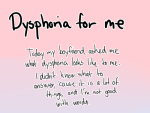
I think there is a lot of confusion amongst the transgender community about what constitutes gender dysphoria. Everyone is going to have a different experience, and while there will almost always be commonalities, you can’t make sweeping statements and expect everyone to fall under that definition. Websites with lists of symptoms like ‘depression’, ‘anxiety’, and ‘low self esteem’ really don’t help much – they all seem to imply you know it if you are gender dysphoric, but from spending even an hour in the FTM tag on Tumblr you’d know that’s clearly not the case for plenty of young people.
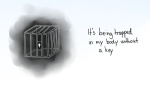
I would define gender dysphoria as feelings of discontent, dissociation or depression regarding a person’s biological sex. I would also tack on a disclaimer stating that these feelings shouldn’t solely be caused by society or other people – if your only source of discomfort with your gender comes from ‘the way society sees me as [gender]’ then you need to seriously rethink whether you need medical transition.
However, this definition doesn’t explain how ‘feelings of discontent, dissociation or depression’ could manifest, so here’s a list of possibilities. I’m going to use the term sex-typical to mean characteristics due to your biological sex, such as prominent hips or breasts for FTM people, or broad shoulders or facial hair for MTF people.
Discontent:
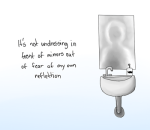
- feeling ashamed or embarrassed by your body, specifically by sex-typical features
- not being able to fit into the type of clothes you want to wear because of your sex-typical body shape
- feeling like you are not living the life you should be
- feeling uncomfortable in gender-specific spaces such as bathrooms or women’s or men’s support groups
Dissociation:
- surprise or discomfort when sex-typical traits are touched/bumped (eg forgetting you have breasts, then holding something to your chest and feeling them)
- inability to mentally picture your body in sexual situations
- a sense of disconnect or lack of understanding about your emotional responses
- inability to relate to discussions of what is expected of people your gender (eg talking about ‘one day, when you’re a mum/dad’)
- not feeling close to other people of your biological sex (note: this doesn’t mean ‘I’m not like the other girls, they’re all popular and into fashion and I’m edgy and different’, I’m talking about a severe lack of understanding or disconnect from the majority of men/women)
- (FTM specific) forgetfulness with regards to menstrual periods
Depression:
- long term feelings of anxiety or depression about your sex-typical characteristics OR with no recognisable cause
- desire to self-harm or cause harm to/remove your genitals
- in sexual people, a lack of sex drive due to discomfort with your genitals or feelings of shame, embarrassment or depression during/after sex
- extreme discomfort or disgust with sex-typical bodily functions (eg growing facial hair for MTF people or menstrual periods for FTM people)
- a sense of fatalism or resignation towards a future living as your birth gender – feeling like there’s no hope for the future or that there is nothing to look forward to
Standard disclaimer that I’m only trying to provide helpful information, this is in no way definitive, your personal experience may be different, and so on. This isn’t supposed to act as a diagnostic chart, but rather to give you something to think about if you’re still not sure. Medical transition is a huge step, and if you don’t currently experience gender dysphoria, the changes induced by HRT could well kick start it back towards your biological sex. So please, think long and hard about where your feelings are coming from, what’s causing them, and whether medical transition will help, before jumping into something with irreversible and potentially unwanted effects.
Here is a handy link that helps describes some differences between dysmorphia and dysphoria:http://amydentata.com/2012/03/06/the-difference-between-dysphoria-and-negative-body-image/








 Holding the Bowl