
Pretty basic DBT skills workbook!
It’s kinda campy-looking, but I’ve found some stuff in it useful, and a lot of it mirrors the stuff we used in the DBT hospital I was in.
Tag: tools
Halting Schizophrenia Before It Starts
Schizophrenia typically starts in the late teens or early 20s. But if you could stop that first psychotic break, could you stop the mental illness in its tracks? Some doctors think so.

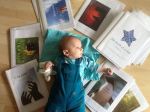
Congrats to Joanna Grace who has written an instruction book for creating and telling sensory stories for children with special education needs or learning disabilities.
Sensory stories use sensory cues such as sounds, tastes, smells and things to hold and feel during the story to help connect to the experience and the message of the tale.
We supported her kickstarter to write the first stories and we are so glad to hear about the book which will help parents and teachers create their own story experiences.
More about the book and it’s launch here.
http://sensoryplaytray.com/sensory-stories-children-teens-book/
Depression Worksheet
Okay, here’s a good list to pass around. It took me several years to even think about looking up the symptoms of depression, and I think it would have done my good to just be presented with them when I was in my teens, but no one told me…. so, here they are.
- Feelings of helplessness and hopelessness. A bleak outlook—nothing will ever get better and there’s nothing you can do to improve your situation.
- Loss of interest in daily activities. No interest in former hobbies, pastimes, social activities, or sex. You’ve lost your ability to feel joy and pleasure.
- Appetite or weight changes. Significant weight loss or weight gain—a change of more than 5% of body weight in a month.
- Sleep changes. Either insomnia, especially waking in the early hours of the morning, or oversleeping (also known as hypersomnia).
- Anger or irritability. Feeling agitated, restless, or even violent. Your tolerance level is low, your temper short, and everything and everyone gets on your nerves.
- Loss of energy. Feeling fatigued, sluggish, and physically drained. Your whole body may feel heavy, and even small tasks are exhausting or take longer to complete.
- Self-loathing. Strong feelings of worthlessness or guilt. You harshly criticize yourself for perceived faults and mistakes.
- Reckless behavior. You engage in escapist behavior such as substance abuse, compulsive gambling, reckless driving, or dangerous sports.
- Concentration problems. Trouble focusing, making decisions, or remembering things.
- Unexplained aches and pains. An increase in physical complaints such as headaches, back pain, aching muscles, and stomach pain.
I’d like to add that in my experience, and from what I’ve heard from others, if the depression has been going on unnoticed for a long time, you won’t have noticed these ‘changes’, they’ll have snuck up on you and become an unremarkable part of your life…
Along with the concentration problems is psychomotor disruptions – either you’re agitated and constantly moving your hands, flicking your fingers, pulling your hair… or you’re clumsy, like you’re surrounded by cotton wool and your extremities are further away than they used to be, so things like writing and walking become really difficult.
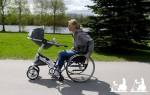
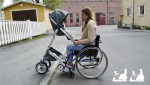
Guys, look. They finally made a baby stroller for wheelchair-
boundusing mothers. This is so important.My wife is a physical therapist. She started tearing up when I showed this to her.
15 Airports That Offer “Rehearsal Programs” for Individuals With Autism
Taking a child with autism on a plane requires some advanced planning and preparation. Thankfully there are now programs in place at many airports that that provide children with autism a flying experience without ever lifting off the ground. Participants pack their bags, ride to the airport, pass through security, and continue through the whole flying process including boarding, “flying” and deplaning.
These “dress rehearsals” help to prepare individuals with autism for flying. When the time comes children with autism will know what to expect and the environment will not be as foreign to them. Hopefully over time the experience of flying will become as pedestrian as it currently is for most of us.
Here are 15 airports currently offering a Airport Rehearsal Program
15 Airports That Offer “Rehearsal Programs” for Individuals With Autism
Custom controller lets disabled man dig into Minecraft using his eyebrows
Alexander Kostov has spinal muscular atrophy, a disease that makes impossible for him to use most traditional game controllers.Very cool. I would like to know more about how they mapped muscle movements to computer inputs. Nonetheless, it shows what’s possible with creativity and abandoning the mouse-and-keyboard paradigm.
Custom controller lets disabled man dig into Minecraft using his eyebrows
Great news that Google has bought Lift Labs a tech company that makes an ‘assisted living’ product.
The Lift Labs device is a fork or spoon created to reduce tremor, by stabilising using internal mechanics to keep it steady. With Google behind it will have a big opportunities for reaching people worldwide and further development. NY Times has speculated that Google may have been interested because Sergey Brin’s mother has Parkinson’s disease and he has a genetic predisposition of developing it.
From NY Times:
Lift Labs’ founder and a handful of employees will join Google and work out of the company’s Mountain View headquarters.
Most people take eating for granted, but for the 11 million Americans with either essential tremor or Parkinson’s disease, the act of lifting a utensil can be harrowing, embarrassing and messy.
Lift Labs’ Liftware device – basically a vibrating spoon/fork that makes eating easier by counteracting the tremors with a bunch of little swivels – tries to ameliorate the condition.
“A lot of social interaction revolves around eating,” said Dr. Kelvin Chou, a neurology professor at the University of Michigan who has collaborated with Lift Labs. “It’s embarrassing for them, and they feel like people are watching them all the time. I’ve had patients say ‘Someone came up to me and said I should stop drinking.’ Things like that.”
To read more click here
People with tremor might also want to check out the handsteady cup.
(Source: https://www.youtube.com/)
It’s here. Chronic Illness and Education
Part 1 is all about going to school when you have a chronic illness. Thank you so much to Ali for putting this together. I hope you find this helpful, and th…It’s that time of year, everyone is dreading going back to school, especially when having a chronic illness can make everything ten times harder.
Check out all three videos:
Chronic Illness and Education Part 1 – School
Chronic Illness and Education Part 2 – Home Schooling
Chronic Illness and Education Part 3 – University
Also check out these links for posts about School and University
My wonderful Spoonie little pseudo-sister, thefaultinourspoons, put together this great post for out school bound Spoonies — please give it a look! It’s fantastic, as usual!! 💙

Beyond Braille
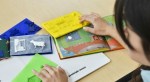
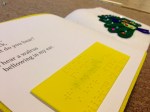
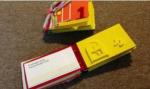
Add Tactile Picture Books to the list of cool things 3-D printers can do. We’ve all experienced picture books with textured patches for itty bitty kiddie hands to graze over while they glance at the pictures and listen to the story. But not everyone has been able to have the same experiences. Until now, visually impaired children were left out of the picture part of picture books.
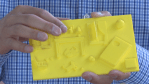
Thanks to the emerging technology of 3-D printing, classic storybooks like Harold and the Purple Crayon, The Very Hungry Caterpillar, and Goodnight Moon have become more accessible. The 2-D pictures in those storybooks have been run through a 3-D printer, resulting in the sculpted scenes pictured above.
Now that the 3-D printed images sit alongside the braille words, visually impaired readers can engage in picture book reading in a whole new way. The future of this technology hopes to put the power in the hands of the parent who would be able to snap a photo of a 2-D page, send it to a printer, and produce their own Tactile Picture Book for their own kids.
Source: NPR
 Holding the Bowl