

I’m gonna use this for adults I know too

Devotional blog dedicated to the Goddess Sigyn offering support to those who are "holding the bowl" within difficult relationships.
If you’re in a down patch, and you’re able to find this, I’ve compiled a list of handy things that have helped me survive the horrible pits of despair with relative ease.
Food
– Stock up on ‘easy’ foods. Canned goods, soups, TV dinners, or other things you can just throw in the oven. It’s absolutely essential that you can still eat, regardless of what you’re putting in your body. You can work on the ‘better’ diet once you’re mentally stable.
– If you’re having trouble with solids because your depression forces you to stop eating, definitely make use of the soups. Broths, especially, can get some nutrients into you without making your stomach feel like it needs to purge.
– If you’re worried about a nutritional deficit, stock up on meal replacement powders or shakes. My go-to is Usana’s Nutrimeal/MySmartShake, that I get from my friend Stacey. They’re filling but not overbearing on the stomach, so when I forget to eat, or stop eating entirely, I’m never worried I’ll be malnourished.
– Have 2-3 blender-style bottles handy, so that making shakes is as seamless as possible.
– If you binge during your low periods, try and keep your water intake as high as possible. That should help force your stomach to shush for a while, and if drinking liquids doesn’t help, I find bananas to be a wonderful source of filling snackery, as well as granola bars. You can also try replacing a drink or two each day with a meal replacement shake, which can help fill the gap and prevent over-eating.
– Tea. Tea tea tea. It doesn’t really matter what kind of tea it is, as long as you find it tasty. There’s something about a warm cup of tea, prepared to perfection, that can at least temporarily get me out of a slump. Herbal infusions, green teas, and white teas are probably ideal, because of the high antioxidant properties and smaller caffeine influence.Daily Structure
– One of the things that destroys me during my down periods is the drop in routine. Keeping a routine is critical for mental stability, because it can prevent rumination and intrusive thoughts.
– No matter how late you wake up, change your clothes. It is so tempting to stay in bed in your PJs all day, but the simple act of changing into a new set of clothes can help wake you up, and assist in basic functions and self-care.
– Spend 10 minutes cleaning. Doesn’t matter what, where, or how you clean, but even something like washing a few plates in the sink has kept me sane and alert. Do something you’ll reasonably enjoy, since that’ll help give your brain the feeling of fulfilment much easier.
– Set alarms. Depression can nuke your sleep schedule something fierce, so having at least two alarms can help remind you when to wake up and go to bed.
– Speaking of bed, find ways to wind yourself down. Read a book, play a casual game on your phone/tablet, do something with your hands if you like (knitting, crochet, sew, Lego, puzzles, etc.) As long as you make sure you’re relaxed and engaged in what you’re doing, you should be able to wind down. I have a side lit e-reader that I use to get me sleepy once I lay down.
– Talk to someone at least once, if you can. If all your friends are busy, download or navigate to 7 Cups of Tea. It’s an app that will connect you to a Listener, and it’s 100% Free. They also have daily progress paths, mental health exercises, and affirmations that can help remind you that you’re valuable.Misc.
– TAKE YOUR MEDS. Set alarms if you have to. Do everything you can to preserve your medication regimen, because if you have meds, keeping that routine stable will help you come back faster.
– Keep tabs on your appointments. When I’m lost in a downward spiral, I will forget literally everything I’m supposed to do. It’s terrible. I’ve started putting my appointments in my phone to make sure I keep them within arm’s reach, and always visible using the widget.
– Stimming/Force Focus. If I’m caught in a panic, I find something soothing to the senses. Fuzzy blanket, cat, dog, plush turtle to snuggle, Lego pieces to fidget with or build to keep my hands busy. Finding something that draws focus is critical for avoiding intrusive thoughts and excessive rumination. I do connect the dot puzzles because they rely on sequential number patterns, and I usually feel better after a small burst of it.
– Keep your support network involved, as best you can. Never feel stupid for reaching out to loved ones when you’re down. If they don’t know you’re hurting, they can’t help you heal. And if it’s not a good time for someone, they’ll tell you. Do not feel like you’re bothering them. If you’re worried about one person being unavailable, send a message to two or three people just to make sure you’ve got backup.I’m running out of ideas right now, but hopefully these are a good start. Feel better, friends. ❤

HALLOWEEN TIPS FOR FAMILIES OF CHILDREN WITH SPECIAL NEEDS
Before You Plan Your Halloween Fun
How to Make a Halloween Costume for a Child with Sensory Integration Dysfunction
Halloween Costumes for Kids in Wheelchairs
How to Make an Emergency Last-Minute Costume
Halloween on a Restricted Diet
Halloween “Trick or Treat” Cards and Sign
Treats Too Tricky? Try Some Sweet Charity
12 Ways to Use Up Halloween Candy
How Do You Celebrate Halloween With a Child With Special Needs?
Halloween With Special Needs: Tell Your Scariest Story
What Do You Do With Leftover Candy?
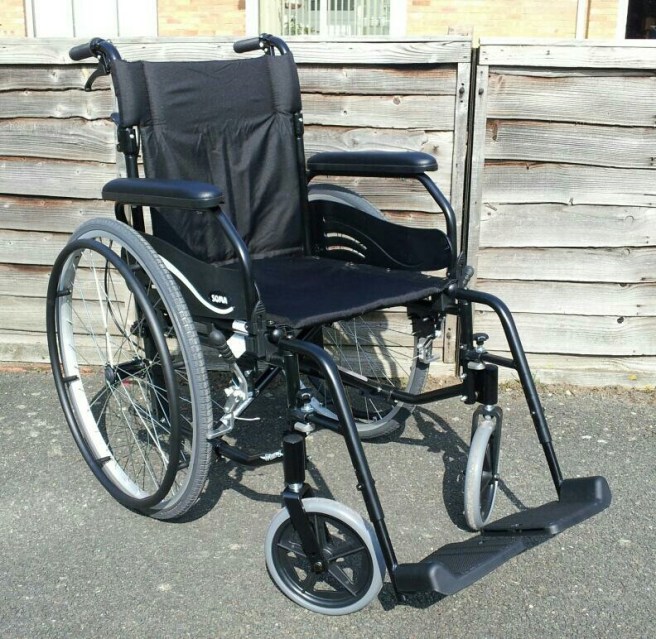
Tips for First Time Wheelchair Pushers
(this is a REBLOG from the awesome and highly recommended Latentexistence blog)
“Today my sister used a wheelchair for the first time. (We share the same inherited mitochondrial condition.) Her husband has little experience of pushing a wheelchair so I tried to give him some tips, which resulted in what I have written below. Believe it or not there is actually some skill involved in pushing a wheelchair and keeping the person in it comfortable. These are just observations from my own experience of being in a wheelchair pushed by someone else, but everyone is different. If you’re pushing a wheelchair for someone new then you should ask them if they have any preferences.
- Communicate. Ask if there’s anything you need to know first. NEVER touch or move a wheelchair without permission.
- Don’t overshoot checkouts and reception desks. If you are level, your passenger has gone too far past it.
- Don’t bump your passenger’s feet into people, objects or walls. Particularly in lifts.
- Don’t follow anyone too closely. (See previous point.) Your passenger is closer to them than you are, and seeing backsides that close gets tedious.
- Watch out for oddly sloping pavements, especially near dropped kerbs. The wheelchair WILL veer sideways into traffic if you are not careful.
- Look ahead for bumps. Dropped kerbs are often not dropped very much. Be prepared to walk a long way around via the road.
- Always approach bumps straight on. If you are not straight, stop and turn first.
- It can be easier to go backwards over bumps if the wheelchair has large wheels.
- Pay attention to the surface you travel over and take the smoother path. Cobbles can be painful or tiring for someone in a wheelchair.
- Don’t let the wheelchair run out of control. Consider taking slopes backwards so you can hold back the wheelchair. CHECK FIRST!
- If your passenger says stop, STOP immediately. (And, indeed, follow other instructions – see comments on original post.)
- Try going through heavy doors backwards so you can push the door with your body.
- Some wheelchairs have brakes operated by the passenger. Never assume that those brakes are on or off, always check.
- If someone speaks to you when they should speak to your passenger, tell them so.
- Be forgiving of your passenger. They have no control and that may make them grumpy. Wheelchair users: be aware that you might be shouting at your assistant more than you realise.
- If you’re pushing a wheelchair very far then you’ll probably want to get some gloves.
Thanks to @knitswift, @chmasu, @missnfranchised, @lisybabe on twitter”
Added tips of my own (my wife and I traveled for 3 months around Australia with a backpack and a manual chair and often use a manual chair on holidays)
– IN ALL CASES DISCUSS THESE TIPS WITH THE WHEELCHAIR USER FIRST –
these might also be considered ‘advanced’
a) If you will be pushing for a while try and get the handles adjusted so they are the correct height for you, it is much better for your back.
b) Make sure the handle grips are secure and are not coming off or unscrewing.
c) Bulky bags hanging off the back can make the pusher ‘stoop’ over them, again not good for the back. Weight on the back can change the likelihood of the chair tipping over. Be aware of the dangers.
d) Leaning the chair back slightly while pushing can make it less bumpy for the passenger and easier to push. This is because inflatable back wheels are smoother than the fixed hard ones at the front suspension-wise. Similarly, tipping back very slightly when you go over bumps, manhole covers etc makes it less jarring
e) It is easier to pull backwards on sand and other less firm surfaces, rather than push. By the sea, get down to the water’s edge where the sand is firm or look for the wooden boarded walkways.
e) If you HAVE to go down steps in a manual chair, you need to be strong and confident. If someone offers to help,
Either: tilt the chair back, get the other person to stand in front of the chair and steady the front wheels. Tell them NOT TO LIFT THE CHAIR at the front. Lifting it is unnecessary and this makes it very hard on your back rather than rolling down one step at a time. Rest or pause after each step.
Or: If you are on your own it is better to go backwards. Take one step at a time and pause between each. Don’t attempt more than 3-4 steps.
Obviously this is dangerous but sometimes it is unavoidable.
f) Going down steep slopes is difficult as you do not want the chair to ‘run away with you’. Go slowly in a ZIG ZAG PATTERN. This makes it less steep and you can turn pause to rest by turning the chair sideways to stop it rolling with gravity. Going backwards is also safer as mentioned above.
g) Keep well clear of the edge of the kerbs, avoid running over grills, glass, look out for mess on the pavement!
h) Get into the habit of always putting the brakes on whenever the chair is stationary.
f) Wear solid footwear with good grips, if you slide so will your companion! Be wary of sandy or stony slopes where you may slip.
g) As well as wheelchair signs, look out for signs aimed at pushchair users. Never use revolving doors at hotels. Ramps and slopes are often at the side of hotels or older buildings.
h) Ask in shops with poor access if they have ramps. Sometimes they have portable ones. Just asking may encourage them to buy one or make changes or mention it to management.
I got so many asks about my chair and style that I thought I’d just make a video about it! I hope you all like it!
no one fucking tells you this so here it is:
when signing out forms to apply for disability / filling out a form for diagnosis
you’re supposed to fill it out as you on your worst days
like, I filled out forms that said I could do most things usually
like, my doctor added in the conditions like “yeah, they can feed themselves when not stressed” “they can do this when not stressed”
but how I should have filled it out was more like
“some days I can’t feed myself” “some days I can’t leave the house”
My doctor didn’t even know this, but I talked to someone who had worked with people with both developmental and intellectual disabilities for a number of years, and she told me to write down how it is for your bad days
this should be a thing they tell you, but it isn’t
part of the reason I didn’t get my autism diagnosis as soon as I should have is because I filled out forms wrong!
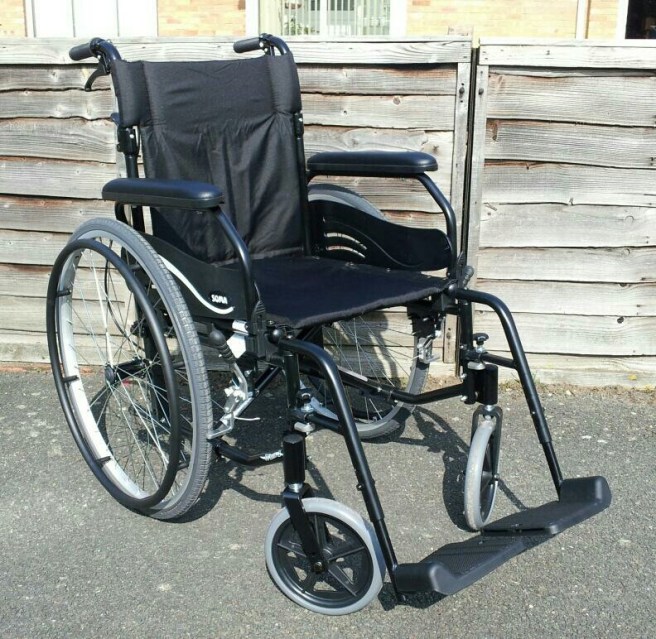
Tips for First Time Wheelchair Pushers
(this is a REBLOG from the awesome and highly recommended Latentexistence blog)
“Today my sister used a wheelchair for the first time. (We share the same inherited mitochondrial condition.) Her husband has little experience of pushing a wheelchair so I tried to give him some tips, which resulted in what I have written below. Believe it or not there is actually some skill involved in pushing a wheelchair and keeping the person in it comfortable. These are just observations from my own experience of being in a wheelchair pushed by someone else, but everyone is different. If you’re pushing a wheelchair for someone new then you should ask them if they have any preferences.
- Communicate. Ask if there’s anything you need to know first. NEVER touch or move a wheelchair without permission.
- Don’t overshoot checkouts and reception desks. If you are level, your passenger has gone too far past it.
- Don’t bump your passenger’s feet into people, objects or walls. Particularly in lifts.
- Don’t follow anyone too closely. (See previous point.) Your passenger is closer to them than you are, and seeing backsides that close gets tedious.
- Watch out for oddly sloping pavements, especially near dropped kerbs. The wheelchair WILL veer sideways into traffic if you are not careful.
- Look ahead for bumps. Dropped kerbs are often not dropped very much. Be prepared to walk a long way around via the road.
- Always approach bumps straight on. If you are not straight, stop and turn first.
- It can be easier to go backwards over bumps if the wheelchair has large wheels.
- Pay attention to the surface you travel over and take the smoother path. Cobbles can be painful or tiring for someone in a wheelchair.
- Don’t let the wheelchair run out of control. Consider taking slopes backwards so you can hold back the wheelchair. CHECK FIRST!
- If your passenger says stop, STOP immediately. (And, indeed, follow other instructions – see comments on original post.)
- Try going through heavy doors backwards so you can push the door with your body.
- Some wheelchairs have brakes operated by the passenger. Never assume that those brakes are on or off, always check.
- If someone speaks to you when they should speak to your passenger, tell them so.
- Be forgiving of your passenger. They have no control and that may make them grumpy. Wheelchair users: be aware that you might be shouting at your assistant more than you realise.
- If you’re pushing a wheelchair very far then you’ll probably want to get some gloves.
Thanks to @knitswift, @chmasu, @missnfranchised, @lisybabe on twitter”
Added tips of my own (my wife and I traveled for 3 months around Australia with a backpack and a manual chair and often use a manual chair on holidays)
– IN ALL CASES DISCUSS THESE TIPS WITH THE WHEELCHAIR USER FIRST –
these might also be considered ‘advanced’
a) If you will be pushing for a while try and get the handles adjusted so they are the correct height for you, it is much better for your back.
b) Make sure the handle grips are secure and are not coming off or unscrewing.
c) Bulky bags hanging off the back can make the pusher ‘stoop’ over them, again not good for the back. Weight on the back can change the likelihood of the chair tipping over. Be aware of the dangers.
d) Leaning the chair back slightly while pushing can make it less bumpy for the passenger and easier to push. This is because inflatable back wheels are smoother than the fixed hard ones at the front suspension-wise. Similarly, tipping back very slightly when you go over bumps, manhole covers etc makes it less jarring
e) It is easier to pull backwards on sand and other less firm surfaces, rather than push. By the sea, get down to the water’s edge where the sand is firm or look for the wooden boarded walkways.
e) If you HAVE to go down steps in a manual chair, you need to be strong and confident. If someone offers to help,
Either: tilt the chair back, get the other person to stand in front of the chair and steady the front wheels. Tell them NOT TO LIFT THE CHAIR at the front. Lifting it is unnecessary and this makes it very hard on your back rather than rolling down one step at a time. Rest or pause after each step.
Or: If you are on your own it is better to go backwards. Take one step at a time and pause between each. Don’t attempt more than 3-4 steps.
Obviously this is dangerous but sometimes it is unavoidable.
f) Going down steep slopes is difficult as you do not want the chair to ‘run away with you’. Go slowly in a ZIG ZAG PATTERN. This makes it less steep and you can turn pause to rest by turning the chair sideways to stop it rolling with gravity. Going backwards is also safer as mentioned above.
g) Keep well clear of the edge of the kerbs, avoid running over grills, glass, look out for mess on the pavement!
h) Get into the habit of always putting the brakes on whenever the chair is stationary.
f) Wear solid footwear with good grips, if you slide so will your companion! Be wary of sandy or stony slopes where you may slip.
g) As well as wheelchair signs, look out for signs aimed at pushchair users. Never use revolving doors at hotels. Ramps and slopes are often at the side of hotels or older buildings.
h) Ask in shops with poor access if they have ramps. Sometimes they have portable ones. Just asking may encourage them to buy one or make changes or mention it to management.
okay if you suffer from anxiety, or depression, or even insomnia, or you just feel shitty all the time, listen up you little shit because what i’m about to say might just help you like nobody’s business
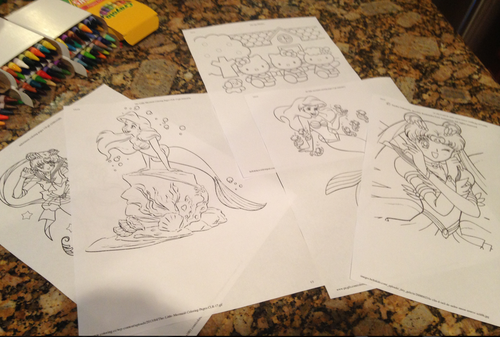
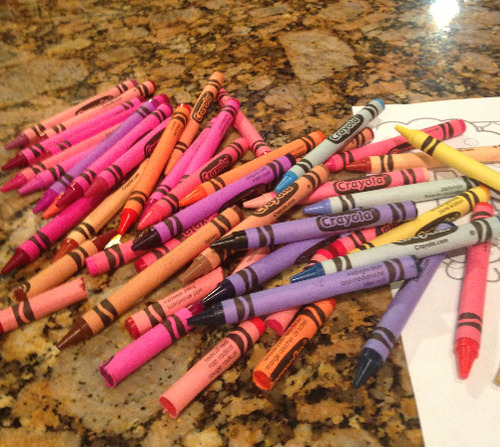
you see these motherfuckers right here? these crayons are like little sticks of wax joy that will never fail to help you in your time of need. these are your buddies right here. You don’t meed a million crayons like me, I just happened to buy these the other day for another project and then loved them so much. any crayons will do.
{colored pencils work too, but you want some crayons because that’s what works the best. don’t ask me why, but you feel 3000% better coloring with crayons than you do with colored pencils or even markers. IT BRINGS BACK THE CHILDHOOD INNOCENCE OR SOME SHIT LIKE THAT}
tl;dr just get some crayons i don’t even care what brand if you want to be a disgusting little shit go ahead and buy RoseArt you just need crayons.
okay, so it’s really simple. you just color. if you have a coloring book, awesome. if you don’t, look up some stuff on google and print it. get stuff that makes you happy, like your favorite disney princess or cartoon character. just type in something like “little mermaid coloring pages" and you’re good to go
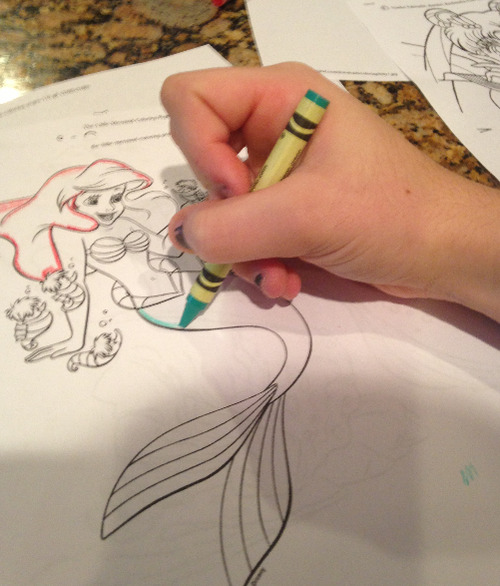
now, here’s the best part. grab a crayon and just fucking go for it. don’t even think about anything else, just focus on coloring the picture however you want it to be and don’t stop until you’re completely satisfied with it. when you’re done with that one, color another one.
i promise, by the time you’ve finished coloring to your heart’s content, you’ll feel so much better. i have no idea why it happens, but coloring with crayons just lifts your stress away, even for a little bit. keep some blank coloring pages on hand and your box of crayons close to you for easy access should you really need it one day.
pro tip: when coloring, spill your crayons out
just take your time and spill all of them out from the box and then like run your hands over them and kinda mess the pile up because that shit is the most orgasmic feeling in the world i don’t know why but it just is
okay, i hope this helps. and if anyone looks at you funny or says that you’re too old to color with crayons, don’t get angry just pity them because they think that there’s an age limit to happiness and they obviously don’t remember how awesome it is to color so just offer them a crayon and if they don’t take it, well, sucks to suck
bringing this back because it’s the only thing that’s gotten me through this summer
Literally this is one of the most helpful things for me
Yep. This works for me, and worked really well with many of my clients when I did social work.
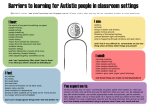
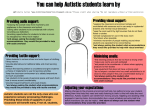
These images are meant for teachers, to help them understand the sensory issues that their autistic students may be dealing with, and to give them tips on helping their students manage these issues in the classroom. However, I think these could also be useful if you need to explain your sensory issues to other people, and to give them tips on how they can help you in general.
Please click the images to see them better.
(Source)
Liesel, Mod.

 Holding the Bowl