uie:
US Helplines:
- Depression Hotline: 1-630-482-9696
- Suicide Hotline: 1-800-784-8433
- LifeLine: 1-800-273-8255
- Trevor Project: 1-866-488-7386
- Sexuality Support: 1-800-246-7743
- Eating Disorders Hotline: 1-847-831-3438
- Rape and Sexual Assault: 1-800-656-4673
- Grief Support: 1-650-321-5272
- Runaway: 1-800-843-5200, 1-800-843-5678, 1-800-621-4000
- Exhale: After Abortion Hotline/Pro-Voice: 1-866-4394253
- Child Abuse: 1-800-422-4453
UK Helplines:
- Samaritans (for any problem): 08457909090 e-mail jo@samaritans.org
- Childline (for anyone under 18 with any problem): 08001111
- Mind infoline (mental health information): 0300 123 3393 e-mail: info@mind.org.uk
- Mind legal advice (for people who need mental-health related legal advice): 0300 466 6463 legal@mind.org.uk
- b-eat eating disorder support: 0845 634 14 14 (only open Mon-Fri 10.30am-8.30pm and Saturday 1pm-4.30pm) e-mail: help@b-eat.co.uk
- b-eat youthline (for under 25’s with eating disorders): 08456347650 (open Mon-Fri 4.30pm – 8.30pm, Saturday 1pm-4.30pm)
- Cruse Bereavement Care: 08444779400 e-mail: helpline@cruse.org.uk
- Frank (information and advice on drugs): 0800776600
- Drinkline: 0800 9178282
- Rape Crisis England & Wales: 0808 802 9999 1(open 2 – 2.30pm 7 – 9.30pm) e-mail info@rapecrisis.org.uk
- Rape Crisis Scotland: 08088 01 03 02 every day, 6pm to midnight
- India Self Harm Hotline: 00 08001006614
- India Suicide Helpline: 022-27546669
- Kids Help Phone (Canada): 1-800-668-6868
FREE 24/7 suicide hotlines:
- Argentina: 54-0223-493-0430
- Australia: 13-11-14
- Austria: 01-713-3374
- Barbados: 429-9999
- Belgium: 106
- Botswana: 391-1270
- Brazil: 21-233-9191
- China: 852-2382-0000
- (Hong Kong: 2389-2222)
- Costa Rica: 606-253-5439
- Croatia: 01-4833-888
- Cyprus: 357-77-77-72-67
- Czech Republic: 222-580-697, 476-701-908
- Denmark: 70-201-201
- Egypt: 762-1602
- Estonia: 6-558-088
- Finland: 040-5032199
- France: 01-45-39-4000
- Germany: 0800-181-0721
- Greece: 1018
- Guatemala: 502-234-1239
- Holland: 0900-0767
- Honduras: 504-237-3623
- Hungary: 06-80-820-111
- Iceland: 44-0-8457-90-90-90
- Israel: 09-8892333
- Italy: 06-705-4444
- Japan: 3-5286-9090
- Latvia: 6722-2922, 2772-2292
- Malaysia: 03-756-8144
- (Singapore: 1-800-221-4444)
- Mexico: 525-510-2550
- Netherlands: 0900-0767
- New Zealand: 4-473-9739
- New Guinea: 675-326-0011
- Nicaragua: 505-268-6171
- Norway: 47-815-33-300
- Philippines: 02-896-9191
- Poland: 52-70-000
- Portugal: 239-72-10-10
- Russia: 8-20-222-82-10
- Spain: 91-459-00-50
- South Africa: 0861-322-322
- South Korea: 2-715-8600
- Sweden: 031-711-2400
- Switzerland: 143
- Taiwan: 0800-788-995
- Thailand: 02-249-9977
- Trinidad and Tobago: 868-645-2800
- Ukraine: 0487-327715
(Source)
ALWAYS REBLOG WHEN YOU SEE SOMETHING LIKE THIS PLEASE; ITS SO MUCH MORE THAN IMPORTANT TO PEOPLE. IT MEANS EVERYTHING TO SOMEBODY AND EVEN THOUGH YOU MIGHT NOT SEE THIS IN THE SAME LIGHT, SOMEONE MIGHT. INFACT YOU REBLOGGING THIS COULD STOP SOMEONE TAKING THEIR LIFE TONIGHT.
Seriously thank you.
Please reblog. I love every single one of you. You’re not alone.

Tag: suicide
Sometimes the help you need isn’t the help you want. Call 1-800-273-8255 if you’re thinking of suicide.
This comic meant a whole lot to me. It was sincere in its depiction and treated the issue through the eyes of a grounded person. Not some godly hero saying everything is better than it seems, but a person trying his best before bringing her somewhere who can actually help.
Robin Williams’ widow opens up about his suicide: “It was not depression that killed Robin”
Susan Williams spoke to Good Morning America about her husband’s struggles with Lewy Body Dementia
Robin Williams’ widow opens up about his suicide: “It was not depression that killed Robin”

Spread awareness.
Never give up.
You are worthy and you are loved, by me and the universe

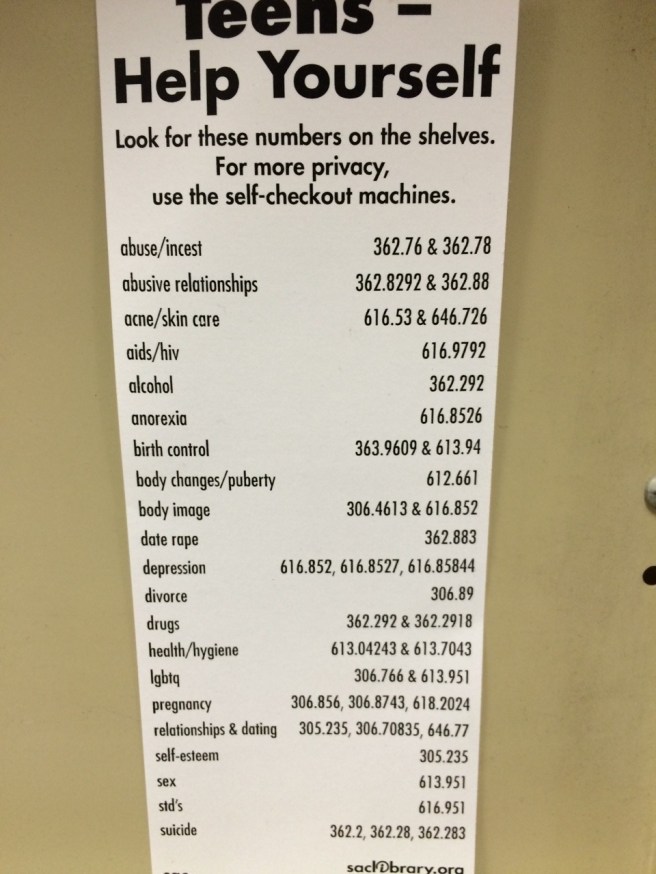
Really happy to see this at my local library
OOOOH. *happy YA librarian dance*
I want this in every library, everywhere. After all, some kids won’t even google this stuff because they don’t want parents/siblings checking their browser history.

Mental health disorders are common in the United States, affecting tens of millions of Americans each year, according to the National Institute of Mental Health. Yet only a fraction of those people receive treatment. Without treatment, mental health disorders can reach a crisis point.
Some examples of mental health crises include depression, trauma, eating disorders, alcohol or substance abuse, self-injury and suicidal thoughts. If you suspect a friend or family member is experiencing an emotional crisis, your help can make a difference.
Spotting the Signs
One of the most common signs of emotional crisis is a clear and abrupt change in behavior. Some examples include:
- Neglect of personal hygiene.
- Dramatic change in sleep habits, such a sleeping more often or not sleeping well.
- Weight gain or loss.
- Decline in performance at work or school.
- Pronounced changes in mood, such as irritability, anger, anxiety or sadness.
- Withdrawal from routine activities and relationships.
Sometimes, these changes happen suddenly and obviously. Events such as a natural disaster or the loss of a job can bring on a crisis in a short period of time. Often, though, behavior changes come about gradually. If something doesn’t seem right with your loved one, think back over the past few weeks or months to consider signs of change.
Don’t wait to bring up your concerns. It’s always better to intervene early, before your loved one’s emotional distress becomes an emergency situation. If you have a feeling that something is wrong, you’re probably right.
Lend an Ear
If you suspect your loved one is experiencing a mental health crisis, reaching out is the first step to providing the help he or she needs to get better. Sit down to talk in a supportive, non-judgmental way. You might start the conversation with a casual invitation: “Let’s talk. You don’t seem like yourself lately. Is there something going on?”
Stay calm, and do more listening than talking. Show your loved one that you can be trusted to lend an ear and give support without passing judgment. When discussing your concerns, stick to the facts and try not to blame or criticize.
Seek Professional Help
Reaching out can help your friend or family member begin to get a handle on an emotional crisis. But professional help is the best way to fully address a mental health problem and get that problem under control. You can explain that psychologists have specialized training that makes them experts in understanding and treating complex emotional and behavioral problems. That training is especially critical when an emotional disorder has reached crisis levels.
Psychologists use scientifically tested techniques that go beyond talking and listening. They can teach their clients tools and skills for dealing with problems, managing stress and working toward goals.
To help your loved one find a psychologist to speak with, you might encourage your loved one to speak to his or her primary care provider about available mental health resources in your community. If your workplace has an employee assistance program (EAP), that can be a useful resource and referral service. You can also find a psychologist in your area by using APA’sPsychologist Locator Service.
Concerns About Suicide or Self-Harm or Threats to Harm Others
No emotional crisis is more urgent than suicidal thoughts and behavior, or threats to harm someone else. If you suspect a loved one is considering self-harm or suicide, don’t wait to intervene.
It’s a difficult topic to bring up, but discussing suicide will not put the idea in someone’s head. In fact, it’s not abnormal for a person to have briefly thought about suicide. It becomes abnormal when someone starts to see suicide as the only solution to his or her problems.
If you discover or suspect that your loved one is dwelling on thoughts of self-harm, or developing a plan, it’s an emergency. If possible, take him or her to the emergency room for urgent attention. Medical staff in the ER can help you deal with the crisis and keep your loved one safe.
If you think someone is suicidal or will harm someone else, do not leave him or her alone. If he or she will not seek help or call 911, eliminate access to firearms or other potential tools for harm to self or others, including unsupervised access to medications.
The National Suicide Prevention Lifeline is also a valuable resource. If you’re concerned about a loved one’s mental state or personal safety, and unable to take him or her to the emergency room, you can talk to a skilled counselor by calling 1-800-273-TALK.
If you’re concerned about a loved one, don’t put it off. You can make the difference in helping your friend or family member get back on track to good mental health.
Think for a second
Imagine with me.
You’re an athlete. You’re gearing up to run the next 5k in your town.
You get there, and your number’s on your chest just like everyone else. You’re at the starting line, just like everyone else.
Bam, off goes the start signal.
Suddenly, you feel a little funny. Everyone else around you is gaining a lead they shouldn’t otherwise gain. Even the little old lady who does this for fun is now almost 50 feet in front of you.
But you keep pushing, right? You’re bound to catch back up, you’re an ATHLETE.
You pump as much of your strength as you can into your legs. You’re using what feels like every ounce of effort you have in you to just get your legs moving. All the while, that lead that everyone has on you is getting bigger and bigger…
People are suddenly farther and farther away…
You keep going You have no choice. You’ve GOT to finish. And you do.
But that’s when you collapse from exhaustion. Everyone around you is looking at you now, very concerned, wondering what could possibly have gone wrong, you were fine yesterday. You looked fine even the whole time you were running! What could POSSIBLY have happened?!
You can fill in the blanks with any invisible malady you like: heart problems, asthma, fibromyalgia, sciatica, what have you. But it’s SOMETHING that nobody can see. It’s something even YOU didn’t see.
Welcome to mental illness.
EVERY DAY is that 5k. Waking up in the morning is the start signal going off, and no matter how much energy we could put into something as simple as making breakfast, suddenly everyone else around us has their day’s tasks half way done and we’re still standing in the kitchen choosing eggs or bacon as though our lives depended on it. And sometimes, it does.
Eating is a chore. Standing up is basically like asking us to climb a mountain. Taking care of ourselves is tiring. Let alone taking care of someone else, if we need to.
That collapse at the finish line of the day could be a panic attack, it could be a fit of tears, it could be the mounting and exploding feeling that you’re a failure, you’re worthless, why do you even bother. It could even be an angry and persistent suggestion that you should just kill yourself so you’re not wasting space.
And let’s not forget, we didn’t do this to ourselves. We couldn’t have predicted this, we aren’t just sitting there asking for people to pamper us, in fact sometimes that makes us feel WORSE.
And at the end of the day, quite possibly the best thing you could do is hold us, tell us it’ll be okay, and just listen.
Most often, there’s no rhyme or reason to our thoughts. I was a straight A student for a long time and if I got less than 80% on ONE test, I flipped out and resigned myself to failure. But anyone else would’ve been like ‘Sweet, I passed!’ People tell me I’m doing well at work, and I’ll just focus on that one mistake I made two weeks ago and oh well, I’ll get fired tomorrow.
We DO NOT DO THIS ON PURPOSE. And it’s not as easy as saying ‘Oh just stop being so hard on yourself.’ That’d be like asking your athlete self to just grow some new lungs/muscles/heart valves and you’ll be fine.
We know you want to help. ❤ And most of us appreciate it SO MUCH, OMG THANK YOU. But sometimes, cuddles, blanket forts and movie binges are enough to keep us going. We don’t need to talk or reason things out all the time.
My daughter, who lost her battle with mental illness, is still the bravest person I know
My daughter lived more than six years with an incurable disease that filled her head with devils that literally hounded her to death, and she did it while laughing, painting, writing poetry, advocating and bringing joy to the people around her. She was the bravest person I have ever known, and her suicide doesn’t change that…
My daughter, who lost her battle with mental illness, is still the bravest person I know

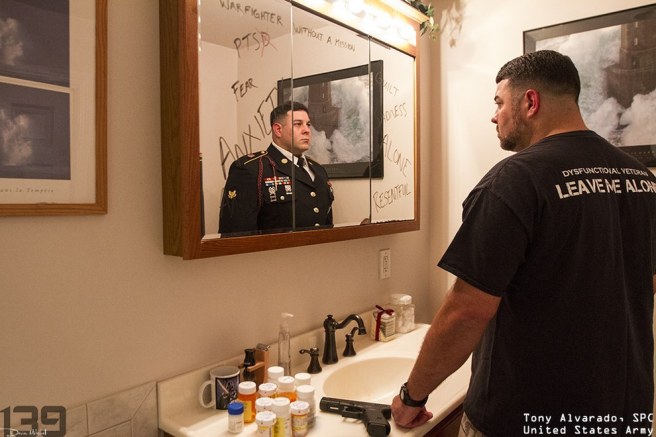
This Jarring Photo Series Captures What PTSD Really Looks Like
A recent study showed that roughly 22 U.S. veterans commit suicide every day — about one every 65 minutes. Photographer Devin Mitchell shared his five newest photos on the subject of suicide exclusively with BuzzFeed News.