More hearing people should learn some sign language so here are some actually useful signs for us hearing people to learn.

Devotional blog dedicated to the Goddess Sigyn offering support to those who are "holding the bowl" within difficult relationships.
More hearing people should learn some sign language so here are some actually useful signs for us hearing people to learn.
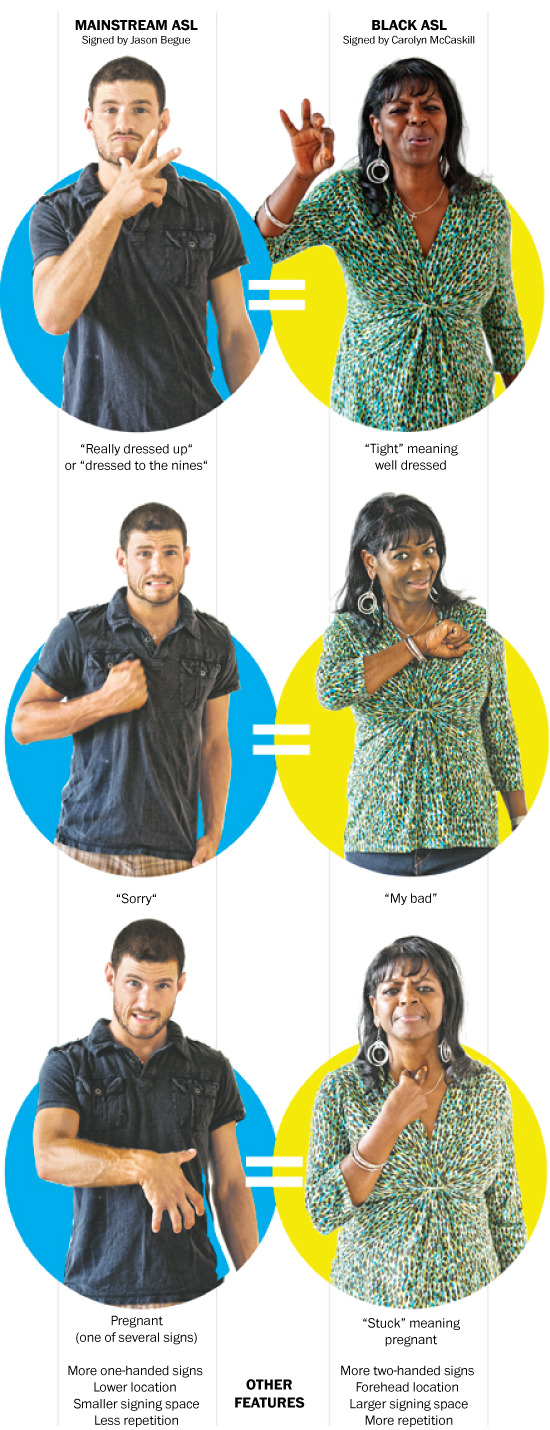
Reader Chris passes along an article about differences in American Sign Language usage between white and African-American signers. Researchers investigating what they call Black ASL found significant variations in signs, signing space, and facial cues. They explain:
Black ASL is not just a slang form of signing. Instead, think of the two signing systems as comparable to American and British English: similar but with differences that follow regular patterns and a lot of variation in individual usage.
They hypothesize that these differences began in segregated learning environments, and continue to evolve in Black social spaces. The whole article is worth a read.
Thanks, Chris, and remember — you can submit Wonk-worthy links through our ask or via email!
ETA, 9/24/12: Many of you have brought up the use of the word “mainstream” in this infographic. Better choices definitely exist, since this word rings of othering. We appreciate your nuanced and attentive readership!
Black folks got they own vernacular in asl also. You learn something new everyday.
whoa, that’s awesome!


Don’t leave out any hard of hearing children who come to your door this Halloween, take a minute out of your day to learn a few seasonal asl signs!
These are two different variations of “Happy Halloween”
Click here for my source.
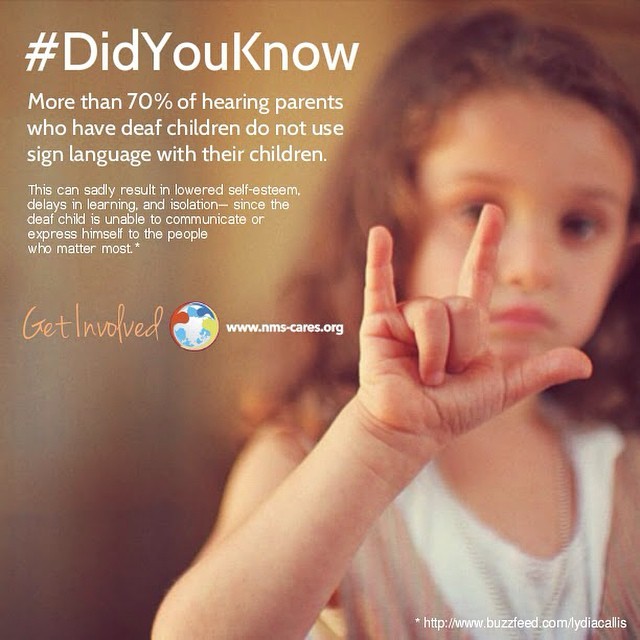
#DidYouKnow #Deaf #DeafAwareness #education #SignLanguage #advocacy #NMSCares
This is actually sadly relevant. I had a lecture this summer about sign languages and Deaf culture and when I was finished, one hearing girl from the audience stayed behind to ask me some more question.
She asked me: “And your parents use sign language, right?” Like it was the most obvious thing in the world and why is she even asking this, of course my parents must know sign language.
“No… They don’t, actually.”
“And how do you communicate, then?”
“Talking?”
“But… isn’t that complicated for you?”
“It is, sometimes.”
“They probably didn’t have time for it…” she said. And I haven’t the heart to tell her that my father was offered sign language courses several times, that I offered to teach them some signs and that they always refused.
But I did told her: “It is not that rare. Most of deaf people I know have hearing parents who don’t sign.”
It’s the sad truth. People are willing to pay for surgeries to “repair” their children, but they are not willing to learn something to communicate with them.
i’d like to add onto this with my own personal experience, too. i was born hearing, but as soon as i was diagnosed as HoH, my parents didn’t do anything to learn ASL. they were quick to put me in classes, but they wouldn’t when i suggested to them that they take the classes with me so that we could learn.
i’ve tried to teach my mom how to sign numerous times, but she always says that “you can’t teach an old dog new tricks,” to which i tell her that she can learn, she just doesn’t want to. which is true. neither of my parents want to learn how to sign, but they want me to be able to hear perfectly so they don’t have to repeat themselves.
little do they know that their frustration with me not being able to hear them would be solved if they would just learn how to sign. maybe signing something to me once instead of repeating themselves four times and then getting mad would be more beneficial.
I’m absolutely shocked at this, it’s never crossed my mind that many parents wouldn’t even try to meet their hard of hearing kids halfway.
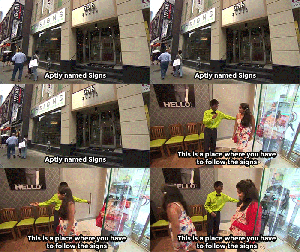
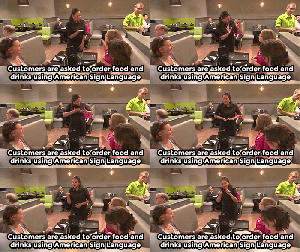
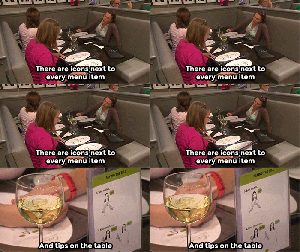

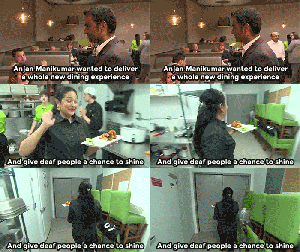
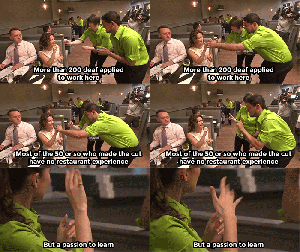
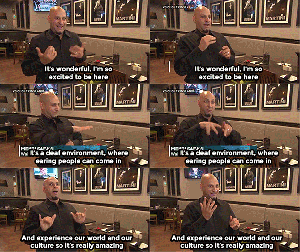
!!!! This is awesome
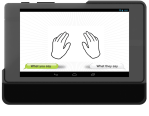
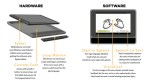


To any Tumblrites who are deaf, hard of hearing, know people who are, or just enjoy cool tech, a start-up called MotionSavvy is working on technology that uses Leap Motion to recognize sign language and and outputs written or spoken English. The project was started by a group of deaf students at RIT’s National Technical Institute for the Deaf (yay RIT!) who moved to San Francisco to develop the product with Leap.
The team has over 800 deaf beta testers, but they are looking for more. They hope to have a product available to consumers by September of 2015.
For more information, check out this TechCrunch article and this video.
 Holding the Bowl