
Hey if you’re schizophrenic/psychotic I just want you to know that you’re a wonderful person and that you deserve so much better than the demonization, marginalization and stigmatization you face in this society.
Please consider reblogging this/other positivity posts for schizophrenic/psychotic people every once in a while. If you have more than 100 followers, odds are that a couple of them experiences psychosis and that they rarely see positivity posts for people with their symptoms.
Tag: schizophrenia
Busting Schizophrenia Myths!
- “Aren’t schizophrenic people dangerous-” No. Violence towards other people isn’t a symptom of schizophrenia, nor is it common in schizophrenic people. That’s not to say that no one with schizophrenia has ever been violent because of their psychosis, but it isn’t a symptom of or in the diagnostic criteria for the illness, and schizophrenic people in general are no more likely to be violent than anyone else.
- “Isn’t that when you have multiple personalities-” No. Schizophrenia isn’t about having multiple personalities – that’s called Dissociative Identity Disorder and is a completely different mental illness. Schizophrenic people might hear one or more voices in their heads and may feel like their actions or thoughts are being controlled by other people/outside forces, but this isn’t the same as having several personalities as it’s always the schizophrenic persons own personality which reacts to these distressing experiences.
- “Isn’t schizophrenia when you’re psychotic like when you hear voices and stuff-” Yes, but schizophrenia isn’t “just” about experiencing psychosis (hallucinations, disorganized thinking/speech/behavior and delusions), it also consists of what’s called negative symptoms (lack of energy, lack of motivation, social isolation, lacking or inappropriate emotional responses, lack of ability to feel pleasure) and cognitive symptoms (impaired memory, impaired concentration, learning difficulties, executive dysfunction and impaired working memory). Schizophrenia is a complex mental illness and psychosis is only 1/3 of what schizophrenic people struggle with.
- “You can’t recover from schizophrenia, right-” Not true. 25% of the people diagnosed with schizophrenia are symptom free within 5-10 years of being diagnosed with the illness and up to 80% improve with ongoing treatment and support. Schizophrenia isn’t necessarily a life sentence, and while you can’t EXPECT to recover from schizophrenia and while there’s no known cure, recovery is possible for many people with the right treatment.
- “Shouldn’t schizophrenic people be locked up-” No. Schizophrenic people are people just like everyone else, and we have the right to the same human rights and the same freedom as other people. We might need to be hospitalized for our own safety sometimes, but we have as much of a right to be a part of and interact with society as everyone else.
- “Real schizophrenic people don’t know they’re sick, right-” Some don’t, but at least 45% of schizophrenics are aware that they’re suffering from schizophrenia, so a person being aware that they’re schizophrenic and having insight into their illness/knowing that what they’re experiencing isn’t real or normal isn’t a sign that they aren’t really sick.
- “What if schizophrenic people just have special powers-” I’m not going to deny you your right to your spiritual beliefs, but I’m going to insist that you don’t force them onto me or any other schizophrenic person. Just like I’m not gonna show up at a Christians door saying that God isn’t real just because I’m an atheist, you don’t get to tell a schizophrenic person that they can see into other dimensions or talk to spirits. You risk triggering or worsening our illness by sharing your spiritual or religious speculations, so don’t bring them up. Ever.
- “Aren’t schizophrenic people dangerous if they don’t take their meds-” No. Anti psychotic meds are heavy medication that impacts your life in many ways, and taking them should always be a free choice. Some people would rather live with their psychosis than take anti psychotic medication, and this doesn’t automatically make them a danger to anyone.
I would really appreciate if non schizophrenic people would consider boosting this post as schizophrenia is a very misunderstood and stigmatized mental illness and I want this post to show up on as many dashes as possible.
Magnum Opus
Kristen Bell is one of the most recent stars to push past stigma and declare her depression and anxiety worth talking about.
And for that, I am thrilled.
It means that once again, there is another person, who seems so ‘normal,’ finally showcasing that, HELLO THERE, this is a real thing. And it knows no boundaries.
As a person who has had mental health issues for quite some time, diagnosed or not, I can basically agree 100% with this. And I wish, I wish, with all my might, that between her efforts and mine, and the efforts of all those other anxious or depressed souls out there, we can finally feel alive.
I want the anxious Plain Janes with no ‘big’ accomplishments to stand up with me, and say ‘I’m still here despite it all.’
I want the hard-working and depressed people to stand up with us, and declare ‘This isn’t shameful.’
I want my bipolar friends who fight internal demons to rally and shout ‘We’re people, too.’
I want my schizophrenic sisters and brothers to get together and yell from the rooftops that ‘We’re MORE than medication.’
Because we are.
We are MORE than this. We are MORE than medication, therapy, and doctor’s visits.
If you know a person in your life with a mental illness (I guarantee you do,) I want you to challenge yourself. Don’t get overwhelmed, but spend some time with them. Get to know their demons, and what they fight with every day. The things that make them struggle. The thoughts they have against their own selves.
I know from personal experience that just going to a counsellor doesn’t cut it. I need time to process my feelings, work through them, and count my victories. Sometimes that means someone points them out for me. Sometimes that means someone has to tell me over a dozen times a day that I am special. That I am okay. That I am loved, wanted, insert-positive-adjective-here. Sometimes that means that I need to just tell someone, anyone, that despite it all, it’s hard to live. I feel lonely. I feel afraid. I feel weak.
I can’t even hold back the tears coming down my face anymore. I’m so scared. But I’m doing this anyway, like I’ve done for the past year or more. (When did I start this, again?)
I am done hiding. I don’t want to hide anymore. If you still need space, though, take it. I’ll be a sounding board for anyone who’s struggling, because I’ve been there. I might not know how your story is going, but I will be a post to lean on if you need me.
We’re in this together, no matter how alone we feel.
hey did you know its almost schizophrenia spectrum awareness week (may 17-23)
(edited 22 oct 2015 to make the post easier to read)
i did my best to pretty this post up and cover everything but feel free to add or edit shit if you think i missed something
the szphrenia spectrum includes
- schizophrenia
where you have some positive symptoms (shit like hallucinations, delusions, disordered thinking) and some negative symptoms (memory loss, lack of expression, lack of emotion, loss of motivation/pleasure and lots others) or catatonia. some szphrenics might have more psychotic symptoms, others more thought disorder symptoms, and still more can be mostly catatonic, but it can be a mix toojust a quick tangent, catatonia is a kind of behaviour / motor abnormality and it can involve immobility, unresponsiveness, mutism, staying in uncomfortable positions for long periods of time, echolalia or echopraxia (copying movements), repetitive movements, and a lot more
- schizophreniform disorder
pretty much the same except the symptoms onset way faster and havent lasted for more than a month. some people recover and others develop szphrenia from it anyway- schizoaffective disorder
when you meet criterion a for schizophrenia in the dsm-v, which is to say you have hallucinations or delusions plus negative symptoms, disorganized behaviour or catatonia, and also have mood episodes- cluster a personality disorders
-schizoid
disinclined to socializing and connecting with people. emotions are directed inward but arent really driven to share them intimately with anyone but an exceptional few for some. may have blunted affect or be apathetic-schizotypal
unusual thought and speech, or odd experiences with / perceptions of reality. can have blunted affect. might prefer solitude and be suspicious of people. avoids having close friends and has social anxiety or paranoia. usually assign some greater meaning to coincidences or feel they are magic or psychic in a way (but not caused by “delusions” or a religion)-paranoid
suspicious of other peoples motives. is hypervigilant, holds grudges, or is quick to react to perceived betrayal. usually are doubtful of whether people are really loyal to them and they read hidden meanings into thingssome mythbusting and misc shit to know
- sch*zo is not a casual adjective, dont use it if youre not szphrenic
- be critical of stuff that uses psychosis- and szphrenic-coded tropes for laughs or an evil effect
(a really common gimmick is someone talking out loud at voices in their head)- we are not obligated to call our experiences hallucinations or delusions, whether or not were “delusional” isnt a reliable hallmark of our mental health
- a lot of us have mixed up speech and it can be really hard for us to talk. as long as you can understand us dont point it out and dont make fun of it
- (medication cw and doctors cw)
dont tell us we should be on meds or seeing a doctor. antipsychotics are a fucking huge gray area with whether they actually help or hurt more and most doctors have a very stereotyped understanding of the szphrenia spectrum
(end cw)- dont force us out of our reality (“you dont actually have magic powers” “youre just anxious”)
- some of us get violent impulses and thats ok
- some of us are just straight up not into socializing dont try to “get us out of the house”
- sometimes we laugh or cry out of nowhere or are really blunt. sometimes we talk out loud to voices or say shit that doesnt make sense or mutter to ourselves or sit in weird positions. sometimes we do stereotypical things and its not weird or creepy
resources and other cool goodies
- diagnosis checklists (psychosis, schizoid, schizotypal, paranoid) theyre also making ones for szphrenia and schizoaffective and catatonia
- the dsm 5 on google docs
if you need me to clear anything up or are curious about something re: szphrenia spectrum my inbox is always open
tyvm for reading and please reblog to spread info about a spectrum of mental illnesses that are way too often just dust in the wind
so i keep seeing these mental illness support posts all over tumblr but i never see any for the “scary” illnesses
im here for the schizophrenics, paranoid and otherwise
im here for the bipolar people, especially those who are rapid cycling (believe me, i know how much it sucks)
im here for the people with borderline personality disorder who are constantly wondering if theyre being abusive
im here for the addicts
the people who dissociate
the people who have trouble telling whats real
the people whose minds are too scary to get their own support posts on tumblr
im here for you all
we’re not as scary as we’re told we are
Schizophrenia Revealed To Be 8 Genetically Distinct Disorders








Although Reid makes it personal, there’s still an important message here that shows Dr. Reid knows what’s up re: schizophrenia and violence
Fun fact: schizophrenics are literally less likely to commit an act of violence than someone who doesn’t experience mental illness.
We are however significantly more likely to be victims of abuse, addiction, poverty, and suicide.
Schizophrenics don’t need the media constantly telling people we’re a time bomb. We need help and patience. And hugs. And maybe some ice cream.
Reblogging because the ‘fun fact’ is both true and important for everyone to know.
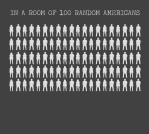
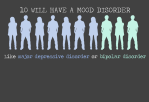

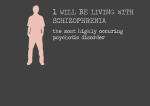
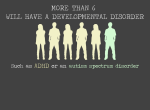
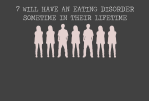

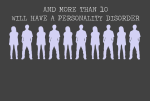
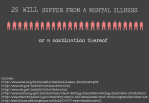
This makes me happy with the awareness.
Some of these cross over. It’s not unheard of for people to have multiple disorders or for people with other disorders to become depressed.
Halting Schizophrenia Before It Starts
Schizophrenia typically starts in the late teens or early 20s. But if you could stop that first psychotic break, could you stop the mental illness in its tracks? Some doctors think so.

Mind and body: Scientists identify immune system link to mental illness
Children with high everyday levels of a protein released into the blood in response to infection are at greater risk of developing depression and psychosis in adulthood, according to new research which suggests a role for the immune system in mental illness.
The study, published today in JAMA Psychiatry, indicates that mental illness and chronic physical illness such as coronary heart disease and type 2 diabetes may share common biological mechanisms.
When we are exposed to an infection, for example influenza or a stomach bug, our immune system fights back to control and remove the infection. During this process, immune cells flood the blood stream with proteins such as interleukin-6 (IL-6), a tell-tale marker of infection. However, even when we are healthy, our bodies carry trace levels of these proteins – known as ‘inflammatory markers’ – which rise exponentially in response to infection.
Now, researchers have carried out the first ever longitudinal study – a study that follows the same cohort of people over a long period of time – to examine the link between these markers in childhood and subsequent mental illness.
A team of scientists led by the University of Cambridge studied a sample of 4,500 individuals from the Avon Longitudinal Study of Parents and Children – also known as Children of the 90s – taking blood samples at age 9 and following up at age 18 to see if they had experienced episodes of depression or psychosis. The team divided the individuals into three groups, depending on whether their everyday levels of IL-6 were low, medium or high. They found that those children in the ‘high’ group were nearly two times more likely to have experienced depression or psychosis than those in the ‘low’ group.
Dr Golam Khandaker from the Department of Psychiatry at the University of Cambridge, who led the study, says: “Our immune system acts like a thermostat, turned down low most of the time, but cranked up when we have an infection. In some people, the thermostat is always set slightly higher, behaving as if they have a persistent low level infection – these people appear to be at a higher risk of developing depression and psychosis. It’s too early to say whether this association is causal, and we are carrying out additional studies to examine this association further.”
The research indicates that chronic physical illness such as coronary heart disease and type 2 diabetes may share a common mechanism with mental illness. People with depression and schizophrenia are known to have a much higher risk of developing heart disease and diabetes, and elevated levels of IL-6 have previously been shown to increase the risk of heart disease and type 2 diabetes.
Professor Peter Jones, Head of the Department of Psychiatry and senior author of the study, says: “Inflammation may be a common mechanism that influences both our physical and mental health. It is possible that early life adversity and stress lead to persistent increase in levels of IL-6 and other inflammatory markers in our body, which, in turn, increase the risk of a number of chronic physical and mental illness.”
Indeed, low birth weight, a marker of impaired foetal development, is associated with increased everyday levels of inflammatory markers as well as greater risks of heart disease, diabetes, depression and schizophrenia in adults.
This potential common mechanism could help explain why physical exercise and diet, classic ways of reducing risk of heart disease, for example, are also thought to improve mood and help depression. The group is now planning additional studies to confirm whether inflammation is a common link between chronic physical and mental illness.
The research also hints at interesting ways of potentially treating illnesses such as depression: anti-inflammatory drugs. Treatment with anti-inflammatory agents leads to levels of inflammatory markers falling to normal. Previous research has suggested that anti-inflammatory drugs such as aspirin used in conjunction with antipsychotic treatments may be more effective than just the antipsychotics themselves. A multicentre trial is currently underway, into whether the antibiotic minocycline, used for the treatment of acne, can be used to treat lack of enjoyment, social withdrawal, apathy and other so called negative symptoms in schizophrenia. Minocycline is able to penetrate the ‘blood-brain barrier’, a highly selective permeability barrier which protects the central nervous system from potentially harmful substances circulating in our blood.
The ‘blood-brain barrier’ is also at the centre of a potential puzzle raised by research such as today’s research: how can the immune system have an effect in the brain when many inflammatory markers and antibodies cannot penetrate this barrier? Studies in mice suggest that the answer may lie in the vagus nerve, which connects the brain to the abdomen. When activated by inflammatory markers in the gut, it sends a signal to the brain, where immune cells produce proteins such as IL-6, leading to increased metabolism (and hence decreased levels) of the ‘happiness hormone’ serotonin in the brain. Similarly, the signals trigger an increase in toxic chemicals such as nitric oxide, quinolonic acid, and kynurenic acid, which are bad for the functioning of nerve cells.
makes me wonder…
 Holding the Bowl