Alcoholism is when your drinking causes serious problems in your life, yet you keep drinking. You also may have a physical dependence on alcohol. This means that you need more and more alcohol to feel drunk. Stopping suddenly may cause withdrawal symptoms.

Alcohol abuse is when your drinking leads to problems, but you are not physically dependent on alcohol. These problems may occur:

  • At work, school, or home
  • In your personal relationships
  • With the law
  • From using alcohol in dangerous situations, such as drinking and driving

If you have a drinking problem, you may:

  • Continue to drink, even when your health, work, or family are being harmed
  • Drink alone
  • Become stirred up, excited, or tense when drinking
  • Become hostile when asked about your drinking
  • Make excuses to drink
  • Miss work or school, or don’t perform as well because of drinking
  • Stop taking part in activities you enjoy because of alcohol
  • Need to use alcohol on most days to get through the day
  • Don’t eat a lot or eat poorly
  • Not care about how you dress or if you are clean
  • Try to hide alcohol use
  • Shake in the morning or after periods when you have not had a drink

Symptoms of alcohol dependence include:

additional details

Resources and information for those with (or family/loved one with) alcoholism… 

hardscum:

refugerestrooms:

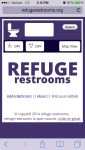
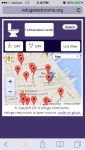
REFUGE restrooms is now live on the web at http://www.refugerestrooms.org. It is viewable on any browser.

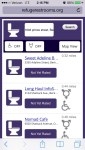
REFUGE seeks to provide safe bathroom access for transgender, intersex, and other gender nonconformist individuals. A few months back the valuable safe2pee database stopped working. We present Refuge as a replacement. Starting with the existing database of listings from Safe2Pee, refuge makes the database easily searchable and mappable to allow folks to find the nearest safe restroom.

This is very much in its alpha stage and had a lot of growing to do. I started learning how to code not that long ago so I’m still learning how I can make the app better and better. The app is open source so please contribute to the project on github @

http://www.github.com/tkwidmer/refugerestrooms

stay tuned both here and on twitter @refugerestrooms.
this looks very useful for people with interstitial cystitis, IBS, Crohn’s and other diseases causing incontinence

Am I in a Healthy Relationship?

Aimed primarily at teens, but still some good information no matter what age you are, particularly on the page that talks about signs of an unhealthy relationship

Am I in a Healthy Relationship?

Family Caregiver Alliance

FCA is first and foremost a public voice for caregivers. Founded in the late 1970s, we were the first community-based nonprofit organization in the country to address the needs of families and friends providing long-term care for loved ones at home. We illuminate the caregivers’ daily challenges to better the lives of caregivers nationally, provide them the assistance they need and deserve, and champion their cause through educationservicesresearch and advocacy.

Long recognized as a pioneer in health services, FCA supports and sustains caregivers with national, state and local programs and resources:

  • National Center on Caregiving– FCA’s NCC unites research, policy and practice, to advance the development of high-quality, cost-effective programs and policies for caregivers in every state
  • Family Care Navigator is sponsored by the NCC and helps caregivers locate support services by state
  • Link2Care, is an online discussion & support group managed by FCA intended for clients of California’s system ofCaregiver Resource Centers, especially focused on caregivers of those with Dementia
  • Bay Area Caregiver Resource Center is the CRC for the six-county San Francisco Bay Area, operated by FCA. FCA’s Family Consultants, educated & licensed in social work, work closely with families caring for ill or elderly loved ones.

Our services, education programs and publications are developed with caregivers’ expressed needs in mind, to offer real support, essential information, and tools to manage the complex and demanding tasks of caregiving.

Family Caregiver Alliance

Talk Therapy Online and Counseling Services.

BlahTherapy is run by and was founded (April 2010) by a single individual who has had moments just like you – where we really needed to speak to someone.

Today, BlahTherapy connects you with random strangers around the world who are willing to talk to you about your problems, as well as sharing their own. As a community, we’ve found that talking through our emotional, psychological, or mental issues is one of the best methods of releasing our anger, stress, depression or pain. Sharing and connecting with other strangers who are going through a struggles just like you provides great consolation to anyone in need of healing or a friend.

Talk Therapy Online and Counseling Services.

submissivefeminist:

Red Flags in BDSM

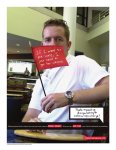
In order to maintain a healthy relationship, especially within the BDSM community, we need to be aware of signs of unhealthy behaviour. Of course, these red flag can appear in any kind of relationship—but it’s extra important when you’re in a relationship with a power-dynamic or a heightened risk of injury. Submissives, especially, often find themselves in unhealthy dynamics with no idea how to spot the problems. Dominants, too, are able to experience this. For this reason, I’ve developed an outline of some of the most common red flags I hear from followers and some resources to help you deal with them. (Images are products of the Red Flag Campaign).

The following are common things a partner might be doing if you’re in an unhealthy relationship:

Insists you do not need a safeword.

While some people prefer to play without a safeword, I will always speak against this practice. Safewords are crucial to a healthy D/s because without them, there is no way to revoke consent and that means you or your partner may not want to continue, but has no way of communicating this.

If your partner insists that you not use a safeword, you need to be firm in saying that will not be the case. I would take extreme caution with playing with someone who has suggested this, as it shows a lack of responsibility for you or your partner’s safety and mental health. Safewords should always be required of everyone in order to play safely. If you don’t want to use them, don’t use them—but always have them in place.

Claims to have no hard or soft limits.

This one is more common with submissives, but Dominants do it, as well. Claiming one has no limits shows a) a lack of experience and/or b) dishonesty. Though some people have more limits than others, everyone has limits. If your partner is insisting they have no limits, ask about something you consider extreme and see if they would agree to it. Communicate the importance of having limits so that everyone is aware of boundaries. No one should go into a scene blind of where the boundaries are.

Pressures you into playing in ways that violate your personal limits.

If you have established limits and your partner wants you to push them, there are two ways to go about this. 

1) You express a desire to want to get past a certain limit and your partner discusses ways they can help you with this in a safe and controlled manner as to help you explore your sexuality.

2) Your partner hounds you to do something outside your limits and you feel really uncomfortable about this.

If your situation sounds like #2, you need to either have a strict conversation with your partner about limits or you need to leave the relationship.

A healthy dynamic does not involve true force of any kind. Remember that everything within a D/s is consensual and if your partner is pushing you to do something you don’t consent to, this is unhealthy. Technically, it is abuse or sexual assault. Don’t tolerate this behaviour, and seek help if you need it.

Plays when they are angry or upset.

This is another sign of an abusive relationship. A good partner will not play when they are angry or upset. This can lead to safety concerns, emotional problems, and abuse. 

Dominants who are angry and wish to punish their submissives need to take time to think about an appropriate punishment instead of lashing out. Physical violence is never a way to solve underlying problems. The submissive should know why they are being punished, agree that it is fair, and feel forgiven after the punishment.

Submissives who play when they are upset are often covering up mental health problems. While healthy people can play after a bad day and feel much better—unhealthy folks will play to “hurt themselves,” so to speak, and will still feel badly after a scene. If this is the case, the submissive should seek counseling to work out their mental health problems instead of using D/s as a means to self-harm. Playing the sadist to an unstable masochist can end very, very badly. It is dangerous and shouldn’t ever be considered. Put your partner’s mental health above play at all times.

Insists that you address them as a specific title (Sir, Master, slut, fuck-toy) upon first meeting them.

This is a problem a lot of people face with potential partners. Fact of the matter is, you are no one’s slut or Master until you have formed a relationship of some kind with that person and you both agree to these titles. Don’t let anyone make you feel like you have to address them in a way you don’t like or be addressed in a disrespectful manner.

Does not provide aftercare. 

Aftercare is absolutely crucial to a healthy D/s relationship, especially ones involving sadism and masochism. In fact, aftercare is often a defining difference between kink and abuse. Aftercare should be done automatically. If you are in need of aftercare and your partner doesn’t realize it—speak up! Both Dominants and submissive who need aftercare are entitled to it after a scene. 

If your partner ignores your needs and does not provide aftercare, you need to leave the relationship. This is an abuse of power and shows a lack of responsibility. You should never leave a scene feeling badly. Aftercare is key to maintaining a healthy relationship. A guide to aftercare can be found here.

Does not respect your safeword.

Safewords, again, are required. If your partner ignores or refuses to respect your safeword, this is assault. The scene needs to end with your safeword, always. Anything past that is no different than continuing after a “no” for relationships without a specific safeword. This is a revoke of consent and anything further without explicit consent is assault.

Never, ever play with someone who doesn’t respect your needs to stop or pause the scene. This is dangerous and highly abusive.

Insists you stop using birth control or barriers during sex. 

Some people like birth control restriction with their partner, and that’s fine for stable relationships with intent to care for any child resulting from that pregnancy. However, if you are not intending on getting pregnant and your partner insists you stop using birth control, this is a major red flag. This is abusive and highly dangerous. 

Same goes for couples who cannot get pregnant and use barriers like condoms to prevent the spread of STDs. Never be forced into not using these methods. If one person in a relationship wants to use them, they will be used. No further questions.

Initiates play when you or your partner is intoxicated.

Couples can and will make their own decisions on this, and I am not here to tell you anything but the facts. Playing with an intoxicated person is assault. Even if you’re in a committed relationship. A person who is drunk or high cannot consent to sex legally in the US and you or your partner may end up with rape charges, even if the person says “yes.” Contracts and consent prior to intoxication do not hold up in court, either.

To be safe, always wait to play until the person is sober. For your safety and theirs, do not play with an intoxicated person.

Makes you feel guilty for using your safeword.

Never, ever feel guilty for needed to stop. It doesn’t matter if you need to stop because you were triggered or because your leg cramped—never let your partner tell you it’s not okay.

Any partner that makes you feel badly for safewording is a horrible person and doesn’t deserve your trust. It’s emotionally abusive to make someone feel bad for needing to stop play/sex. Don’t tolerate it—you have every right to decide if you need to stop.

Refuses to have conversations about consent/limits/desires.

Communication is so important. If your partner can’t communicate important things like limits, safewords, consent, or their desires, it’s going to be tricky. This is a red flag because it can lead to problems down the road. Relationships are difficult without proper communication—there simply isn’t a way around it. Insist on communicating these important topics or find a new partner who will.

Does not treat you as an equal or disrespects you out of scenes.

Unless you’ve discussed and agreed upon a 24/7 relationship, the scene ends with a safeword or natural progression. This means humiliation and painful physical contact stops there. Submissives who find themselves being put down by their partners out of scenes or at inappropriate times need to evaluate their relationship. Your self-worth will never depend on your partner and no one deserves to be with someone who makes them feel badly without their consent.

If any of the previous red flags apply to you or someone you love, please urge them to seek help. The following resources can be used in cases of sexual or physical violence:

National Sexual Assault Hotline (US): 1.800.656.HOPE

Domestic Violence Hotline (US): 1-800-799-SAFE

Rape Crisis Network (UK): 44 (0)141 331 4180

Sexual Assault Resources (International)

xx SF

opulentes:

ABUSE

Information

  • Love Is Respect (Digital Abuse)
  • Love Is Respect (Emotional/Verbal Abuse)
  • Love Is Respect (Financial Abuse)
  • Love Is Respect (Physical Abuse)
  • Love Is Respect (Sexual Abuse)
  • Love Is Respect (Stalking)
  • Help Guide

Coping

  • Caring for yourself
  • Domestic abuse

Chat Rooms 

  • Survivors Chat
  • Fort Refuge
  • Pandy’s

ADD/ADHD

Information

  • Help Guide
  • Attention Span Test
  • Attention Quiz
  • Concentration Quiz

Coping

  • Coping Tips for Attention Deficit Disorder
  • 12 Best Tips for Coping with ADHD
  • 50 Tips On The Management of Adult Attention Deficit

Medication

  • ADHD Medication Chart: Compare Drugs for ADD and ADHD
  • Drugs Used to Treat ADHD/ADD
  • ADD/ADHD Medications: Are ADHD Drugs Right for You
  • ADHD Medication Side Effects, Drug Types, Precautions

ADDICTION

Information

  • Help Guide (Alcohol & Drugs)
  • Half of Us (Alcohol & Drugs)

Coping and Recovery

  • Tools of Recovery: Addiction Coping Skills
  • 5 Ways to Deal With Urges and Cravings 
  • After Rehab: 5 Ways for Addicts to Cope
  • Addiction Recovery
  • Coping With Urges
  • Dealing With Cravings

ANGER

Coping

  • strategies to keep anger at bay
  • Anger management: 10 tips to tame your temper
  • Anger Management: Tips and Techniques
  • Feeling Angry
  • Controlling Anger — Before It Controls You
  • Dealing With Anger
  • How To Cope With Anger
  • Anger management: What works and what doesn’t
  • Ten Commandments of Anger Regulation

ANXIETY

Information

  • Anxiety Quiz
  • Social Anxiety Test
  • What are your stress triggers?
  • Coping Skills Quiz
  • Anxiety disorders explained
  • Help Guide (Anxiety Attacks & Anxiety Disorder)
  • Understanding and managing anxiety
  • learn more about anxiety
  • Anxiety Self-Assessment
  • Help Guide (General Anxiety Disorder)
  • Help Guide (Social Anxiety Disorder & Social Phobia)
  • Explanation of anxiety and self help tips 

Coping

  • a list of stress relievers
  • Identifying and Managing Anxiety
  • 11 Assorted Anxiety Tips for Anxiety Sufferers
  • How to work through feelings of isolation
  • Tips and tricks for dealing with anxiety
  • Anti-stress breathing tips
  • How to stay under control with severe social anxiety
  • Coping with social anxiety
  • Managing Stress
  • how to help a friend with anxiety
  • Help Guide (Therapy)
  • Half of Us
  • Job interviews and social anxiety
  • Dealing with anxiety
  • Coping with test anxiety
  • Tips for flying anxiety
  • Grounding techniques 
  • More grounding techniques 
  • Even more grounding techniques
  • Mindfulness
  • Belly breathing
  • Living with anxiety
  • Social anxiety disorder self help tips.
  • Coping with flashbacks
  • What anxious racing thoughts are like for me
  • Using a thought diary

Panic Attacks

  • How to handle panic attacks
  • Exploring and coping with panic attacks
  • 10 Rules for Coping with Anxiety and Panic
  • Tips to cope with panic attacks
  • Rules for coping with anxiety and panic
  • Understanding and coping with panic attacks
  • Understanding and helping panic attacks and panic disorders
  • Help Guide (Panic Attacks & Panic Disorder)
  • Coping with panic attacks workbook
  • Rules for coping with panic
  • Panic attack workbook 2

Interactives

  • Emotional baggage check
  • The Dawn Room
  • The quiet place
  • The thoughts room
  • Stress Analyst
  • cloudflowing
  • imagination
  • planetarium
  • weavesilk
  • calm
  • make sand art online
  • lifeinneon
  • dolldivine
  • barcinski-jeanjean
  • rainymood
  • do nothing for 2 minutes
  • stars
  • Muscle Relaxation
  • Mood chart

Medication

  • Help Guide (Anxiety Medicine)
  • Common Medications for Anxiety Disorders
  • Guidelines for Medication Use

Chat Rooms

  • HealthfulChat
  • Phobics Awareness 
  • Healing Well
  • Anxiety Space

BIPOLAR DISORDER

Information

  • Help Guide (Signs and Symptoms)
  • Half of Us
  • Bipolar Depression Quiz
  •  hypomania

Coping

  • Bipolar disorder and self-help
  • Living with bipolar disorder
  • How to deal with bipolar disorder without medication
  • 10 ways to cope with bipolar disorder
  • Coping skills
  • Help Guide (Self Help)
  • Bipolar Support tumblr

Medication

  • Help Guide (Bipolar Disorder Medication Guide)
  • Help Guide (Treatment)

Chat Rooms

  • HealthfulChat
  • Bipolar World
  • Healing Well

DEPRESSION

Information

  • depression information
  • Depression Infographic 
  • Help Guide (Depression: Signs, Symptoms, Causes & Help)
  • Help Guide (Teenage Depression: A Guide for Parents)
  • Half of Us
  • Depression Quiz

Coping

  • How to cope with depression
  • How to cope with depression 1
  • Natural depression treatments
  • Ways to deal with depression/stress
  • Tips to help overcome loneliness
  • 10 Tips on How to Work Through Feelings of Social Isolation
  • 8 Tips to Overcome Loneliness
  • Ways to deal with depression/stress
  • having a bad day?
  • Make a comfort box
  • 10 Things to Do When You Feel Like Crap
  • how to find a new normal in the middle of depression
  • you are not alone in the way you think you are
  • reasons to stay alive
  • how to stop trying to think yourself into happiness and actually arrive there
  • cheer me up
  • Help Guide (Dealing with Depression)
  • Help Guide (Helping Someone with Depression)

Medication

  • What to expect with antidepressants
  • Finding the right anti-depressant

Chat Room

  • HealthfulChat
  • Healing Well

EATING DISORDERS

Recovery

  • 281 Reasons to Recover
  • Eating Disorders and Emotional Eating Test
  • Relapse Prevention
  • Bloating, Indigestion, & Feeling too full
  • Why You Must Eat
  • Learning to Love Your Body
  • Tips to Stop Restricting
  • Dealing With Weight Gain
  • 10 Steps to Bulimia Recovery Workbook
  • Coping with Exercise Addiction
  • Tips to help with bulimia recovery
  • Help Guide (Emotional Eating)
  • Help Guide (Binge Eating)
  • Help Guide (Bulimia)
  • Help Guide (Helping Someone With an Eating Disorder)
  • Help Guide (Treatment and Recovery)
  • Stop Hating Your Body
  • Body Positive Zone
  • Self Care 101
  • self esteem
  • 30 day self esteem challenge
  • developing positive self esteem
  • learning-to-love-yourself
  • Something Fishy
  • Ways of coping with eating disordered behaviors
  • The addiction help center

FRIENDS WITH ILLNESS

  • How to deal/talk with bipolar and depressed people
  • What to do when your friend is talking about suicide
  • What to do if someone you know is overdosing
  • What to do if your friend is hurting themselves
  • How to help someone who is suicidal
  • here’s what you tell someone who wants to commit suicide
  • tips for looking after someone with depression
  • Friends with metal illness?
  • What to do when someone is suicidal
  • Help Guide (Helping Someone with Depression)

GENERAL RESOURCES

  • Feelings Wheel
  • PsychForums
  • Psych Central 
  • Lets Recover Together
  • How to find a Support Group 
  • DailyStrength

GRIEF AND LOSS

  • Help Guide (Coping with a Breakup or Divorce)
  • Help Guide (Coping with Grief & Loss)
  • Help Guide (Coping with Pet Loss)
  • Help Guide (Supporting a Grieving Person)
  • Help Guide (The Five Stages of Grief)

HOTLINES

  • Crisis Text Line: Text “SUPPORT” to 741741
  • Crisis Call Center Call 1-800-273-8255 (24/7) Text ANSWER to 839863 (24/7)
  • Thursday’s Child Call 1-800-872-5437 (24/7)
  • The Trevor Project Call 866-488-7386 (24/7)
  • National Safe Place Text SAFE and your current location to the number 69866
  • National Runaway Safeline Call 1-800-786-2929 (24/7)
  • National Domestic Violence Hotline Call 1-800-799-7233 (24/7) 

MEDITATION

  • Tips to Start Meditating
  • 8 Ways to Make Meditation Easy and Fun
  • 18 Minute Guided Meditation: Blissful Deep Relaxation
  • 1 Hour Universal Mind Meditation
  • Guided Meditation for Sleep and Good Dreams
  • Guided Meditation and Progressive Muscle Relaxation
  • Progressive Muscle Relaxation
  • Guided Relaxation
  • Foundations in Flow Yoga Class
  • Heart Opening 30min Yoga Class
  • 10min Shoulder Yoga Routine
  • 9min Yoga Breathing Exercise (Pranayama) 
  • Kundalini Yoga Breathing Exercises (3 min)
  • Yoga Poses

OCD

Information

  • Specific Symptoms of OCD
  • Distinguishing OCD From Other Conditions
  • The Course of Obsessive-Compulsive Disorder 
  •  How do Obsessive Compulsive People Think?

Coping and Treatment

  • Natural Treatment Options
  • Treatments for Obsessive-Compulsive Disorder (OCD)
  • Additional Treatment Options for OCD
  • Residential Treatment for OCD
  • Medications for Obsessive-Compulsive Disorder (OCD)
  • A New Relationship to Your Obsessions
  • How to Find Help for OCD
  • OCD: Exposure Therapy Versus Medication
  • Cognitive Therapy for OCD

Chat Rooms

  • HealthfulChat
  • OCD-UK

PERFECTIONISM

Information

  • Perfectionism Resources
  • Perfectionism – a double-edged sword
  • Type-A Personality Quiz
  • Perfectionism Test
  • Procrastination Test
  • Perfectionism: the road to failure
  • perfectionism and procrastination

Coping

  • How to Overcome Perfectionism
  • LEARN TO MANAGE PERFECTIONISM
  • How to Overcome Perfectionism & Procrastination
  • Perfectionism – Stress Management
  • 10 Steps To Conquer Perfectionism
  • perfectionists coping with failure

PTSD

Information

  • Help Guide (Traumatic Stress)
  • Help Guide (PTSD)
  • Help Guide (Emotional & Psychological Trauma)
  • Mental Help
  • PTSD Infographic
  • Understanding PTSD
  • What is PTSD?

Coping

  • Coping with flashbacks
  • Self Help Strategies for PTSD
  • Coping with Traumatic Stress Reactions 
  •  Post-Traumatic Stress – Self-help Guide
  • Understanding and Coping with PTSD
  • Coping with PTSD

SCHIZOPHRENIA

Information

  • Schizophrenia: What’s in my head?
  • Help Guide
  • schizophrenia
  • Symptoms of Schizophrenia
  • Types of Schizophrenia
  • Causes of Schizophrenia

Coping

  • Living with Schizophrenia
  • Coping With Schizophrenia 
  • Schizophrenia Coping and Recovery
  • Schizophrenia: Coping with Delusions and Hallucinations
  • Paranoid schizophrenia Coping and support

Treatment

  • An Introduction to the Treatment of Schizophrenia
  • Treatment of Schizophrenia
  • Drugs to Treat Schizophrenia
  • Common Drugs and Medications to Treat Schizophrenia
  • Treating Schizophrenia Successfully 

SELF-HARM

  • Cut something that’s not real skin
  • Half of Us
  • Help Guide
  • Recover Your Life
  • Self-Injury Outreach & Support
  • How to care for cuts
  • Resisting cutting
  • 25 ways to avoid self injury and prevent self harm
  • Tips to help stop cutting
  • 99 Coping Skills: Things to do Instead of Cutting
  • What to do when someone sees
  • How to fade/cover scars
  • Alternatives For Cutting 1
  • Alternatives For Cutting 2
  • Alternatives For Cutting 3
  • Alternatives For Cutting 4
  • Alternatives For Cutting 5

SELF-LOVE

  • how to stop putting yourself down
  • Self confidence
  • how to improve your self-esteem
  • How to be ok with yourself
  • tips on self-love
  • Confidence
  • Learn to love yourself
  • when told you are not pretty
  • emergency compliment
  • lessons for self-love

SUICIDE

  • Coping with Suicidal Thought
  • What to do when someone is suicidal
  • How to help someone who is suicidal
  • here’s what you tell someone who wants to commit suicide
  • Help Guide (Suicide Prevention)
  • Help Guide (Dealing with Suicidal Thoughts & Feelings)

THERAPY

  • how to get free therapy
  • Getting a Therapist – a brief step-by-step
  • Psychiatrist, Psychologist, Therapist or Counsellor?
  • 50 Signs of Good Therapy
  • 50 Warning Signs of Questionable Therapy

fixyourwritinghabits:

creativesocialworker:

Social Worker Tumblrs

Therapist Tumblrs

Psychology Tumblrs

Recovery/Support Tumblrs

Reblogging in honor of the last day of Social Work Month.  These arent ranked in any particular order so check them all out.  If I missed you just let me know!

yo I’m reblogging this because it can seriously help folks out, definitely a list worth keeping.

lucysweatslove:

Making an “Alternatives” Jar

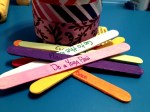
For anybody with issues with binge eating, purging, and/or self-harm (or any other type of urge), an “alternatives” jar is a good project! It is a jar filled with popsicle sticks that have things written on them that you can do when your urge hits, as an alternative to the urge.

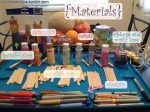
You need:

  1. A glass jar (I used a small 8 oz old jar that I had left from a jar of jam- you can get these for $1 in some places with the jam)
  2. Popsicle sticks (I used 70 regular-sized ones from a pack of 1,000 craft sticks that I bought for $5)
  3. Markers (I used Bic Mark-It Permanent Markers, but any other marker should work, even dollar-store markers)
  4. Paints, as many colors as you want (I used Apple Barrel brand acrylic paints, which run for $0.50-$0.57 per 2 oz container at Wal Mart). 
  5. Paint brushes to use for the paints (I used Plaid brand sponge brushes, which I got for $1 for 4, and a pack of 24 different brushes which were $5 each)
  6. Ribbons and washi (decorative/paper) tape ($0.50-$3.50 per roll, however you want)

Items 4-6 are optional! You can use as much or as little paint as you want. You should only need one bottle if you are doing one color; however, you may want more!

Instructions:

  1. Gather your materials 🙂 (not too hard!)
  2. Decide how many sticks your jar will hold. Mine held 70 craft sticks; some can hold more!
  3. Decide how many colors you want to use, and if you want the colors to mean anything.
  4. Paint the craft sticks!! Do this on a surface easily cleaned, thrown away, or that you don’t mind getting messy! I used a lid from a plastic tote. You can either put the paints on a palette (if you have one), or dab it onto the sponge brushes and then paint.
  5. Let your painted sticks dry.
  6. While you are letting them dry, you can decorate your jar. Some permanent markers work on glass; others don’t. You can try them though! Acrylic paints don’t always work on glass, also. I used washi tape and ribbons, using a hot glue gun to attach the ribbons to the jar. The tape and ribbons can be removed from the jar if I so choose (so that way I can re-use the jar or re-decorate if I want to)
  7. Once the sticks dry, write on them!!

Ideas for how to use color:

You can see that I used 7 colors, each with 10 sticks. Colors can be used to denote:

  1. Type of urge (especially useful if you have multiple types)
  2. Type of emotion behind the urge or activity (feeling sad, guilty, angry, lonely, wanting sensation, etc)
  3. Amount of time the activity takes (5 min, 10 min, 15 min, 30 min, 1 hr, over 1 hr)
  4. Amount of money you’d have to invest (ie, totally free things, things you can spend $1 on, things you’d have to spend $5 on, etc)

How to use:

  1. When your urge hits, pick a color or colors to represent what you need. For example: red for me are things to get anger out, so if I’m wanting to purge because I am angry, I will choose the red sticks.
  2. Pick one stick of that color. Do that activity, and put the stick to the side. If, after you’re done with the activity, the urge is still there, pick another stick.
  3. Keep choosing sticks until the urge is gone (or you have other things you have to do)
  4. If the urge hasn’t gone away, but you are done with your sticks: choose another color and keep going.

Ideas for what to write on your sticks

  1. 101 things to do besides binge
  2. More binge alternatives
  3. Alternatives to binge eating/purging
  4. Alternatives to self-harm
  5. More alternatives to self-harm

Idea based off of: Coping Bank and Binge Jar

sherwat:

All credit goes to the masterpost…posters. Because they’re great people.

Cheer up and Relax
Fun Stuff
Mental Illness
Self Harm
Films
General Self Help
Everything
In Case Of Emergency
Others