
Anger & Irritability
CBT & Self help for anger
Anger problems workbook
Anger management tips & techniques
Anger & aggression management
Anger & aggressive behaviour leaflet
Controlling anger guide
Dealing with anger & impulsivity (PDF)Anxiety
Overcoming health anxiety (9 modules with workbooks)
Improving self esteem (9 modules with workbooks)
Overcoming perfectionism (9 modules with workbooks)
Mastering general anxiety & worries (11 modules with workbooks)
General self help strategies
Self help home toolkit
How to tolerate uncertainty
Applied tension technique (for those who faint at sight of blood/needles)
Self help for specific phobias
Youth anxiety self help
How to stop worrying
Flying phobia self help
General anxiety disorder self help (3 steps)
Anxiety workbook
CBT & Self help for general anxiety
CBT & Self help for phobias
CBT & Self help for health anxiety
CBT & Self help for low self esteem
CBT & Self help for stress
Anxiety & panic leaflet
Phobias leaflet
Anxiety self help guide
Health anxiety self help guide
Stress workbook
Stress management course
Hints to avoid harmful stressBipolar Disorder
Coping with Bipolar Disorder (8 modules with workbooks)
CBT & Self help for bipolar
Bipolar support & self help
Wellbeing plan for Bipolar disorder (PDF)
Bipolar disorder mood chart (PDF)Also see anger/irritability, depression, insomnia & impulsivity resources.
Borderline Personality Disorder
Overcoming distress intolerance (4 modules with workbooks)
Ten coping skills for BPD
Coping with BPD
BPD resource listAlso see CBT, DBT, self harm, anger/irritability, suicidal thoughts, impulsivity & depression resources.
Cognitive Behavioural Therapy (CBT)
7 Step self help course
CBT Based self help
CBT Worksheets & Information sheets
Free self help worksheetsConcentration & Time management
Put off procrastinating (7 modules with workbooks)
Guide for goal setting
Concentration leaflet
Sitting exams leaflet
Procrastination leafletDepression & Low mood
Coping with depression (9 modules with workbooks)
The Journal depression help
CBT & Self help for depression
Depression leaflet
Depression & low mood self help guide
Depression workbook
Dealing with depression tips
Antidepressant skills workbook (PDF)
Undoing depression: A self help site
Worry & sadness course
Depression mood chart (PDF)
Exercise to beat depression Handout 1 | Handout 2 | Handout 3 | Handout 4
Thinking your way out of depression (CBT)Dialectal Behaviour Therapy (DBT)
DBT Self help (videos, worksheets, activities etc.)
DBT Worksheets
Mindfulness
Skills Workbook
Coping & Relationship skills
Ways to manage distress right now
Letting go of emotional suffering
Mindfulness leaflet
Appraising change (PDF)
Honest communication (PDF)
Goal setting
Mindfulness in everyday life
Quick relaxation techniquesEating disorders & Body image
Overcoming body dysmorphia (7 modules with workbooks)
Overcoming disordered eating Part A | Part B (9 modules each part)
CBT & Self help for anorexia
CBT & Self help for bulimia & binge eating
Eating disorders leaflet
Eating disorders self help guide
Eating disorder coping skills
Tips & strategies for overcoming eating disordersFatigue & Chronic pain
CBT & Self help for chronic fatigue & pain
Chronic pain workbook
Restless legs syndrome self help
Treating chronic fatigue & Fibromyalgia
Chronic fatigue self help
Fatigue fighter self help
The pain toolkit (PDF)
Chronic pain patient’s guide to pain free hours (PDF)
Chronic pain survival handbook (PDF)Impulsive thoughts & behaviours
ADHD in adults: Managing impulsivity
Managing impulsive behaviours
5 Tips for changing impulsive behaviours
Impulse control strategiesInsomnia & Sleep difficulties
Getting to sleep
Sleep hygiene
CBT & Self help for sleep issues
Insomnia leaflet
Sleeping problems self help guide
Sleep problems workbook
How to sleep better
Can’t sleep?Obsessive Compulsive Disorder
How to manage obsessions
Manage your OCD at home
What to do while obsessing
Stopping your compulsions
CBT & Self help for OCD
Obsessions & compulsions self help guide
Obsessions & compulsions workbookPanic Attacks
Coping with panic attacks (12 modules with workbooks)
Self help strategies for Panic Disorder
Panic attack self help programme
CBT & Self help for Panic Disorder
Panic self help guide
Panic workbookPsychosis
CBT & Self help for psychosis
Hearing voices self help guide
Schizophrenia treatment & recovery
Self help measures for psychosis
Guided self help for psychosis (PDF)Social Anxiety
Coping with social anxiety (12 modules with workbooks)
Improving your social skills
Home management strategies for social anxiety
Improve your assertiveness (10 modules with workbooks)
CBT & Self help for social anxiety
Shyness & social anxiety self help guide
Shyness & social anxiety workbook
Shyness/Social anxiety courseSelf harm
Self harm leaflet
Self harm self help guide
Self harm alternatives & distractions
Cutting & self harm help
Self injury self help ideas
Self harm coping plan (Link at bottom of page)
Stopping self harmSuicidal thoughts
CBT & Self help for suicidal thoughts
Dealing with suicidal thoughts & feelings
Suicide: Read this first
Making a safety plan (Link at bottom of page)
Ways to help yourself when you’re feeling suicidal
What can I do if I’m feeling suicidal?
Self help for the suicidal workbook
Suicide hotlines by countryTrauma & Abuse
Self help for PTSD
CBT & Self help for PTSD
Post traumatic stress leaflet
Information for adults abused as children
Dealing with abuse guide
Post Traumatic stress self help guide
Post traumatic stress workbook
Safety & escaping domestic violence
Help for abused men
Coping with PTSD
How to recover from disasters & traumatic eventsNote: I haven’t created or extensively reviewed any of these resources, they’re just things I’ve found online that look like they’d be useful and to my best knowledge do not cost anything.
These are self help resources intended to be used in addition to and not as a substitute for medical treatment- please contact a professional if you are feeling unsafe. 🙂
Tag: ptsd
Workbooks and Self-Help Books for Mental Illnesses & Symptoms
Hello everybody! I was just thinking about how I always recommend people who can’t get therapy to use workbooks, so I thought I’d make a quick list of some you could look at. I’m not comfortable recommending books for things I have not struggled with (like, if I was looking at the description of a book on OCD I’d have no idea if it was good or not) but I think I’ve covered a lot. Some of these are series which have workbooks for specific disorders like bipolar, etc., if you want to find some. Plus, you don’t have to be diagnosed with something to use a workbook if you think it’ll help you.
Workbooks are sometimes made to be done in conjunction with therapy, or something like that, but anyone can still get something out of them if you put in regular work and try to apply the skills.
I’ve linked them all the Amazon because they’re usually cheaper on there.
For reference: DBT = dialectical behaviour therapy, CBT = cognitive behavioural therapy, ACT = acceptance and commitment therapy
Anxiety, Depression, and Intrusive Thoughts
- The CBT Anxiety Solution Workbook
- The Anxiety and Worry Workbook
- The DBT Skills Workbook for Anxiety
- The Anxiety Toolkit
The Mindfulness and Acceptance Workbook for Depression
The Cognitive Behavioural Workbook for Depression
- Overcoming Unwanted Intrusive Thoughts
The Anxious Thoughts Workbook
Borderline Personality Disorder
- The BPD Survival Guide
- Stronger Than BPD
- You Untangled
- Mindfulness for BPD
- The BPD Toolbox
Beyond Borderline: True Stories of Recovery
Interpersonal Problems
Anger
- The DBT Skills Workbook for Anger
- The Anger Workbook for Teens
- Anger Management for Everyone
ACT on Life Not on Anger
Trauma and PTSD
Self Harm
- Freedom from Self harm
- Stopping the Pain: A Workbook for Self-Injury
Rewrite: The Journey from Self-Harm to Healing
General Emotional Issues/Multiple Disorders
PTSD is the most common illness and it’s really amazing because it’s not something you see. It’s not like ‘oh I lost an arm’. It’s something that’s triggered. The biggest thing we can do for vets is just listen. A lot of research for Sam Wilson’s military background was just listening, letting the vets know they’re not alone.
Anthony Mackie on how he studied mental illness for Sam Wilson. (SLCC 9/26/15)
PTSD sufferers don’t get to move on. This is how the disease works. Forgiveness, acceptance, inner peace–all of things are well and good, but at the end of the day, PTSD doesn’t care. You’re still going to jump when someone slams a door. You’re still gonna have nightmares. The trauma is not just a horrible event or experience. It’s a life sentence. It’s a burden that cannot be shed.
Ever
(via heroes-get-made)
(via heroes-get-made)
I feel as if the gods are giving me the cold shoulder & my luck has left me. But I’m also bi polar, have PTSD & an anxiety disorder. I can’t tell what’s just in my head & what isn’t. I feel lost. What can I do?
My perspective is colored by experience and, well, my viewpoint as someone with Borderline Personality Disorder (which has some similarities to Bipolar and PTSD, among other things, enough that they get confused for one another) and with anxiety disorder. And psychosis, too. So take from this what you will.
My experience, and I’ve seen this mirrored with some other people who struggle with mental health, is that when things are extra stressful, all of that makes a whole lot of “noise” and you’ll feel abandoned. If you can normally see spirits, you won’t see them. If you can normally “hear” spirits, you won’t. You’ll overlook signs, or see signs that aren’t there that confirm your worst fears because your anxiety will be ramped up because you’ll be weirded out by the fact that you want reassurance and that sense of the gods being present just isn’t there.
What I’ve always done is realize that it’s unlikely I just got abandoned (unless I have a good, solid reason to suspect I’ve pissed a god off, like breaking a specific oath that I remember or something), that it’s just a normal swing of bad luck, and concentrate first and foremost on self-care and doing what work I, personally, can take care of, one step at a time. It’s really disconcerting to feel that the gods aren’t there, but it’s more likely that you’re just so stressed out that that static noise is completely drowning out your normal sense. They’re there, you are just having trouble perceiving it. Keep talking to them, keep asking for help, but also work to help yourself. When you feel a bit calmer, your sense of presence should come back.


tedx:
In this gut-wrenching talk, Sergeant Andrew Chambers shares the haunting story of his time in Iraq and the tough transition home that landed him in jail. It’s a powerful testimony to the struggle our soldiers face when they come home, and the tragic ways that they can be denied the help they need.
For any veterans who need help, you can find a list of resources here. Among them, the Wounded Warrior Project does outstanding work with wounded vets.
For anyone looking to support a veteran, we encourage you to heed Chambers’s advice: “Find a veteran and listen to his story. A lot of us just need somebody to talk to.”
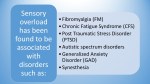
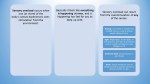
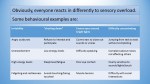
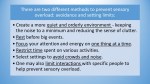
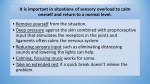
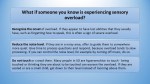
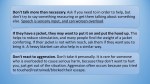
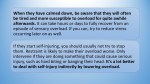
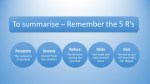
Sensory Overload and how to cope.
(click on images to zoom)
So important.
I also find I can get SO from thinking too much, like brain-over-stimulation. Though that is kinda like audio input for me because of the way I think. After all, my go-to overload thought is “quiet please, make it stop”.
thank you for posting this, i needed it
This is wonderful and so needed
My last SO situation I had allodynia all over, and all the skin sensory input just destroyed my ability to think.
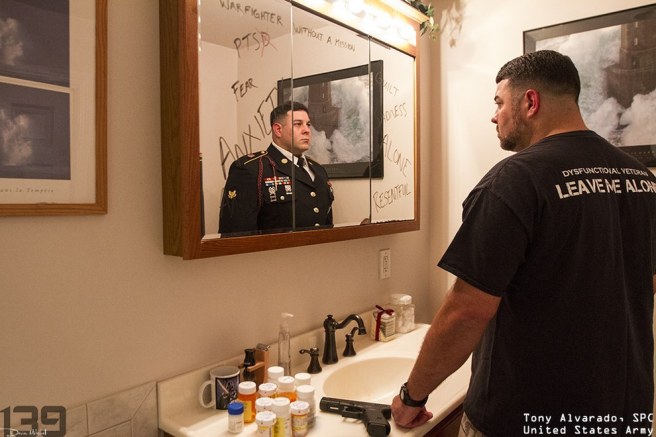
This Jarring Photo Series Captures What PTSD Really Looks Like
A recent study showed that roughly 22 U.S. veterans commit suicide every day — about one every 65 minutes. Photographer Devin Mitchell shared his five newest photos on the subject of suicide exclusively with BuzzFeed News.

Old traumatic memories are recalled differently than new ones
People with post-traumatic stress disorder often experience prolonged and exaggerated fearfulness, even when they’re completely out of harm’s way.
The long-term storage of painful or fearful memories is a defence mechanism of sorts. It can help animals (humans included) evade dangerous and potentially life-threatening situations. But in humans, it can also cause severe psychological distress.
Scientists have tried to understand what enables fearful memories to persist with such vigour (and some researchers have even suggested sleep might play a role). Figuring this out could help alleviate the negative psychological effects endured long after traumatic experiences occur.
Now, researchers funded by the US National Institute of Mental Health think they have uncovered an important clue.
In experiments with rats, a team from the University of Puerto Rico discovered that an old fear memory is recalled via a separate brain pathway from the one used to recall the memory when it was still fresh.
The team has published its findings in Nature.
“While our memories feel constant across time, the neural pathways supporting them actually change with time,” explained lead author Gregory Quirk in a press release.
“Uncovering new pathways for old memories could change scientists’ view of post-traumatic stress disorder, in which fearful events occur months or years prior to the onset of symptoms.”

a masterpost to help you feel better and get through the day.
distract yourselfstatic noise / background sounds (helps you focus / feel less overloaded – I can’t study without this stuff)
simply noise
my noise
rainy mood
nature sounds
jazz and rain
rainy cafelots of things to do
writing, painting, makeup, body care, even movies master post
musical squares
lucid dream
learn a new language
make your own mind palace!!
draw a nebula
make your own font
learn something new
fun sites to visit
bubble wrap game
answer questions to buy rice to help end hunger!
get a hug from a nice person
microwave mug snackswatch something
ultimate teen movie master post 80s – today
bbc sherlock
granada sherlock holmes
pretty little liars
hannah montana
ellen best momentslisten to music
tom hiddleston’s song of the day masterpost
my personal “tunes” tagwhen you are sadadisri’s tag
abby’s tag
cierra’s tag
my taganxiety
play with sand
chill out
zen garden (video)
managing stress
social anxiety tips
anti anxiety masterpost
the quiet place
the dawn room
tour of the stars
identifying your type of anxiety
how to cope with a panic attack
anti anxiety foods
make a thought diary
dealing with panic attacks and anxiety (video)
mental illness help appsdepression
how to overcome emotional numbness
coping with depression
natural depression treatments
which antidepressant should you ask for?
depression test (not 100% accurate)insomnia
tips to beating insomnia
understanding insomnia
when to fall asleep according to sleep cycles (helps you feel more awake later)
tips for falling asleep quicklyself harm
alternatives to self harm
if you already have, here’s how to care for injuries
understand self harm and how to stop
butterfly project (self harm prevention)
tips for stopping cutting
how to fade and cover scars
how to explain scars (avoid talking about visible scars)
just relapsed? read this.
need to see blood? cut a white screen.eating disorders
different eating disorders explained
why you should try to recover
feeling bloated?
preventing relapse
why you need to eat
learn to love your body
recovering from bulimia
don’t put yourself down
how to boost your confidence
self love
loose weight the healthy way (blogilates youtube – great workout, healthy eating, and self improvement channel)suicidal
countries (outside of US) suicide hotline list
suicide hotline list (includes US as well as other countries)
talk with someone or help someone!
online suicide prevention – talk it out online
how to help someone who is suicidal
reasons to live
100 reasons NOT to commit suicideabuse
healthy vs. unhealthy relationship boundaries
abuse hotlines
understand that sexual abuse is not your fault
understand that physical abuse is not your fault
how to move on from sexual abuse
understanding domestic violence and abuse
how to escape an abusive relationship safely
after silence (support for victims of abuse)
do you think someone you love is being abused?
healing and overcoming abuse
speaking out after abuseptsd
help guide for ptsd
help guide for ptsd 2 (similar to 1 with more extensive self-help tips)
how to help someone with ptsd
10 tips for understanding someone with ptsd
coping with ptsdasking for help
telling people how you are feeling
how to tell someone about your anxiety
how to ask for helprestoring your faith in the world
random acts of kindness caught on film (video)
real life heroes (video)
giving servers $200 tips (video)
paying for people’s groceries (video)
faith restoring
in case you forgot the world is a gorgeous place (video)other master posts that may be helpful (:
1 2 3 4 5 6Most importantly, remember that YOU ARE LOVED.
Feel free to message me at any time for any reason.
 Holding the Bowl