
In all the world there was only one who pitied him’, illustration from ‘The Heroes of Asgard, tales from Scandinavian Mythology’, by A & E Keary, 1930 (colour litho)

Devotional blog dedicated to the Goddess Sigyn offering support to those who are "holding the bowl" within difficult relationships.
In all the world there was only one who pitied him’, illustration from ‘The Heroes of Asgard, tales from Scandinavian Mythology’, by A & E Keary, 1930 (colour litho)

Her name, appears to etymologically derive from two Old Norse words, sigr (victory) and vina (meaning girl-friend). This will cause some modern-day practitioners to hail Her in rites as “Victory Bringer.”
Appearances in Lore: Volupsa, Gylfaginning, Skaldskaparmal, Haustlong, Pulur, Þórsdrápa
- she was counted among the Asyngr (the name given to the Goddesses among the Aesir).
- She was wed to Loki, and with him had two sons
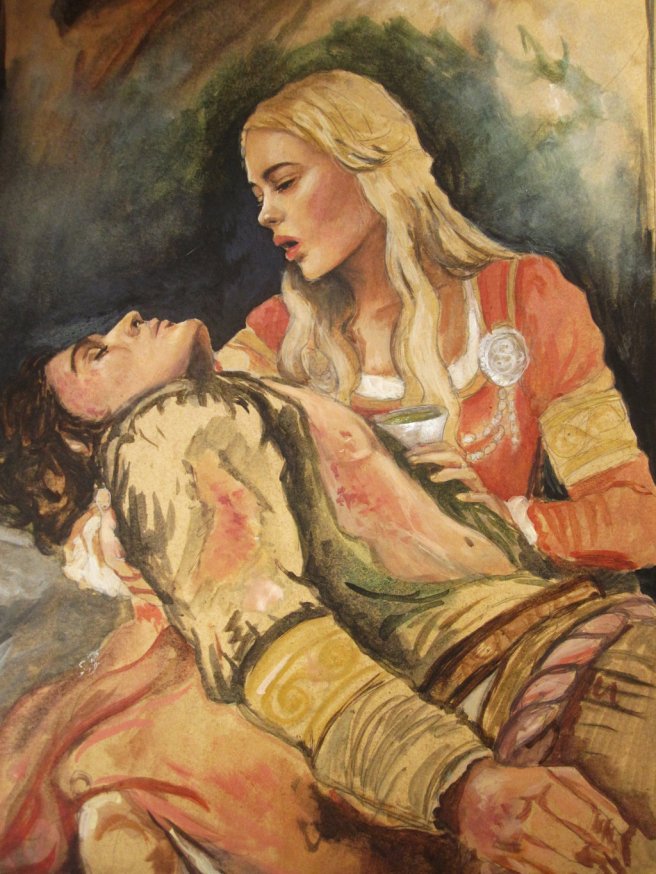
- As described in the lore, Loki’s two sons were slain, one forced to kill the other. The intestines of her son was then used to bind Loki. Sigyn stood at his side in her grief, and held up a vessel to catch the poison that burned like acid, that dripped from the snake fixed above Him.
- One of her by-names, or kennings is “Incantation-Fetter” (used briefly in passing in Þórsdrápa).
Because she’s mentioned in Haustlong (an older text and one of the few actually written by a pagan skald, and not a Christian scholar) I’ve seen scholary theory that she may be a Goddess from the older Germanic tradition, which carried into the later appearing Norse culture… READ MORE
I read those myths about Sigyn holding the bowl of poison over Loki to keep it from spilling on him and everyone focuses on Loki getting venom on his face and ignores the fact that with holding a heavy-ass bowl out at arm’s length all freaking day, girl’s arms have gotta be jacked as hell.
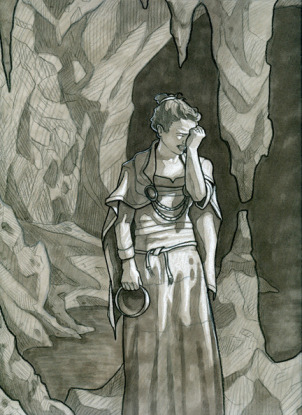
Part of the “Binding of Loki” by Sam Flegal.
Read about the process he went through for finding the best way to convey the emotions of the moment here.
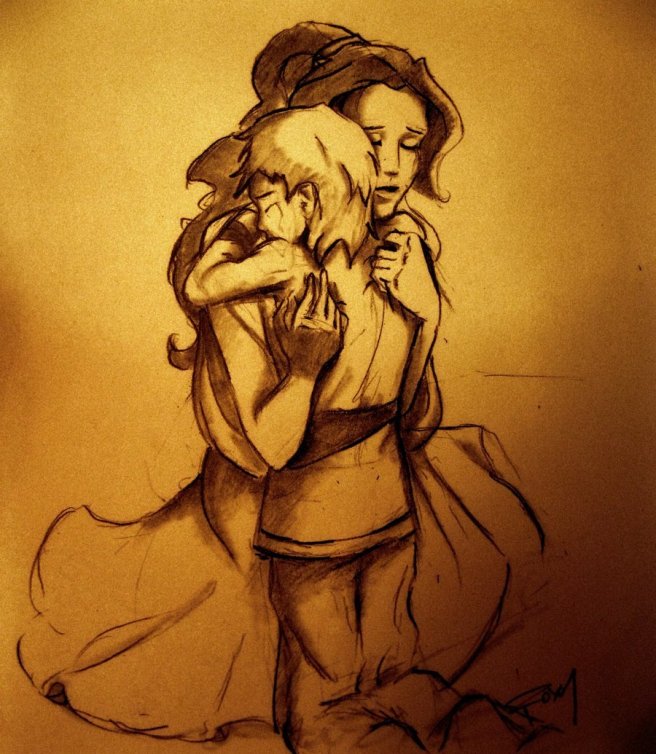
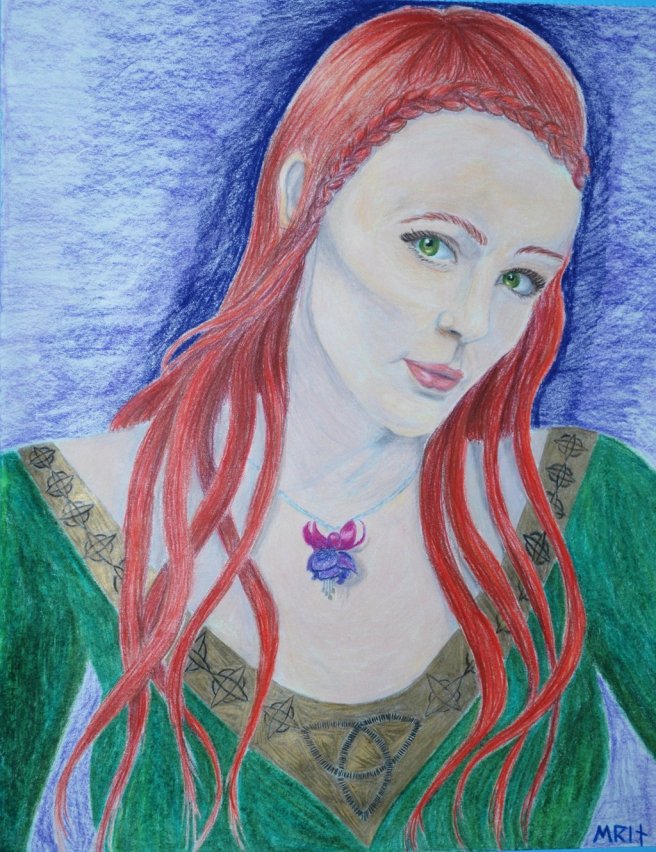
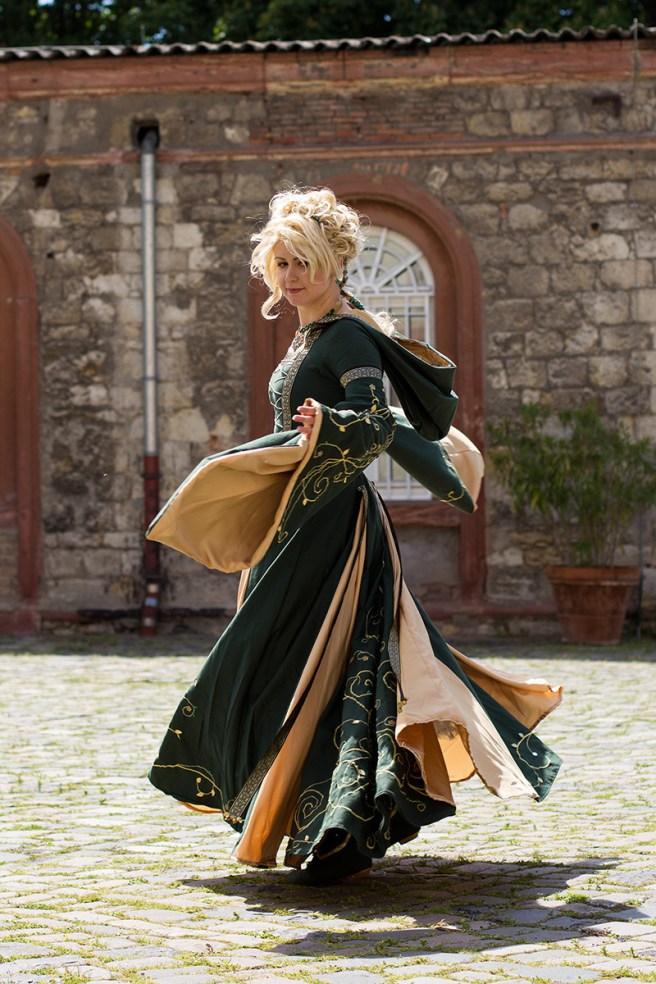

 Holding the Bowl