
“you can’t let your mental health affect everything” sorry. my bad. i forgot that even though my mental illness is In My Brain, which does Everything for me, that’s not an excuse for my mental health affecting everything i do. so sorry.
Tag: mental illness










Last Week Tonight s02e29
“But
if we’re going to constantly use mentally ill people to dodge conversations
about gun control, then the very least we owe them is a fucking plan.”


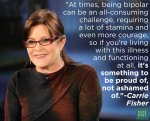
Could Depression Be Caused By An Infection?
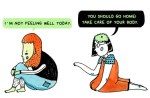
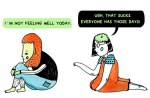


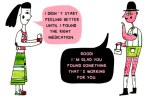
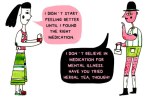




so i keep seeing these mental illness support posts all over tumblr but i never see any for the “scary” illnesses
im here for the schizophrenics, paranoid and otherwise
im here for the bipolar people, especially those who are rapid cycling (believe me, i know how much it sucks)
im here for the people with borderline personality disorder who are constantly wondering if theyre being abusive
im here for the addicts
the people who dissociate
the people who have trouble telling whats real
the people whose minds are too scary to get their own support posts on tumblr
im here for you all
we’re not as scary as we’re told we are
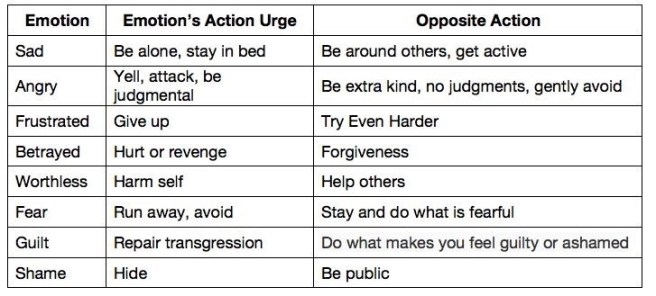
no offense but this is literally the most neurotypical thing i have ever seen
Uhhhh… no.
This is what they teach you in therapy to deal with BPD and general depression.
When I got out of the hospital after hurting myself a second time, I got put into intensive outpatient program for people being released from mental hospitals as a way to monitor and help transition them into getting them efficient long-term care.
This is something they stressed, especially for people with general depression. When you want to stay at home and hide in your bed, forcing yourself to do the opposite is what is helpful. For me, who struggles with self harm- “I want to really slice my arm up. The opposite would be to put lotion on my skin (or whatever would be better, like drawing on my skin) the opposite is the better decision.” It doesn’t always work because of course mental health isn’t that easy, but this is part of what’s called mindfulness (they say this all the time in therapy)Being mindful of these is what puts you on the path to recovery. If you’re mindful, you are able to live in that moment and try your best to remember these better options.
I swear to god, I don’t get why some people on this website straight up reject good recovery help like this because either they a)have never been in therapy so don’t understand in context how to use these coping tactics. Or b)want to insist that all therapists and psych doctors are neurotypical and have zero idea what they are talking about. (Just so ya know, they teach this in DBT, the therapy used to help BPD. The psychologist who came up with DBT actually had BPD, so….a neurotypical women didn’t come up with this.)
I have clinical OCD and for me, exposure therapy–a version of “do the opposite”–has been fundamental. I’ve had huge improvement in the last year, but I’m 100% clear that if I hadn’t done my best to follow this protocol I’d be fucked. I have a lot of empathy for that moment when you’re just too tired to fight and you check the stove or you wash your hands or go back to the office at midnight to make sure the door is locked. But the kind of therapeutic approach outlined above has been crucial for me.
It’s hard to do. I’ve weathered panic attacks trying to follow this protocol. But I’ve gotten remarkable results. I was afraid to touch the surfaces in my house, okay? I was afraid to touch my own feet, afraid to touch my parrot–deliberately exposing myself to “contamination” has helped me heal. I can’t speak for people with other issues, but this has helped my anxiety and OCD.
I feel that tumblr, in an effort to be accepting of mental illness, has become anti-recovery. Having a mental illness does not make you a bad person. There is nothing morally wrong with having a mental illness anymore than more than there’s something morally wrong with having the flu. However, if you’re “ill” physically or mentally, something is wrong in the sense that you are unwell and to alleviate that you should try to get better. While there is not “cure” for mental illness, there are ways to get better.
There was a post on tumblr where someone with ADHD posted about how much you can get done when you focus and was attacked for posting about being “nuerotypical” – when she was posting about the relief she got from being on an medication to treat her illness.
I saw another post going around tumblr that said something along the line of “you control your thoughts, why not choose to have happy thoughts” which again was shot down as “nuerotypical” but while you don’t have control over what thoughts come into your mind, you absolutely can and should choose to have happy thoughts. In DBT we call this “positive self talk”.
I’m in DBT to help treat PTSD stemming from child abuse. The abuse and abandonment I experienced destroyed my self esteem and created a lot of anxiety over upsetting other people. DBT has taught me to recognize when my thoughts are distorting realty ‘no one likes you’ and answer back ‘plenty of people like you, you don’t need everyone to like you, especially if the relationship doesn’t make you happy’, to respond to the thought ‘I’m so worthless’ with ‘you’re really great and have accomplished something’
And it’s not easy to challenge your thoughts, it’s a skill that’s learned and it’s hard to force yourself to think something that doesn’t seem authentic or even seems wrong to think – it’s hard to be encouraging towards yourself when you hate yourself – but you force yourself to be aware of your thoughts and push back when you fall into unhealthy patterns
That isn’t “so neurotypical” that’s recovery.
Not shaming mental illness doesn’t mean shaming RECOVERY.
Pro-Recovery isn’t anti-disability.
Do not shame healthy behaviors as “neurotypical”.
Learning healthy behaviors and taking steps to treat mental illness and disorders including taking medication if that’s what works for you is important. You shouldn’t be ashamed if you have mental illness, but you shouldn’t say ‘well I’m not neurotypical therefor I can’t do anything to get better’ – while there is no cure for mental illness, there is a lot you can do to get better, to function better, to manage your mental illness and be safer, happier, and healthier for it.
When I contracted PTSD my therapist first confirmed I has been traumatized then asked me to speak about the specific moments that stuck with me the most. I had to directly acknowledge the memories I wanted to avoid in order to make my brain realize it wasn’t happening anymore.
—
When my depression was so bad I couldn’t bare any positive comments about myself or compliments, my therapist made a point to end each session with a compliment that I had to accept and thank her for. At the time I hated myself so much it could physically HURT, but she worked to ease me into it.—
When we discovered I live almost constantly dissociated, my therapist worked with me to move back into my body fir a five-minute period. This is commonly a coping mechanism for Autistic people and others with sensory issues, and I had started doing it at a young age to handle stimulation on a day-to-day basis. The reason why I had to learn to stop it is because when my head and body didn’t feel connected, I couldn’t stop the physical affects of anxiety; I couldn’t calm my body down, and the anxiety would escalate to panic. The sensation was AWFUL when I returned into my body – it was like grabbing a live wire and I hated every second, but I’m better for it. I learned to ground myself.—
Unfortunately, the recovery process can mean directly challenging bad thoughts and feelings which SUCKS but in the long run, it may actually help you. You might not be in a place to do it right now, and it sounds scary and awful, but there are ways to do it safely and beneficially!
if there’s anything i’ve learned about dealing with mental illness, especially depression, it’s never about having one big breakthrough and then living happily ever after. i think i expected that from myself which only caused me to hate myself more when relapses happened.
but what it is -actually- about is saving yourself over and over, picking yourself back up after each fall and not letting it keep you beat. and that’s not a hopeless thought. it’s freeing to know that recurring depression is perfectly normal, and i am not a failure when it kicks me in the teeth. so long as im surviving and seeking help, i am still winning. you HAVE to redefine what success in mental illness means in order to stop beating yourself up.
Mental illness vs. Autism
Okay, so I’ve seen waaaaaaay too many posts lumping autistics in with mental illness groups and it’s not cool because they are completely different.
Mental illness is the equivalent of a PC with a virus. It is a working computer with its own personality that the virus has attacked and affected in its own unique way. My depression and anxiety are not a part of me and I do not like them and they change the way I think/feel/act from my ‘normal’.
Autism is the equivalent of a Mac or Linux in a world of PCs. PCs think you’re defective because you appear to be a PC with a virus but in reality you’re a WHOLE OTHER OPERATING SYSTEM with all the strengths and weaknesses of any other, that just happens to be different from the majority of computers. But being a Mac is not a problem in the same way that being a PC with a virus can be a problem.
Macs can get viruses–autistics can have mental illnesses, and people with mental illnesses can be autistic. But the two are not synonymous. We do not have the same terminology or community or anything. This doesn’t mean that it’s not okay to learn how to cope with mental illness or even be proud of it.
Some people are treated for or recover from mental illness. You cannot change being autistic. You cannot treat being autistic. You cannot recover from autism.
You cannot spend a lifetime trying to turn a Mac into a PC. You should learn how to protect and love both Macs and PCs.
Stop referring to yourself as ‘disabled’ if you are only mentally ill
You are not disabled. You are an able-bodied person that benefits from ableism. You can physically accomplish everything that physically disabled people can’t. Stop using your mental illness as a way to completely dominate disability discourse.
Yes, people with mental illnesses are discriminated against, but let’s not pretend for a second that showing up to a job interview while suffering depression is anywhere near the equivalent of showing up to a job interview in a wheelchair.
As someone that has both severe mental illness and severe physical disabilities let me tell you: there is an enormous difference between not being able to go get groceries because you emotionally/psychologically can’t and because you physically cannot.
The word you are looking for is neurotypicalism. Not ableism. Unless you’re suffering from a mental illness that physically damages you, you are able-bodied. You do not deal with the same exclusion, erasure or silencing that actually physical disabled people do.
I have days, and weeks where I cannot get out of bed and that does not make my disabled. What makes me disabled is my literal, actual fucking disabilities. I’ve suffered from severe mental illness since I was young, but until two years ago I was not disabled. I was mentally ill. Learn the difference and please stop dominating disability discourse and harassing people who are actually disabled.
This is total bullshit. Like, complete, total, bullshit. I don’t think anything in it is actually true.
Disability discourse has historically been dominated by this attitude, and that’s a big part of what exacerbates disabilities that mostly involve brain function.
You say there is an “enormous difference”, but you know what? Many other people who also have both of those do not think that difference is enormous, or significant even. You are not the absolute arbiter of everyone else’s experience.
 Holding the Bowl