Hi friends, it’s Ali! I moved accounts yet again, so have reposted my spoonie masterpost. Hopefully this one will spread like wildfire like the original (: Love and spoons ❤ xx
WHAT IS A SPOONIE?
A spoonie is a person, living with one or more physical or mental chronic illness or disability, that identifies with Christine Miserandino’s Spoon Theory.
Last updated 25th May 2015 @ 17:10 EST Updated when possible (updated version here ♥) Please reblog / like only — do not edit. Thank you. Message hyperelasticzebra to add a blog, article, or post to the list.
I try my best to find as many spoonie blogs and posts to add to this as possible, but if I have missed you, your blog, or a helpful post, please let me know! I don’t always have the spoons or time to search for articles pertaining to specific illnesses.
I feel like the line between “fluffy uwu self care” and “get your shit together self care” is thinner than people seem to think. Like, sitting in a quiet space with a book and maybe some twinkly fairy lights gives me the spoons to go call my damn doctor like I’ve been meaning to. Bath bombs or shower steamers make me feel content and/or sparkly, which gives me confidence to go out in public. (Plus, I bathed.) I dye my hair funky colors so if I feel like people are staring at me I can say it’s at that instead of whatever my anxiety wants it to be.
The two are not mutually exclusive, is what I’m getting at, and I never see that mentioned, just either “self care is being nice to yourself” or “self care is kicking yourself in the ass to function for a few hours”. Kick yourself in the ass with niceness.
Gotta get your emotion-focused coping before you do your problem-focused coping.
“Mental Illness Recovery Series” book contains 100 true life stories of people all around the world battling daily with their mental disorders. It’s an inspirational book 📖, that gives rise to the silenced truth of mental illness and the exhausting, but noble journey of recovery.
My complete and total inability to keep anything clean or tidy for any amount of time is a symptom of my depression. I may never be able to do this. It’s important that I remember that and forgive myself when I clean something out (like my car) and it ends up trashed within a week.
Depression IS A DISABILITY. Requiring accommodations is okay.
Medications don’t make you better, they don’t cure your depression. They serve as an aid. Their purpose is to help you get to everyone else’s minimal level of functioning.
Depression can cycle through periods of inactivity. This doesn’t mean it’s gone away.
The reason I don’t feel like other people understand me is because … well … other people DON’T understand me. They can’t. They don’t have my disability.
Paranoia is par for the course.
Depression can and will interfere with your physical mobility. Forgive yourself when you can’t physically do something.
It’s entirely possible that I may never be able to live by myself. I can’t take care of myself. I need help to do it. And that’s okay.
As someone who suffers from depression and who experiences all these things as well I think this is important and needs to be reblogged. Depression is a very difficult thing, not only for people who suffer from it, but for everyone who knows a depressed person. My family doesn’t know how to deal with it, my friends try their very best to support me and I have tried to pretend I was fine until I was in ninth grade.
Everything makes so much more sense
Depression is a disease of the brain. The brain is an organ. When organs are not functioning properly, you are advised to see a doctor and get help. So why is it so hard to understand that the brain can suffer as well, and that we need help for it?
The brain controls the body. A sick brain means a sick body.
…. Shit.
Don’t disregard it as just sadness. Depression is life threatening.
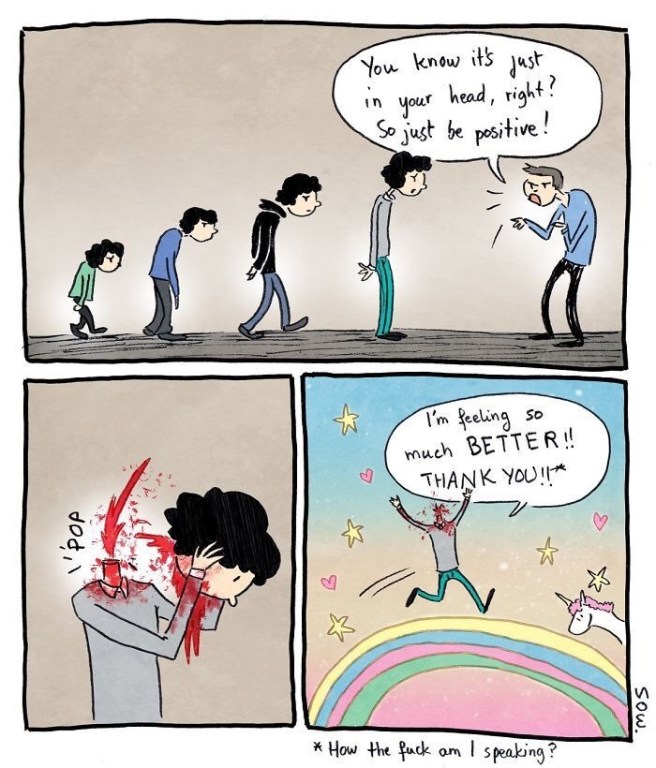
The day I rebuked someone for saying “depression is in your head” with the comeback “Yes. And there’s an organ in your head called the brain – or at least in MY head, sounds to me like you don’t have one at the present moment – and a brain is a physical component of the body, therefore depression is a Physical ailment”…
that day was the day I took my first step toward accepting it as a disability and forgiving myself for having to live with something so stigmatized
and;
when people attribute depression to being “all in your head,” what they’re really doing is connecting your illness to an expectation of sufferers being virtuous and having enough willpower, almost making it an issue of personal integrity, as if fostering and growing those is the only – or even the most effective – “cure,” and if you’re weak in those areas and not persevering hard enough, then it’s a moral failing
it’s not
My former boss once asked me if I was sure the depression wasn’t “only” in my head.
And I said, “Yes. That’s why they call it a mental illness.”
Just because you can’t see it doesn’t mean it isn’t there.
Hello everybody! I was just thinking about how I always recommend people who can’t get therapy to use workbooks, so I thought I’d make a quick list of some you could look at. I’m not comfortable recommending books for things I have not struggled with (like, if I was looking at the description of a book on OCD I’d have no idea if it was good or not) but I think I’ve covered a lot. Some of these are series which have workbooks for specific disorders like bipolar, etc., if you want to find some. Plus, you don’t have to be diagnosed with something to use a workbook if you think it’ll help you.
Workbooks are sometimes made to be done in conjunction with therapy, or something like that, but anyone can still get something out of them if you put in regular work and try to apply the skills.
I’ve linked them all the Amazon because they’re usually cheaper on there.
For reference: DBT = dialectical behaviour therapy, CBT = cognitive behavioural therapy, ACT = acceptance and commitment therapy
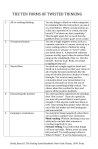
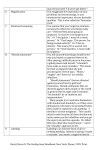
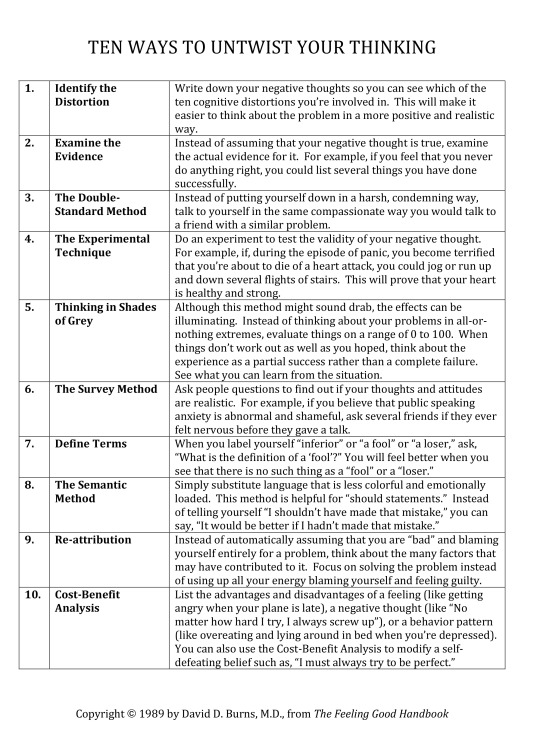
During my first month with my therapist, I was given this worksheet to read and work on. She noticed that while I was talking with her, that my thoughts followed a lot of these. I wasn’t aware that my anxiety had brought me down paths of low self-worth and stinky thinking.
After a couple of weeks of talking with her, she gave me this worksheet to work on.
While, at first, I thought these weren’t going to work out, I was very surprised to see just how easy they were to use . My homework at that time was to identify which sort of thinking I used on the regular and which ones would best challenge them for me.
So, what do you think? Do any of the maladaptive thinking patterns sound like you? which ways would you like to untwist your thinking?


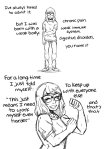
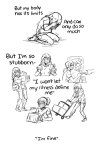
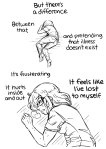
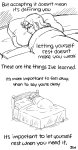
 Holding the Bowl