
The number of high profile deaths recently relating back to addiction and mental health issues is absolutely devastating; those struggling should be met with kindness and understanding, not stigma and hate.
For anyone out there battling demons such as these, know that you are not alone and you deserve to be helped and to be loved.
Tag: mental health
here’s a tip: if you start dating a depressed person, don’t be surprised if they are still depressed while they are dating you.
they’re not depressed because they’re single, and you are not an all-powerful cure for mental illnesses. just be there for them.REAL
FUCKING
TALK
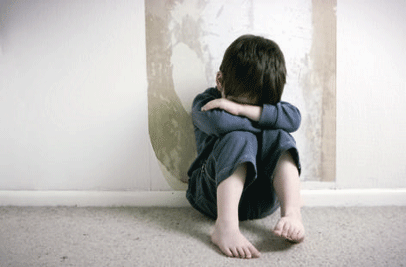
Stress tied to change in children’s gene expression related to emotion regulation, physical health
Children who have been abused or neglected early in life are at risk for developing both emotional and physical health problems. In a new study, scientists have found that maltreatment affects the way genes are activated, which has implications for children’s long-term development. Previous studies focused on how a particular child’s individual characteristics and genetics interacted with that child’s experiences in an effort to understand how health problems emerge. In the new study, researchers were able to measure the degree to which genes were turned “on” or “off” through a biochemical process called methylation. This new technique reveals the ways that nurture changes nature—that is, how our social experiences can change the underlying biology of our genes.
The study, from researchers at the University of Wisconsin, Madison, appears in the journal Child Development. Nearly 1 million children in the United States are neglected or abused every year.
The researchers found an association between the kind of parenting children had and a particular gene (called the glucocorticoid receptor gene) that’s responsible for crucial aspects of social functioning and health. Not all genes are active at all times. DNA methylation is one of several biochemical mechanisms that cells use to control whether genes are turned on or off. The researchers examined DNA methylation in the blood of 56 children ages 11 to 14. Half of the children had been physically abused.
They found that compared to the children who hadn’t been maltreated, the maltreated children had increased methylation on several sites of the glucocorticoid receptor gene, also known as NR3C1, echoing the findings of earlier studies of rodents. In this study, the effect occurred on the section of the gene that’s critical for nerve growth factor, which is an important part of healthy brain development.
There were no differences in the genes that the children were born with, the study found; instead, the differences were seen in the extent to which the genes had been turned on or off. “This link between early life stress and changes in genes may uncover how early childhood experiences get under the skin and confer lifelong risk,” notes Seth D. Pollak, professor of psychology and pediatrics at the University of Wisconsin, Madison, who directed the study.
Previous studies have shown that children who have experienced physical abuse, sexual abuse, and neglect are more likely to develop mood, anxiety, and aggressive disorders, as well as to have problems regulating their emotions. These problems, in turn, can disrupt relationships and affect school performance. Maltreated children are also at risk for chronic health problems such as cardiac disease and cancer. The current study helps explain why these childhood experiences can affect health years later.
The gene identified by the researchers affects the hypothalamic-pituitary-adrenal (HPA) axis in rodents. Disruptions of this system in the brain would make it difficult for people to regulate their emotional behavior and stress levels. Circulating through the body in the blood, this gene affects the immune system, leaving individuals less able to fight off germs and more vulnerable to illnesses.
“Our finding that children who were physically maltreated display a specific change to the glucocorticoid receptor gene could explain why abused children have more emotional difficulties as they age,” according to Pollak. “They may have fewer glucocorticoid receptors in their brains, which would impair the brain’s stress-response system and result in problems regulating stress.”
The findings have implications for designing more effective interventions for children, especially since studies of animals indicate that the effects of poor parenting on gene methylation may be reversible if caregiving improves. The study also adds to what we know about how child maltreatment relates to changes in the body and mind, findings that were summarized recently in an SRCD Social Policy Report by Sara R. Jaffee and Cindy W. Christian.
being bullied, abused, scapegoated, and neglected in school crippled my brain’s reward mechanism. despite having responsible, supportive parents, i was permanently damaged by that experience. medicating my anxiety and depression helps a lot, but it will still always be there. bullying is a form of child abuse. emotional cruelty from authority figures is a form of child abuse. this shit is real.
a society that’s happy to sprain itself bending over backwards to make sure kids don’t see sex on tv is willing to accept kids’ minds being permanently scarred in school. i just don’t understand.
Games may ease depression, anxiety in players
Video games can be entertaining, but could they also help improve mental health?…
“A lot of them look exactly the same as games that someone could play just for fun. So they may have cartoon characters, they could have missions, but embedded in that game are treatment mechanisms,” said Tracy Dennis, Professor of Psychology at Hunter College.
Dennis designed one such game called Personal Zen. She says preliminary findings show after playing the game for 20 minutes the brain starts processing negative information differently.
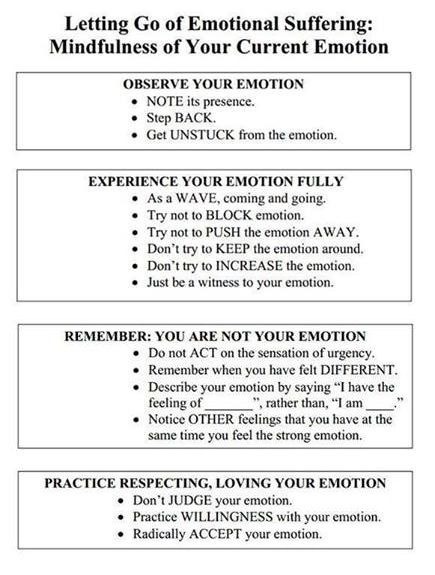
How to Take Control of Negative Emotions
1. Don’t take every thought and feeling seriously. Both of those tend to be patterned and habitual. Thus, they are not necessarily accurate and reliable.
2. Don’t blow small things out of proportion. Take control of your thinking and keep things in perspective. Don’t allow yourself to dwell on negatives, or critical thoughts.
3. Accept that we’re all hit by negative emotions. It’s a fact of life – and is unavoidable.
4. Work on strategies that work for you, and that help distract you from the way you feel.
5. Deliberately think about more positive things – like what is going well, or the things you’re thankful for – then shrug your shoulders and move on with your day.
6. Notice your triggers – the things that bother you, attack your self esteem and your self confidence – so you recognise the patterns and can plan how best to cope.
It’s Different for Girls with ADHD
When you live in total squalor—cookies in your pants drawer, pants in your cookies drawer, and nickels, dresses, old New Yorkers, and apple seeds in your bed—it’s hard to know where to look when you lose your keys. The other day, after two weeks of fruitless searching, I found my keys in the refrigerator on top of the roasted garlic hummus. I can’t say I was surprised. I was surprised when my psychiatrist diagnosed me with ADHD two years ago, when I was a junior at Yale.
In editorials and in waiting rooms, concerns of too-liberal diagnoses and over-medication dominate our discussions of Attention Deficit Hyperactivity Disorder, or ADHD. The New York Times recently reported, with great alarm, the findings of a new Center for Disease Control and Prevention study: 11 percent of school-age children have received an ADHD diagnosis, a 16 percent increase since 2007. And rising diagnoses mean rising treatments—drugs like Adderall and Ritalin are more accessible than ever, whether prescribed by a physician or purchased in a library. The consequences of misuse and abuse of these drugs are dangerous, sometimes fatal.
Yet also harmful are the consequences of ADHD untreated, an all-too-common story for women like me, who not only develop symptoms later in life, but also have symptoms—disorganization and forgetfulness, for instance—that look different than those typically expressed in males. While the New York Times’ Op-Ed columnist Roger Cohen may claim that Adderall and other “smart” drugs “have become to college what steroids are to baseball,” these drugs have given me, a relatively unambitious young adult who does not need to cram for tests or club until 6 a.m., a more normal, settled life.
The idea that young adults, particularly women, actually have ADHD routinely evokes skepticism. As a fairly driven adult female who had found the strength to sit through biology lectures and avoid major academic or social failures, I, too, was initially perplexed by my diagnosis. My peers were also confused, and rather certain my psychiatrist was misguided. “Of course you don’t have ADHD. You’re smart,” a friend told me, definitively, before switching to the far more compelling topic: medication. “So are you going to take Adderall and become super skinny?” “Are you going to sell it?” “Are you going to snort it?”
The answer to all of those questions was no. I would be taking Concerta, a relative of Ritalin. Dr. Ellen Littman, author of Understanding Girls with ADHD, has studied high IQ adults and adolescents with the disorder for more than 25 years. She attributes the under-diagnosis of girls and women—estimated to be around 4 million who are not diagnosed, or half to three-quarters of all women with ADHD—and the misunderstandings that have ensued about the disorder as it manifests in females, to the early clinical studies of ADHD in the 1970s. “These studies were based on really hyperactive young white boys who were taken to clinics,” Littman says. “The diagnostic criteria were developed based on those studies. As a result, those criteria over-represent the symptoms you see in young boys, making it difficult for girls to be diagnosed unless they behave like hyperactive boys.”
ADHD does not look the same in boys and girls. Women with the disorder tend to be less hyperactive and impulsive, more disorganized, scattered, forgetful, and introverted. “They’ve alternately been anxious or depressed for years,” Littman says. “It’s this sense of not being able to hold everything together.”
Further, while a decrease in symptoms at puberty is common for boys, the opposite is true for girls, whose symptoms intensify as estrogen increases in their system, thus complicating the general perception that ADHD is resolved by puberty. One of the criteria for ADHD long held by the Diagnostic and Statistical Manual, published by the American Psychiatric Association, is that symptoms appear by age 7. While this age is expected to change to 12 in the new DSM-V, symptoms may not emerge until college for many girls, when the organizing structure of home life—parents, rules, chores, and daily, mandatory school—is eliminated, and as estrogen levels increase. “Symptoms may still be present in these girls early on,” says Dr. Pat Quinn, cofounder of The National Center for Girls and Women with ADHD. “They just might not affect functioning until a girl is older.” Even if girls do outwardly express symptoms, they are less likely to receive diagnoses. A 2009 study conducted by atThe University of Queenland found that girls displaying ADHD symptoms are less likely to be referred for mental health services.
In “The Secret Lives of Girls with ADHD,” published in the December 2012 issue ofAttention, Dr. Littman investigates the emotional cost of high IQ girls with ADHD, particularly for those undiagnosed. Confused and ashamed by their struggles, girls will internalize their inability to meet social expectations. Sari Solden, a therapist and author of Women and Attention Deficit Disorder, says, “For a long time, these girls see their trouble prioritizing, organizing, coordinating, and paying attention as character flaws. No one told them it’s neurobiological.”
Often, women who are finally diagnosed with ADHD in their twenties or beyond have been anxious or depressed for years. A recent study published in the Journal of Consulting and Clinical Psychology found that girls with ADHD have high rates of self-injury and suicide during their teenage years, at last bringing attention to the distinct severity of ADHD in females. In Pediatrics, a large population study found that the majority of adults with ADHD had at least one other psychiatric disorder, from alcohol abuse to hypomanic episodes to major depression. This poses a particular threat to females, for whom ADHD diagnoses tend to come later in life.
For the two decades prior to my diagnosis, I never would have suspected my symptoms were symptoms; rather, I considered these traits—my messiness, forgetfulness, trouble concentrating, important-document-losing—to be embarrassing personal failings. Matters really deteriorated in college, when I was wrongfully allowed a room of my own, leaving me with no mother to check up on “that space between your bed and the wall,” where moldy teacups, money, and important documents would lie dormant. I maintained a room so cluttered that fire inspectors not only threatened to fine me 200 dollars if I didn’t clean, they insisted it was the messiest room they had ever seen (boys’ included!) in their twenty years of service. Throughout college, I would lose my ID and keys about five times a semester. I’d consistently show up for work three hours early or three hours late. I once misplaced my cellphone only to find it, weeks later, in a shoe.
“Often, if girls are smart or in supportive homes, symptoms are masked,” Solden says. “Because they’re not hyperactive or causing trouble for other people, they’re usually not diagnosed until they hit a wall, often at college, marriage, or pregnancy. A lot of things that are simple and routine to other people—like buying groceries, making dinner, keeping track of possessions, and responding to emails—do not become automatic to these women, which can be embarrassing and exhausting.”
As a recent college graduate cautiously negotiating adulthood in New York City, I am both embarrassed and exhausted by my struggles to keep track of objects and time. While the stakes have become significantly higher—credit cards, passports, and cameras have slipped through my fingers—medication has minimized the frequency of these incidents.
I can’t say that I know what part is ADHD, what part is me, or whether there’s a difference. I can say that ADHD medication (in conjunction with SSRIs) has granted me a base level of functionality; it has granted me the cognitive energy to sit at my jobs, to keep track of my schedule and most possessions, and to maintain a semblance of control over the quotidian, fairly standard tasks that had overwhelmed me—like doing laundry, or finding a sensible place to put my passport.
Medication is certainly not a cure-all, but when paired with the awareness granted by a diagnosis, it has rendered my symptoms more bearable—less unknown, less shameful. And while I’m certain I’ll continue to misplace and forget objects, I have discovered the virtues of a little self-love, a lot of self-forgiveness, and even using different drawers to store different things.
The drawer thing, though, is a work in progress. The next time I misplace my keys, the fridge will be the first place I look.
—Maria Yagoda
7 Key Insights on Self Love
1. I need to affirm and to validate myself as it’s hard to accept validation from others if, deep down inside, I don’t believe it’s true.
2. My time is valuable as anybody else’s so I need to prioritise what I need to do.
3. I can’t give to others, and help to build them up, if I’m not taking care of my own self first.
4. I need to remember that I’m worthy of love, of success, opportunities, and knowing happiness.
5. My opinions are as valuable as anybody else’s. It’s up to me to decide and to choose my own beliefs.
6. I don’t have to explain why I do what I do (unless you’re the police or have some authority!)
7. My past does not define me – I’m free to change and grow, to try on different “me”s, and to set inspiring goals.
Attachment Disorder
Attachment disorder is where a child or adult is unable to form normal healthy attachments. This is usually due to detrimental early life experiences – such as neglect, abuse, separation from their parents or primary caregivers (after six months of age and before three years of age), frequent change of caregivers, and lack of responsiveness from their caregivers.
Symptoms vary depending on age. In adults, they fall under one of two categories – either avoidant or anxious/ ambivalent personalities. These are summarized below.
1. Avoidant
· Intense anger and hostility
· Hypercritical of others
· Extremely sensitive to criticism, correction or blame
· Lacks empathy
· Sees others as untrustworthy and unreliable
· Either sees themselves as being unlovable or “too good” for others
· Relationships are experienced as either being too threatening or requiring too much effort
· Fear of closeness and intimacy
· Compulsive self-reliance
· Passive or uninvolved in relationships
· Find it hard to get along with co-workers and authority figures
· Prefers to work alone, or to be self employed
· May use work to avoid investing in relationships
2. Anxious/ Ambivalent
· Demonstrates compulsive caregiving
· Problems with establishing and maintaining appropriate boundaries
· Feels they give they give more than they get back
· Feels their efforts aren’t noticed or appreciated
· Idealizes people
· Expects their partner to repeatedly demonstrate their love, affection and commitment to them, and the relationship
· Emotionally over-invests in friendships and romantic relationships
· Are preoccupied with close relationships
· Overly dependent on their partner
· Believes that others are out to use them or to take advantage of them
· Fears rejection
· Is uncomfortable with anger
· Experiences a roller coaster of emotions – and often these are extremes of emotion
· Tends to be possessive and jealous; finds it hard to trust
· Believes they are essentially flawed, inadequate and unlovable.

 Holding the Bowl