cosmic-noir:

empressrarapo:

papi-chulo-bucky:

rainbowwhimsyart:

backstageleft:

nonespark:

a-littlebit-ofsunshine:

palewansickly:

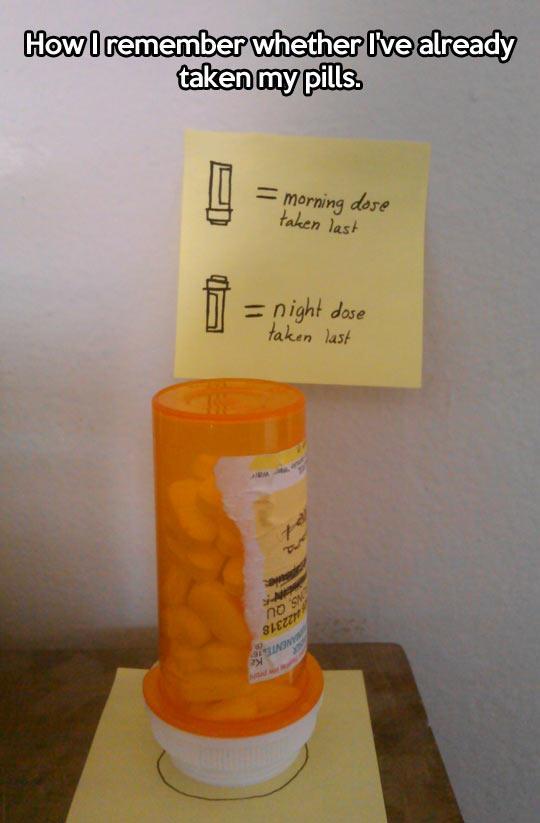
OMG. This. Changes. Everything.

Reblogging for my followers who might have trouble remembering whether or not they’ve taken their medicine!

OH MY GOD, THIS WILL HELP ME SO MUCH. I GET SO SCARED WHEN I DON’T KNOW IF I JUST TOOK MY MEDS TWICE.

THANK YOU, I’M ABOUT TO CRY.

Let me share with you guys a product that super helps me remember if I took my meds or not (because while the above is great, I still would manage to confuse myself):

They count as soon as you put the top back on. So if I don’t know if I’ve taken my medication for the day, I can check the cap to see how long ago I opened the container! It’s brilliant! 

JFC THIS IS A GAME CHANGER.

I KNOW THIS IS MY ART BLOG BUT EVERYONE WHO TAKES MEDS SHOULD SEE THIS.

Don’t forget! ♥️

@dommebadwolff23 @litaqutie

YOOOOOOOO

Friendly reminder:

morethanjustanumber:

Health looks different for everyone.

If drinking a Diet Coke in the morning stops you from getting a 500 calorie Frappucino, then do it.

If your mile takes 17 minutes to complete, complete it.

If you love meat, eat it. If you’re vegan, get that plant-based protein.

Do what is best for your body at the pace that you can handle.

There is no wrong way to be better and you will not be perfect overnight.

Keep failing until you fly and I’ll be cheering for you every step and stumble along the way.

Cardiac distress symptoms in women

solarine:

In the wake of Carrie Fisher’s death four days after she suffered a massive heart attack, one thing that was reported by some news outlets was that she had been in “significant distress” on the flight. We don’t know the exact details of this, but in my experience as an EMT, it often means “hysterical woman having a panic attack and thinking she’s dying…*woman dies* …oops, guess she really was dying.” 

It is SO IMPORTANT to remember that many women present in what medicine considers an ‘atypical’ manner for heart attack, but it actually IS typical…for women. Women are more than twice as likely to die from cardiac emergencies, not because our physiology is that much different than men and thus gives us a worse chance at survival (it’s actually better if treated promptly and adequately), but because our symptoms are more likely to go unrecognized or to be dismissed entirely.

Thus, please take a moment to review and pass on this list of cardiac distress symptoms as seen in women: 

Shortness of breath – This is the most common one. If a woman, especially one without prior history of respiratory issues or shortness of breath, seems to be having trouble catching her breath and/or complains of such, pay very close attention. If she continues to feel winded after sitting or laying down, it’s probably time to call for help.

Feeling of impending doom – This can range from a sense of general unease to a full-blown panic attack. This one is extremely important, and is the symptom most commonly disregarded by doctors and hospital staff. If a woman tells you that she feels ‘not quite right,’ or like something terrible is about to happen, or that she’s about to die, LISTEN TO HER FFS. 

Nausea and “indigestion” – Also common. Heart attacks frequently present as a feeling of vague nausea or indigestion, but unlike typical heartburn, antacids and other OTC treatments will not alleviate the symptoms.

Hiccups – Unexplained hiccups, especially if seen with any of the other symptoms listed above, can be indicative of heart muscle that is being acutely or chronically starved of oxygen.  The exact mechanism isn’t known, but it’s thought that the enzymes released by the dying muscle irritate the pericardium and adjacent diaphragm, causing spasms in the healthy muscle. 

Fatigue – This is another commonly seen symptom, and is often overlooked or ignored as just transient tiredness. Many women having a heart attack will complain of feeling “flu-like” symptoms of nausea, sweating, fatigue, and shortness of breath, and they’ll lie down for a nap and never wake up. 

Lightheadedness – A feeling of being lightheaded or about to faint isn’t terribly uncommon in many benign conditions, and many women experience it on a monthly basis. However – be aware when it appears unexpectedly or unexplainedly, and/or with one or more of the other symptoms on this list. 

Sweating (diaphoresis) – Heart attack does funny things to the sympathetic nervous system, which is behind reflexes such as sweating and hiccups. If a lady is experiencing unexplained or excessive sweating, pay attention to anything else that might be going on with her. 

Tingling or numb extremities – A feeling of numbness or “pins and needles” tingling in the extremities can be an important sign that cardiac function is being impaired and those body parts aren’t receiving enough oxygen. 

Peripheral and/or central cyanosis – Often accompanies tingling or numbness, and is considered a later-stage symptom of cardiac distress and heart failure. Finger and toe tips will turn pale or blue first, and lips and gums after that. Important to remember that darker-skinned women may present cyanosis as ashen, grey, or darker purple rather than pale or blue. 

Back pain – Pain between the shoulder blades, in the cervical spine, or even further down in the torso or lumbar region can be a symptom of heart attack. Alone, it isn’t that suspicious, but if it’s unrelenting and presents with any of the other symptoms above, keep a watchful eye on things. 

Classic “crushing” or “tight” chest pain or pressure – Women DO experience this classic pain, too, just not as frequently as men do. This may be due to our higher pain threshold, or differences in blood volume, or maybe we’re just not sure because nobody’s bothered to really study it. Whatever the reason, some women do still experience the crushing or tightening pain, and others may experience less painful pressure or tightness that doesn’t seem to be relieved by anything.

Arm and jaw pain – Another “classic” heart attack symptom, and a bit more common than central chest pain. Unexplained pain in the left arm or shoulder, and on the left side of the neck or jaw, should not be ignored by anyone.

pastthestorm:

duskenpath:

thecraftychemist:

neuromorphogenesis:

Missing link found between brain, immune system — with major disease implications

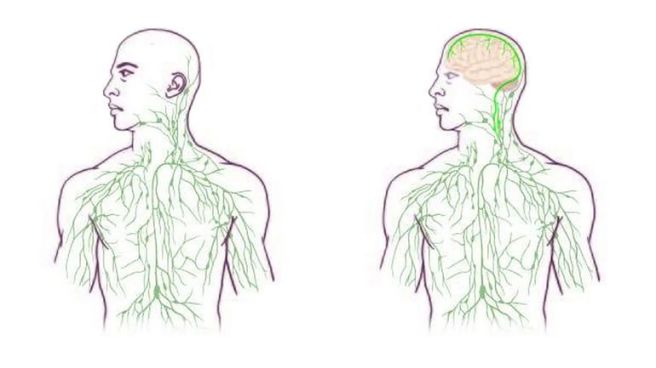
In a stunning discovery that overturns decades of textbook teaching, researchers at the University of Virginia School of Medicine have determined that the brain is directly connected to the immune system by vessels previously thought not to exist.

That such vessels could have escaped detection when the lymphatic system has been so thoroughly mapped throughout the body is surprising on its own, but the true significance of the discovery lies in the effects it could have on the study and treatment of neurological diseases ranging from autism to Alzheimer’s disease to multiple sclerosis.

“Instead of asking, ‘How do we study the immune response of the brain?,’ ‘Why do multiple sclerosis patients have the immune attacks?,’ now we can approach this mechanistically – because the brain is like every other tissue connected to the peripheral immune system through meningeal lymphatic vessels,” said Jonathan Kipnis, a professor in U.Va.’s Department of Neuroscience and director of U.Va.’s Center for Brain Immunology and Glia. “It changes entirely the way we perceive the neuro-immune interaction. We always perceived it before as something esoteric that can’t be studied. But now we can ask mechanistic questions.“

He added, “We believe that for every neurological disease that has an immune component to it, these vessels may play a major role. [It’s] hard to imagine that these vessels would not be involved in a [neurological] disease with an immune component.”

Kevin Lee, who chairs the Department of Neuroscience, described his reaction to the discovery by Kipnis’ lab: “The first time these guys showed me the basic result, I just said one sentence: ‘They’ll have to change the textbooks.’ There has never been a lymphatic system for the central nervous system, and it was very clear from that first singular observation – and they’ve done many studies since then to bolster the finding – that it will fundamentally change the way people look at the central nervous system’s relationship with the immune system.”

Even Kipnis was skeptical initially. “I really did not believe there are structures in the body that we are not aware of. I thought the body was mapped,” he said. “I thought that these discoveries ended somewhere around the middle of the last century. But apparently they have not.

The discovery was made possible by the work of Antoine Louveau, a postdoctoral fellow in Kipnis’ lab. The vessels were detected after Louveau developed a method to mount a mouse’s meninges – the membranes covering the brain – on a single slide so that they could be examined as a whole. “It was fairly easy, actually,” he said. “There was one trick: We fixed the meninges within the skullcap, so that the tissue is secured in its physiological condition, and then we dissected it. If we had done it the other way around, it wouldn’t have worked.”

After noticing vessel-like patterns in the distribution of immune cells on his slides, he tested for lymphatic vessels and there they were. The impossible existed.

The soft-spoken Louveau recalled the moment: “I called Jony [Kipnis] to the microscope and I said, ‘I think we have something.’”

As to how the brain’s lymphatic vessels managed to escape notice all this time, Kipnis described them as “very well hidden” and noted that they follow a major blood vessel down into the sinuses, an area difficult to image. “It’s so close to the blood vessel, you just miss it,” he said. “If you don’t know what you’re after, you just miss it.

“Live imaging of these vessels was crucial to demonstrate their function, and it would not be possible without collaboration with Tajie Harris,” Kipnis noted. Harris is an assistant professor of neuroscience and a member of the Center for Brain Immunology and Glia. Kipnis also saluted the “phenomenal” surgical skills of Igor Smirnov, a research associate in the Kipnis lab whose work was critical to the imaging success of the study.

The unexpected presence of the lymphatic vessels raises a tremendous number of questions that now need answers, both about the workings of the brain and the diseases that plague it.

For example, take Alzheimer’s disease. “In Alzheimer’s, there are accumulations of big protein chunks in the brain,” Kipnis said. “We think they may be accumulating in the brain because they’re not being efficiently removed by these vessels.” He noted that the vessels look different with age, so the role they play in aging is another avenue to explore.

And there’s an enormous array of other neurological diseases, from autism to multiple sclerosis, that must be reconsidered in light of the presence of something science insisted did not exist.

Image: 

The lymphatic system map: old (left) and new.

Source

This is really big. This is really big news in medicine and I suspect in mental health as well. Consider the recent discoveries around the association between mental health and the immune system;

There are still so many things we are finding out about the nature of disease and the human body – especially the brain.

Interestingly this agrees with what a lot of non western medical modalities have said for centuries, big stuff

guys this is real! source: http://www.sciencedaily.com/releases/2015/06/150615094258.htm

How to Survive a Health Crisis or Chronic Illness in Marriage | Reader’s Digest

A medical crisis or lifelong health condition rewrites the script of your relationship. Your roles may change drastically. Your future doesn’t look the way you’d hoped. Sex, money, work, chores, fun — they’re all different now. “Managing the way an illness affects your marriage is just as important as keeping up with medications and doctor’s appointments and treatments,” Dr. Sotile says.

“Today, most illnesses aren’t short events. They’re processes that go on and on and on, possibly for the rest of your lives. And both of you will need different things at different times in the process. Couples who take responsibility for this can build stronger, closer marriages despite the presence of illness.”

Read more

How to Survive a Health Crisis or Chronic Illness in Marriage | Reader’s Digest

revenge-of-the-sock-puppets:

transyoite:

phantomdoodler:

yourpersonalcheerleader:

laughingsquid:

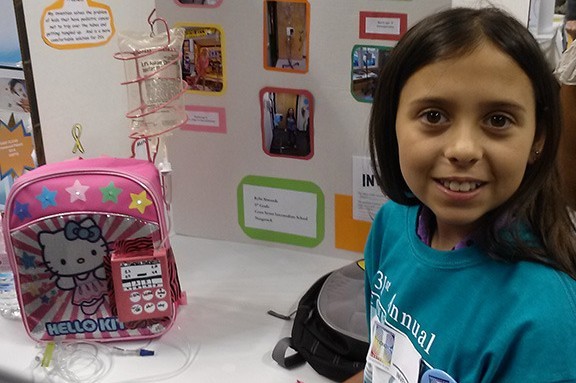
After Battling Cancer, 11-Year Old Girl Invented a ‘Chemo Backpack’ to Replace Bulky IV Poles

Smart!!

She’s currently raising funds to begin production

Her name is Kylie Simonds. please don’t forget her name.

Kylie Simonds you are a badass of the highest order and I salute you. I would also like an IV pack for my infusions? You rock, kid.

Proof That Hiking Makes You Happier And Healthier

Proof That Hiking Makes You Happier And Healthier

How Proper Self Care Can Reduce Your Stress

How Proper Self Care Can Reduce Your Stress

Tips to be your child’s health advocate

Being engaged and informed in your child’s health is one of the most important roles that a parent can fill, but dealing with a health issue can be anxiety-inducing for most parents. Here are some practical tips to help you navigate health concerns for your child.

BE INFORMED: If you have been referred to a specialist, make a list of questions prior to the visit. Keep a journal with dates and notes of each episode that your child has had and any medications the child has taken. For instance, if your child is seeing an allergist, bring a list of all known allergies, foods that triggered a reaction, severity and type of reaction, time to reaction, and any medications taken.

FIND SUPPORT: Join a support group with parents who have children coping with similar health issues. You can connect with parents in a local support group or online – and these connections can help you with everything from finding the right doctor to dealing with the emotional stress of a new diagnosis. Kinsights.com hosts online support communities to connect parents who are dealing with similar conditions and concerns. The site is also a secure resource to store your child’s medical history so you can keep track of your child’s health.

ASK QUESTIONS: Knowledge is power. Spend time doing research and get familiar with the medical terminology associated with your child’s condition. You’ll be a more informed parent, and you’ll be empowered to ask better questions during your child’s appointments.

BE PROACTIVE: Keep a copy of your child’s medical records with you when seeing a new specialist. Keep accurate records of dates and treatments for each doctor you’ve seen so that you aren’t piecing together your child’s medical history each time you see a new physician.

Whether you are managing an ongoing health issue or are in the process of finding a diagnosis, connecting with parents who have been in your shoes before can provide a crucial support network. And access to health information is better than ever before – just make sure you’re looking at reliable sources for research, medical information and insights on your child’s condition.

Tips to be your child’s health advocate