
Being engaged and informed in your child’s health is one of the most important roles that a parent can fill, but dealing with a health issue can be anxiety-inducing for most parents. Here are some practical tips to help you navigate health concerns for your child.
BE INFORMED: If you have been referred to a specialist, make a list of questions prior to the visit. Keep a journal with dates and notes of each episode that your child has had and any medications the child has taken. For instance, if your child is seeing an allergist, bring a list of all known allergies, foods that triggered a reaction, severity and type of reaction, time to reaction, and any medications taken.
FIND SUPPORT: Join a support group with parents who have children coping with similar health issues. You can connect with parents in a local support group or online – and these connections can help you with everything from finding the right doctor to dealing with the emotional stress of a new diagnosis. Kinsights.com hosts online support communities to connect parents who are dealing with similar conditions and concerns. The site is also a secure resource to store your child’s medical history so you can keep track of your child’s health.
ASK QUESTIONS: Knowledge is power. Spend time doing research and get familiar with the medical terminology associated with your child’s condition. You’ll be a more informed parent, and you’ll be empowered to ask better questions during your child’s appointments.
BE PROACTIVE: Keep a copy of your child’s medical records with you when seeing a new specialist. Keep accurate records of dates and treatments for each doctor you’ve seen so that you aren’t piecing together your child’s medical history each time you see a new physician.
Whether you are managing an ongoing health issue or are in the process of finding a diagnosis, connecting with parents who have been in your shoes before can provide a crucial support network. And access to health information is better than ever before – just make sure you’re looking at reliable sources for research, medical information and insights on your child’s condition.
Tag: Disabilities
“One of the best examples,” Jackson said, “ is that at the end of WWII some librarians decided that they wanted to put books on tape for people who lost their vision. Those were the first audiobooks. And today, there’s Audible.com, there’s Amazon, there are so many uses for audiobooks outside of those who are visually impaired.”
There are dozens more examples. Under Armor recently acquired the patent for a one-handed zipper. NPR added transcripts to their site for the hearing-impaired, and their traffic increased 7%. Inclusivity is a good business move.
If someone doesn’t “seem” disabled to you, maybe it’s because they’ve been forced to develop a huge and complex system of coping mechanisms in order to try and survive in an ableist world. It’s probably that.

Tips for helping your special needs child get through Independence Day
Independence Day is one of the most difficult days for children with special needs. Most special needs kids are either terrified of the sound, afraid of the flames, or don’t care for the extra people crowding the streets. If you are worried about your special needs child this Independence Day, these tips might be able to help you ensure that your little ones have a happy, fun, safe Fourth of July.
- Don’t force the issue. If your child doesn’t want to participate in the festivities, don’t force them to. This can cause all kinds of problems from meltdowns, over-excitement and agitation. It’s not worth the hassle just so that they can see a few cool explosions in the sky.
- If your child wants to participate in the fireworks but is still scared, take them to pick out their own that they feel comfortable. When you go, find someone that can assist you so that you can have them explain all the sounds, colors, and other things that they do. Each person that works at a fireworks stand has gotten a free show of everything so that they know what they do and can explain them to you.
- Create a safe space inside the house where they can see if they want that is away from all the flashing, popping, and loud sounds. If they know they have a place that they can go, sometimes it makes things easier on our special needs kiddos.
- Get earplugs! Don’t be cheap with them either. Loud sounds are the culprit of kids disliking firework displays. Choose a good brand that will mold to the shape of your kiddos ear for the best fit possible.
- Lastly, consider alternatives. Perhaps that is the best time for the family to go have their camping trip or do something else fun that the whole family can enjoy. Fireworks aren’t for everyone. There are a ton more fun ways that the whole family can enjoy the holiday and spend less money than a fireworks display that will be over in 20 minutes.
My Parents are Dead and My Sister is Disabled
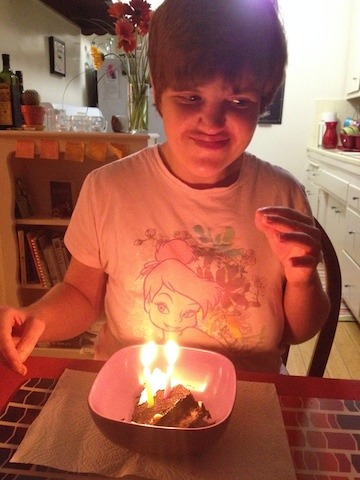
On May 28th, my sister, Edna, turned 31.
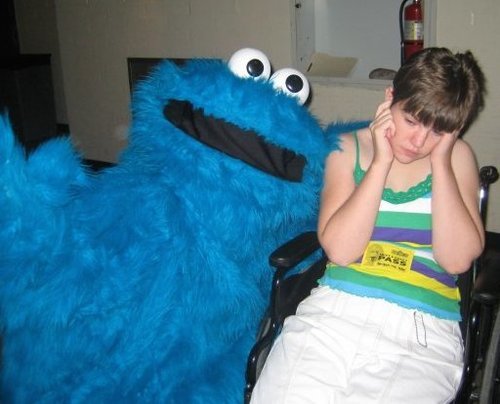
Her mental age is about three years old. She loves Winnie the Pooh, Beauty & the Beast, and Sesame Street. Even though the below picture is unconvincing.
Edna and “Cookie.” I think she was trying to play it…
ideal life
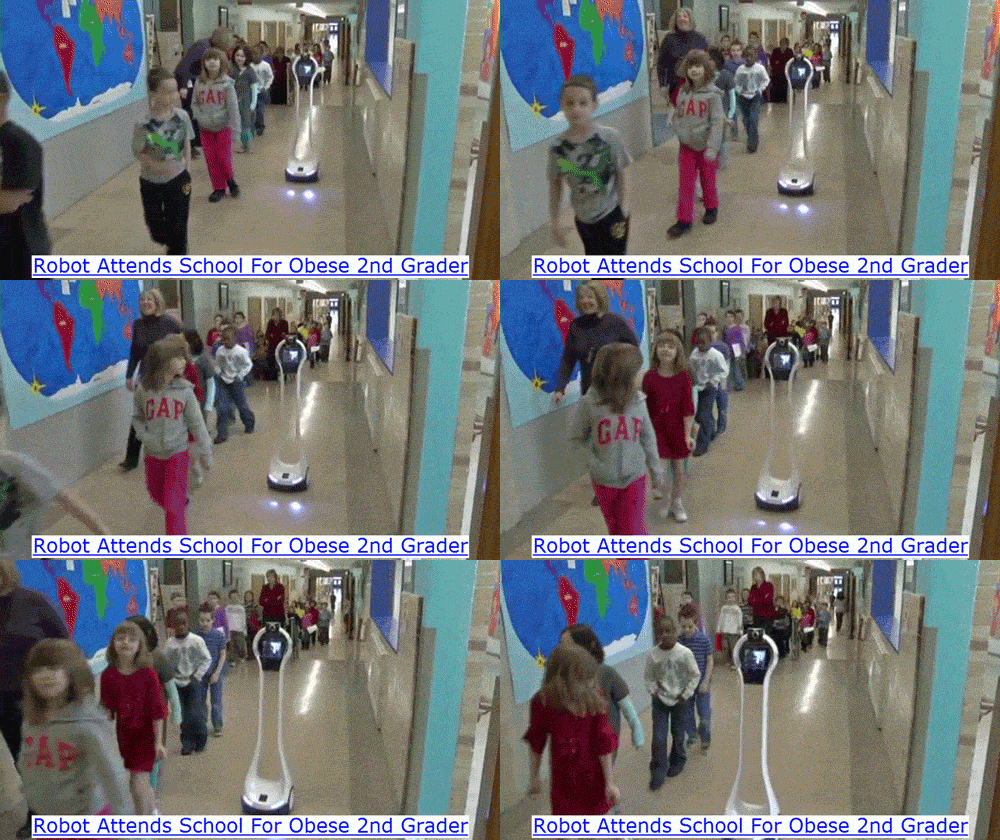
This robot is for a very sick little boy who suffers from eosinophilic esophagitis and anaphylactic shock syndrome. His obesity is a symptom and unrelated to why he must send a robot to school.
If there are even tiny particles of milk or peanuts in the air, he will end up in the emergency room. He is basically allergic to life and has been in intensive care twice in the last 2 years. This robot allows him to go to school. He can learn, interact with students and teachers, and make friends that aren’t nurses and doctors.
Sometimes when I tell people I have to work from bed most days, they respond with, “I wish I could do that.” or “That sounds awesome.”
I know this is an easy and obvious joke to make, and I am not admonishing anyone who has made that kind of joke. But I would like people to know that it is hurtful. One of the more hurtful things that is said to me, if I’m being honest. Because I want nothing more than to get out of this bed. And I think this kid would like to play with his friends in real life rather than sending his robot to school. Our lives are not ideal, but we adapt them to make the best out of a bad situation.
Love, Dating, Relationships and Disability
Love comes in all shapes and sizes, and sometimes the shapes and sizes include disabilities, big and small. We’re exploring love in many forms with first-hand accounts from the frontlines of dating, marriage, intimacy and friendship, all with people living—and loving—with disabilities or challenges like long-distance romance.
 Holding the Bowl