Self-Driving Car Completes Drive Across America 99% Autonomously
Think of the freedom it’ll make for people like me, who have panic attacks when it comes to stuff like driving. The car mostly handling itself would ease some of that stress, significantly so if they continue research to make it safe and capable for city driving. People who lack the ability to handle cars, something I think a lot of people take for granted, would finally be that much more independent.
I wear glasses. Can I manage without glasses? Well, yes, probably. I could squint a lot, constantly move up close to anything I want to see, take the bus or a taxi if I want to go anywhere. I could just accept that I’ll never be able to see eagles flying in the sky or whales jumping out of the ocean.
But why? Why try so hard to manage life when I could just put on a pair of glasses? No one would ever suggest a near-sighted person should just work harder. No one would say ‘Maybe that’s just your normal’ to someone that needs glasses. They would say ‘Let’s go to the eye doctor and get you a prescription so you’re able to see again.’
You shouldn’t have to try so hard.
My doctor (paraphrased), when I expressed doubts about going back on an anti-depressant. (via
This is such a good analogy because nobody thinks about it like this. If you wear glasses, you literally need constant use of a medical aid to experience the world like most people do. If it were anything besides glasses, that would be considered a disability. But needing glasses is an extremely common, visible, and accepted form of disability to the point that we don’t even consider it one, we just accept that some people need glasses and that’s perfectly normal and there’s nothing wrong with needing to rely on them.
That is how all disabilities and illnesses should be seen, and how we should look at treatment for them. You have a problem, and you need help dealing with it, and there’s nothing wrong with either of those things. That’s perfectly normal and that’s okay.
it’s sort of ironic that the original article on spoon theory costs so many spoons to read, so i decided to write a brief summary for people who need it
spoon theory is an analogy
in it, spoons = energy
you get [x] number of spoons a day ([x] amount of energy), & doing things costs [x] number of spoons ([x] amount of energy)
for example, you get 10 spoons today; getting up costs 1, making food costs 2, making a phone call costs 2, watching a tv episode costs 2, etc
the purpose of spoon theory is to explain to abled/healthy people what being disabled/chronically ill is like, in a way they might find easier to understand
it highlights how little energy disabled/chronically ill people have when compared to abled healthy people, how much more energy things can cost, & how careful they have to be in prioritising what they spend that energy on
disabled/chronically ill people also use it as a way of talking about their energy levels
if you say “i’m low on spoons”, you’re not just saying you’re low on energy; you’re saying you’re low on energy because you’re disabled/chronically ill
for this reason, abled healthy people don’t get to say “i’m low on spoons”
For 8-year-old Noah Aldrich, his 6-year-old sibling, Lucas, is more than a brother; he’s a best friend.
Noah completed a mini-triathlon in Boise, Idaho, all while alternately pushing and pulling Lucas, who, as a result of a rare genetic condition, cannot walk, talk or eat on his own. The duo finished in a time just over 54 minutes. And while Lucas had a smile on his face for hours afterward, many adults at the finish line couldn’t contain their tears.
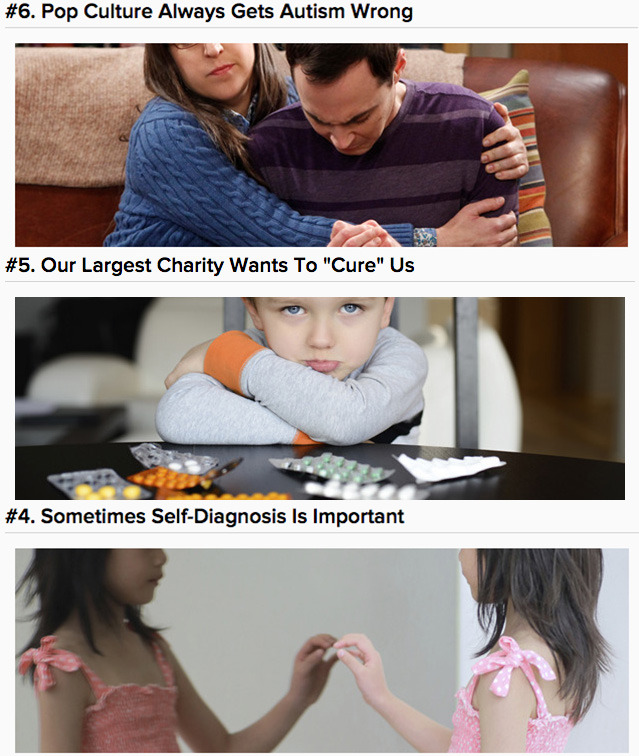
More than one percent of all children born in the United States today have autism. Some people, whom we shall politely refer to as “squealing jackasses” (we have some far more impolite terms ready), blame vaccines for the rise in cases. The real cause of this supposed autism boom is the simple fact that it was first diagnosed in 1943, so we basically only just figured out autism is a thing. We sat down with several high-functioning autistic people and asked them what our readers should know about their condition. Here’s what they said…
Ask their owners to leave without checking to see if the dog is a service animal
Roll your eyes when the dog is a service animal
Ask whether the dog is a service animal when they are clearly wearing a service coat
stop????????????? questioning my wife’s fucking service dog
It doesn’t matter if “other people have tried to bring pets inside,” that doesn’t give you the right to ask illegal questions??
That’s like saying, “Someone hit me with a stick once, so no one can use a walking cane in my establishment because they might hit me with it.”
if you see a dog wearing all of these:
ASSUME SHE IS A SERVICE DOG
Helpful Facts About Service Dogs
They can be any breed.
They may even be other species, such as miniature horses.
They are allowed anywhere the human public is allowed, such as restaurants, stores, markets, hotels, bathrooms, etc.
You do not need to ask if a dog is a service dog, as long as the dog is wearing a clearly-visible jacket.
As an owner/employee of an establishment that someone brings a dog to, you are only entitled to ask two questions. You don’t NEED to ask any. You are allowed to ask two.
The first question: “Is the animal required because of a disability?” NOTE: If it is obvious what the dog does and why it is required, you ARE NOT allowed to ask this question (for example, if the handler is in a wheelchair or also using a red-tipped white cane).
The second question: “What task does this animal perform?” ALSO not required if it’s obvious.
That’s it.
Any more and you are violating the ADA (Americans with Disabilities Act), opening yourself and your business up for a hefty lawsuit.
There are two times you are allowed to ask a service animal to leave. You are NEVER allowed to ask the dog’s handler to leave, no matter what the animal is doing.
The first time you are allowed to ask the animal to step outside: if it is not housebroken, and poses a sanitary risk.
The second time you are allowed to ask the animal to step outside: if it is acting aggressive towards or endangering other patrons.
That’s it.
You are only allowed to charge a cleaning fee if you would normally charge a human for the same fee. In other words, if the dog leaves hair on the floor and you wouldn’t charge a human for shedding on the floor, you can’t charge. If it’s a hotel and you wouldn’t charge a human for peeing in the tub, you cannot legally charge the dog for the same.
You are never allowed to ask for documentation that an animal is a legitimate service animal. This is in part to protect many people who don’t have access to medically-provided dogs, who have trained their own service dogs (perfectly legal and fine), or who can’t carry papers around with them at all times.
You may not ask that the animal perform their task for you. What the fuck, don’t do this. Think of allergy alert dogs—are you really going to wave an allergen in front of someone that might have a deadly allergy just to prove that the dog is “real?” congratulations, your ass is sued.
If you want more helpful facts please hit me up, I’m just really sick and tired of going places with my wife and her service dog only to get the message loud and clear that everyone is nervous and we’re unwelcome, when her dog is the most polite, well-trained, well-MARKED animal you’ve ever seen.
A typical conversation entering 2/3 businesses we went into today:
Person: Ma’am, you can’t have a pet in here. You have to leave. Wife: She’s a service dog. She’s wearing her coat. Person: Oh, sorry. We have to ask. People bring their pets in here sometimes, and we have to ask them to leave, because they’re not allowed. Wife: She’s not a pet, she’s a service animal.
Please spread this. Some people just don’t know. Others think that if they can’t see a disability, it doesn’t exist or need treatment.
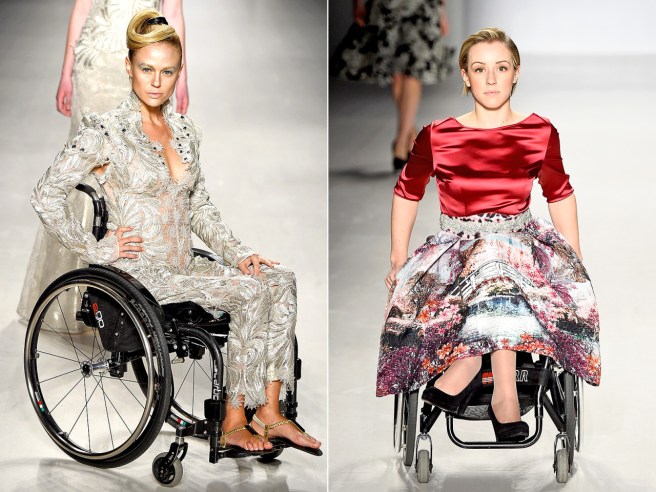
On April 17, 2015 (Friday) will take place the official #NoShameDay for the whole disabled community.
People with disabilities have a lot of insecurities about their bodies or meaning and value of their life. Many of them are ashamed of their physical or mental illness and closes on itself in their homes. How do I know that? Because I used to be one of them. I was born with cerebral palsy and I was using a wheelchair until I was 7, now I’m fighting with depression. I’m not ashamed about my physical and mental illness anymore. I accepted it and now I’m fighting for a better life.
Some people don’t have strength to fight for themselves so we have to helped them and encourage them! Being physically or mentally ill should not be linked with shame! Physical or mental illness can happen to anyone and there are no exceptions!
If you are physically/mentally disabled and you are not ashamed of it or
If you have someone in your family who is disabled and you are not ashamed of it or
If you are still fighting to not be ashamed of it but you need some support, encouragement and love or
You want to help others to begin to love yourself and not be ashamed of who they are because they are strong, beautiful and worth it…
Post your selfies, confessions, feelings etc. with #NoShameDay tag at April 17, 2015!!!!
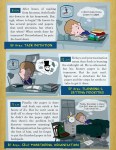
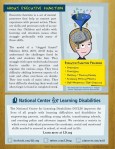
This is for those who don’t understand what executive function is. Even I know what it is after reading this and I can relate to this so much, especially in organization, impulse, and self-monitoring!
It doesn’t mention autism, but I know autistic people tend to be poor at executive functioning.
This is a great illustration of how complex executive functioning really is. “Executive functioning” isn’t just one trait, it’s a whole series of things (some of which aren’t even included here!) Executive functioning is more than just stereotypical “forgot my homework” ADHD cliches; it affects everything from prioritizing the steps involved in running errands to the flow and structure of conversation. And most people have more deficits in some areas than in others, so no two people with EF problems will be exactly alike.