Because you can never have enough guides to Disability Etiquette …
I’ve been wanting to write a post about “disability etiquette” for quite awhile. Mainly, I want to try to come up with a simple set of guidelines that covers the essentials of what we consider “disability etiquette.” First, I think we have to be clear about what “disability etiquette” is for.
Is it meant to make social interactions less annoying and humiliating for disabled people, so our everyday lives suck a little less? Or, is it designed to make non-disabled people feel more confident interacting with disabled people, so they will interact with us instead of shying away?
Obviously, it’s a little of both, and I don’t think the two goals necessarily conflict. With both in mind, let’s take a shot at a three-point guide, structured by three very basic questions I think non-disabled have about us, and that we have about how we actually want social interactions to go:
Question 1:
Is it okay to ask a disabled person about their disability?
Answer:
It depends on the situation and how well you know the disabled person. If you’re a stranger or an occasional acquaintance, it’s hard to justify asking a disabled person about the specifics of his or her disability. Even if you know them pretty well, if you’re talking about work, or your last vacation, then it’s probably awkward and inappropriate to suddenly say, “You know, I’ve always wondered, what is your disability actually called?” On the other hand, if you are a wheelchair user and you’re in an emergency room because you’re violently ill, it’s probably okay for your nurse to ask for some details, even if he or she is a complete stranger.
If you’re not sure whether you know someone well enough to ask, think of an analogy. In a similar situation and level of acquaintance, would you ask whether a person is married or has kids? Would you dig further and ask if they are divorced or widowed? The better you already know and trust someone … and the better they know and trust you … the more it’s potentially okay to ask about a person’s own disability.
Above all, think about why you want to ask. Is there a truly practical need to know? Do you really care about the person, and want to know them better as a person? Or, is it insatiable curiosity, like an itch you’re just dying to scratch? If your motivation is more like the latter, it’s a good sign you should probably leave it alone.
What’s it all about? Appropriateness.
Question 2:
Is it okay to ask if a disabled person needs some help?
Answer:
Asking is the key. It’s almost always good to ask. The problems arise when people dive in to help without asking, or when they ask, but then don’t listen or overrule the answer.
If you ask a disabled person if they need help getting into or out of a building, and the answer is, “Yes!”, ask how you can help, and do what you can realistically do to help, according to the disabled person’s instructions. If the answer is, “No thank you,” or even “NO! Go away!”, respect the answer, and don’t take it personally. That can be hard to do if you’ve just been snapped at. But, if you’re original motivation was really to help, then it shouldn’t matter if the answer you got was politely given or incredibly rude. If you find yourself feeling personally offended, ask yourself whether your real priority was making the other person’s day a little easier, or was your actual goal to feel a little better about yourself. There’s nothing wrong with boosting your ego a little by helping others, but things start to get out of balance when that’s why you offer people help.
Of course, if the disabled person takes you up on your offer, first ask how you can help and then follow the disabled person’s instructions. Don’t take “Yes, thanks” as your cue to take charge of the situation. That is exactly the sort of thing that causes many of us to resist help, especially from strangers, even when we probably really do need it. Also, following instructions is critical, even if you’re sure you know what you’re doing. The disabled person usually knows much better than you do how you can help them, and may also be more aware of the safest ways to do things for both of you.
What’s it all about? Control.
Question 3:
For real now, no messing around … which term should I use? Disabled Person? Person with a Disability? Physically Challenged? Special Needs?
Answer:
This one can frustrating, for sure. It seems like we are always changing our minds and can never agree even among ourselves which terms to use and encourage others to use. Given that reality, your best bet is to take a two step approach to terminology.
Start out using “disability” and “disabled” as your default terms. A lot of disabled people still don’t like “disabled” and “disability,” but it does seem to be the most universally understood and accepted term, applicable to all kinds of disabilities and across all cultures. Whether it makes complete sense to your way of thinking at the moment, it is the most widely accepted way of referring to physical or mental impairments.
If those words are accepted with no comment, you’re fine. If a disabled person objects though, and says they prefer other terms, then respect their preference, whatever it might be.
It’s worth noting that there is currently a debate going on inside the disability community between person-first language … where you say “person with a disability,” and identity first language … where you say “disabled person” or just “disabled.” If you’re not disabled yourself, you really don’t need to worry about this. Just go with what the disabled person or people you are with seem to like better.
Above all, never lecture to a disabled person on why your preferred terms are correct, and the terms they prefer is wrong or misinformed. You might know something deeper and more significant about disability than a person who actually lives with disabilities everyday, but it’s unlikely. In any case, telling a disabled person that they’re doing disability wrong is just obnoxious. Don’t do it.
What’s it all about? Respect.
Is there more to “disability etiquette” than these three things … Appropriateness, Control, and Respect? I’m not sure there is.
One of the most important things I’ve learned as a Real Adult™ is the importance of a job half done.
Today I did a load of dishes, wiped off my stove, and swept the kitchen floor. Did I do the best job, or finish every dish? No! My stove still has that caked on caramel that I need to bust out an SOS pad to take care of, one of our big pots is still sitting in the sink, and somehow a kitty kibble unearthed itself while I was wiping down the stove (?? how??).. but the kitchen looks a LOT better. It’s once again an inhabitable, usable space.
Parents, bosses, teachers, even my own self, harp upon absolute perfect completion of a task as the be all and end all of a job well done, but god damn, my kitchen isn’t terrible because I took the time to improve it. Little steps, especially when you’re struggling, are important. They mean a LOT. They are a sign that you won, if only in that brief moment, and they make getting all the other stuff done so much easier later on down the road.
This is literally the only way that chronically-depressed me can accomplish anything.
if you can only muster enough energy to half-ass something, remember, half an ass is better than none at all
remember too that if you half-ass something now that means in future you will need less ass to complete it later, and future you will also be saved.
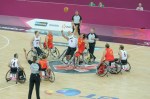
The Olympics may be ending, but there is so much more to come. The Rio 2016 Paralympics begin September 7th, and run until September 18th. The Paralympics recently had several major budget cuts, so please watch and support these incredible athletes. My heart goes out to all the athletes who won’t be able to compete due to the budget cuts, and I’ll be cheering on everyone who can make it from here in Canada.
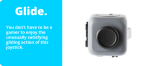
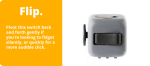
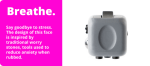
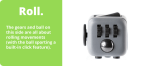
i need this fidget toy more than i have ever needed any other fidget toy
it’s currently in its fundraising phase, it looks like they’ll be ready to sell them in December 2016! image source and more information here at their kickstarter.
Second, trigger warnings: suicide, death mention, suicide ideation
Third, this is going to be honest instead of positive, so please consider carefully if you think anything is going to trigger you and don’t read below the cut.
I pop into r/chronicpain from time to time and it can be a really gloomy place. There are a lot of people who are really desperate. I wouldn’t call them depressed, I don’t know that they are, they’re just…. they’re in a lot of pain and they want it to stop, some of them are in a place where they could lose access to their medication, and they can’t do it any more.
This post is really good. So many tips for bad days ❤
Sensory overload has been found to be associated with disorders such as:
Fibromyalgia (FM)
Chronic Fatigue Syndrome (CFS)
Post Traumatic Stress Disorder (PTSD)
Autistic spectrum disorders
Generalized Anxiety Disorder (GAD)
Synesthesia
Sensory overload occurs when one (or more) of the body’s senses experiences over-stimulation from the environment.
Basically it feels like everything is happening at once, and is happening too fast for you to keep up with.
Sensory overload can result from the over stimulation of any of the senses.
Hearing: Loud noise or sound from multiple sources, such as several people talking at once.
Sight: Bright lights, strobe lights, or environments with lots of movement such as crowds or frequent scene changes on TV.
Smell and Taste: Strong aromas or spicy foods.
Touch: Tactile sensations such as being touched by another person or the feel of cloth on skin.
Obviously, everyone reacts in differently to sensory overload.
Some behavioural examples are:
Irritability – “Shutting down” – Covers eyes around bright lights – Difficulty concentrating Angry outbursts – Refuses to interact and participate – Covers ears to close out sounds or voices – Jumping from task to task without completing Overexcitement – Low energy levels – Difficulty speaking – Compains about noises not effecting others High energy levels – Sleepiness/fatigue – poor eye contact – Overly sensitive to sounds/lights/touch Fidgeting and restlessness – Avoids touching/being touched – Muscle tension – Difficulty with social interactions
There are two different methods to prevent sensory overload: avoidance and setting limits:
Create a more quiet and orderly environment – keeping the noise to a minimum and reducing the sense of clutter.
Rest before big events.
Focus your attention and energy on one thing at a time.
Restrict time spent on various activities.
Select settings to avoid crowds and noise.
One may also limit interactions with specific people to help prevent sensory overload.
It is important in situations of sensory overload to calm oneself and return to a normal level.
Remove yourself from the situation.
Deep pressure against the skin combined with proprioceptive input that stimulates the receptors in the joints and ligaments often calms the nervous system.
Reducing sensory input such as eliminating distressing sounds and lowering the lights can help.
Calming, focusing music works for some.
Take an extended rest if a quick break doesn’t relieve the problem.
What if someone you know is experiencing sensory overload?
Recognize the onset of overload. If they appear to have lost abilities that they usually have, such as forgetting how to speak, this is often a sign of severe overload.
Reduce the noise level. If they are in a noisy area, offer to guide them somewhere more quiet. Give time to process questions and respond, because overload tends to slow processing. If you can control the noise level, for example by turning off music, do so.
Do not touch or crowd them. Many people in SO are hypersensitive to touch – being touched or thinking they are about to be touched can worsen the overload. If they are seated or are a small child, get down to their level instead of looming above them.
Don’t talk more than necessary. Ask if you need to in order to help, but don’t try to say something reassuring or get them talking about something else. Speech is sensory input, and can worsen overload.
If they have a jacket, they may want to put it on and put the hood up. This helps to reduce stimulation, and many people find the weight of a jacket comforting. If their jacket is not within reach, ask them if they want you to bring it. A heavy blanket can also help in a similar way.
Don’t react to aggression. Don’t take it personally. It is rare for someone who is overloaded to cause serious harm, because they don’t want to hurt you, just get out of the situation. Aggression often occurs because you tried to touched/restrained/blocked their escape.
When they have calmed down, be aware that they will often be tired and more susceptible to overload for quite awhile afterwards. It can take hours or days to fully recover from an episode of sensory overload. If you can, try to reduce stress occurring later on as well.
If they start self-injuring, you should usually not try to stop them. Restraint is likely to make their overload worse. Only intervene if they are doing something that could cause serious injury, such as hard biting or banging their head. It’s a lot better to deal with self-injury indirectly by lowering overload.
To summarise – Remember the 5 R’s
Recognise The symptoms of overload
Remove Yourself from the situation
Reduce the stimulus causing the overload
Relax Your body and calm yourself down
Rest Yourself as you will most likely feel fatigue.]
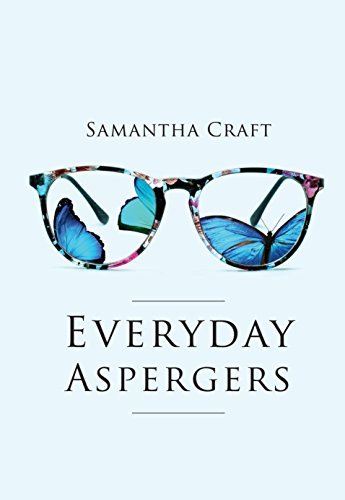
Through 150 telling journal entries, Samantha Craft presents a life of humorous faux pas, profound insights, and the everyday adventures of a female with Asperger’s Syndrome.
Being a parent with a disability is an incredible experience. And I don’t necessarily mean that in a good way.
Sometimes, it means that your child will see you throw a temper tantrum over toppling a plastic cup. Because that plastic cup falling over was the last thing you needed after waking up too early, not eating enough, changing so many outfits, and putting everything else first.
Sometimes, it means that your child will see you sobbing on the floor for what looks like no reason, and then they will come to your side and offer comfort because they’ve been there too. And they don’t even know that grown-ups should have a ‘better handle’ on crying. They just know that mommy is sad, so let’s hug her and be close because that might make her feel better. Most of the time, it does.
Sometimes, it means that your child will ask you if they can hug you when they see you slump, because they know something’s up before you do. A teeny little hug can make an entire day better, of course.
Sometimes, it means that your child starts to sob hysterically because they’re scared of the machine daddy’s putting on mommy’s back. They don’t know it’s supposed to make mommy better, or that it’s harmless to them. They just know mommy’s plugged into something and it looks weird.
Sometimes it means that you can’t pick up your kids even if you want to, because the physical pain is like torture. Even if it’s not hurting now, it’ll hurt later, and you know it.
Sometimes, it means that you can’t be a parent for a day or two. And you still love your kids, even if they’re consuming more energy than you have to give.



























 Holding the Bowl