Everyone deserves the opportunity to dress their best. That’s why I’m so glad to be able to share Tommy Hilfiger’s innovative #TommyAdaptive collection with you. #TommyPartner
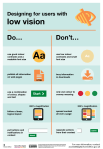
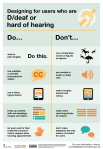
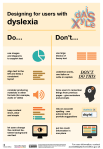
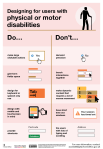
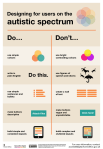
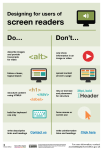
The dos and don’ts of designing for accessibility are general guidelines, best design practices for making services accessible in government. Currently, there are six different posters in the series that cater to users from these areas: low vision, D/deaf and hard of hearing, dyslexia, motor disabilities, users on the autistic spectrum and users of screen readers.
[…] Another aim of the posters is that they’re meant to be general guidance as opposed to being overly prescriptive. Using bright contrast was advised for some (such as those with low vision) although some users on the autistic spectrum would prefer differently. Where advice seems contradictory, it’s always worth testing your designs with users to find the right balance, making compromises that best suit the users’ needs.
I’ve been wanting something like this to reference! Boosting for the others that like to dabble in code/design.
This is some of the most lucidly written accessibility advice I’ve seen. Making accessible web pages should be the default, not an add-on. It’s really not that hard to do, especially when you think about it from the start – and it benefits everyone.
(Obligatory note that there are exceptions to some of these guidelines, e.g., “bunching” some interactions together is an important way to cue which interactions are related to each other, but that’s why these are guidelines, not absolute rules.)
young web designer: thank you oh my god no one has been able to explain this quite as well and this is just good shit
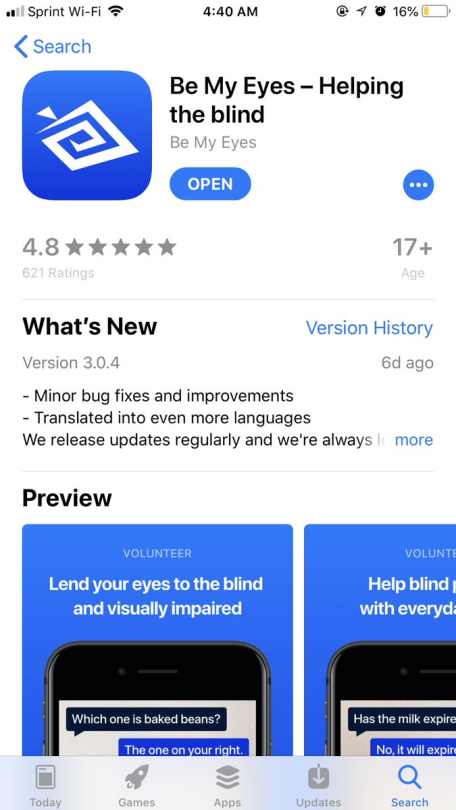
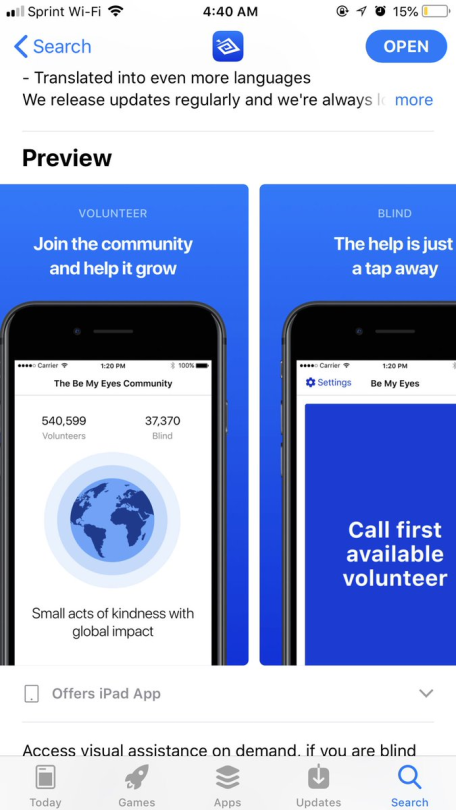
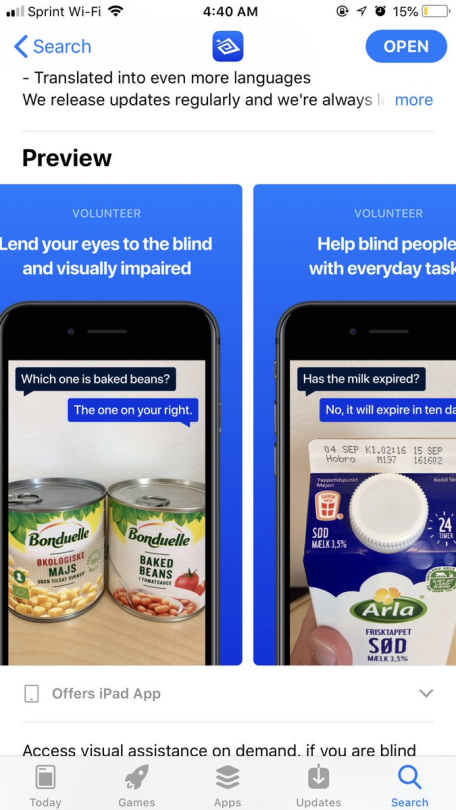
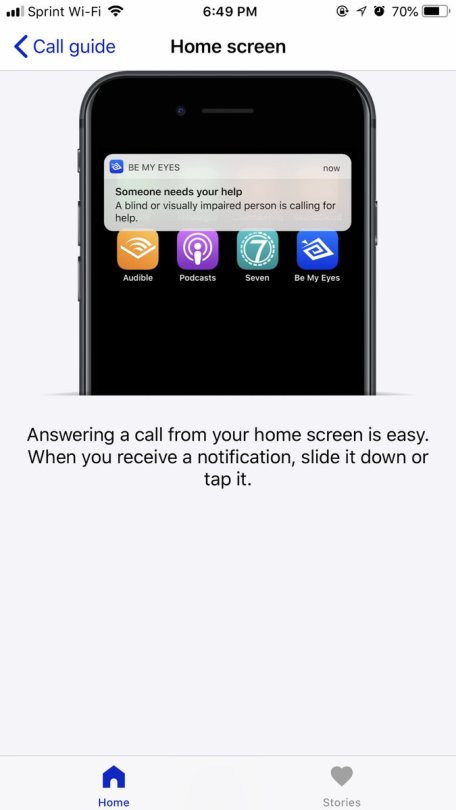
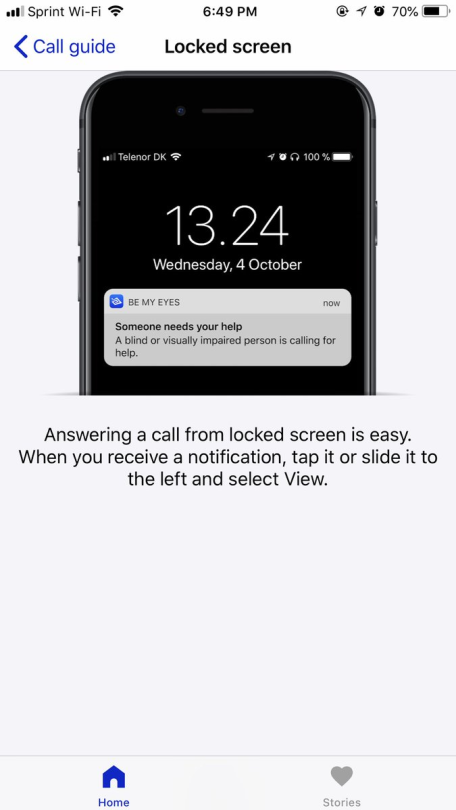
The app is called Be My Eyes and allows blind people to phone or message for help. The app seems to allow video and photos to be sent and the sighted person on the other end can send a message to the blind person, answering whatever inquiry they have.
[This is a set of screenshots about the app called Be My Eyes.
First photo: The overview page for the app. The top says “Be My Eyes- helping the blind.”
Second photo: The preview page on the app store. It shows two phones. The one on the left is titled “Volunteer” and says “Join the community and help it grow.” The one on the right is titled “Blind.” The phone under the title has “Call first available volunteer,” written in large font.
Third photo: More previews. Shows the messages between two people texting each other. The visually impaired person sent a picture of two cans of food, and is asking which one is beans. Another example shows the person sending a picture of their milk carton, and asking if it is expired.
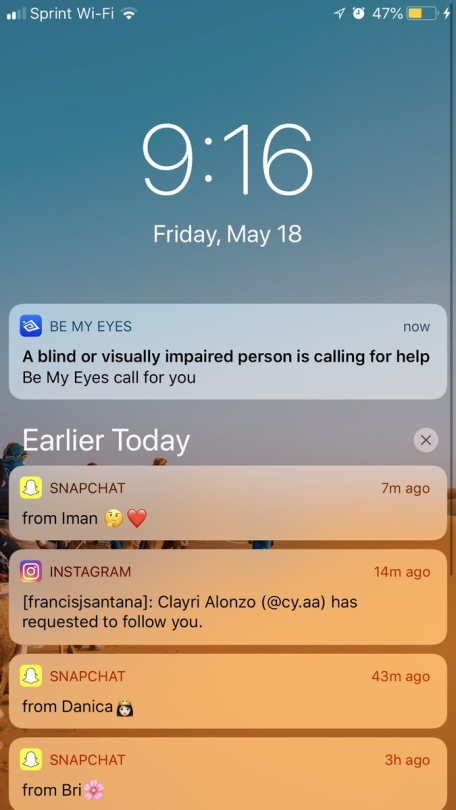
Fourth photo: An iphone lock screen. A notification from the app says “a blind or visually impaired person is calling for help.”
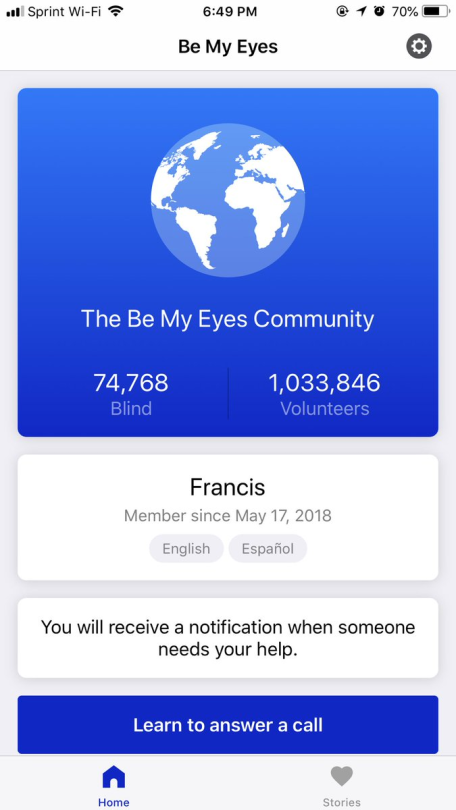
Fifth photo: The profile page of a sighted user named Francis, who speaks English and Español. The top says there are 74,768 Blind and 1,033,846 Volunteers using the app.
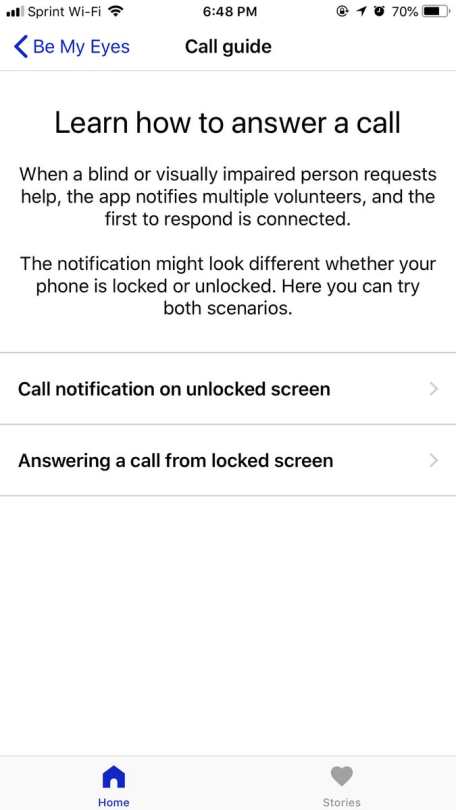
Sixth photo: Text that says “Learn how to answer a call. When a blind or visually impaired person requests help, the app notifies multiple volunteers, and the first to respond is connected. The notification might look different whether your phone is locked or unlocked. Here you can try both scenarios.
Seventh photo: A notification from the app on an iphone home screen. The instructions say to pull the notification down or tap it to answer a call.
Eighth photo: The same notification on an iphone lock screen. The instructions say to tap it or slide it to answer the call.]
Please reblog the version of this post with image descriptions. It’s a service for blind folks, posted about in a format blind folks don’t have access to (without the descriptions).
Also, if you’re willing to download and use this app but you don’t go out of your way to add image descriptions to the images you share, please reevaluate that! Contact me if you need help adding image descriptions to things.
This app is actually very useful. The way sighted people are talking about it is not.
A quick note to all my (amazing) able-bodied allies: be careful when talking about the “curb cut effect” in relation to how accessibility affects people. When you mention “prams, buggies, and bicycles” in the same breath as people with mobility aids, you’re conflating “accessibility” with “convenience”.
When disabled people talk about accessibility, we’re talking about “equal access” not “ease of access”. When something isn’t accessible, we’re not mildly inconvenienced; we’re completely excluded. When the lift isn’t working, we can’t get to work. When public transportation isn’t accessible, we’re not troubled; we’re trapped.
This is why our most vocal supporters call themselves “disability rights activists” not “accessibility advocates”. It’s not about the benefits of accessibility; it’s about the direct, long-term harm a lack of accessibility causes.
Most folks don’t realize that the ADA is not a building code, but is in fact a civil rights law. So, the next time you’re explaining how important accessibility is to your able-bodied friends, don’t just focus on how accessibility makes the most common spaces better for everyone.
Focus on how a lack of accessibility excludes disabled people from even the most common spaces.
This is remarkably good, sharp and both funny, sad, righteous-angering and, well, eye-opening. It’s for the blind and partially-sighted, and just as much it’s for those of us who have never had to think about any of this stuff, and is called “10 Steps to Help You Find the Perfect Job”.
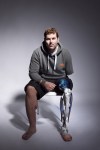
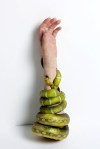
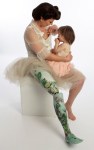
Yeah this is cool but how about a source? Every single one of these beautiful prosthetics is from The Alternative Limb Project which is run by Sophie de Oliveira Barata. She has made other incredible limbs as well. Check them out here!
I chose eBay because I’m Australian and I didn’t want to give recommendations for stores that are only here. These are the ones that genuinely help me every day.
I encourage everybody to use The Mighty – basically Facebook for the chronically ill. You can tailor your feed to your diseases. I didn’t know who needed help with what so here are some pages on The Might about products chronic pain:
“Most autistic people who are capable of formulating questions have frequently experienced the following scenario: We ask for information that we need in order to prepare ourselves for a new experience. Instead of answering our questions, NT people tell us that we don’t need to ask these questions at all. We just need to relax and stop being so anxious. The fact is that being able to ask questions, and getting clear answers to our questions, and thus knowing what to expect, are often the very things autistic people need in order to be able to relax and not be anxious. Asking a lot of questions about the details of a situation is usually not a “maladaptive behavior” that increases an autistic person’s anxiety. More often it’s an adaptive strategy that an autistic person is using to reduce anxiety or to prevent being in an anxiety-provoking situation in the first place. It’s very important for us to have thorough explanations and ample opportunities to ask questions.”
So today I tripped. Fell flat on my face, it was awful but ultimately harmless. My service dog, however, is trained to go get an adult if I have a seizure, and he assumed this was a seizure (were training him to do more to care for me, but we didn’t learn I had epilepsy until a year after we got him)
I went after him after I had dusten off my jeans and my ego, and I found him trying to get the attention of a very annoyed woman. She was swatting him away and telling him to go away. So I feel like I need to make this heads up
If a service dog without a person approaches you, it means the person is down and in need of help
Don’t get scared, don’t get annoyed, follow the dog! If it had been an emergency situation, I could have vomited and choked, I could have hit my head, I could have had so many things happen to me. We’re going to update his training so if the first person doesn’t cooperate, he moves on, but seriously guys. If what’s-his-face could understand that lassie wanted him to go to the well, you can figure out that a dog in a vest proclaiming it a service dog wants you to follow him
WHO IS REALLY OUT HERE IGNORING A SERVICE DOG?? If ANY type of dog approaches me im in. no questions asked, where you going? can i come?




 Holding the Bowl