dianesdreams:

neurosciencestuff:

Mind and body: Scientists identify immune system link to mental illness

Children with high everyday levels of a protein released into the blood in response to infection are at greater risk of developing depression and psychosis in adulthood, according to new research which suggests a role for the immune system in mental illness.

The study, published today in JAMA Psychiatry, indicates that mental illness and chronic physical illness such as coronary heart disease and type 2 diabetes may share common biological mechanisms.

When we are exposed to an infection, for example influenza or a stomach bug, our immune system fights back to control and remove the infection. During this process, immune cells flood the blood stream with proteins such as interleukin-6 (IL-6), a tell-tale marker of infection. However, even when we are healthy, our bodies carry trace levels of these proteins – known as ‘inflammatory markers’ – which rise exponentially in response to infection.

Now, researchers have carried out the first ever longitudinal study – a study that follows the same cohort of people over a long period of time – to examine the link between these markers in childhood and subsequent mental illness.

A team of scientists led by the University of Cambridge studied a sample of 4,500 individuals from the Avon Longitudinal Study of Parents and Children – also known as Children of the 90s – taking blood samples at age 9 and following up at age 18 to see if they had experienced episodes of depression or psychosis. The team divided the individuals into three groups, depending on whether their everyday levels of IL-6 were low, medium or high. They found that those children in the ‘high’ group were nearly two times more likely to have experienced depression or psychosis than those in the ‘low’ group.

Dr Golam Khandaker from the Department of Psychiatry at the University of Cambridge, who led the study, says: “Our immune system acts like a thermostat, turned down low most of the time, but cranked up when we have an infection. In some people, the thermostat is always set slightly higher, behaving as if they have a persistent low level infection – these people appear to be at a higher risk of developing depression and psychosis. It’s too early to say whether this association is causal, and we are carrying out additional studies to examine this association further.”

The research indicates that chronic physical illness such as coronary heart disease and type 2 diabetes may share a common mechanism with mental illness. People with depression and schizophrenia are known to have a much higher risk of developing heart disease and diabetes, and elevated levels of IL-6 have previously been shown to increase the risk of heart disease and type 2 diabetes.

Professor Peter Jones, Head of the Department of Psychiatry and senior author of the study, says: “Inflammation may be a common mechanism that influences both our physical and mental health. It is possible that early life adversity and stress lead to persistent increase in levels of IL-6 and other inflammatory markers in our body, which, in turn, increase the risk of a number of chronic physical and mental illness.”

Indeed, low birth weight, a marker of impaired foetal development, is associated with increased everyday levels of inflammatory markers as well as greater risks of heart disease, diabetes, depression and schizophrenia in adults.

This potential common mechanism could help explain why physical exercise and diet, classic ways of reducing risk of heart disease, for example, are also thought to improve mood and help depression. The group is now planning additional studies to confirm whether inflammation is a common link between chronic physical and mental illness.

The research also hints at interesting ways of potentially treating illnesses such as depression: anti-inflammatory drugs. Treatment with anti-inflammatory agents leads to levels of inflammatory markers falling to normal. Previous research has suggested that anti-inflammatory drugs such as aspirin used in conjunction with antipsychotic treatments may be more effective than just the antipsychotics themselves. A multicentre trial is currently underway, into whether the antibiotic minocycline, used for the treatment of acne, can be used to treat lack of enjoyment, social withdrawal, apathy and other so called negative symptoms in schizophrenia. Minocycline is able to penetrate the ‘blood-brain barrier’, a highly selective permeability barrier which protects the central nervous system from potentially harmful substances circulating in our blood.

The ‘blood-brain barrier’ is also at the centre of a potential puzzle raised by research such as today’s research: how can the immune system have an effect in the brain when many inflammatory markers and antibodies cannot penetrate this barrier? Studies in mice suggest that the answer may lie in the vagus nerve, which connects the brain to the abdomen. When activated by inflammatory markers in the gut, it sends a signal to the brain, where immune cells produce proteins such as IL-6, leading to increased metabolism (and hence decreased levels) of the ‘happiness hormone’ serotonin in the brain. Similarly, the signals trigger an increase in toxic chemicals such as nitric oxide, quinolonic acid, and kynurenic acid, which are bad for the functioning of nerve cells.

makes me wonder…
Don’t Call Robin Williams’ Death a Waste

sonneillonv:

When people describe a suicide as a ‘waste’ IDK it pushes buttons inside me.  When I was younger, and when I was so depressed I was considering suicide, my primary reason was feeling like I was already a waste – a waste on peoples’ time, a waste on their resources, a waste of their affection.  I’d been convinced that I was completely selfish, that I took and took without giving back, and that I only caused misery to others by being alive because I was so thoughtless.  I was convinced that, after a brief mourning period, their lives would be better if I wasn’t around to ruin them anymore.

Now I’m an adult and I understand that when a thirteen-year-old feels that way, it’s because the adults in their life have failed them.  Kids, as we say in the SPN fandom, are supposed to eat your food and break your heart.  A teenager being self-absorbed is developmentally normal, especially when that teenager is being relentlessly bullied, is friendless, is struggling with school, and otherwise has plenty of misery going on in their own lives that prevents them from being terribly interested in other peoples’.  I stopped being suicidal when someone told me it was okay to care about myself first.  I had literally never heard that before.  I thought I had to justify my own existence.  I thought if I wasn’t satisfying other people, if I wasn’t making other people happy, then I didn’t deserve to live.

When people talk about ‘waste’, what are we wasting?  Are we wasting their time by forcing them to grieve?  Are we wasting their resources by demanding their attention?  ”You’re wasting the rest of your lives”.  Okay, fine, but they’re OUR lives.  They aren’t yours.  You aren’t entitled to them.  You don’t get to obligate us to continue in misery because our deaths would affect YOU.  People who say suicide is selfish, or a pointless waste, make me furious because they want us to just continue living on in abject misery, the kind of misery that makes us literally want to die… why?  Because they’re entitled to us?  Because we owe it to them?  Because their discomfort is worth more than our agony?

I don’t support suicide.  I don’t want anyone to commit suicide.  But I understand why.  And I understand that half the time, the people who claim people who kill themselves are wasting their lives, or being selfish, don’t actually have any interest in fixing the real problems, because that’s too much work; it costs too much; it requires too much time and too much care.  If you actually cared about helping people who are in agony, you wouldn’t call them selfish for wanting to escape it, and you wouldn’t call that escape a ‘waste’.  You’d call it a tragedy, because whatever could have been done to make life bearable HERE was not done.  A solution was not found.  The pain was not eased.  And only one escape was left.

I’m still depressed, but I’m better now.  I haven’t been in a suicidal state for more than ten years.  I was able to change my circumstances enough that the people who had instilled those toxic beliefs in me no longer had control over me, and I had a daemon at my side reminding me that it is okay, that it is healthy, to care about my own self-interest.  Now my husband is in the hospital because, like Robin, he is bipolar.  He’s been depressed, without a manic swing, for three months, and it’s only getting worse.  He’s hurting himself, and he’s looking for a way out.  But he has a way out that isn’t killing himself – there is a good hospital close to us where he knows the doctors and feels comfortable, where they will listen to him and adjust his medication.  He has a wife and a son who understand his illness, who support him and NEVER blame him, and who will gladly take on the challenge of handling his affairs in his absence because we are his team, and we are on his side.

Despite all this, I honestly believe I’ll lose him one day.  It gets worse, it doesn’t get better.  The progression of his condition has been so severe over the course of six years that I’m scared to contemplate where we’ll be in ten.  And I’m resigned to that.  I accept it.  I love him for the time he’s here, and I want to ease as much of his pain as it’s in my power to do.  I’m furious that I’m so impotent and I can’t do more because when you love someone you don’t want them to suffer.

Robin Williams was in pain.  Now he isn’t anymore.  I’m grieved for the suffering he endured, and for his family and friends who are suffering now.  Losing a battle like this is terrible and tragic and heartbreaking.  We all wish we could have done better by him.  And if you want others to avoid following his example, we need to do better by them.  We have to ease the pain HERE.  We have to make good care accessible to them HERE.  We have to fight stigma and support members of our community HERE.  It may not always end up being enough, because most of the time it gets worse, not better.  But we should do it because people are suffering, and they need help, and they don’t have to earn the right to their own existence.  They don’t owe us their suffering.  We owe them relief.

Don’t Call Robin Williams’ Death a Waste

On the passing of heroes.

thefrogman:

I decided to become a comedian at the age of 14. At that point I didn’t know how to be one—but I was eager to learn. 

One of the first things I did was visit my local Blockbuster videotape rental store. Turn right as you enter, head to the middle section directly after the really old action movies, and there would be a small series of shelves dedicated to stand up comedy specials.

My comedy masterclass all contained on analog magnetic tape. 

Robin Williams had 3 specials available at my Blockbuster. They were the first ones I chose to watch. Sometimes I would question that decision because it was a bit like wanting to learn science and starting with quantum physics. I had never seen a mind work so quickly. He was a world class performer. His timing was perfect. His delivery was spot on. And he adjusted to the audience without missing a beat. He was an inspiration. I still use many of the things I learned from him in my work today. I owe a lot of my success to his teachings. 

Like Mr. Williams, I suffer from the same chemical imbalance. My brain is sick and I have been struggling with that illness for many years. At one point I very nearly made the same decision he did. At the time I saw it as the only escape from my suffering. I was able to choose life and move forward, but it was not an easy choice to make by any means. I was facing a lifetime of illness. I could not leave my home. My friends had given up on me. The loneliness was unbearable. I was so incredibly tired. The exhaustion never stopped. Not even for a second.

And to me, the most disheartening reality… I could no longer perform.

The dream I had since I was 14 was no longer possible. 

My anchor to this mortal coil was the love I had for my parents. The most amazing two people in my life. Their unending love and support kept me here. I feel so lucky to have that anchor. I’m so grateful to still be around. 

I just want to say that I understand the choice Robin Williams made. The choice that countless others have made. I wish with all my heart that they could have chosen to keep going. But I refuse to demonize them or call them selfish for letting go.

A sick brain is one of the most formidable foes in existence. I know for many blessed with health that is difficult to understand. But I assure you this disease is dangerous and pervasive and sometimes it is fatal. Suicide is not about being selfish. It is not about having a weak will.

Your own brain deceives you. It convincingly whispers that all hope is lost. It tells you there is no way to elude the anguish. It blocks your view of all other options and makes you think there is only one method of escape. Only one solution to end this pain. It silences the logical mind that knows that there are other options. It makes you truly believe that you cannot be helped.

I think if certain people could experience this illness, if only for a moment, they might be surprised how strong people with depression actually are. Maybe they could realize how hard people fought to stay alive as long as they did. They might discover it is less of a choice and more of a battle. 

To those in the throes of depression… I ask you to keep fighting. I ask you to keep living. Being on the other side of my decision I was able to gain important wisdom I wish I knew beforehand. Contentment is not being happy all of the time. It is learning to cope with the hardships in between the bits of joy. It is not taking the bits of joy for granted when they come. And contentment is still possible even with a sick brain. 

If you keep going, you will feel joy again. And you will feel great sadness again. You will feel everything in between. I make no guarantees of ever achieving a perfect, happy life.

Just know that there is help. There is hope. I promise if you seek care and find a doctor your trust, they can help you work through this illness and learn to cope with it. If you put in the work, you will have bits of joy. You will have moments that make life worth living. One day you will look back and be grateful you stuck around to experience the good, no matter how hard coping with the bad may have been. 

I will miss Robin Williams dearly. He was the greatest mentor I have never met. He had a beautiful brain with a tragic flaw. My hope is that his passing will bring awareness to the true nature of mental illness. That it will help relieve the stigma surrounding it. That it will inspire others to find better ways to treat it. I think that would be a most fitting tribute to a man that brought the world many a smile. 

My heart is with all who have lost loved ones to depression. Giant Frogman bear-hugs to all of you.

I wrote a bit more about depression here. If you need help, it might be a good place to start. 

seashellies:

I just can’t right now.

My childhood idol is gone. In the worst possible way.

It hurts to know that he was suffering so much and all the people who love him all over the world couldn’t reach out to help him because his suffering was in silence.

Depression doesn’t have to take your life. If you’re suffering reach out. Please! Reach out to those you know love you. Reach out to anyone you can. If all else fails call a hotline. It doesn’t have to take you.

Aplaceofhope

Don’t let it take you as it’s taken him.

Gods forgive me but I wish it had been an overdose. At least then I could hope it had been accidental.

I’m on mom duty so I can’t even grieve but the tears just keep coming.

Gods Robin, I’m so sorry. Rest easy your suffering is over.

thoughtsreadunspoken:

The number of high profile deaths recently relating back to addiction and mental health issues is absolutely devastating; those struggling should be met with kindness and understanding, not stigma and hate.

For anyone out there battling demons such as these, know that you are not alone and you deserve to be helped and to be loved.  

Phases of clinical depression could affect treatment

sonneillonv:

crowdog66:

Explores the hypothesis (arrived at through recent studies) that depression is more influenced by immune system responses than previously thought and that it may respond differently to any given treatment at various phases in the cycle of the immune system’s reactions.

Guise, this is important.

Phases of clinical depression could affect treatment

If you know someone who’s depressed, please resolve to never ask them why. Depression isn’t a straightforward response to a bad situation; depression just is, like the weather. Try to understand the blackness, lethargy, hopelessness, and loneliness they’re going through. Be there for them when they come through the other side.
It’s hard to be a friend to someone who’s depressed, but it’s one of the kindest, noblest, and best things you’ll ever do.

Stephen Fry (via onlinecounsellingcollege)

Games may ease depression, anxiety in players

Video games can be entertaining, but could they also help improve mental health?…

“A lot of them look exactly the same as games that someone could play just for fun. So they may have cartoon characters, they could have missions, but embedded in that game are treatment mechanisms,” said Tracy Dennis, Professor of Psychology at Hunter College.

Dennis designed one such game called Personal Zen. She says preliminary findings show after playing the game for 20 minutes the brain starts processing negative information differently.

Games may ease depression, anxiety in players

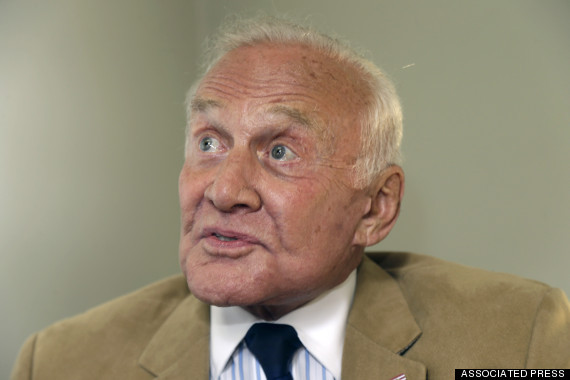
The famous astronaut who defied odds – and gravity – by landing on the moon alongside Neil Armstrong in 1969struggled with depression and alcoholism after his inspiring feat. “I can’t recall ever sharing my pain with another male friend or confiding in anyone that I was struggling to hold life together,”he wrote in his bookMagnificent Desolation.“At first the alcohol soothed the depression, making it at least somewhat bearable. But the situation progressed into depressive-alcoholic binges in which I would withdraw like a hermit into my apartment.”

After treating his depression and alcoholism, Aldrin went on to serve as thechairman of the National Association of Mental Health.

Read More… These 12 Incredibly Successful People Will Change The Way You Think About Depression