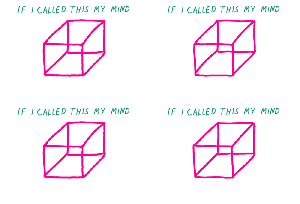

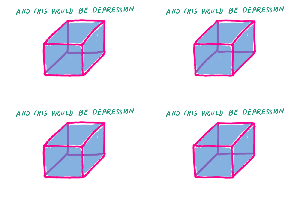
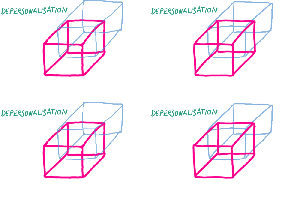
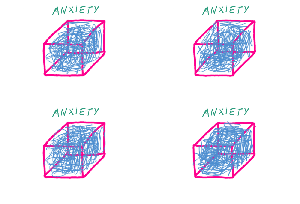


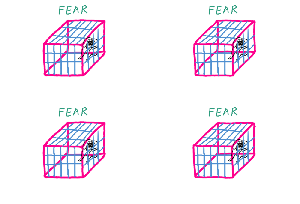
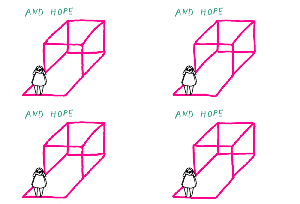
I found these gifs I made a while back for a site that’s not running anymore, so I thought I’d post them here. It’s a description of psychiatric symptoms and states of mind using a pink box and some other stuff.

Devotional blog dedicated to the Goddess Sigyn offering support to those who are "holding the bowl" within difficult relationships.
I found these gifs I made a while back for a site that’s not running anymore, so I thought I’d post them here. It’s a description of psychiatric symptoms and states of mind using a pink box and some other stuff.
Depression is so isolating bc you don’t want to be a bother to anyone so you start doing really passive aggressive things to try and reach out, which makes you feel even worse so you end up quietly weeping in the bathroom and when someone knocks on the door you immediately hide yr face and clear yr throat and say “oh yeah, I’m fine.”
Okay, here’s a good list to pass around. It took me several years to even think about looking up the symptoms of depression, and I think it would have done my good to just be presented with them when I was in my teens, but no one told me…. so, here they are.
- Feelings of helplessness and hopelessness. A bleak outlook—nothing will ever get better and there’s nothing you can do to improve your situation.
- Loss of interest in daily activities. No interest in former hobbies, pastimes, social activities, or sex. You’ve lost your ability to feel joy and pleasure.
- Appetite or weight changes. Significant weight loss or weight gain—a change of more than 5% of body weight in a month.
- Sleep changes. Either insomnia, especially waking in the early hours of the morning, or oversleeping (also known as hypersomnia).
- Anger or irritability. Feeling agitated, restless, or even violent. Your tolerance level is low, your temper short, and everything and everyone gets on your nerves.
- Loss of energy. Feeling fatigued, sluggish, and physically drained. Your whole body may feel heavy, and even small tasks are exhausting or take longer to complete.
- Self-loathing. Strong feelings of worthlessness or guilt. You harshly criticize yourself for perceived faults and mistakes.
- Reckless behavior. You engage in escapist behavior such as substance abuse, compulsive gambling, reckless driving, or dangerous sports.
- Concentration problems. Trouble focusing, making decisions, or remembering things.
- Unexplained aches and pains. An increase in physical complaints such as headaches, back pain, aching muscles, and stomach pain.
I’d like to add that in my experience, and from what I’ve heard from others, if the depression has been going on unnoticed for a long time, you won’t have noticed these ‘changes’, they’ll have snuck up on you and become an unremarkable part of your life…
Along with the concentration problems is psychomotor disruptions – either you’re agitated and constantly moving your hands, flicking your fingers, pulling your hair… or you’re clumsy, like you’re surrounded by cotton wool and your extremities are further away than they used to be, so things like writing and walking become really difficult.
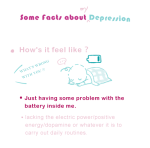
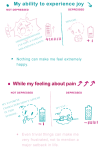
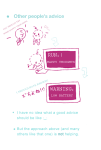
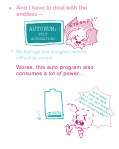
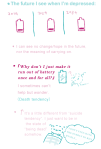
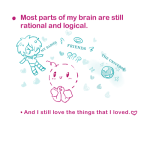
some thoughts about my depression.
my mum asked yesterday so i did this for her.
it may not apply to all people with depression, because different person can have different symptoms.
Yeah….. This sums it up


About 2.6 percent of American adults – nearly 6 million people – have bipolar disorder, according to the National Institute of Mental Health (NIMH). But the disease, characterized by significant and severe mood changes, is still dangerously misunderstood.
Bipolar disorder is vastly different from the normal ups and downs of everyday life, but many have co-opted the term to refer to any old change in thoughts or feelings. The mood swings in someone with bipolar disorder, sometimes also called manic depression, can damage relationships and hurt job performance. It has been estimated that anywhere from 25 to 50 percent of people with bipolar disorder attempt suicide at least once.
Artist Ellen Forney detailed her diagnosis with bipolar disorder in the graphic memoir Marbles: Mania, Depression, Michelangelo, and Me. Forney previously shared her story with us, specifically detailing how her bipolar disorder has affected her creative work.
Below are some poignant pages from the memoir, along with unique commentary into how these panels came to be and what they mean to Forney, in her own words… What Bipolar Disorder Really Looks Like
I am a mother with mental illness – one who is raising a beautiful, caring son.
I think one thing you can do to help your friends who are depressed is to reach out to them not in the spirit of helping, but in the spirit of liking them and wanting their company. “I’m here to help if you ever need me” is good to know, but hard to act on, especially when you’re in a dark place. Specific, ongoing, pleasure-based invitations are much easier to absorb. “I’m here. Let’s go to the movies. Or stay in and order takeout and watch some dumb TV.” “I’m having a party, it would be really great if you could come for a little while.” Ask them for help with things you know they are good at and like doing, so there is reciprocity and a way for them to contribute. “Will you come over Sunday and help me clear my closet of unfashionable and unflattering items? I trust your eye.” “Will you read this story I wrote and help me fix the dialogue?” “Want to make dinner together? You chop, I’ll assemble.” “I am going glasses shopping and I need another set of eyes.” Remind yourself why you like this person, and in the process, remind them that they are likable and worth your time and interest.
Talk to the parts of the person that aren’t being eaten by the depression. Make it as easy as possible to make and keep plans, if you have the emotional resources to be the initiator and to meet your friends a little more than halfway. If the person turns down a bunch of invitations in a row because (presumably) they don’t have the energy to be social, respect their autonomy by giving it a month or two and then try again. Keep the invitations simple; “Any chance we could have breakfast Saturday?” > “ARE YOU AVOIDING ME BECAUSE YOU’RE DEPRESSED OR BECAUSE YOU HATE ME I AM ONLY TRYING TO HELP YOU.” “I miss you and I want to see you” > “I’m worried about you.” A depressed person is going to have a shame spiral about how their shame is making them avoid you and how that’s giving them more shame, which is making them avoid you no matter what you do. No need for you to call attention to it. Just keep asking. “I want to see you” “Let’s do this thing.” “If you are feeling low, I understand, and I don’t want to impose on you, but I miss your face. Please come have coffee with me.” “Apology accepted. ApologIES accepted. So. Gelato and Outlander?”
#613: How do I reach out to my friends who have depression? | Captain Awkward
P.S. A lot of people with depression and other mental illnesses have trouble making decisions or choosing from a bunch of different options. “Wanna get dinner at that pizza place on Tuesday night?” is a LOT easier to answer than “So wanna hang out sometime? What do you want to do?”
(via startrekrenegades)
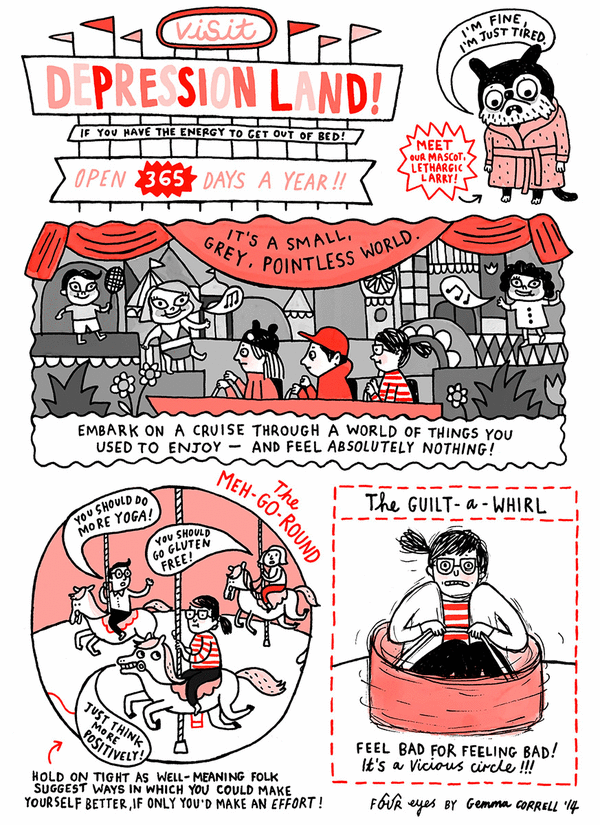
Depression is humiliating. It turns intelligent, kind people into zombies who can’t wash a dish or change their socks. It affects the ability to think clearly, to feel anything, to ascribe value to your children, your lifelong passions, your relative good fortune. It scoops out your normal healthy ability to cope with bad days and bad news, and replaces it with an unrecognizable sludge that finds no pleasure, no delight, no point in anything outside of bed. You alienate your friends because you can’t comport yourself socially, you risk your job because you can’t concentrate, you live in moderate squalor because you have no energy to stand up, let alone take out the garbage. You become pathetic and you know it. And you have no capacity to stop the downward plunge. You have no perspective, no emotional reserves, no faith that it will get better. So you feel guilty and ashamed of your inability to deal with life like a regular human, which exacerbates the depression and the isolation.
Depression is humiliating.
If you’ve never been depressed, thank your lucky stars and back off the folks who take a pill so they can make eye contact with the grocery store cashier. No one on earth would choose the nightmare of depression over an averagely turbulent normal life.
It’s not an incapacity to cope with day to day living in the modern world. It’s an incapacity to function. At all. If you and your loved ones have been spared, every blessing to you. If depression has taken root in you or your loved ones, every blessing to you, too.
Depression is humiliating.
No one chooses it. No one deserves it. It runs in families, it ruins families. You cannot imagine what it takes to feign normalcy, to show up to work, to make a dentist appointment, to pay bills, to walk your dog, to return library books on time, to keep enough toilet paper on hand, when you are exerting most of your capacity on trying not to kill yourself. Depression is real. Just because you’ve never had it doesn’t make it imaginary. Compassion is also real. And a depressed person may cling desperately to it until they are out of the woods and they may remember your compassion for the rest of their lives as a force greater than their depression. Have a heart. Judge not lest ye be judged.
Pearl (via psych-facts)
This is seriously the most accurate description of depression. Wow.
(via fake-that-smile-babe)
 Holding the Bowl