
weave silk is my favorite and seed plant breeder is super fun.
These are all wonderful.
Tag: coping
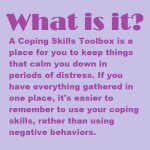
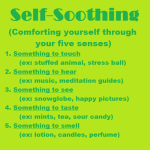
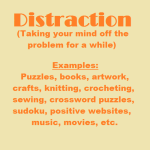
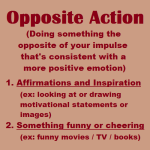
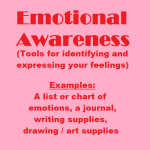
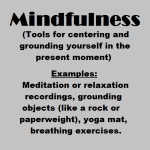
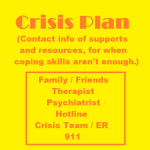

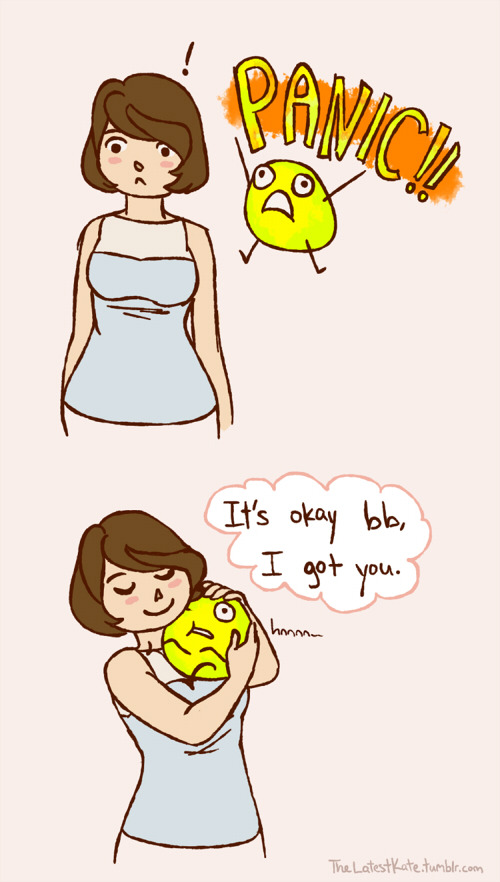
my therapist taught me to start thinking of my anxiety as my panicky friend
it’s working???
this is so cute omg
Woah this is super useful!!
Steps for Letting Go of Painful Memories
Experiences can leave us with some painful memories. They tie us to the past and prevent us moving on. And the only way to freedom is to work on letting go – so these memories don’t haunt us or keep us trapped in pain. Below are some guidelines to help you work on this.
1. Before you can let go, you must face whatever happened and accept that it is part of your past experiences. Suppression doesn’t work as a long-term solution. It can only be a band aid that brings temporary relief. Talk to someone you trust, or write about it in your journal. You need to share what happened, in order to move on.
2. Identify the lessons you have learned from what has happened. There’s always a lesson – so look for what you’ve learned. It doesn’t make it better – but it does lessen its power.
3. Write the lesson down on a piece of paper and repeat it to yourself when you’re hit by old, painful memories. For example, if you’ve been scarred by abuse, then you might write something like: “My experience of abuse does not determine who I am. I’m a stronger person now, and that is not my destiny. I’m choosing my own future, and the person I will be.”
4. Repeat this mantra often so it takes root in your mind. Allow it to be stronger than the bad experience. Say it often, till you mean it, then you’ll start to feel you’re freer. Persevere and keep on fighting when those old memories return.
5. Seek to be a person who’s at peace with themselves. When peace is your focus, old thoughts and memories have much less power over how you think and feel. However, seeking after peace must be a conscious, constant choice.
6. When the past tries to intrude, focus firmly on the present. Ground yourself in what’s happening around you in the room, and try to breathe deeply – and deliberately relax. You are here in this moment; you’re not living in the past.
7. Forgive – for your own sake. Try to heal from what happened – then let resentments go. You don’t want them in your life for they’ll just tie you to the past. It’s not an ease process; it takes work and discipline. But it is worth the daily struggle – as one day you’ll be free.

opulentes:
ABUSE
Information
- Love Is Respect (Digital Abuse)
- Love Is Respect (Emotional/Verbal Abuse)
- Love Is Respect (Financial Abuse)
- Love Is Respect (Physical Abuse)
- Love Is Respect (Sexual Abuse)
- Love Is Respect (Stalking)
- Help Guide
Coping
- Caring for yourself
- Domestic abuse
Chat Rooms
- Survivors Chat
- Fort Refuge
- Pandy’s
ADD/ADHD
Information
- Help Guide
- Attention Span Test
- Attention Quiz
- Concentration Quiz
Coping
- Coping Tips for Attention Deficit Disorder
- 12 Best Tips for Coping with ADHD
- 50 Tips On The Management of Adult Attention Deficit
Medication
- ADHD Medication Chart: Compare Drugs for ADD and ADHD
- Drugs Used to Treat ADHD/ADD
- ADD/ADHD Medications: Are ADHD Drugs Right for You
- ADHD Medication Side Effects, Drug Types, Precautions
ADDICTION
Information
- Help Guide (Alcohol & Drugs)
- Half of Us (Alcohol & Drugs)
Coping and Recovery
- Tools of Recovery: Addiction Coping Skills
- 5 Ways to Deal With Urges and Cravings
- After Rehab: 5 Ways for Addicts to Cope
- Addiction Recovery
- Coping With Urges
- Dealing With Cravings
ANGER
Coping
- strategies to keep anger at bay
- Anger management: 10 tips to tame your temper
- Anger Management: Tips and Techniques
- Feeling Angry
- Controlling Anger — Before It Controls You
- Dealing With Anger
- How To Cope With Anger
- Anger management: What works and what doesn’t
- Ten Commandments of Anger Regulation
ANXIETY
Information
- Anxiety Quiz
- Social Anxiety Test
- What are your stress triggers?
- Coping Skills Quiz
- Anxiety disorders explained
- Help Guide (Anxiety Attacks & Anxiety Disorder)
- Understanding and managing anxiety
- learn more about anxiety
- Anxiety Self-Assessment
- Help Guide (General Anxiety Disorder)
- Help Guide (Social Anxiety Disorder & Social Phobia)
- Explanation of anxiety and self help tips
Coping
- a list of stress relievers
- Identifying and Managing Anxiety
- 11 Assorted Anxiety Tips for Anxiety Sufferers
- How to work through feelings of isolation
- Tips and tricks for dealing with anxiety
- Anti-stress breathing tips
- How to stay under control with severe social anxiety
- Coping with social anxiety
- Managing Stress
- how to help a friend with anxiety
- Help Guide (Therapy)
- Half of Us
- Job interviews and social anxiety
- Dealing with anxiety
- Coping with test anxiety
- Tips for flying anxiety
- Grounding techniques
- More grounding techniques
- Even more grounding techniques
- Mindfulness
- Belly breathing
- Living with anxiety
- Social anxiety disorder self help tips.
- Coping with flashbacks
- What anxious racing thoughts are like for me
- Using a thought diary
Panic Attacks
- How to handle panic attacks
- Exploring and coping with panic attacks
- 10 Rules for Coping with Anxiety and Panic
- Tips to cope with panic attacks
- Rules for coping with anxiety and panic
- Understanding and coping with panic attacks
- Understanding and helping panic attacks and panic disorders
- Help Guide (Panic Attacks & Panic Disorder)
- Coping with panic attacks workbook
- Rules for coping with panic
- Panic attack workbook 2
Interactives
- Emotional baggage check
- The Dawn Room
- The quiet place
- The thoughts room
- Stress Analyst
- cloudflowing
- imagination
- planetarium
- weavesilk
- calm
- make sand art online
- lifeinneon
- dolldivine
- barcinski-jeanjean
- rainymood
- do nothing for 2 minutes
- stars
- Muscle Relaxation
- Mood chart
Medication
- Help Guide (Anxiety Medicine)
- Common Medications for Anxiety Disorders
- Guidelines for Medication Use
Chat Rooms
- HealthfulChat
- Phobics Awareness
- Healing Well
- Anxiety Space
BIPOLAR DISORDER
Information
- Help Guide (Signs and Symptoms)
- Half of Us
- Bipolar Depression Quiz
- hypomania
Coping
- Bipolar disorder and self-help
- Living with bipolar disorder
- How to deal with bipolar disorder without medication
- 10 ways to cope with bipolar disorder
- Coping skills
- Help Guide (Self Help)
- Bipolar Support tumblr
Medication
- Help Guide (Bipolar Disorder Medication Guide)
- Help Guide (Treatment)
Chat Rooms
- HealthfulChat
- Bipolar World
- Healing Well
DEPRESSION
Information
- depression information
- Depression Infographic
- Help Guide (Depression: Signs, Symptoms, Causes & Help)
- Help Guide (Teenage Depression: A Guide for Parents)
- Half of Us
- Depression Quiz
Coping
- How to cope with depression
- How to cope with depression 1
- Natural depression treatments
- Ways to deal with depression/stress
- Tips to help overcome loneliness
- 10 Tips on How to Work Through Feelings of Social Isolation
- 8 Tips to Overcome Loneliness
- Ways to deal with depression/stress
- having a bad day?
- Make a comfort box
- 10 Things to Do When You Feel Like Crap
- how to find a new normal in the middle of depression
- you are not alone in the way you think you are
- reasons to stay alive
- how to stop trying to think yourself into happiness and actually arrive there
- cheer me up
- Help Guide (Dealing with Depression)
- Help Guide (Helping Someone with Depression)
Medication
- What to expect with antidepressants
- Finding the right anti-depressant
Chat Room
- HealthfulChat
- Healing Well
EATING DISORDERS
Recovery
- 281 Reasons to Recover
- Eating Disorders and Emotional Eating Test
- Relapse Prevention
- Bloating, Indigestion, & Feeling too full
- Why You Must Eat
- Learning to Love Your Body
- Tips to Stop Restricting
- Dealing With Weight Gain
- 10 Steps to Bulimia Recovery Workbook
- Coping with Exercise Addiction
- Tips to help with bulimia recovery
- Help Guide (Emotional Eating)
- Help Guide (Binge Eating)
- Help Guide (Bulimia)
- Help Guide (Helping Someone With an Eating Disorder)
- Help Guide (Treatment and Recovery)
- Stop Hating Your Body
- Body Positive Zone
- Self Care 101
- self esteem
- 30 day self esteem challenge
- developing positive self esteem
- learning-to-love-yourself
- Something Fishy
- Ways of coping with eating disordered behaviors
- The addiction help center
FRIENDS WITH ILLNESS
- How to deal/talk with bipolar and depressed people
- What to do when your friend is talking about suicide
- What to do if someone you know is overdosing
- What to do if your friend is hurting themselves
- How to help someone who is suicidal
- here’s what you tell someone who wants to commit suicide
- tips for looking after someone with depression
- Friends with metal illness?
- What to do when someone is suicidal
- Help Guide (Helping Someone with Depression)
GENERAL RESOURCES
- Feelings Wheel
- PsychForums
- Psych Central
- Lets Recover Together
- How to find a Support Group
- DailyStrength
GRIEF AND LOSS
- Help Guide (Coping with a Breakup or Divorce)
- Help Guide (Coping with Grief & Loss)
- Help Guide (Coping with Pet Loss)
- Help Guide (Supporting a Grieving Person)
- Help Guide (The Five Stages of Grief)
HOTLINES
- Crisis Text Line: Text “SUPPORT” to 741741
- Crisis Call Center Call 1-800-273-8255 (24/7) Text ANSWER to 839863 (24/7)
- Thursday’s Child Call 1-800-872-5437 (24/7)
- The Trevor Project Call 866-488-7386 (24/7)
- National Safe Place Text SAFE and your current location to the number 69866
- National Runaway Safeline Call 1-800-786-2929 (24/7)
- National Domestic Violence Hotline Call 1-800-799-7233 (24/7)
MEDITATION
- Tips to Start Meditating
- 8 Ways to Make Meditation Easy and Fun
- 18 Minute Guided Meditation: Blissful Deep Relaxation
- 1 Hour Universal Mind Meditation
- Guided Meditation for Sleep and Good Dreams
- Guided Meditation and Progressive Muscle Relaxation
- Progressive Muscle Relaxation
- Guided Relaxation
- Foundations in Flow Yoga Class
- Heart Opening 30min Yoga Class
- 10min Shoulder Yoga Routine
- 9min Yoga Breathing Exercise (Pranayama)
- Kundalini Yoga Breathing Exercises (3 min)
- Yoga Poses
OCD
Information
- Specific Symptoms of OCD
- Distinguishing OCD From Other Conditions
- The Course of Obsessive-Compulsive Disorder
- How do Obsessive Compulsive People Think?
Coping and Treatment
- Natural Treatment Options
- Treatments for Obsessive-Compulsive Disorder (OCD)
- Additional Treatment Options for OCD
- Residential Treatment for OCD
- Medications for Obsessive-Compulsive Disorder (OCD)
- A New Relationship to Your Obsessions
- How to Find Help for OCD
- OCD: Exposure Therapy Versus Medication
- Cognitive Therapy for OCD
Chat Rooms
- HealthfulChat
- OCD-UK
PERFECTIONISM
Information
- Perfectionism Resources
- Perfectionism – a double-edged sword
- Type-A Personality Quiz
- Perfectionism Test
- Procrastination Test
- Perfectionism: the road to failure
- perfectionism and procrastination
Coping
- How to Overcome Perfectionism
- LEARN TO MANAGE PERFECTIONISM
- How to Overcome Perfectionism & Procrastination
- Perfectionism – Stress Management
- 10 Steps To Conquer Perfectionism
- perfectionists coping with failure
PTSD
Information
- Help Guide (Traumatic Stress)
- Help Guide (PTSD)
- Help Guide (Emotional & Psychological Trauma)
- Mental Help
- PTSD Infographic
- Understanding PTSD
- What is PTSD?
Coping
- Coping with flashbacks
- Self Help Strategies for PTSD
- Coping with Traumatic Stress Reactions
- Post-Traumatic Stress – Self-help Guide
- Understanding and Coping with PTSD
- Coping with PTSD
SCHIZOPHRENIA
Information
- Schizophrenia: What’s in my head?
- Help Guide
- schizophrenia
- Symptoms of Schizophrenia
- Types of Schizophrenia
- Causes of Schizophrenia
Coping
- Living with Schizophrenia
- Coping With Schizophrenia
- Schizophrenia Coping and Recovery
- Schizophrenia: Coping with Delusions and Hallucinations
- Paranoid schizophrenia Coping and support
Treatment
- An Introduction to the Treatment of Schizophrenia
- Treatment of Schizophrenia
- Drugs to Treat Schizophrenia
- Common Drugs and Medications to Treat Schizophrenia
- Treating Schizophrenia Successfully
SELF-HARM
- Cut something that’s not real skin
- Half of Us
- Help Guide
- Recover Your Life
- Self-Injury Outreach & Support
- How to care for cuts
- Resisting cutting
- 25 ways to avoid self injury and prevent self harm
- Tips to help stop cutting
- 99 Coping Skills: Things to do Instead of Cutting
- What to do when someone sees
- How to fade/cover scars
- Alternatives For Cutting 1
- Alternatives For Cutting 2
- Alternatives For Cutting 3
- Alternatives For Cutting 4
- Alternatives For Cutting 5
SELF-LOVE
- how to stop putting yourself down
- Self confidence
- how to improve your self-esteem
- How to be ok with yourself
- tips on self-love
- Confidence
- Learn to love yourself
- when told you are not pretty
- emergency compliment
- lessons for self-love
SUICIDE
- Coping with Suicidal Thought
- What to do when someone is suicidal
- How to help someone who is suicidal
- here’s what you tell someone who wants to commit suicide
- Help Guide (Suicide Prevention)
- Help Guide (Dealing with Suicidal Thoughts & Feelings)
THERAPY
- how to get free therapy
- Getting a Therapist – a brief step-by-step
- Psychiatrist, Psychologist, Therapist or Counsellor?
- 50 Signs of Good Therapy
- 50 Warning Signs of Questionable Therapy

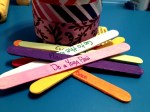
Making an “Alternatives” Jar
For anybody with issues with binge eating, purging, and/or self-harm (or any other type of urge), an “alternatives” jar is a good project! It is a jar filled with popsicle sticks that have things written on them that you can do when your urge hits, as an alternative to the urge.
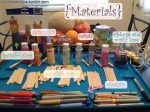
You need:
- A glass jar (I used a small 8 oz old jar that I had left from a jar of jam- you can get these for $1 in some places with the jam)
- Popsicle sticks (I used 70 regular-sized ones from a pack of 1,000 craft sticks that I bought for $5)
- Markers (I used Bic Mark-It Permanent Markers, but any other marker should work, even dollar-store markers)
- Paints, as many colors as you want (I used Apple Barrel brand acrylic paints, which run for $0.50-$0.57 per 2 oz container at Wal Mart).
- Paint brushes to use for the paints (I used Plaid brand sponge brushes, which I got for $1 for 4, and a pack of 24 different brushes which were $5 each)
- Ribbons and washi (decorative/paper) tape ($0.50-$3.50 per roll, however you want)
Items 4-6 are optional! You can use as much or as little paint as you want. You should only need one bottle if you are doing one color; however, you may want more!
Instructions:
- Gather your materials 🙂 (not too hard!)
- Decide how many sticks your jar will hold. Mine held 70 craft sticks; some can hold more!
- Decide how many colors you want to use, and if you want the colors to mean anything.
- Paint the craft sticks!! Do this on a surface easily cleaned, thrown away, or that you don’t mind getting messy! I used a lid from a plastic tote. You can either put the paints on a palette (if you have one), or dab it onto the sponge brushes and then paint.
- Let your painted sticks dry.
- While you are letting them dry, you can decorate your jar. Some permanent markers work on glass; others don’t. You can try them though! Acrylic paints don’t always work on glass, also. I used washi tape and ribbons, using a hot glue gun to attach the ribbons to the jar. The tape and ribbons can be removed from the jar if I so choose (so that way I can re-use the jar or re-decorate if I want to)
- Once the sticks dry, write on them!!
Ideas for how to use color:
You can see that I used 7 colors, each with 10 sticks. Colors can be used to denote:
- Type of urge (especially useful if you have multiple types)
- Type of emotion behind the urge or activity (feeling sad, guilty, angry, lonely, wanting sensation, etc)
- Amount of time the activity takes (5 min, 10 min, 15 min, 30 min, 1 hr, over 1 hr)
- Amount of money you’d have to invest (ie, totally free things, things you can spend $1 on, things you’d have to spend $5 on, etc)
How to use:
- When your urge hits, pick a color or colors to represent what you need. For example: red for me are things to get anger out, so if I’m wanting to purge because I am angry, I will choose the red sticks.
- Pick one stick of that color. Do that activity, and put the stick to the side. If, after you’re done with the activity, the urge is still there, pick another stick.
- Keep choosing sticks until the urge is gone (or you have other things you have to do)
- If the urge hasn’t gone away, but you are done with your sticks: choose another color and keep going.
Ideas for what to write on your sticks
- 101 things to do besides binge
- More binge alternatives
- Alternatives to binge eating/purging
- Alternatives to self-harm
- More alternatives to self-harm
Idea based off of: Coping Bank and Binge Jar



All credit goes to the masterpost…posters. Because they’re great people.Cheer up and Relax
- Sad?
- Ugh, Feelings
- Calming Noises
- Feeling Okay?
- Websites for when you want to…
- Cute games
- Coping Skills and Distractions
- A happy things Masterpost
- Feeling stressed, sweetie?
Fun Stuff
- Hobbies Masterpost
- somethingpointy’s Masterpost of Bullshit Time Wasting!!
- For when boredom Strikes
- Good psychological games masterpost
- Learn To Code
Mental Illness
- Anxiety Masterpost
- Bipolar Disorder Masterpost
- Depression Masterpost
- Eating Disorder Masterpost
- Mental Health Help Masterpost
- Panic and Anxiety Information Masterpost
- Recovery Resources
Self Harm
- Momma’s Alternatives to Self Harm
- Ultimate Self-Injury Recovery Masterpost
- Coping with thoughts of self harm Masterpost
Films
- The Big LGBTQA* Film Masterpost
- Studio Ghibli Films Masterpost
- Disney Films Masterpost
- Animated Movie Masterpost
- What do you mean I’m not 10 anymore?
General Self HelpEverything
- One Big Masterpost
- Everything Masterpost
- Nicoisbroken’s Master list
- Literally Rad’s Resource Masterpost
In Case Of EmergencyOthers
Optimism in the dark places
Sometimes, people who want to see themselves as optimistic say things like this to suffering people they encounter:
- “Look on the bright side!”
- “Cheer up!”
- “It can’t be that bad!”
- “It’s ok.”
- “Smile, you’ll feel better!”
- “You have so much to be grateful for.”
Sometimes people who say this kind of thing mean well, but it’s still degrading. It’s degrading because:
- Sometimes things really are that bad
- Refusing to acknowledge that doesn’t help anything
- And when you try to insist to someone who is going through something awful that it can’t be as bad as they think, what you’re really doing is refusing to listen to them
- Telling someone to shut up is neither kind nor optimistic
This is particularly the case if you’re talking to someone in a bad situation that is unlikely to get better, or which is at least unlikely to get better in the near future eg:
- Someone who has a terminal illness
- People who are facing systemic oppression of a kind that isn’t going to go away in their lifetime
- Someone who is trapped in an abusive relationship they see no way out of
I think that there’s another kind of optimism that is much more helpful:
- Acknowledge that things really are that bad
- Don’t try to smooth them over
- Identify things that make life worth living
- Work on building and recognizing love (including, love people enough to acknowledge how bad things are without pressuring them to sanitize them for you)
I don’t talk about my illness so that you will feel sorry for me. I talk about it so you will know what I’m going through, why I am the way I am. I don’t want your pity. I want your understanding.
And sometimes, I talk about it because I had a bad day and just like you, talking about the bad thing makes me feel better. It just so happens I have a lot of bad days and my illness is usually at the core of it.
(via chronicallyalive)
 Holding the Bowl