Right this minute, there is someone going through chemotherapy shopping at your grocery store, buying popsicles and ice cream to help their sore mouth, and worrying what the cashier is going to think.
There is someone on hemodialysis buying white bread instead of whole wheat, trying to keep their phosphorus levels reasonable between appointments and hoping for the best.
There is a person attending intensive outpatient treatment for their eating disorder who has been challenged by their therapist to buy a Frappuccino.
There are dietitians picking up a dozen different candy bars to eat with their clients, who feel ashamed and guilty about enjoying them.
There is someone who just doesn’t have it in them to cook right now, and this frozen pizza and canned soup will keep them going.
There are people recovering from chronic dieting and semi-starvation who are buying chocolate and chips at their deprived body’s insistence.
All around us are people listening to what their bodies need and attempting to make the best possible choice within a context of overwhelming food pressure. All of their choices are valid, and every single one of these foods is “real.”
Tag: coping
What It’s Like To Be In Love When You Have Depression
This intense love is frightening, because every day, I fear that one more thing will push him over the edge. That one more time of me rolling over in bed, teary-eyed, for no reason, could push him …

taekookau-deactivated20160227:
heya so i thought i’d make a little help masterpost. (if you prefer a page there’s one here x)
ROUGH NIGHT?
- listen to let it go from frozen in 25 different languages
- luke’s giggle will make u happy
- 5sos did a dumb thing that will make you smile
- and another dumb thing
- you’re cute, so look at this complimenting website
- watch some good movies:—)
- playlists for your moods
- cute random acts of kindness
- hugs??????
- play some pointless dumb but entertaining games to cheer you up
- disney movies!!
- cute things to make you happy
- noise machines to help you calm down
- if school is making you sad: remember that your mental health comes before schoolwork, always, and your teacher will understand that.
DEPRESSION/SELF-HARM/SUICIDE:
- self-harm alternatives
- if you’ve already self-harmed, take care of your cuts/burns/etc !!
- country suicide hotlines
- suicide hotline masterpost
- how to stop self-harming + fully understand it
- butterfly project (self-injury prevention)
- suicidal? talk to someone or help someone!
- suicide prevention- like a hotline, but online!
- not sure how to help someone who is suicidal?
- reasons to live
- tips to help stop cutting
- how to fade/cover/hide your scars
- how to explain scars (excuses)
- just relapsed?
- coping with your depression
- natural depression treatments
- antidepressants: which one should you ask for?
- types of mental health issues
- feel the need to see blood? (cut a white screen)
- the thoughts room
ANXIETY & INSOMNIA:
- understanding anxiety
- different types of anxieties
- having a panic attack?
- dealing with social anxiety
- explanations of many anxiety disorders
- tips to beat insomnia
- understanding & curing insomnia
- when to try to sleep (based on when you need to wake up)
- tips for falling asleep quickly
- how to help someone having a panic attack
- do not say these things to someone having a panic attack!!
- tips for calming down your anxiety
EATING DISORDERS:
- why you should try to recover
- feeling bloated?
- prevent your relapse!
- why you should recover (why you need to eat)
- love your body
- bulimia recovery steps
- stop putting yourself down
- boost your confidence
- self-love
ABUSE & SEXUAL ABUSE:
- healthy vs unhealthy boundaries in a relationship
- abuse hotlines
- how to overcome emotional numbness
- how to realize sexual abuse is not your fault
- how to realize sexual abuse is not your fault (part 2)
- how to realize physical abuse is not your fault
- how to forget about sexual abuse
- domestic violence and abuse
- how to escape an abusive relationship safely
- aftersilence program (victims of abuse and sexual abuse)
- do you think someone you love is getting abused?
- healing, forgiving and overcoming physical and sexual abuse
- speaking out after sexual/physical abuse
if you can think of other links to add or need help, message me anytime xx
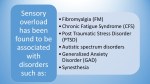
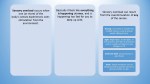
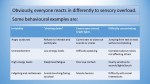
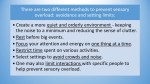
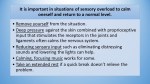
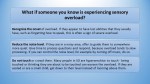
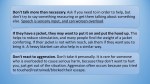
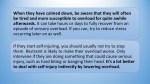
Sensory Overload and how to cope.
(click on images to zoom)
this is very good advice. being autistic, i’m susceptible to overload, and do my best to keep my environment restful so i’m better able to deal with the outside world when i need to, but sometimes shit happens. the number one thing i wish people knew about overload is: don’t get between me and the door. usually i catch it in time to politely excuse myself ‘for a cigarette’ but sometimes, like if i get cornered one of those people who stands too close and wears too much perfume and talks too loud and completely ignores disengagement signals, i can end up in a hurry to get away from the stimulus, and even a little panicky. so like… don’t block my path on my way out, okay?
also, don’t follow me outside and keep talking. don’t try to participate in my spindown. don’t demand reassurance every thirty seconds. don’t make it about you. i’ve got this. i don’t need your help. i just need you to stop making it worse.
» Depression: How do you tell your boss you can’t work?
If you don’t have a mental illness – whether it’s depression or alcoholism or an anxiety disorder – you’ve probably never been confronted with these questions: How do you call in sick when your mental illness prevents you from work? What do you say when you go back to work after an extended absence because of your mental illness?
When you have to answer these questions, you realize how much stigma there is about mental illness.
Links Related to Borderline Personality Disorder (BPD)
Not Norse-related, but a collection of my writings on BPD that are personally relevant and perhaps useful to others, particularly if they want to understand me better or communicate with me better.
- Questions on Borderline Personality Disorder (with listed book resources)
- Tips for Communicating with Someone With BPD (which would include tips for communicating with me. A bit of a lengthy read, but I’d very much suggest doing so if we interact at all.)
- On Shadow Work (ie, spiritual and psychological exercises for dealing with issues, including BPD)
- BPD and Mirroring (about identity disturbances)
- Long Personal Post on BPD
My Parents are Dead and My Sister is Disabled
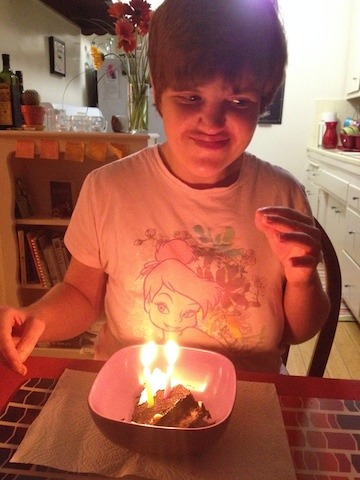
On May 28th, my sister, Edna, turned 31.
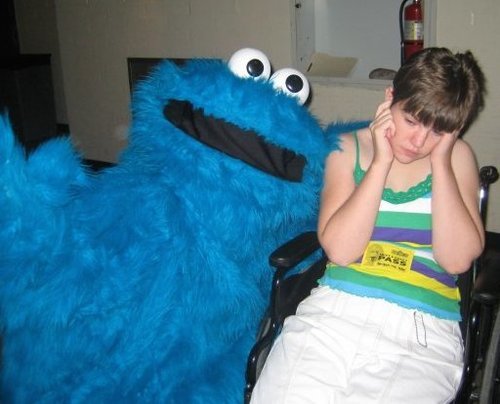
Her mental age is about three years old. She loves Winnie the Pooh, Beauty & the Beast, and Sesame Street. Even though the below picture is unconvincing.
Edna and “Cookie.” I think she was trying to play it…

Not every survivor remembers the date it happened. However, for the ones that do, these dates can be terrifying reminders of the past.
Personally, my traumaversary is Oct 29th. I started making plans for how to handle it 3 months in advance. Planning ahead, as far as you can, is probably a good thing to do.
Before Hand:
If you’re in college, talk to your professors. See if you can be excused from class that day, complete work due that day ahead of time, stuff like that.
If you’re able to, see if you can take off work that day, or if nothing else, just give a heads up to your boss that you may not be at your best.
Remove temptation. If you’re worried you may hurt yourself that day, go ahead and get rid of the things you could do so with. Even if it is only asking a friend to hold on to them until you’re feeling better. This is not a sign of weakness, it is not you being a burden. It is you realizing that it probably isn’t going to be a good day and you don’t want to relapse if you can help it. It is a big step, and I am super proud of you.
See if people are willing to check in with you. Whether it be a phone call, a text, a facebook chat, or coming to hang out with you- it is nice to know that people are going to be there for you on that day.
Prepare. Make food before hand or have things that can be mircrowaved, have ‘easy’ clothing sets ready, You may surprise yourself and that day be perfectly okay- but it’s better to have things on hand just in case.
Leave nice notes for yourself. Or have a friend help you. Especially if you think the day is going to be really rough. Having a note on the fridge, the bathroom mirror, the door… Little ‘remember, you can make it through this. I believe in you’ and various things can wonderful.
The Day of:
Be kind to yourself. It isn’t your fault if you’re upset or angry or spend all day crying. It isn’t your fault. There is nothing /wrong/ with you for reacting. You are a human being who has been through terrible trauma and anyone who judges you for how you heal is ignorant and cruel. There is also nothing wrong with you if the day goes perfectly well and you aren’t affected at all. It doesn’t mean that what happened wasn’t terrible. It just means you’re at a different place in your journey.Know that you’re in control. You’re allowed to be alone that day if you want. You’re allowed to surround yourself with friends. You’re allowed to go out in public. You’re allowed to stay at home. Do not feel like you have to do one thing or another. Your main concern on this day should be you. Even if you make plans, you’re allowed to change them. Just because you decide a week in advance that you’re going to do plan A doesn’t mean that you aren’t allowed to throw that to the wind and do something else on that day.
Memorialize it. Now this is a personal choice, not everyone -wants- to make their trauma dates into memorials and that is a-okay. But for a lot of us, it is about taking back that day and turning it into something new. Get a tattoo. Plant a tree. Go sky diving. Go to a theme park and ride roller coasters all day. Anything that you could look back on that date and go ‘I did it.’
Self Care. Take a day for self care. Watch terrible romantic comedies/sci-fi flicks/horror movies all day. Take a bubble bath. Spend time with friends who love you. Drink your favorite tea/coffee. Go to the humane shelter and pet dogs/cats. Whatever it is that you think would make you feel better? Do it.
Make something. Follow your own emotions with it. Paint. Draw. Sculpt. Even if you’ll later destroy it. Even if you finish it- you immediately rip it apart or set it on fire. At least you got it out of your system.
Give back. I know plenty of survivors who choose to spend their anniversaries volunteering in one way or another. Go through your closet and donate old clothes to a shelter that helps survivors. Make a care package with a letter to donate to a women’s shelter- pass on encouragement and advice.
Whatever you choose to do, in whatever combination- be easy on yourself. Take a moment every now and then to check in with yourself, and ask if you’re okay.
No matter what, I want you all to remember that I believe in you. You made it through the trauma, and you can make it through this. And I’m not saying that to silence your pain.
Your pain is valid. Your hurt is valid. You are valid.
Take care of yourself, okay?
Just a reminder that while positivity is a great tool it is not healthy to:
- repress negative thoughts/feelings
- feel guilty for having negative thoughts/feelings
- feel that you can’t express negative thoughts/feelings
Negative emotions are a part of life, and a truly balanced cognitive strategy will accept this (while working to change the balance of good to bad and teaching you coping strategies/self care/distraction etc)
Why Stress Triggers Depression In Some People, Resilience In Others
A new study shows why stress can trigger depression in some people. But what’s the solution?
Depending on your genetic makeup and a host of other variables, you’ll have a different reaction to stressful events from the people around you, and even your relatives. Some people naturally get energized by the challenge, even if it’s a frightening or intimidating one, and can’t wait to overcome it. Others feel dwarfed by the stress and just want to hide from it – this is called depression. Researchers and psychologists have long tried to tease apart why people have such different reactions to stress, and now a new study offers more clues about what’s going on in the brain to explain this difference in people’s responses.
Why Stress Triggers Depression In Some People, Resilience In Others