
The Ritz-Carlton, Laguna Niguel Annual Holiday Surfboard Auction benefiting Surfers Healing

Devotional blog dedicated to the Goddess Sigyn offering support to those who are "holding the bowl" within difficult relationships.
Hasbro’s fundamental mission is to bring joy and play to children and their families around the world. But for some children play can be challenging. For children with a developmental disability, play isn’t always accessible out of the box, relegating countless toys to the back of the closet or the donation bin. But more importantly, the joy and benefits that play can bring, the connection between peers, siblings and other generations may be lost.
Believing that we could do more, a passionate group of Hasbro employees from across the Company, came together to team up with Autism Project – a long term philanthropic partner of the Hasbro Children’s Fund, to figure out a way to help. The team learned that many classic Hasbro toys were being widely used by teachers and occupational therapists working in the field and that they were creating their own supportive play tools which provided structure that is critical to the way certain children manipulate concepts to help them understand play. ToyBox Tools was created to provide that structure through a series of tools, rooted in evidence-based and emerging best practices. The instructional videos, printable materials and play-mats are designed to help families, caregivers and teachers unlock the power of play and to make play more fun and enjoyable at a child’s own pace. ToyBox Tools recognizes that parents and caregivers know their children best and encourages them to use their judgment in selecting the right product and level appropriate for their child.
Collectively our mission is to make “play accessible".
ToyBox Tools – helping children with developmental disabilities learn how to play
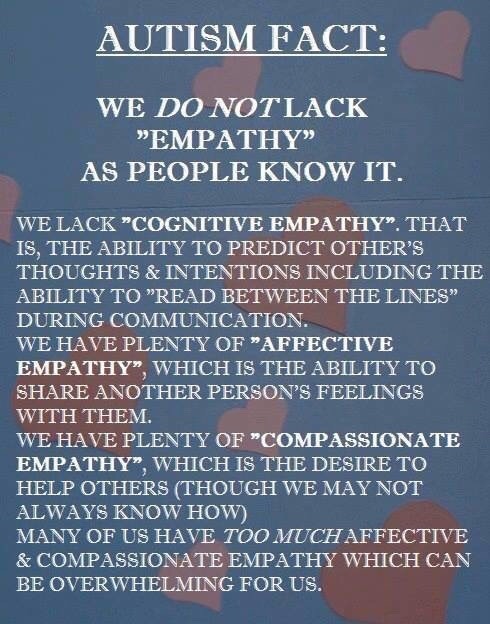
this is a really important message because it is a common misconception about autism, but it’s also important to acknowledge that people who have conditions that involve less of the other types of empathy are also important and are no less human because often times people try to dehumanize us (autistic people) by saying we don’t have empathy, and it is important to correct their misconception, but it is also important to assert that people who don’t have other kinds of empathy are just as important and valuable as those who do.
- yodeling into a can of peas (although it is not helpful, its definitely not as harmful as A$)

Congrats to Joanna Grace who has written an instruction book for creating and telling sensory stories for children with special education needs or learning disabilities.
Sensory stories use sensory cues such as sounds, tastes, smells and things to hold and feel during the story to help connect to the experience and the message of the tale.
We supported her kickstarter to write the first stories and we are so glad to hear about the book which will help parents and teachers create their own story experiences.
More about the book and it’s launch here.
http://sensoryplaytray.com/sensory-stories-children-teens-book/
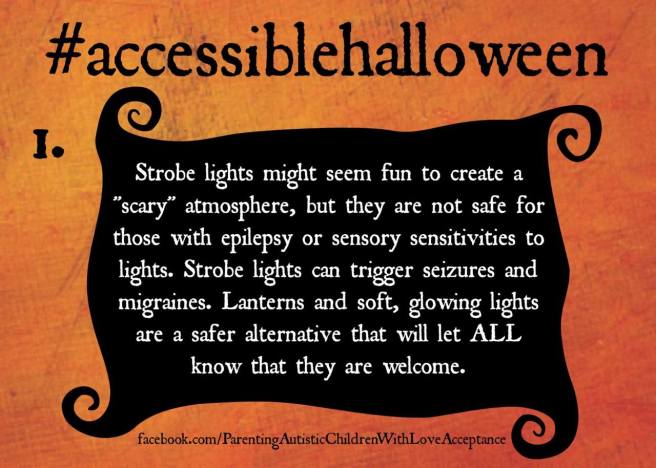
For the month of October, PACLA will be sharing information to help make Halloween safe & accessible for everyone! Autistic children deserve a #posAutive experience in an often overwhelming time of
year. We ALL do. Look for the hashtag #AccessibleHalloween, contribute your own ideas and accommodations, and share widely! The more people we reach, the more inclusive we can make this holiday. Thanks and may we all have a HAPPY and #AccessibleHalloween!Image Description: Orange textured background, with a large hashtag at the top, #accessiblehalloween, and a large number 1. A black banner stretches across the meme, with white text reading:
Strobe light might seem fun to create a “scary” atmosphere, but they are not safe for those with epilepsy or sensory sensitivities to lights. Strobe lights can trigger seizures and migraines. Lanterns and soft, glowing lights are a safe alternative that will let ALL know they are welcome.
idek if people even know this about me but i make really neat little high-quality buttons to display plant fibers, feathers and bug wings, pretty much anything i pick up around town in my autistic ramblings. sometimes i order pressed flowers or feathers off craftpeople or exotic bird caretakers and make art with them. i get neat handmade paper and play with textures. other stuff i just decide looks neat and stick it in the machine to see what happens.
aud offered to help me put them on sale. i guess it depends on if anyone is into nature shit? here’s the kind of stuff i make:
iris and feathers on art paper, the last one has neat little gold flecks behind the black feather fluff.
that’s a robin’s egg.
cicada wings, viceroy wings, flowers, birchbark from the riverbank, art paper. i was really grooving on the look of flowers over birchbark. it feels like petting warm suede in my brain when i look at them.
leaves and regular paper. leaves don’t hold their spectacular colors forever, but they look like gems for quite a while before they fade, about a year or so. and they still look neat afterward, unless you press them without drying them first, which i did with the green ones (those were an experiment, and they rusted nastily).
rose petals. the ones i kept still look perfect years later.
roses and leaves
leaves, flowers, cicadas. the ones that look like psychedellic planets are silk fiber that i arranged with a toothpick.
some of the feather buttons i’ve made. these are sort of popular at the local art store, where the owner sells my stuff on commission.
and keychains with peacock feathers over gradient paper. these were really messy to make, but they looked awesome.
you can see all the dead thing button designs in high resolution here.
Taking a child with autism on a plane requires some advanced planning and preparation. Thankfully there are now programs in place at many airports that that provide children with autism a flying experience without ever lifting off the ground. Participants pack their bags, ride to the airport, pass through security, and continue through the whole flying process including boarding, “flying” and deplaning.
These “dress rehearsals” help to prepare individuals with autism for flying. When the time comes children with autism will know what to expect and the environment will not be as foreign to them. Hopefully over time the experience of flying will become as pedestrian as it currently is for most of us.
Here are 15 airports currently offering a Airport Rehearsal Program
15 Airports That Offer “Rehearsal Programs” for Individuals With Autism
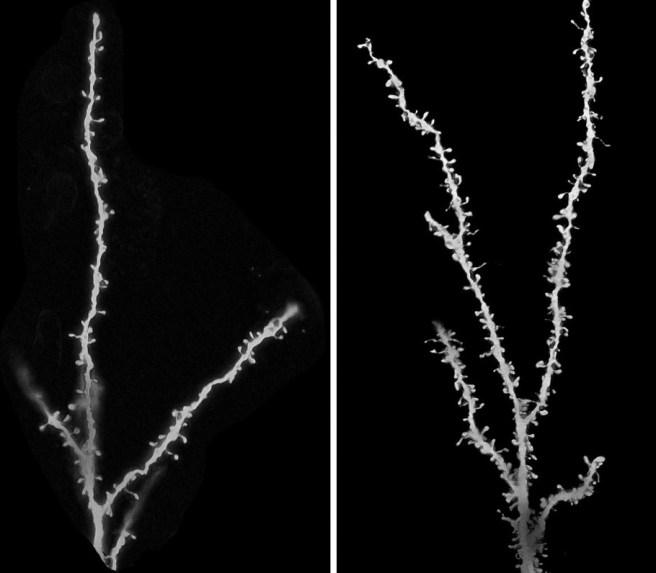
NEW YORK, NY (August 21, 2014) — Children and adolescents with autism have a surplus of synapses in the brain, and this excess is due to a slowdown in a normal brain “pruning” process during development, according to a study by neuroscientists at Columbia University Medical Center (CUMC). Because synapses are the points where neurons connect and communicate with each other, the excessive synapses may have profound effects on how the brain functions. The study was published in the August 21 online issue of the journal Neuron.

D.J. Svoboda is the face of the Imagiville brand. He has published three children’s books with plans to write more. He travels around the country speaking to families about his experiences and inspires them to dream big. read more
He does commissions as well. Love his art!!


 Holding the Bowl