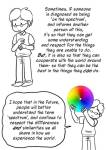
“His stimming is beautiful. To get him to stop stimming would require intensive coercion that, even if successful, would likely result in irreparable psychological harm.”
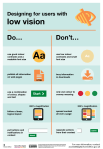
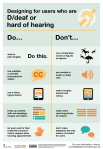
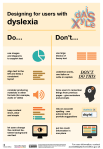
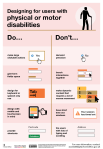
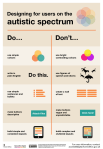
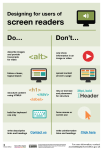
The dos and don’ts of designing for accessibility are general guidelines, best design practices for making services accessible in government. Currently, there are six different posters in the series that cater to users from these areas: low vision, D/deaf and hard of hearing, dyslexia, motor disabilities, users on the autistic spectrum and users of screen readers.
[…] Another aim of the posters is that they’re meant to be general guidance as opposed to being overly prescriptive. Using bright contrast was advised for some (such as those with low vision) although some users on the autistic spectrum would prefer differently. Where advice seems contradictory, it’s always worth testing your designs with users to find the right balance, making compromises that best suit the users’ needs.
I’ve been wanting something like this to reference! Boosting for the others that like to dabble in code/design.
This is some of the most lucidly written accessibility advice I’ve seen. Making accessible web pages should be the default, not an add-on. It’s really not that hard to do, especially when you think about it from the start – and it benefits everyone.
(Obligatory note that there are exceptions to some of these guidelines, e.g., “bunching” some interactions together is an important way to cue which interactions are related to each other, but that’s why these are guidelines, not absolute rules.)
young web designer: thank you oh my god no one has been able to explain this quite as well and this is just good shit
I realized a little while ago (after struggling with mental illness for almost 30 years) that my approach needs to be positive, not negative.
I don’t mean positive thinking or any of that shit. I mean, if you’re mentally ill, you often frame management as “an absence of symptoms.” Which is great, if you’re talking about acne or a torn ACL or chicken pox. But if your mental illness is as pervasive as mine (anxiety with obsessional features), striving to eliminate every single symptom so that you can be “normal” is a fool’s errand. And I used to get worked up about it. One of my future in-laws likes to comment on my knee bouncing, and it wrecked my self-confidence whenever we were over at their house. “Nervous tic?” she’d ask, in front of everyone.
My current therapist is great. When I talk to her about eliminating a certain habit or tic that I have, she asks me if that tic is interfering with me living the life I want. If the answer is “yes,” then we work on eliminating it. If the answer is “no,” then we leave it be. My anxiety makes it impossible for me to go to Disneyworld. But I don’t want to go to Disneyworld, so there’s no reason for me to worry about it. I could spend all of my time trying to control all of my rituals and tics. I could exert all of my energy into social situations and “pushing my limits,” but all that is going to do is make me miserable.
Let’s reframe health as “capable of living the best life you can.”
“Imagine having a child that refuses to hug you or even look you in the eyes”
Imagine being shamed, as a child, for not showing affection in a way that is unnatural or even painful for you. Imagine being forced, as a child, to show affection in a way that is unnatural or even painful for you. Imagine being told, as a child, that your ways of expressing affection weren’t good enough. Imagine being taught, as a child, to associate physical affection with pain and coercion.
As a preschool special ed para, this is very important to me. All my kids have their own ways of showing affection that are just as meaningful to them as a hug or eye contact is to you or me.
One gently squeezes my hand between both of his palms as he says “squish.” I reciprocate. When he looks like he’s feeling sad or lost, I ask if I can squish him, and he will show me where I can squish him. Sometimes it’s almost like a hug, but most of the time, it’s just a hand or an arm I press between my palms. Then he squishes my hand in return, says “squish,” and moves on. He will come ask for squishes now, when he recognizes that he needs them.
Another boy smiles and sticks his chin out at me, and if he’s really excited, he’ll lean his whole body toward me. The first time he finally won a game at circle time, he got so excited he even ran over and bumped chins with me. He now does it when he sees me outside of school too. I stick out my chin to acknowledge him, and he grins and runs over and I lean down for a chin bump.
Yet another child swings my hand really fast. At a time when another child would be seeking a hug, she stands beside me and holds my hand, and swings it back and forth, with a smile if I’m lucky. The look on her face when I initiate the hand swinging is priceless.
Another one bumps his hip against mine when he walks by in the hallway or on the playground, or when he gets up after I’m done working with him. No eye contact, no words, but he goes out of his way to “crash” into me, and I tell him that it’s good to see him. He now loves to crash into me when I’m least expecting it. He doesn’t want anything, really. Just a bump to say “Hi, I appreciate you’re here.” And when he’s upset and we have to take a break, I’ll bump him, ask if he needs to take a walk, and we just go wander for a bit and discuss whatever’s wrong, and he’s practically glued to my side. Then one more bump before we go back into the room to face the problem.
Moral of the story is, alternative affection is just as valid and vitally important as traditional affection. Reciprocating alternative affection is just as valid and vitally important as returning a hug. That is how you build connections with these children.
This is so goddamn important.
I verbally express affection. A LOT.
My husband… doesn’t. I don’t know why. For the longest time part of me wondered if it meant he loved me less.
At some point I told him about a thing I had done as a kid. Holding hands, three squeezes means ‘I Love You’.
Suddenly he’s telling me I Love You all the time.
Holding my hand, obviously, but also randomly.
taptaptap
on my hand, my shoulder, my butt, my knee, whatever body part is closest to him, with whatever part of him is closest to me
All the time.
More often than I ever verbally said it.
It’s an ingrained signal now, I can tap three times on whatever part of him, and get three taps back in his sleep. Apparently I do the same.
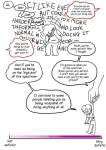
“Most autistic people who are capable of formulating questions have frequently experienced the following scenario: We ask for information that we need in order to prepare ourselves for a new experience. Instead of answering our questions, NT people tell us that we don’t need to ask these questions at all. We just need to relax and stop being so anxious. The fact is that being able to ask questions, and getting clear answers to our questions, and thus knowing what to expect, are often the very things autistic people need in order to be able to relax and not be anxious. Asking a lot of questions about the details of a situation is usually not a “maladaptive behavior” that increases an autistic person’s anxiety. More often it’s an adaptive strategy that an autistic person is using to reduce anxiety or to prevent being in an anxiety-provoking situation in the first place. It’s very important for us to have thorough explanations and ample opportunities to ask questions.”
For the uninformed, functioning labels are terms like high functioning autism, low functioning autism, mild autism, severe autism. Other words like moderate or level 1, level 2, etc may be used too.
Functioning labels are extremely offensive because they’re placed on autistic people based on observation from the outside. This is problematic for three reasons.
Functioning labels determine how autistic people are treated. People associate “low functioning/severe” with incompetence or infancy and they end up treating the autistic person like a pet or a baby. High functioning/mild gets stereotyped as people who are just a little quirky and their difficulties get ignored as laziness or intentional stubbornness.
Functioning labels imply brokenness and treat people as if their intrinsic value is determined by what they contribute to society rather than the fact that they are a living being with oxygen in their lungs and blood in their veins like everybody else.
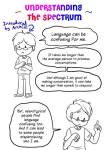
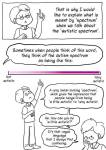
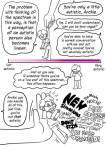
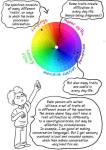
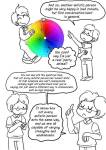
Functioning labels create a dichotomy as if there are differing “levels” of autism or that people exist on different areas of the spectrum. NO, NO, NO, that’s not how it is.
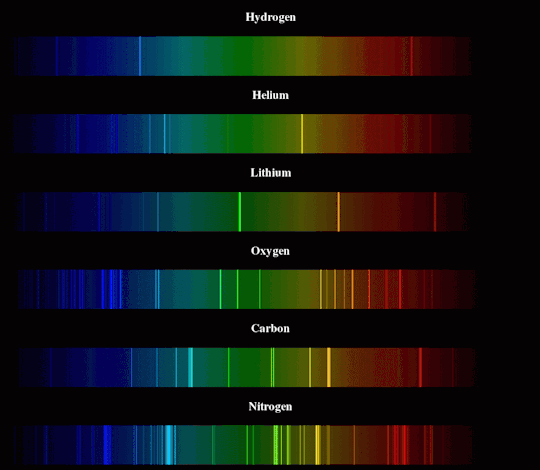
Think of spectroscopy and how the elements create their own signature color lines. Now put peoples’ names in place of the elements: Hydrogen/Harold, Helium/Henry, Lithium/Luke, Oxygen/Olga, Carbon/Carol, Nitrogen/Nadine.
Autism is like that. We’re all on the same spectrum and all that is unique is how we display our symptoms, our sensory issues, our splinter abilities and so forth.
In light of that, I want to change the language. Let’s start pushing for support levels instead of functioning labels.
High support: Anyone who isn’t able to live independently and needs help with some or all of their basic daily living skills such as eating, bathing, basic grooming, putting on makeup, getting dressed and completing tasks. Can be abbreviated online or in writing as HSP for High Support Person or HSAP for High Support Autistic Person.
Usage in speech: Clarissa is a high support autistic person and needs assistance with getting dressed and taking a shower. Abbreviated usage online: I’m a HSAP and I’m really into physics, so the poor sucker who signs me on is gonna hear a lot about it when they hand me my iPad!
Medium support: Anyone may or may not live independently and doesn’t need help with basic living skills, but needs help with other things like cooking, completing some tasks, transportation if unable to drive and assistance for things like grocery shopping. Can be abbreviated online or in writing as MSP for Medium Support Person or MSAP for Medium Support Autistic Person.
Usage in speech: Kevin is a medium support autistic person and needs some assistance to prepare meals and shop for the wood he uses for his carpentry projects. His boyfriend, Max, usually helps him with those. Usage online: I’m a MSAP and I’m looking for info about saws. Any fellow auties know what’s best for cutting oak?
Low support: Anyone who more often than not lives independently and may only need assistance with minor things like balancing a checkbook, getting started on some tasks like organizing a garage sale or arranging to move from one house to another. Can be abbreviated online or in writing as LSP for Low Support Person or LSAP for Low Support Autistic Person.
Usage in speech: Jesse is a low support autistic person and she only needs help keeping her checkbook balanced. Usage online: I’m a LSAP and I’m thinking about moving to Seattle. What’s the weather and traffic like there?
Reasons support levels are better:
They don’t make assumptions about intelligence
They don’t encourage infantilization or pity
They sound more respectful and dignified
Ditch functioning labels and start using support levels. These terms can apply to practically every kind of disability, not just autism.
For the record, I’m a MSAP.
Please reblog this whether you’re disabled or not. Make this viral.
The next time somebody gives you shit about your late autism diagnosis, remember that Anthony Hopkins was diagnosed as autistic when he was 70 years old.
People can go almost their whole lives and never know they’re autistic, but recognize they feel different from their peers.
And BTW Anthony Hopkins stims by rubbing his hands together, and being autistic is exactly why he’s such a good actor. He studies people’s mannerisms with an analytical mind, adopts those mannerisms for characters and turns out awesome performances. He’s a chameleon.
^That. Your dx might not happen yet because of money or ridiculous ideas on the part of your doctors but if you know you’re very probably autistic, odds are good you are.
You’re in good company. We’ve got: Geeks, sporty people, actors, artists, great friends, business moguls, sketchbook doodlers, public speakers, asl experts, activists, cat snugglers, Knights of the UK, parents, kids, dinosaur experts, shoelace collectors, snorkleing enthusiasts, quilters, people with all kinds of bodies and faces and colors and lives.



 Holding the Bowl