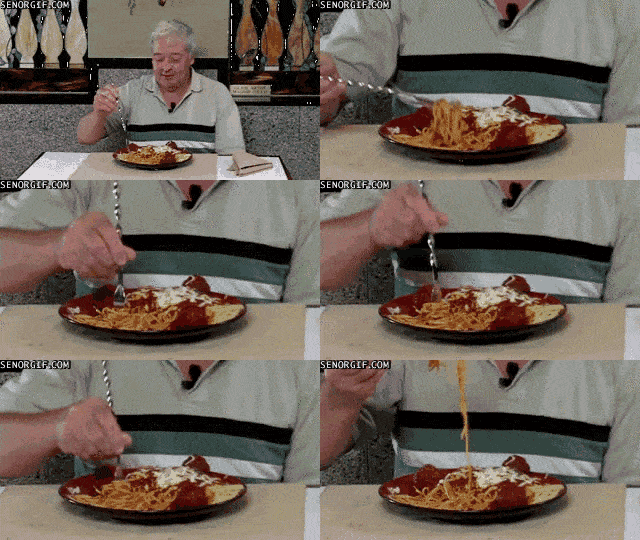
While I’m sure there are people too lazy to spin a fork, keep in mind people like this person who may be suffering from arthritis or a neurological disease or nerve damage or a thousand other conditions that might impair their ability to do things as simple as spin a fork to eat spaghetti.
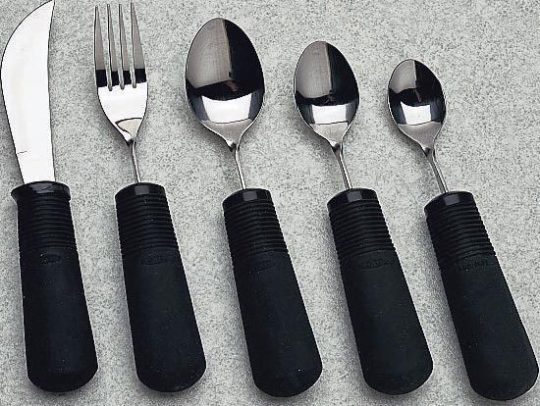
These are used with people who can’t grip well:
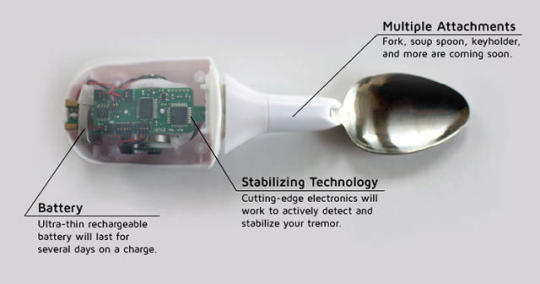
This is for Parkinsons’s:
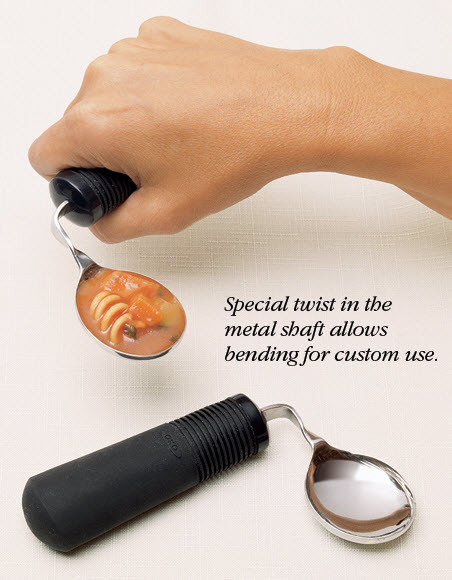
For people who can’t even bend their joints:
Here’s a product that guides your hand from your plate to your mouth
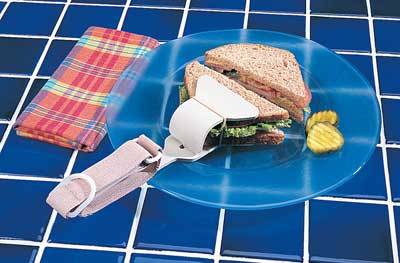
This one holds a sandwich
Like I get it. I used to see things like the fork and think “that’s fuckin’ lazy” or that product that holds a gallon and you just tip it and pour. But then I started working around the disabled and impaired and found out that these products aren’t meant for lazy people, they’re meant for people who need help.
So maybe next time you see something, instead of thinking “Wow, are people that lazy?” just be grateful that you’re able to do the things you do every day and take for granted, like being able to feed yourself and wipe your own ass because you have enough coordination and bendy joints to do it.
HEAR FUCKING HEAR
I have nerve damage and degenerating joints in my hands (I’m only 38 dammit) and I would cut a bitch for that spaghetti fork, people have no clue how hard that movement is, no fucking clue
for that same reason, those jokes about “they’re so dumb you gotta wonder who ties their shoes for them” that shit ain’t funny either
Resume Production of High Profile 1R99C Serial #: 887591, manufactured on May 29, 1997 When her 1997 Roho cushion went out, Dr. Codrina Cozma discovered she could not breathe on the new Roho cushions and her mobility was restricted due to the pointed tip cell design and new material that was thinner and less elastic. Since last year, she has been experiencing skin sores, difficulty breathing, and dangerously limited mobility while trying 15 different cushions manufactured by Roho and other companies. Roho customer reviews from the past four years also indicate that the material used in Roho cushions tears easily causing serious health issues to other patients who are dependent on these cushions.
In his 6/2/2014 email, Mr. Robert Graebe, CEO of the Roho Group, assured Codrina: “Our staff here at ROHO will be available to answer any questions your treating professional may have, and will happily fulfill any product recommendation from your seating specialist.” However, when Codrina’s seating specialist and six other clinicians requested the Roho Group to replicate her 1997 cushion because current cushions jeopardized her vital functions, Roho VP David McCausland denied the request in his 9/2/2014 letter, arguing that the chemical ingredients used in her 1997 cushion were no longer available. In subsequent emails, Mr. McCausland refused to reveal the chemical and procedural specs of the 1997 cushion which could have helped other companies produce this cushion, and he denied Dr. Cozma’s request to have the cushion replicated by Roho using the 1997 design and sizes and with currently available chemicals that would produce a material with the same chemical properties.
Despite the fact that Codrina has spinal muscular atrophy and scoliosis, she has touched the lives of thousands of students at universities in Florida and Georgia, and she has blessed people in need who have benefited from grants from her Heaven Preview Foundation. She has also served internationally for over 20 years as a religious and medical multilingual translator. The Roho Group’s denial to resume production of a discontinued medical product leaves her with no alternatives to survive and continue her mission in the world as her medical team has not been able to find any other viable options for her.
Codrina’s Roho story is now being circulated in the media worldwide, and people of many nations are hereby pleading with the Roho Group to resume production of a cushion that will save her life and also improve the quality of life of other patients whose needs are not being met by current Roho cushions. Resuming abandoned series has been done before at Roho according to their past patents, so this decision remains a matter of willingness for the company to address the serious medical needs of its customers. Thank you for caring enough to sign this petition! For more details and updates, please visit Codrina’s blog at www.codrinacozma.wordpress.com or contact her on Facebook.
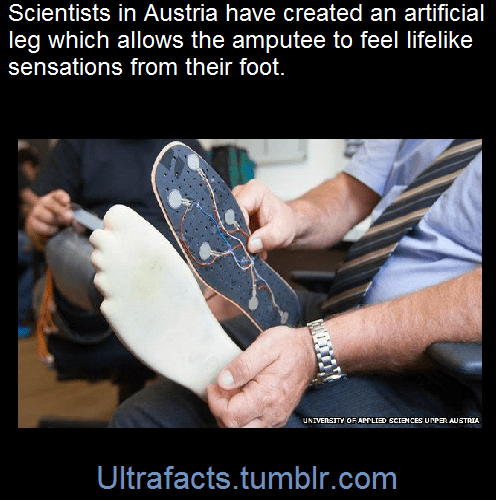
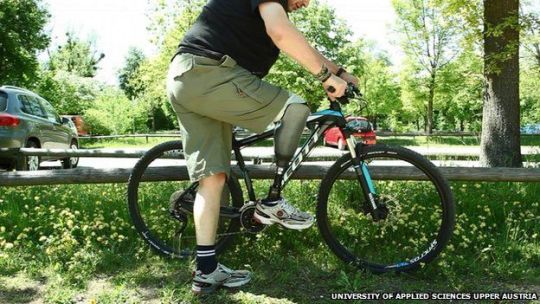
Surgeons first rewired nerve endings in the patient’s stump to place them close to the skin surface. Six sensors were fitted to the base of the foot, to measure the pressure of heel, toe and foot movement.
These signals were relayed to a micro-controller which relayed them to stimulators inside the shaft where it touched the base of the stump. These vibrated, stimulating the nerve endings under the skin, which relayed the signals to the brain.
Prof Egger said: “The sensors tell the brain there is a foot and the wearer has the impression that it rolls off the ground when he walks.”
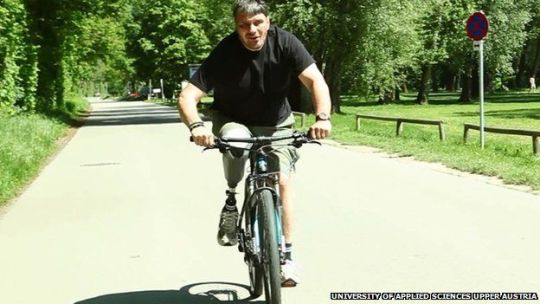
Wolfgang Ranger, a former teacher, who lost his leg after a blood clot caused by a stroke, has been testing the device for six months, both in the lab and at home.
He said: “I no longer slip on ice and I can tell whether I walk on gravel, concrete, grass or sand. I can even feel small stones.”
The 54-year-old also runs, cycles and goes climbing.
Another major benefit was a reduction in excruciating “phantom limb” pain felt by Mr Rangger for years following the amputation.
I shared an article from I Fucking Love Science on this a few days ago, but, it’s worth sharing again, because this is a HUGE deal. Anything that can really reduce phantom limb pain for amputees is absolutely welcome.
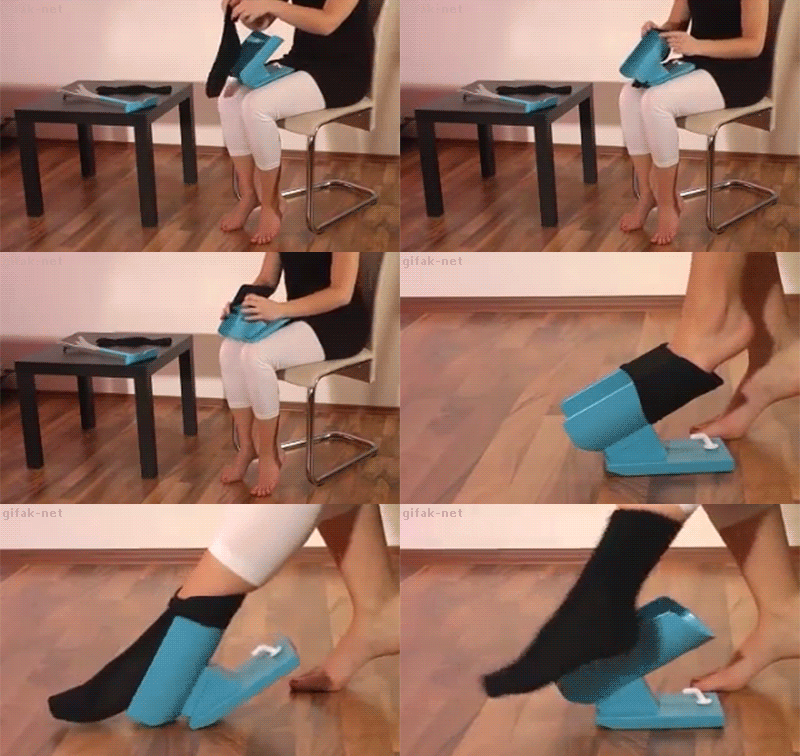
yh but if you look outside your own personal reasons for using this, laziness, it actually looks a really great and practical way to put on your socks if you have a disability that hinders you from otherwise being able so without someone there to help you
you do realise that there are people out there who literally have to travel door to door helping elderly people, disabled people and people with chronic illnesses to put on their socks? people are paid to help put on pressure socks to help with oedema? don’t you realise that if these people could have one of these tools, these caregivers could be doing something else and that this therefore is an incredible tool designed to cater for some of the most healthcare dependent people in our society? do you guys even realise there are other people living other lives?
i really wish i had this when my spine was broken and i had to wear a medical metal corset which made bending down impossible. i had to ask my mom to help me with socks and it was kinda humiliating.
My dad spends an hour in the morning getting dressed because he has no one to help him to get his socks on because his ankle is fused. If he had this it would literally save him an hour.
“Oh but people are so lazy!”
fuck off you ableist pieces of shit
Honestly I don’t even get how you could look at this and think “lazy”. This looks like more work for an otherwise able-bodied person than just putting their sock on the regular way. It’s pretty obvious this is meant for people who have trouble bending over, like come on.
You know how people go straight to “lazy” on this? Because we’re trained to think of most accessibility modifications as lazy. The disabled = lazy message is deeply embedded in our culture.
ok no but does anyone know where to get this? my best friend and housemate is unable to put on socks due to her illnesses and this would just make her so happy being the independent laydee that she is
My grandpa would have been so happy to have this. It would have made his last years so much easier.
This would have been amazing when I was pregnant. I got so big and was in so much pain I could no longer bend down or even pull a leg into my lap (because I didn’t have one anymore) to put my shoes and socks on.
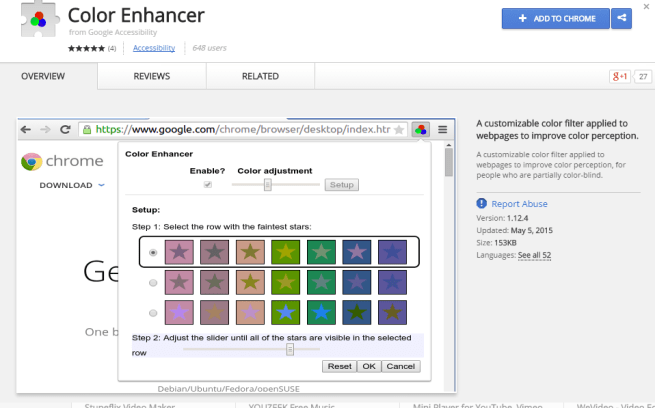
It is fairly simple to use and can help you change the images on your screen to improve contrast or make them of colours that you can see more easily if you are partially colour blind.
“A customizable color filter applied to webpages to improve color perception, for people who are partially color-blind”
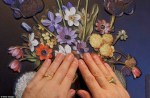
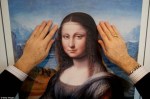
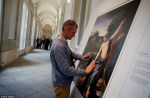
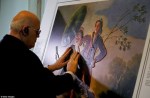
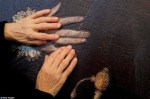
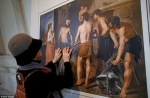
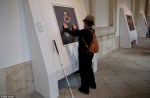
Visitors aren’t touching the original paintings themselves, exactly. They’re touching an extremely high-resolution replica of each painting. The exhibit at Madrid’s Prado Museum, called Hoy toca el Prado, or Touch The Prado, is the product of a new printing process invented in Spain called Didú. Developed by a printing studio called Estudios Durero, Didú produces physical objects a bit like a 3D printer would—except using a completely different chemical process.
The process begins with a high-resolution photo of the painting. The employees at Durero select textures and features that make sense to enhance for the blind. In this aspect, small details, which may appear insignificant at first sight, can be fundamental in understanding the composition or the theme developed in each image. After around forty
hours of work on each image, the volumes and textures are defined and
printed with special ink. Then a chemical method is applied that gives
volume to the initially flat elements. On these, the real image with the
original colours is printed, at a suitable size so that it can be
touched and reached with the hands.
Hi spoonies, I’ve been trying out some different free, Android apps to help manage my fibromyalgia, and so far I really like 3 of them:
-Bluelight Filter. I use it to tint my phone screen with black, and that tones down all the harsh light.
-Plant Nanny. You get a cute little plant to take care of! When you drink water, you give it water, so it keeps you hydrated. It even reminds you when to drink more!
-Pain Coach. This is through web md, and is great for tracking pain levels, symptoms, triggers, goals, etc!
Let me know if there’s any that you recommend, and I hope these help you 🙂
Pain Coach is great, I don’t use it often to record stuff but I do like reading things that are all kept in one place.
I also use FibroMapp, I think it cost me a few dollars but it’s pretty good
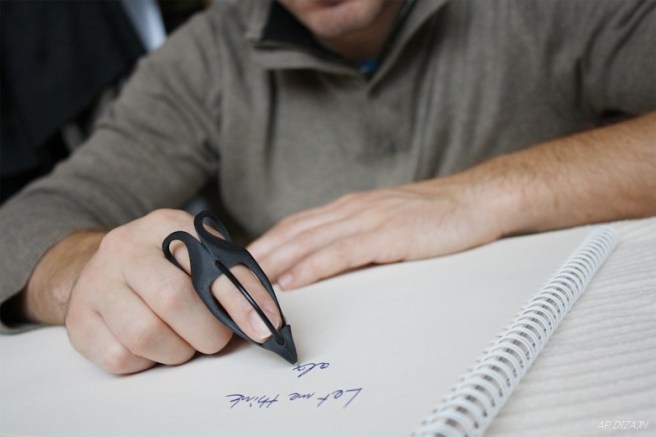
Independence is important for everyone. Unfortunately, for a person with such insignificant disability as the lack of thumb seams to be, life is not easy at all. We learn how to write in the earliest years of our life and it becomes an inherent element of our everyday life. When somebody is suddenly deprived of the opportunity to ordinarily use a writing tool, the disability starts to be inconvenient, it deprives of the independence.





 Holding the Bowl