Friendly reminder that Vincent van Gogh willingly checked himself into an asylum so that he could get better, resulting in him creating some of the most iconic paintings of his entire career, done in the asylum, when he was being treated 24/7, because he finally didn’t have to struggle with his demons and could instead focus on his muse, WHICH WERE TWO DIFFERENT THINGS!
Remember this little insignificant painting?
How about this one?
Check this one out:
All of these and more were painted in the asylum when he was receiving treatment for his mental illnesses and I know I just said that but I said it again and I’m saying it a third time until you dramatic abled assholes understand!
VINCENT VAN GOGH
– KNEW THAT HE WAS MENTALLY ILL
– WANTED TO CHANGE THAT
– WENT TO AN ASYLUM
– GOT THE HELP HE NEEDED
– PAINTED SOME ICONIC MASTERPIECES AS A RESULT!
SO DON’T YOU DARE COME OUT HERE WITH THIS, “I WISH I WAS DEPRESSED SO I COULD BE AS CREATIVE AS VAN GOGH” BULLSHIT BECAUSE EVEN HE KNEW THAT HIS DEMONS WERE HARMING HIS WORK, AND MORE IMPORTANTLY, HIS HEALTH, AND HE DID EVERYTHING WITHIN HIS POWER TO FIGHT THEM EVERY SINGLE DAY OF HIS LIFE, UNTIL THEY ENDED UP WINNING!
This is also incredibly important for any creative persons dealing with mental illness, and their parents.
Receiving mental help improves your craft, not hurt it. Before getting put on medication for the first time to treat my mental illnesses, my mom expressed to me how she’s worried about my getting treatment because of my art. Regardless, your mental health should be more important anyway, but, honestly, it’s a lot harder to produce good art when you struggle getting out of bed, let alone creating masterpieces. When you’re in more health, improving your craft comes much easier!
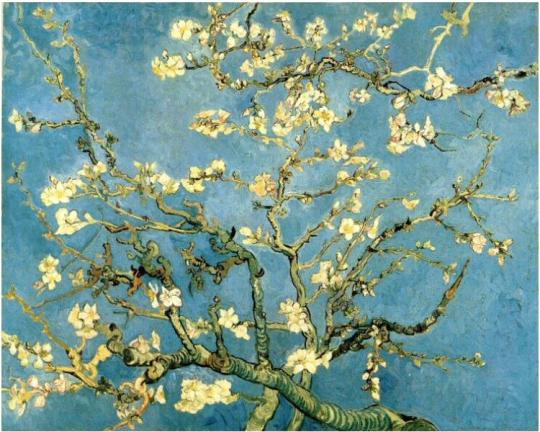
Personally I think the most beautifull painting of him was this one:
He made it when he heard about the birth of his nephew who was named after him. Still in the asylum but really happy for his brother!
“How glad I was when the news came… I should have greatly preferred
him to call the boy after Father, of whom I have been thinking so much
these days, instead of after me; but seeing it has now been done, I
started right away to make a picture for him, to hang in their bedroom,
big branches of white almond blossom against a blue sky.”
Oh I have sucb rants about how “good” art comes while suffering.
No.
look at me.
The idea of the “suffering artist” comes from bunch of alcholic, drug abusing, womanizers trying to justify their bad life choices as some sort of artistic angst.
IT IS 100% BULLSHIT
Take your meds, get your therapy, be happy, and live life
The art will be there.
it’s true that i wrote a higher volume of words when i was untreated. that’s because i was using writing to avoid my life. i spend more time these days on self-care. but the words i do write are of much higher quality, and my craft in plotting and organizing, collaboration and research, has gone through the roof.
i used to just put my head down for 16 hours and pound out ten thousand words from a pit of misery, and shove them in a file named with a keymash to collect dust. now i spend 4 hours on research and planning, an hour talking to my collab partner, and an hour writing a thousand words that are structural and focused and advance the project, then go have a nice bath and text my friends pictures of my cat. my work day’s less than half as long and infinitely more productive.
(and in case you’re imagining those 10k misery files were some kind of De Profundis, no, they were mostly porn.)
i am a MUCH better writer now that i’m on meds that work and have had some years of good counselling.
you won’t lose your creativity if you get help, darlings. that’s YOU. it’s not the disease. it’s yours. you’re the artist. what makes you better isn’t suffering, it’s practice, and you’ll practice more and easier when you’re happier.
This whole idea that suffering is what makes the art is baffling to me. I do MUCH LESS work, let alone quality work, when I’m hitting a low point. It’s like creating anything is a struggle. When I’m doing well is when I can freely write and paint and craft, and the quality of work is present.
I used to really worry that medications would harm my creativity and it’s part of why I resisted taking them. It hasn’t. If anything it’s allowed me to be more focused and able to complete things. My imagination hasn’t changed just because I’m on anti-depressants.
a lot of my family didnt want me to start medications because they thought it would impact my ability to create, and I believed them.
Now im getting better and better with my art because i dont have to fight through the brainfog or the constant panic attacks and can dedicate my energy to my work.
Antidepressents didnt take my emotions away, they made them easier to handle.
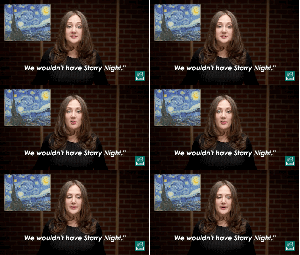
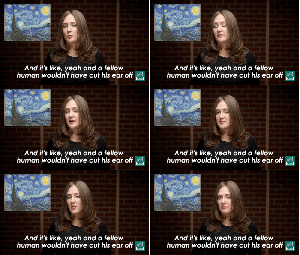
also Van Gogh was literally in an asylum receiving mental health treatment when he painted ‘Starry Night’. It was one of the most stable & productive periods of his life, despite the fact that wasn’t hugely effective treatment, because they didn’t really have modern understandings of what things work on mental illness. Like, you know. Medication.
This is why we don’t romanticize mental illness or chronic disease.
ALSO because I am reading a book of his letters right now, Van Gogh himself addressed the idea that the best art came from pain and said that his art tended to suffer when his depression was hitting pretty hard. So don’t even pull that shit where you give his untreated depression credit for his art. Van Gogh would have hated that, and if antidepressants/better treatment of mental illness HAD existed then we might have even more of his work now.
Everything everyone said above me x1000000. I have done so much more art /with/ medication, than when I’m curled up in bed almost unable to move or feel. This is less ‘what he created’ and more ‘what other beauty might we have seen?’
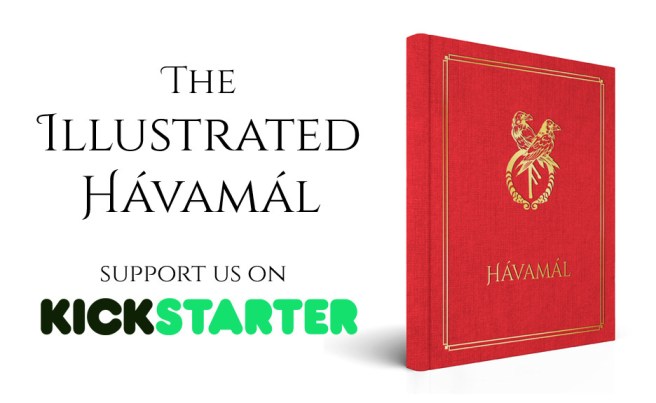
If you’ve been following me for the last few months or more, you know that back in December 2015, I dedicated 31 days to illustrate “The Hávamál.”A lot of folks have been asking me to collect all the drawings into a book, so I did!
Signal boosting a fellow artist’s really cool book project!
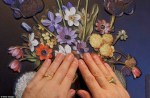
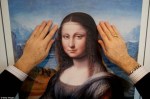
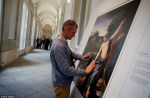
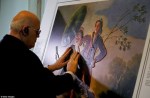
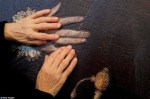
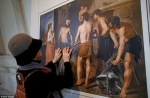
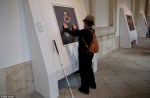
Visitors aren’t touching the original paintings themselves, exactly. They’re touching an extremely high-resolution replica of each painting. The exhibit at Madrid’s Prado Museum, called Hoy toca el Prado, or Touch The Prado, is the product of a new printing process invented in Spain called Didú. Developed by a printing studio called Estudios Durero, Didú produces physical objects a bit like a 3D printer would—except using a completely different chemical process.
The process begins with a high-resolution photo of the painting. The employees at Durero select textures and features that make sense to enhance for the blind. In this aspect, small details, which may appear insignificant at first sight, can be fundamental in understanding the composition or the theme developed in each image. After around forty
hours of work on each image, the volumes and textures are defined and
printed with special ink. Then a chemical method is applied that gives
volume to the initially flat elements. On these, the real image with the
original colours is printed, at a suitable size so that it can be
touched and reached with the hands.
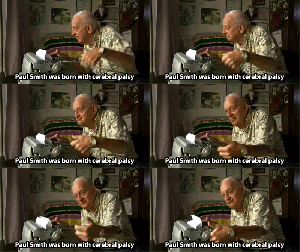
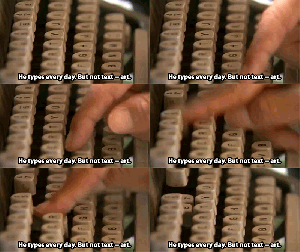
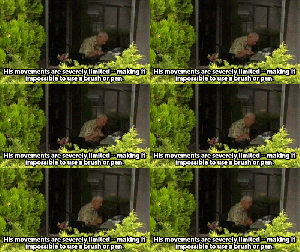
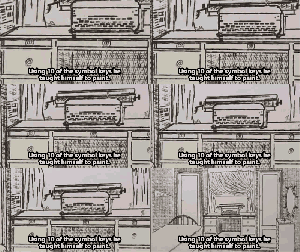
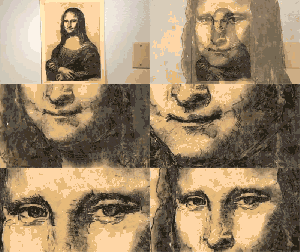
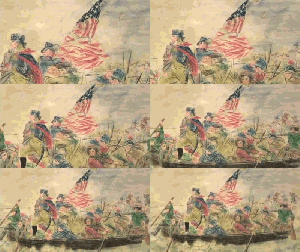
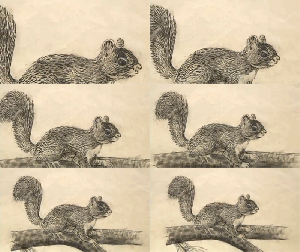
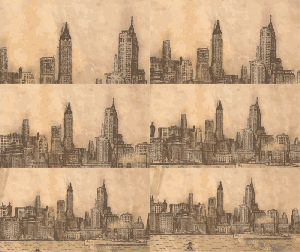
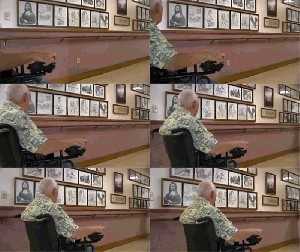
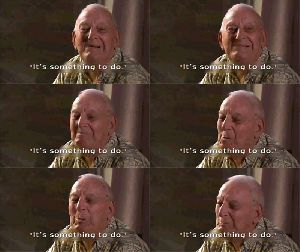
Last year, 22-time Emmy award-winning reporter John Stofflet posted this news video he created for KING-TV in 2004, featuring Paul Smith and his artistic talents.





 Holding the Bowl