Here’s something that happens to ADHD children a lot: Getting pushed beyond their limits by accident. Here’s how it works and why it’s so bad.
Child says, “I can’t do this.”
Adult (teacher or parent) does not believe it, because Adult has seen Child do things that Adult considers more difficult, and Child is too young to properly articulate why the task is difficult.
Adult decides that the problem is something other than true inability, like laziness, lack of self-confidence, stubbornness, or lack of motivation.
Adult applies motivation in the form of harsher and harsher scoldings and punishments. Child becomes horribly distressed by these punishments. Finally, the negative emotions produce a wave of adrenaline that temporarily repairs the neurotransmitter deficits caused by ADHD, and Child manages to do the task, nearly dropping from relief when it’s finally done.
The lesson Adult takes away is that Child was able to do it all along, the task was quite reasonable, and Child just wasn’t trying hard enough. Now, surely Child has mastered the task and learned the value of simply following instructions the first time.
The lessons Child takes away? Well, it varies, but it might be:
-How to do the task while in a state of extreme panic, which does NOT easily translate into doing the task when calm.
-Using emergency fight-or-flight overdrive to deal with normal daily problems is reasonable and even expected.
-It’s not acceptable to refuse tasks, no matter how difficult or potentially harmful.
-Asking for help does not result in getting useful help.
I’m now in my 30’s, trying to overcome chronic depression, and one major barrier is that, thanks to the constant unreasonable demands placed on me as a child, I never had the chance to develop actual healthy techniques for getting stuff done. At 19, I finally learned to write without panic, but I still need to rely on my adrenaline addiction for simple things like making phone calls, tidying the house, and paying bills. Sometimes, I do mean things to myself to generate the adrenaline rush, because there’s no one else around to punish me.
But hey, at least I didn’t get those terrible drugs, right? That might have had nasty side effects.
There’s a lot of overlap between ADHD traits and autism traits. Whether you meet the diagnostic criteria for ADHD, too, I have no idea (because I’m a random person on the Internet), but you might find ADHD resources helpful in figuring out your life challenges.
A lot of “help” for executive function skills comes from neurotypicals who are naturally good at it and lack insight into people who aren’t, which makes it spectacularly useless to the people who actually need it.
Well shit this explains so much about me
This is why I want to scream when NT professionals try to insist that forcing ADD people into “the zone” is the best treatment for ADD. Forced focus is exhausting because it’s fueled by adrenaline. We have reams of medical data that frequent adrenaline rushes in young people are horribly bad for their development and causes a laundry list of problems later in life, both physical and mental.
Literally NT professionals: I know you can accomplish this task if I push you into a state of artificial panic every time I want you to do it.
Me: Or you could, idk, help break the task into smaller, less scary bits, use a reward structure at each stage to reinforce positive association, or even turn it into a game because ADD people are kind of hardwired to love game-like structures and anything that has a whiff of fun to it.
NT professionals: That requires imagination, time, and mental energy that I, a NT person who is not struggling with overwhelming self-doubt and mental block at this moment, simply cannot be bothered to spare.
Me: Oh right, of course. Carry on with terrorizing small children, then.
Nothing like the abusive teaching styles described above happened to me, because I was good at doing work, until I magically stopped being good at doing work sometime in 9th grade and instead started being bad at doing work. At that point and at my school, teachers were more loose about when work got done, so I started procrastinating until the last minute. This worked really well for me and I have had all A’s and the extremely occasional B+ in every class.
It’s only now, reading this post, that I’m realizing why my clever “do it at the last minute” strategy works so well.
😦
One of the reasons I work in the stressful jobs I do (aside from my abysmal college performance)
Is that it’s hard for me to get any work done unless it feels like a life-or-death situation
So, I work at a place where life-or-death situations happen on the regs
I was a really great worker until I switched into an office track and realized that without the nonstop panic and stress of a retail/food service position i’m almost entirely unable to prioritize and complete tasks.
• I’m proud of you. The education system works against us at every turn but you’re still hanging in there, and that’s amazing.
• Long term goals are lovely but they won’t motivate you. ADHD brains know two times: now and not now. Long term goals fall under “not now”, so if you try to use them to motivate yourself your brain won’t buy it. Some things that help me get motivated: using coloured pens, bringing a tasty drink like juice or pop to my desk, playing music I can sing along to.
• Get. Diagnosed. With an official diagnosis, you can access accommodations through your school. You don’t have to struggle through school being held to neurotypical standards. You can get things like extra time on tests, extensions on assignments, access to digital copies of textbooks so you can use text-to-speech software, the ability to write tests and exams in a smaller room with fewer distractions, noise cancelling headphones during tests. I live in Ontario so I can’t guarantee all of these things in other places, but you’ll never know what accommodations are available to you until you apply for them.
• Work for the amount of time that you can. You can only handle five minutes? Do work for those five minutes. You can stretch it out to fifteen minutes today? Awesome! It’s excruciating for us to get work done without it being a crisis, I know. But doing work in small increments every day goes a long way. Doing nothing because you can’t work as long as a neurotypical is just going to leave you with more work to do the night before.
• Keep fidgets and/or stim toys at your desk. If you get overwhelmed or can’t focus, grab a fidget and allow yourself to just sit and fidget for a little bit. Tactile stim toys are my favourite since they’re very grounding for me.
• Try not to beat yourself up for what you didn’t get done earlier. This is a hard one but it’s so so hard to get anything done while you’re upset with yourself, especially for us ADHDers who get easily caught up in emotions. You have a disability. It’s not your fault that you couldn’t get it done earlier. You’re working on it now and that’s what’s important.
My 5-year-old nephew was just diagnosed with ADD/ADHD, and his teacher wants him to go on meds to ease classroom management. He and my brother are really hesitant about that.
What’s it like for such a young kid to go on ADD meds? Good or bad idea? I mean, I really wish I’d started back in my teens or twenties (geez, that would have helped), but at five one’s brain is barely finished forming…
Advice?
My dude’s brother and nephew could use some advice if you’ve got it.
So, I’m a masters-level psychotherapist, and I was diagnosed with ADHD when I was 23. A lot of my work concerns adults with ADHD, though I’ve spent some time in multidisciplinary clinic settings that treated kids 0-5 with mental health concerns. Medicating at this age is very normal. I was never medicated as a child, but I can talk some about what growing up with ADHD is like and a bit about what being medicated is like.
I started medication when I was 6. As much as I still have problems now (because ADHD is lifelong and can get worse as you get older) I can’t imagine how much worse I would be if I was unmedicated as a child.
I have very few memories as a kid, but my mother relates how coming back from an overnight girl scout trip, she forgot to give me my meds. I was ….insufferable apparently. Enough that she stopped, and gave them to me.
Twenty minutes later, I can stay in my seat, hold a conversation, and read my book. Like I wanted to do in the first place.
Holy cow, so y’all. A lot of us have sensory issues. A friend of mine has a toddler who is basically me when it comes to this sorta thing. A lot of OTs recommend weighted blankets but those are 1. expensive to try (I mean WHAT IF THEY DON’T WORK?) 2. HOT.
Now, I haven’t tried these myself because after decades of trial and error I have found what works for me (and I’m claustrophobic…so these frighten me as much as they fascinate lol), but I will tell you that my friend is RAVING about them on facebook. Her toddler has been sleeping through the night finally without getting under his fitted sheet with all his stuffed animals and blankets) and he is taking actual naps. A weighted blanket didn’t work for them (and they were fortunate to be able to borrow one), but these are much more economical.
That’s right. 40 bucks compared to the hundred plus I see for most weighted blankets (and those aren’t even adult sized).
Now, we know tumblr doesn’t like to allow linked posts in the search results so if y’all could pass this around that would be great. These sheets have already changed the life of a family I know, I’m sure they’d help others.
People with sensory processing disorders like fibromyalgia and other chronic pain diseases have the same experience. Until I started talking to people with ADHD, I didn’t realize it wasn’t normal to spend every waking minute feeling your clothes against your skin or cataloging the changes in sound and light and smell. It wasn’t until I watched Elementary and saw the characters around Sherlock not noticing sensory details around them that he picks up that I realized it’s not normal for brains to do this.
Unlike folk with ADHD, though, I never had this experience full blown until I was in my twenties. It build gradually over about a decade, and I thought I’m just getting older. I didn’t have these issues as a young child, so my lack of focus in my mid-20s had to be age-related, not ADHD, right?
And that’s how you trick yourself into thinking you’re normal for years. It’s easier than admitting difference, even as you carefully pick out only silk and pure cotton clothes, wash everything (including yourself) in unscented soap, and eat only a handful of foods (mostly sugar, because it’s boring and you don’t have to think about it much).
Spoonies, pay attention: if you can’t focus, it may not just be the pain. What else is your brain, primed for pain signals, now also processing without end?
i need this fidget toy more than i have ever needed any other fidget toy
it’s currently in its fundraising phase, it looks like they’ll be ready to sell them in December 2016! image source and more information here at their kickstarter.
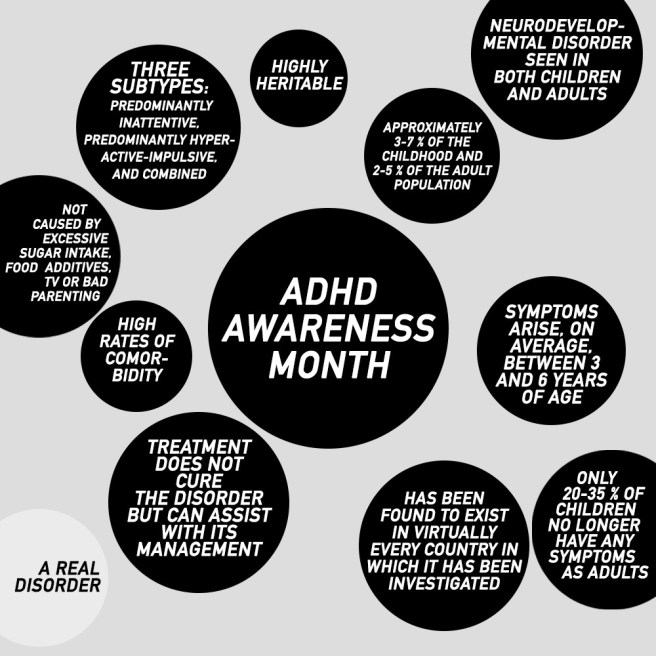
“maybe we can talk about how with the internet there are more diagnoses of adhd now, and how the internet is rewiring our brains…”
“medicating childhood: the hoax of adhd”
literally all things ive seen in the past fucking WEEK let me out of this hell
i can debunk this all in a flash
adhd is a neurodevelopmental disorder, and develops around 12 years old. given that, and how many diagnosed adhd adults there are, including elders, this is something that predates the internet
adhd is genetic, so despite an attention given from parent to child, it’s incredibly likely that at least one of the parents or other relatives also has adhd
oh yes, and let’s not forget the myth that adhd symptoms are synonymous with child behavior. but adhd isn’t just hyperactivity – in fact, hyperactivity doesn’t always present itself. in addition to hyperactivity, other symptoms include:
echolalia
poor memory
racing/scattered thoughts
slowed social development (around 30%)
difficulty understanding tasks/organizing them into steps
struggles understanding time management
impulsive acts (impulsive spending is a major issue with many of us)
difficulty managing emotions, especially anger
easily bored (and boredom leads to greater frustration than others)
TROUBLE SLEEPING. many adhd people spend their entire lives not getting good sleep because of the constant “noise” in their heads. see the scattered thoughts. basically, the thoughts are always going. there is no shut off switch. insomnia is largely prevalent with adhd
losing details (like getting poor grades because you missed the fine print on a test even with knowing the material)
struggles with listening comprehension (words sound like nonsense)
struggles with reading comprehension (words look like nonsense)
memorization issues – a child skilled in math will have trouble with multiplication tables, for example
has trouble “waiting their turn” in conversation – frequently interrupts without realizing
hyperfocus – an often overlooked aspect, when one focuses to the exception of all other external stimuli, including needing to eat, sleep, etc. time almost ceases to exist
not a symptom, but adhd – especially adult adhd – is highly comorbid with anxiety disorders and depression later in life. this is because a person with adhd is working their heart out to achieve the same standards, contrary to the believe that they’re “lazy.” as you can see above, almost every aspect of daily life is impacted – social, work, school, family, money… and this can lead to a feeling of being unable to cope.
despite all that, people with adhd are also:
more solution-oriented
more resilient
more expressive
more curious
and better at multitasking – not just because of having to learn how to manage the other symptoms, but these are, in fact, also symptoms. you can imagine how useful hyperfocus can be as well.
i wrote all this because i really want people to understand me and understand how this all works. and i want misunderstandings to stop so people can respect who i am.
::draaaaaaaags age of development down into single digits where it belongs, otherwise gestures expansively, pats post on its face::












 Holding the Bowl