
with mother’s day coming up pretty soon let’s all keep in mind that not everyone has positive feelings about or a healthy relationship with their mother.
some people grew up with abusive mothers, some people grew up with absent mothers, and some people have mothers who they just don’t get along with because of personality clashes or a radical difference in beliefs.
while it’s completely okay to celebrate mother’s day and talk about how much you love your own mother, please keep in mind that there are people who are not going to be celebrating and who do not have the positive relationship with their mother that you do. try to refrain from making or reblogging shaming, guilt-tripping posts saying/implying that someone is not a good person for not being with their mother on mother’s day or for not having loving feelings towards their mother and consider tagging your mother’s day posts so that people can avoid seeing them if they want to. also, if you see someone you follow or someone you know having a bad time on mother’s day because it brings up negative feelings for them please consider reaching out to that person and offering them a kind word of support.
mothers are generally seen to be good and wonderful and most of them are! but mothers are not incapable of being abusive and they are not incapable of doing something wrong and unfortunately not everyone was lucky enough to grow up with a mother who loved them and treated them the way a good mother should. please keep these people in mind on mother’s day and do not treat people badly for not celebrating mother’s day or for expressing negative feelings about their mother. there’s a reason they’re not celebrating and a reason those feelings exist. please respect that.
Tag: abuse
Resources to identify, cope with, or leave a bad relationship
Most of the resources here use the term “abuse,” but if that word feels too big, too scary, too clinical, or otherwise not right for what you’re experiencing, that is okay.
Not all bad relationships are abusive. You don’t need to convince anyone that you’re being mistreated to a specific degree. You may just be struggling with a relationship that’s run its course, that doesn’t feel good, that isn’t healthy, or just isn’t right for you. That’s okay! If you don’t want to be in a relationship, you can leave it. That’s it!
Not all relationships have to be forever. You are not obligated to stay with someone indefinitely just because you were with them for a while beforehand. Ending a relationship doesn’t mean everything that came before was “meaningless.” You can have a lot of good times, and then come to a point where it’s best for you two to stop seeing each other.
“The reason we got together” and “the reason we broke up” can co-exist simultaneously. Part of dating is learning what you do and don’t need in a relationship. Some of that learning process means relationships will end. That’s okay.
Not all struggle equals growing. Some relationships hit “rough patches” and the partners work through them and come out stronger. But don’t let the narrative of “love takes work” and “relationships need compromise” convince you that you have to pour endless emotional labor into something. Leaving something that isn’t working takes its own courage and effort. It’s not “giving up,” it’s just learning and growing and making new choices.
If you need help figuring out whether to leave a relationship, consider:
- Reading through the “identifying abuse” section of this post
- Talking to people you trust about whether they think the relationship is good for you
- Thinking about your reasons to stay vs. your reasons to leave, and whether any of those are based on fear, insecurity, or other warped thinking
- Talking to a mental health professional
- Asking yourself whether your partner seems committed to improving or resolving the issues in your relationship
- Noting how often you feel happy, content, loved, afraid, guilty, angry, exhausted, etc. and whether the relationship makes you feel good overall
Abuse
If you know, or fear, that you are in an abusive relationship, the rest of this page is for you. I am not a professional or an expert in this field, so I will just state a few core truths and link as many resources as I can.
It is not your fault. Nothing you do can ever justify or deserve abuse.
It is not your responsibility. If someone is acting in a way that hurts you, that is their problem. There is nothing you can do or say to fix it. It doesn’t matter whether they have their own pain, life situation, or diagnosis. You don’t owe them anything.
If it feels bad, it’s bad. You don’t need to prove to anyone that a relationship is worth leaving. There isn’t a “threshold of abuse” that needs to be crossed before it’s okay to leave. If you’re unhappy, leave.
It doesn’t have to feel like this. Relationships should, at the core, make you feel happy, able to grow, free to be yourself. Yes, relationships take work and compromise – but if you feel angry, afraid, exhausted, or guilty in your relationship, you deserve better, and you can find better.
It is not selfish to leave. If you are unhappy or afraid in a relationship, you can leave it. Even if your partner believes that you owe them your emotional labor, or insists that they need you, you don’t have to stay.
You deserve help. There may be people who refuse to help you, or who can’t help you. Sometimes friends, family members, police, etc. let us down. Your partner may isolate you from people who can help. That doesn’t mean you don’t deserve help. Reach out to any sources of help. Cut off people who aren’t helpful. Fight for your own safety. Call a hotline, see a therapist, tell your manager – you may have to get creative. But you’re worth it.
Healing is possible. Abuse can impact your mood, self-esteem, future relationships, and other aspects of your life. If you need help identifying abuse and working up to leaving, or if you’ve already left and want help moving through the trauma of abuse, please work with a mental health professional.
Many of the resources linked here focus on adult, heterosexual women – though if you click through, many of the links also include resources for men, children, LGBTQ people, etc.
Identifying relationship abuse:
- HelpGuide abuse section
- 21 signs of an abusive relationship
- Abuse defined
- Signs of emotional abuse
- Am I being abused?
General abuse resources:
- Love Is Respect
- Abuse & Assault links at Scarleteen
- Out of the Fog
- Maine Center to End Domestic Violence
- Center for Relationship Abuse Awareness
- Domestic Shelters org
- Hotline for Domestic Violence
- Abuse and relationships
- Healthy Place
- Room to be Safe
- Domestic Violence Resource Center
Abuse resources on tumblr:
- All About Abuse
- Abuse FAQ
- Abuse advice
- Resources at Mental Illness Mouse (scroll to ‘abuse’)
- Emotional Abuse Awareness
- Abuse masterlist
Safety planning:
- Safety planning at loveisrespect
- Staying Safe page at Women’s Law
- Safety planning at Scarleteen
- Staying safe with an abusive partner
- Safety plan worksheet
- Emotional safety plan
Internet safety and stalking:
- Harassment & Stalking resources at NOVA
- Stalking resources at RAINN
- Stalking safety plan
- Technology safety planning at NNEDV
- Stalking resources at VOC
- Cyberstalking resources at DVRCV
Other sources to find help:
Are You Dissociating?
Dissociating is one of the most common responses to abuse and trauma. It involves feeling numb, detached or unreal and (while it happens to everyone once in a while) is experienced more frequently and severely in survivors. Dissociating people vary widely in symptoms and may experience any or all of the things from the following list.
You may be dissociating if you:
- find yourself staring at one spot, not thinking anything
- feel completely numb
- feel like you’re not really in your body, like you’re watching yourself in a movie.
- feel suddenly lightheaded or dizzy
- lose the plot of the show or conversation you were focused on
- feel as if you’re not quite real, like you’re in a dream
- feel like you’re floating
- suddenly feel like you’re not a part of the world around you
- feel detached and far away from other people, who may seem mechanical or unreal to you
- are very startled when someone/something gets your attention
- completely forget what you were thinking just a moment ago
- suddenly cover your face or react as if you’re about to be hurt for no reason
- can’t remember important information about yourself, like your age or where you live
- find yourself rocking back and forth
- become very focused on a small or trivial object or event
- find that voices, sounds or writing seem far away and you sometimes have trouble understanding them.
- feel as if you’ve just experienced a flashback (perhaps rapidly) but you can’t remember anything about it.
- perceive your body as foreign or not belonging to you
(likes and reblogs always taken as support)
To my anon asking about dissociation. I hope you see this.
I thought dissociation was only when I have straight up out of body experiences turns out I’m dissociated like 99% of the time lmso
As it turns out, I dissociate rather a lot. Mostly when I’m stressed, but also because of exhaustion or pain. Too bad the latter two are pretty much standard operating procedure for me.
jfc I must dissociate like 90% of the time
Actually the other day I had an interesting period of derealisation, I still can’t work out what made me have that “is this a dream, I can’t tell” thing going on, whether it was a smell or the way the light was falling or what. I felt completely disconnected temporally. As if I could be walking my dog for a hundred years.
Of course maybe I’d accidentally stepped into Alfheimr for a moment, and time really WAS meaningless.
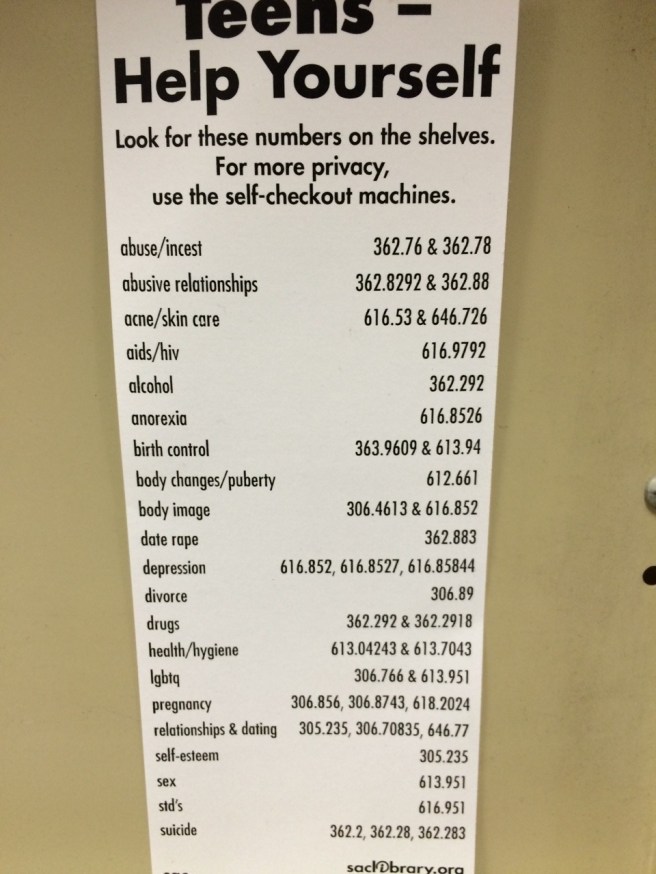
Really happy to see this at my local library
OOOOH. *happy YA librarian dance*
I want this in every library, everywhere. After all, some kids won’t even google this stuff because they don’t want parents/siblings checking their browser history.
a masterpost to help you feel better and get through the day.
distract yourselfstatic noise / background sounds (helps you focus / feel less overloaded – I can’t study without this stuff)
simply noise
my noise
rainy mood
nature sounds
jazz and rain
rainy cafelots of things to do
writing, painting, makeup, body care, even movies master post
musical squares
lucid dream
learn a new language
make your own mind palace!!
draw a nebula
make your own font
learn something new
fun sites to visit
bubble wrap game
answer questions to buy rice to help end hunger!
get a hug from a nice person
microwave mug snackswatch something
ultimate teen movie master post 80s – today
bbc sherlock
granada sherlock holmes
pretty little liars
hannah montana
ellen best momentslisten to music
tom hiddleston’s song of the day masterpost
my personal “tunes” tagwhen you are sadadisri’s tag
abby’s tag
cierra’s tag
my taganxiety
play with sand
chill out
zen garden (video)
managing stress
social anxiety tips
anti anxiety masterpost
the quiet place
the dawn room
tour of the stars
identifying your type of anxiety
how to cope with a panic attack
anti anxiety foods
make a thought diary
dealing with panic attacks and anxiety (video)
mental illness help appsdepression
how to overcome emotional numbness
coping with depression
natural depression treatments
which antidepressant should you ask for?
depression test (not 100% accurate)insomnia
tips to beating insomnia
understanding insomnia
when to fall asleep according to sleep cycles (helps you feel more awake later)
tips for falling asleep quicklyself harm
alternatives to self harm
if you already have, here’s how to care for injuries
understand self harm and how to stop
butterfly project (self harm prevention)
tips for stopping cutting
how to fade and cover scars
how to explain scars (avoid talking about visible scars)
just relapsed? read this.
need to see blood? cut a white screen.eating disorders
different eating disorders explained
why you should try to recover
feeling bloated?
preventing relapse
why you need to eat
learn to love your body
recovering from bulimia
don’t put yourself down
how to boost your confidence
self love
loose weight the healthy way (blogilates youtube – great workout, healthy eating, and self improvement channel)suicidal
countries (outside of US) suicide hotline list
suicide hotline list (includes US as well as other countries)
talk with someone or help someone!
online suicide prevention – talk it out online
how to help someone who is suicidal
reasons to live
100 reasons NOT to commit suicideabuse
healthy vs. unhealthy relationship boundaries
abuse hotlines
understand that sexual abuse is not your fault
understand that physical abuse is not your fault
how to move on from sexual abuse
understanding domestic violence and abuse
how to escape an abusive relationship safely
after silence (support for victims of abuse)
do you think someone you love is being abused?
healing and overcoming abuse
speaking out after abuseptsd
help guide for ptsd
help guide for ptsd 2 (similar to 1 with more extensive self-help tips)
how to help someone with ptsd
10 tips for understanding someone with ptsd
coping with ptsdasking for help
telling people how you are feeling
how to tell someone about your anxiety
how to ask for helprestoring your faith in the world
random acts of kindness caught on film (video)
real life heroes (video)
giving servers $200 tips (video)
paying for people’s groceries (video)
faith restoring
in case you forgot the world is a gorgeous place (video)other master posts that may be helpful (:
1 2 3 4 5 6Most importantly, remember that YOU ARE LOVED.
Feel free to message me at any time for any reason.
How to Escape from an Abusive Relationship
It’s important to have a safe exit plan from an abusive relationship. The following tips might help you with this:
• Make a note of the phone numbers for your local women’s shelters.
• Confide in someone you genuinely trust (a good friend, a colleague at work, or a family member. Develop a code so they can help you if you are in an emergency (like a word you can text to them.)
• If your partner harms you, go to the emergency department and ask the staff to document your visit, and your reason for seeking medical attention.
• Journal each threat or abusive incident (with dates). If possible photograph any injuries.
• Prepare your escape in advance. Plan where you will go, and how you will get there.
• If you have a car, keep it backed in the driveway, with plenty of gas, and the keys close at hand, so that you can make a quick escape. Hide an extra set of car keys in case your partner steals and hides yours.
• Set money aside, either in a secret bank account or with a trusted friend or family members.
• Leave a packed bag with a friend or family member. This should contain an extra set of keys, essential ID (birth certificates, social security card, credit card, bank information, important phone numbers, passport, medical records etc), some clothes and any medications. If possible, avoid making use of neighbors or mutual friends.
• Know your partner’s schedule, and plan ahead for safe times to leave.
• Be especially alert to securing help through your computer or phone. Delete your internet browsing history, any websites you’ve checked out for resources, and all your old emails. If you called for help just before you left the house, dial another number afterwards in case your partner hits redial.
• Leave a false trail behind. For example, call hotels or rental agencies that are several hours away from the place you are planning on moving to.
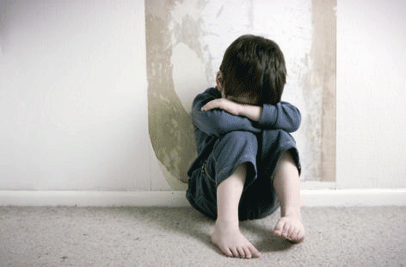
Stress tied to change in children’s gene expression related to emotion regulation, physical health
Children who have been abused or neglected early in life are at risk for developing both emotional and physical health problems. In a new study, scientists have found that maltreatment affects the way genes are activated, which has implications for children’s long-term development. Previous studies focused on how a particular child’s individual characteristics and genetics interacted with that child’s experiences in an effort to understand how health problems emerge. In the new study, researchers were able to measure the degree to which genes were turned “on” or “off” through a biochemical process called methylation. This new technique reveals the ways that nurture changes nature—that is, how our social experiences can change the underlying biology of our genes.
The study, from researchers at the University of Wisconsin, Madison, appears in the journal Child Development. Nearly 1 million children in the United States are neglected or abused every year.
The researchers found an association between the kind of parenting children had and a particular gene (called the glucocorticoid receptor gene) that’s responsible for crucial aspects of social functioning and health. Not all genes are active at all times. DNA methylation is one of several biochemical mechanisms that cells use to control whether genes are turned on or off. The researchers examined DNA methylation in the blood of 56 children ages 11 to 14. Half of the children had been physically abused.
They found that compared to the children who hadn’t been maltreated, the maltreated children had increased methylation on several sites of the glucocorticoid receptor gene, also known as NR3C1, echoing the findings of earlier studies of rodents. In this study, the effect occurred on the section of the gene that’s critical for nerve growth factor, which is an important part of healthy brain development.
There were no differences in the genes that the children were born with, the study found; instead, the differences were seen in the extent to which the genes had been turned on or off. “This link between early life stress and changes in genes may uncover how early childhood experiences get under the skin and confer lifelong risk,” notes Seth D. Pollak, professor of psychology and pediatrics at the University of Wisconsin, Madison, who directed the study.
Previous studies have shown that children who have experienced physical abuse, sexual abuse, and neglect are more likely to develop mood, anxiety, and aggressive disorders, as well as to have problems regulating their emotions. These problems, in turn, can disrupt relationships and affect school performance. Maltreated children are also at risk for chronic health problems such as cardiac disease and cancer. The current study helps explain why these childhood experiences can affect health years later.
The gene identified by the researchers affects the hypothalamic-pituitary-adrenal (HPA) axis in rodents. Disruptions of this system in the brain would make it difficult for people to regulate their emotional behavior and stress levels. Circulating through the body in the blood, this gene affects the immune system, leaving individuals less able to fight off germs and more vulnerable to illnesses.
“Our finding that children who were physically maltreated display a specific change to the glucocorticoid receptor gene could explain why abused children have more emotional difficulties as they age,” according to Pollak. “They may have fewer glucocorticoid receptors in their brains, which would impair the brain’s stress-response system and result in problems regulating stress.”
The findings have implications for designing more effective interventions for children, especially since studies of animals indicate that the effects of poor parenting on gene methylation may be reversible if caregiving improves. The study also adds to what we know about how child maltreatment relates to changes in the body and mind, findings that were summarized recently in an SRCD Social Policy Report by Sara R. Jaffee and Cindy W. Christian.
being bullied, abused, scapegoated, and neglected in school crippled my brain’s reward mechanism. despite having responsible, supportive parents, i was permanently damaged by that experience. medicating my anxiety and depression helps a lot, but it will still always be there. bullying is a form of child abuse. emotional cruelty from authority figures is a form of child abuse. this shit is real.
a society that’s happy to sprain itself bending over backwards to make sure kids don’t see sex on tv is willing to accept kids’ minds being permanently scarred in school. i just don’t understand.
taekookau-deactivated20160227:
heya so i thought i’d make a little help masterpost. (if you prefer a page there’s one here x)
ROUGH NIGHT?
- listen to let it go from frozen in 25 different languages
- luke’s giggle will make u happy
- 5sos did a dumb thing that will make you smile
- and another dumb thing
- you’re cute, so look at this complimenting website
- watch some good movies:—)
- playlists for your moods
- cute random acts of kindness
- hugs??????
- play some pointless dumb but entertaining games to cheer you up
- disney movies!!
- cute things to make you happy
- noise machines to help you calm down
- if school is making you sad: remember that your mental health comes before schoolwork, always, and your teacher will understand that.
DEPRESSION/SELF-HARM/SUICIDE:
- self-harm alternatives
- if you’ve already self-harmed, take care of your cuts/burns/etc !!
- country suicide hotlines
- suicide hotline masterpost
- how to stop self-harming + fully understand it
- butterfly project (self-injury prevention)
- suicidal? talk to someone or help someone!
- suicide prevention- like a hotline, but online!
- not sure how to help someone who is suicidal?
- reasons to live
- tips to help stop cutting
- how to fade/cover/hide your scars
- how to explain scars (excuses)
- just relapsed?
- coping with your depression
- natural depression treatments
- antidepressants: which one should you ask for?
- types of mental health issues
- feel the need to see blood? (cut a white screen)
- the thoughts room
ANXIETY & INSOMNIA:
- understanding anxiety
- different types of anxieties
- having a panic attack?
- dealing with social anxiety
- explanations of many anxiety disorders
- tips to beat insomnia
- understanding & curing insomnia
- when to try to sleep (based on when you need to wake up)
- tips for falling asleep quickly
- how to help someone having a panic attack
- do not say these things to someone having a panic attack!!
- tips for calming down your anxiety
EATING DISORDERS:
- why you should try to recover
- feeling bloated?
- prevent your relapse!
- why you should recover (why you need to eat)
- love your body
- bulimia recovery steps
- stop putting yourself down
- boost your confidence
- self-love
ABUSE & SEXUAL ABUSE:
- healthy vs unhealthy boundaries in a relationship
- abuse hotlines
- how to overcome emotional numbness
- how to realize sexual abuse is not your fault
- how to realize sexual abuse is not your fault (part 2)
- how to realize physical abuse is not your fault
- how to forget about sexual abuse
- domestic violence and abuse
- how to escape an abusive relationship safely
- aftersilence program (victims of abuse and sexual abuse)
- do you think someone you love is getting abused?
- healing, forgiving and overcoming physical and sexual abuse
- speaking out after sexual/physical abuse
if you can think of other links to add or need help, message me anytime xx
http://www.pdf-archive.com/2014/03/30/why-does-he-do-that/why-does-he-do-that.pdf
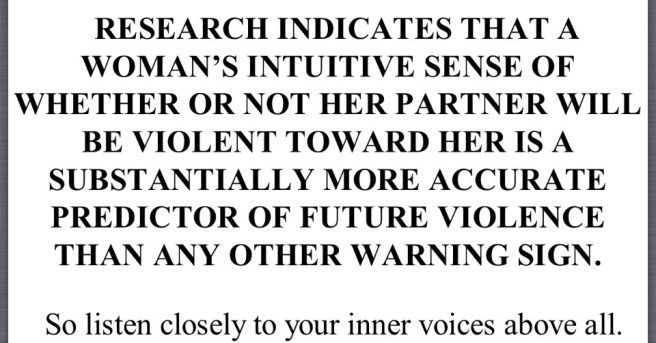
There have been many moments in life that I felt were kinda creepy, like when a guy I barely knew offered to pay me an expensive ticket to a show, or when my friend rambled nervously about how his exboyfriend would never survive without him… And this book is confirming that creepy behaviours are really associated with controling, manipulative, abusive partners. This is giving me more confidence in my creep-dar. I think everyone should join me.
It actually has to do with how our brains work. We do this thing called “thin slicing”, where we analyze micro details of a situation and look for associations with things we’ve seen before. This is a very fast process and it’s not a rational one, and often we get this “bad vibes” feeling way before our rational mind realizes the reason why we’re uncomfortable.
So yes, listen to your discomfort. That’s your brain picking up on signals that there is something wrong with the situation you’re in, signals that your rational mind didn’t perceive yet. It’s a built-in survival mechanism. You get bad feelings about a dude, it’s probably because you noticed something about him that matched some other creep you’ve met before.
 Holding the Bowl