Jörmungand’s candle is out of the frame, but all the others: Wolf, Hel, Sleipnir, are there. As well as a candle for Loki and Sigyn, of course. A beautiful way to celebrate the end of July.
French artist JL Gonzal made this for Tattoo artist JC Sheitan using an existing prosthesis on which he added the metal bits and built the tattoo machine so that it can be set as needed by the tattoo artist.
This is a sigil I made for my personal worship. It is for both Loki and Sigyn, but if it resonates with anyone here, please feel free to use it.
OshindiJo
Oh hey look, something that ISN’T TOTAL FUCKING BULLSHIT 😀
… Step 1. Realize that you should exercise. Step 2 ? Step 3. HEALTH!
When you’re depressed, that question mark can be a barely navigable labyrinth of garbage fires fueled by physical and mental exhaustion, self-loathing, defeat, and frustration. The last time I found myself trying to hack through that mess during a particularly dark period, I started to come up with my own list of bare-bones, practical tips to help me face the idea of moving again. Now I’m sharing them, in case they might help someone else in a similar position. I stress the word “might.” If you’re depressed, the last thing you need is another a-hole telling you what you should do. But if you’re looking for somewhere to start, I’ve been there too.
First heading? “You don’t have to exercise.” I love this entire piece. It’s going on facebook, that’s how much I love it. A+
“The perfect body is a breathing one. Anything that serves those ends is worth considering. Everything else is noise.”
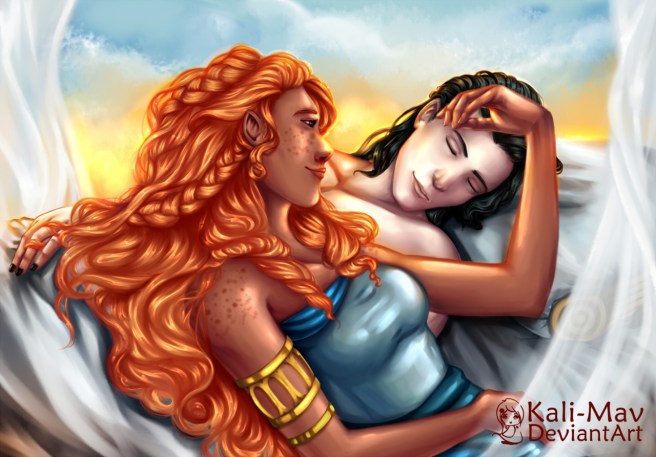
Ok… so I have a soft spot for Logyn about the size of Australia… what can I say!!
And honestly, if you ship the babes, then @nanihoo is probably a blessing and she was courteous enough to let use her Sigyn design ;w; Thank you so so much!!!
I meant for shorter hair for loki… but it somehow… didn’t agree with me
Friends, family members and loved ones of learning disabled and mentally ill people need to have a working knowledge of what Executive Dysfunction is, and respect the fact that it is a prominent feature of that person’s psychology and life.
Executive Dysfunction is best known as a symptom of autism and ADHD, but it also features in depression, anxiety disorders schizophrenia, OCD (which by the way is also an anxiety disorder), personality disorders; etc, a whole myriad of mental illnesses and disabilities can result in executive dysfunction.
Years ago when I was like 14 and had recently learned of my autism diagnosis, I watched a youtube interview between autistic people, and an autistic woman said something along these lines:
“Sometimes, a lightbulb will burn out, but I cannot change it. I have the physical capability to change the lightbulb, and I want to change the lightbulb, and I know I need to do it, but because of my autism I just don’t do it. So the lightbulb remains unchanged for weeks. Sometimes people have to change the lightbulb for me.”
When she said that I related so much, because constantly throughout my whole life I have wanted and needed to do things with my wanting and needing being akin to my spurring an extremely stubborn horse who refuses to move. For the first time I learned that I wasn’t just “lazy”, I had a condition that prevented me from doing things as easily as other people can, but unfortunately it took me years since then to understand that.
Imagine that you are a horserider, but your horse is entirely unwilling to move even if you want to move. You dig in your heels, you raise the reins, but the horse refuses to respond. Your wants and needs are the rider, and your executive functions (the parts of your mind responsible for getting things done) are the horse.
I think it’s incredibly dangerous for neurotypical loved ones to not understand, or be aware of, or respect executive dysfunction. Neurotypical can assume that we are just being lazy, careless, selfish or difficult, when in reality we want to do the thing but our brains prevent us from consistently and reliably doing the thing.
That misinterpretation can lead to toxic behavior and resentment on the part of the loved one, which will harm us emotionally and do us a lot of damage gradually over time.
That damage can take the form of internal self-criticism, complicating executive dysfunction even further and making it worse.
A section of Norse Myth Wherein Odin turns one of Loki’s twin boys into a wolf, who then devours his brother. Odin uses the dead twin’s innards to form a chain and binds Loki to a rock with it as punishment for him having killed a favored god. The goddess Skadi then puts a venomous snake over his head, which drips venom into his eyes. Loki’s wife, and mother of the twins, goes to Loki and holds a bowl over his face, collecting the venom before it can drip onto him. However, when the cup is full, she must move it away from his face to dump the venom, and it is then it hits Loki as was intended. It is said that his writhing in agony is what causes the earth to shake.
I used to really worry that medications would harm my creativity and it’s part of why I resisted taking them. It hasn’t. If anything it’s allowed me to be more focused and able to complete things. My imagination hasn’t changed just because I’m on anti-depressants.
a lot of my family didnt want me to start medications because they thought it would impact my ability to create, and I believed them.
Now im getting better and better with my art because i dont have to fight through the brainfog or the constant panic attacks and can dedicate my energy to my work.
Antidepressents didnt take my emotions away, they made them easier to handle.
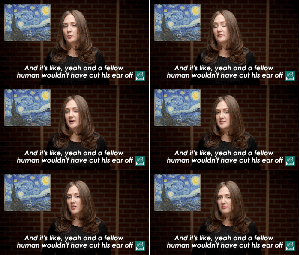
also Van Gogh was literally in an asylum receiving mental health treatment when he painted ‘Starry Night’. It was one of the most stable & productive periods of his life, despite the fact that wasn’t hugely effective treatment, because they didn’t really have modern understandings of what things work on mental illness. Like, you know. Medication.
This is why we don’t romanticize mental illness or chronic disease.
ALSO because I am reading a book of his letters right now, Van Gogh himself addressed the idea that the best art came from pain and said that his art tended to suffer when his depression was hitting pretty hard. So don’t even pull that shit where you give his untreated depression credit for his art. Van Gogh would have hated that, and if antidepressants/better treatment of mental illness HAD existed then we might have even more of his work now.
We might have more of his work now because if he access to anti depressants he might not have killed himself.