I got my period completely unexpectedly. I hadn’t even been told a thing about it and was absolutely convinced something was wrong with me when I saw blood in my panties. I had to go, crying and scared, to my teacher. I had to sit, embarrassed and bloody, in the office and wait for my stepmom.
I was 9
The blood was thick, heavy, and I felt like I was going to throw up. My stomach rejected food, the part of my body I wasn’t even fully aware of yet was now always sticky and wet and gross and I was told it was completely and totally natural. No one told me it was okay to be afraid. No one prepared me.
“It’ll be over in a few days,” they said.
“It won’t come back until next month,” they said.
I was 10
Sleep started to elude me almost completely, and then I’d get so tired that my father had to literally drag me into a standing position so I’d start to become conscious. My stepmom didn’t explain that if my pad got full I could change it. She yelled at me because pads are expensive. I ruined almost all of my underwear because I didn’t want her to yell at me again. My dad refused to acknowledge it had happened at all. He has four daughters.
I was 11
A sharp pain gripped my side and I could barely breathe. I didn’t feel good. I begged to stay home from school. I was crying and clutching my side. Something wasn’t right.
“It’s normal,” they said.
“Don’t be so dramatic,” they said.
I passed out in science class. Woke up in the doctor’s office because my small town didn’t have a hospital and was told I’d had a ruptured ovarian cyst. I had four more cysts on my left one and at least three on my right. I needed to be on birth control and tested for PCOS.
I didn’t even know what an ovary was.
I was 12
My dad flat out refused to get me birth control. Said I didn’t need it. That there was no reason for a twelve year old to get on the pill. I’d just start having sex and who knows what else and that was that.
He’s a nurse.
I was 13
“What do you mean you’ve gone through the entire box of pads already?” my stepmother demanded, loud, shrieking. “There were 20 pads in there! How many days do you bleed?”
I didn’t know I was supposed to count.
“When does your period start? How many days between stop and start?”
I didn’t know I could count.
I started marking it all on my calendar. Some months there was nothing. Some months over half the days were filled in. I stole an entire box of pads from under the sink to hide in my room for my very own.
I was 14
New year, new calendar. I give my period tracking one to my stepmom and take her through it page by page. My periods last 10 days at the least. There is no consistent day my period begins and I show her.
“You just counted wrong,” she says.
I was 15
My legs swell. My back aches. I’ve got a headache. I puke up my dinner and shit out my breakfast five minutes after I ate it. I’ve bled all over my bed.
“You’re overreacting,” they said
“Don’t be such a baby,” they said
I was 16
I can’t eat for two straight days because if I do I will throw up. I’m not sick. I’m on my period.
It’s normal, I think.
I’m 17
I go through 40 pads this time.
It’s normal, I think.
I’m 18
I gained three pant sizes right before the blood shows up. I lay in bed all day with a heating pad across my shoulder blades, on my lower back, and one across my stomach. It doesn’t really help.
It’s normal, I think.
I’m 19
My own money. No health insurance. I moved away. Saw a doctor. I’m on birth control pills.
I’m 20
The pills have stopped working at easing my blood flow. The doctor tries a new pill. It does nothing. The doctor tries another pill. I can’t afford it. I don’t go to the doctor for four more years.
I’m 24
My girlfriend drags me to the doctor with my state health insurance. She tells the doctor about my symptoms. The doctor’s mouth opens slightly.
“That’s not normal,” she says.
I bleed for 28 days straight.
I’m diagnosed with Polycystic Ovarian Syndrome. The doctor asks if I want an IUD. I’ve never even heard of that.
My insurance pays for it. It’s free.
“Okay,” I say.
“It’s worth a try,” I say.
I haven’t had a period in months.
I am 25
My oncologist examines my medication list. “IUD? Birth control?” he asks. “You’re married. Don’t you want kids?” No. “What about your husband.” Wife. “Oh.”
My GP is out of town. I see a new doctor. We’re discussing surgeries. Is a hysterectomy an option?
“No,” he says. “You might marry a man who wants kids.” I’m married to a woman and I don’t want kids.
My dad is a nurse. He has four daughters.
“You’re married to a woman. Why are you on birth control?”
“Because I need to be,” I say. Finally. I say. “Because I want to be.”
Okay, can we just pause a moment and watch Shaun “catastrophize” the car accident after Lea let him try driving? This is a real autism nuance that I have NEVER seen portrayed, but it’s one I think almost all autistic people can relate to.
Lea was teaching Shaun how to make the car peel out (burn rubber) and wasn’t specific enough about telling him to take his foot of the gas before taking it off the brakes. So he took his foot off the brake first, drove the car off the road and I think the axle or a tire got messed up because he ran over a big rock.
Lea didn’t react the way Shaun expected. She took the blame for the accident and had to calm him down because he was making a big deal out of it. But why is Shaun reacting this way to something Lea considers minor?
Answer: Autistic people are never allowed to fail the way neurotypicals are.
Neurotypicals are given a shot at something, and if they mess up they get to laugh about it / get a little embarrassed and try again.
Autistic people are given a shot at something, and if we mess up we get lectured / yelled at, the opportunity is taken away from us and we’re told “obviously you can’t do it, so why bother trying again?”
We are kept on a really short leash by the authority figures in our lives. This is especially true of autistic people such as myself who can’t live independently and need some or a lot of help every day. We’re expected to defer to caregivers as authority figures as if we’re not capable of deciding anything for ourselves or being an authority in our own lives without a “go ahead” from someone else. Some of us might need someone else to help us do the thing after we make our decision.
The reactions caregivers give to our decisions may cause us to decide the opposite of what we actually want so we don’t inconvenience them and cause a conflict– and that can feel like not having a real choice at all.
“I want thing A, but they always get mad when I want thing A, so I’ll say I want thing B instead because less social pressure.”
I’ll give a simple scenario to express what I’m talking about here. Assume the autistic person needs assistance getting dressed, and how they express what they’re saying (speech or AAC) is up to your imagination.
One day:
Autistic person: “I want to wear my red hoodie today.” Caregiver: “I haven’t sorted the laundry yet. I’m tired. Why don’t you wear the blue sweatshirt instead?” Autistic person: *Hesitant* Caregiver: *Sighs and looks annoyed* Autistic person: *Stomach gets a tight feeling; this is social pressure. Pushing against social pressure causes conflict. Conflict is painful.* Autistic person: *Conflict discomfort is unbearable, seeks to end it the quickest way possible.* Autistic person: Fine…I’ll wear the blue sweatshirt. Autistic person: *Feels defeated, like their choices don’t matter.*
Another day:
Autistic person: *Wants to wear their red hoodie.* Autistic person: *Remembers the caregiver’s response about the hoodie last time* Autistic person: *Stomach gets tight again.* Autistic person: I’ll wear my blue sweatshirt today. Caregiver: *Looks relieved.* Caregiver: Okay, let’s get you dressed.
Autistic person: *Stomach tightness goes away, but they feel defeated like their choices don’t matter.*
And what about nonverbal autistic people who need lots of daily help and can’t make their communications understood? Many of their meltdowns may be sensory, but I can betcha all the money in every bank on Earth that some of their meltdowns are from feeling like they have no say or control in their own lives. Every decision is made for them, they’re maneuvered through their day, get tugged on if they resist and then they act out explosively (ie aggression, bolting, vocalizing) because that’s the only choice they get to make that is entirely their own.
I think caregivers should present them with choices during the day, even if it’s as simple as what color shirt they wear or if they want oatmeal or a muffin for breakfast. Let them have some say in their lives. They might look at or touch the thing they want if you offer both and say they get too choose.
And hey, if it won’t hurt anything if they act like they want both, let them have both! Who cares if wearing two shirts that don’t go together looks a little silly? Who cares if they want a muffin with their oatmeal? They’re making their own choice. You can still steer them away from choices that would be dangerous while still giving them choices.
Like, don’t present them with any winter clothes in summer, and don’t offer food choices with foods that upset their stomach.
But let them have a chance to choose.
And let them have a chance to try, fail and try again.
Shaun was yelling “I want to make my own decisions!” when he had a meltdown. I wonder how many autistic people who can’t understandably express that thought are having meltdowns for the same reason.
Society teaches autistic people that we should do everything possible to not inconvenience our caregivers, but the cost of that is we feel little to no control over our lives.
The worst failure is not trying.
Let us try.
My sister isn’t autistic, but she has some autistic traits that go along with her other disabilities. This concept is so so important, because although she functions on the level of a 5 year old (she is 28), she is still a human being who has preferences. She is also extremely hard on herself when she feels like she did something incorrectly- I’m teaching her how to play the piano, and alongside that, I’m trying to teach her to be patient with herself.
2 part response!
1: It’s great that you recognize your sister’s frustration and are trying to help her be patient with herself. It sounds like the other people around her make a big deal out of her mistakes instead of noticing when she gets things right.
It’s nice to see someone trying to pick that apart and show her she IS capable.
Part 2: Mental ages are really stigmatizing and ableist. I know you didn’t mean it maliciously and may not realize why mental ages are harmful, so I hope this helps shed light on why.
Mental ages hurt disabled people because we’re treated like we’re the mental age instead of the adults we are. It results in us being treated with less respect, being treated as if we don’t know what we want and we get treated like we don’t know what we’re talking about when we do. It’s a form of infantilizing, and it’s an implication that we’re somehow “less developed” than our peers because baby / child brains are less developed than adult brains. We aren’t less developed, we just developed differently.
Mental ages get used as a shortcut, but it’s so harmful to disabled people just like functioning labels (mild / severe / high functioning / low functioning) hurt autistic people and intellectually disabled people.
Your sister may need things explained to her differently or need extra help that nondisabled 28 year olds don’t need help with, but she is still 28. She hasn’t been 5 since the year between her 5th and 6th birthdays.
I know you had zero malice behind what you said; that’s why I pointed it out so you can avoid it in the future. (Mistakes are how we learn and they help us grow.)
Good luck with your sister and I hope the piano lessons go smoothly! ^_^
huh. Interesting.
This is something I understand about myself, and I think instinctively understand about my twin brother (he is autistic, I am otherwise ND) but I hadn’t ever really thought through the internal process like this before. For either of us, really. I’m almost embarrassed!
“Mental Illness Recovery Series” book contains 100 true life stories of people all around the world battling daily with their mental disorders. It’s an inspirational book 📖, that gives rise to the silenced truth of mental illness and the exhausting, but noble journey of recovery.
I’ve heard a lot of advocates of inclusion say things like “kids with disabilities work twice as hard as everyone else” or “my employees with Down’s syndrome never come in late or take a day off.”
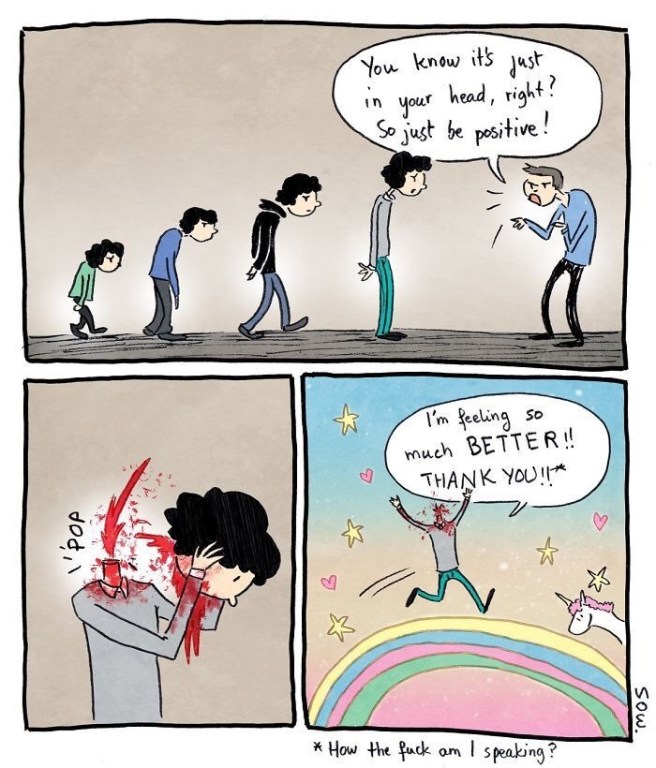
This sounds like praise, but it isn’t.
The time disabled people spend working twice as hard as everyone else has to come from somewhere.
There are reasons why kids aren’t in school every waking moment. There is a reason why vacation time exists and why it’s normal to be late occasionally.
People need rest. People need leisure time. People have lives and needs and can’t do everything.
Being disabled doesn’t erase the need for down time. Being disabled doesn’t erase the need for play, or for connections to other people.
Working twice as hard as everyone else all the time isn’t sustainable. Praising disabled people for doing unsustainable things is profoundly destructive.
People with disabilities should not have to give up on rest, recreation, and relationships in order to be valued. We have limited time and energy just like everyone else, and our limitations need to be respected.
It is not right to expect us to run ourselves into the ground pretending to be normal. We have the right to exist in the world as we really are.
I spent years wholeheartedly believing these four words.
This phrase consumed my thoughts to the point where I never thought I would be good enough until I could stop eating for good.
And I know I am not the only one.
If you have ever felt this way – or you feel that way now – just take a moment to remind yourself of two things:
1. PRETTY GIRLS DO EAT.
2. BEING PRETTY IS NOT THE ONLY VALUE YOU HAVE AS A WOMAN
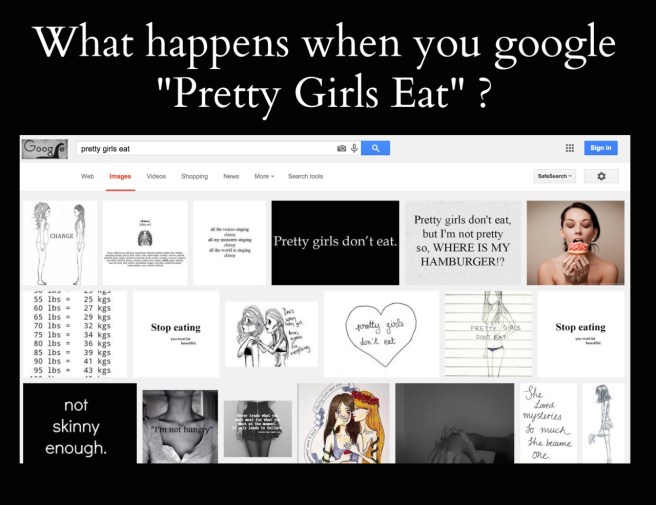
Im not the first person to point these things out. And I sure as hell hope I am not the last. But I hope one day when you google “pretty girls eat” that you see something different.
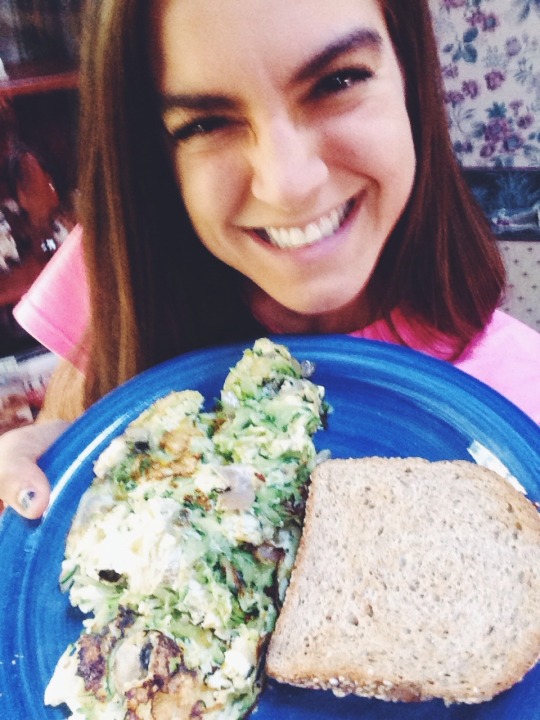
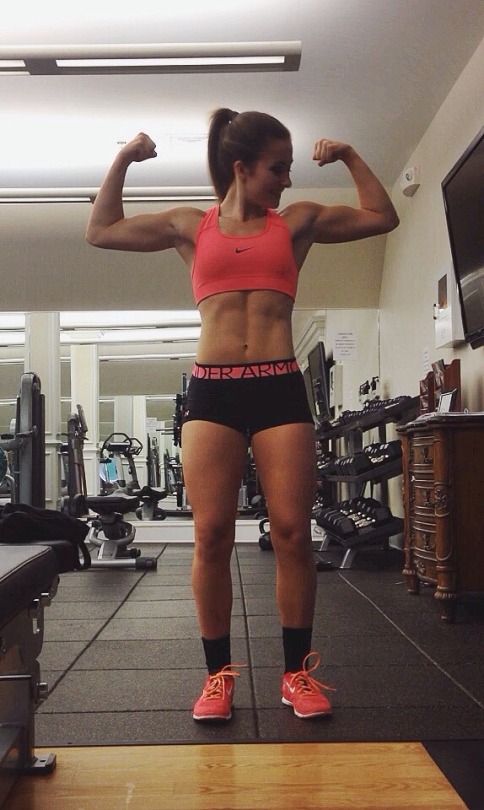
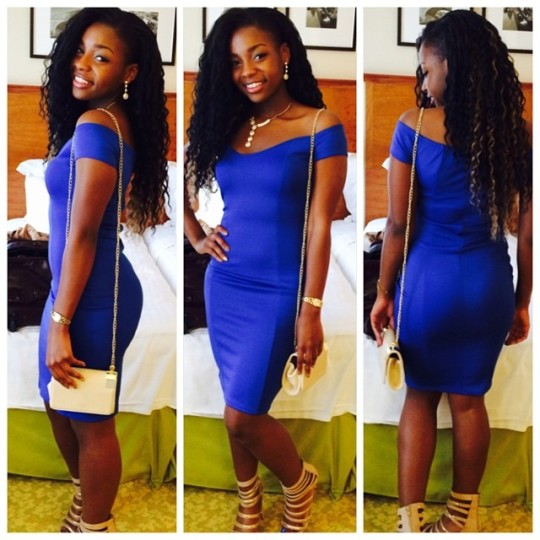
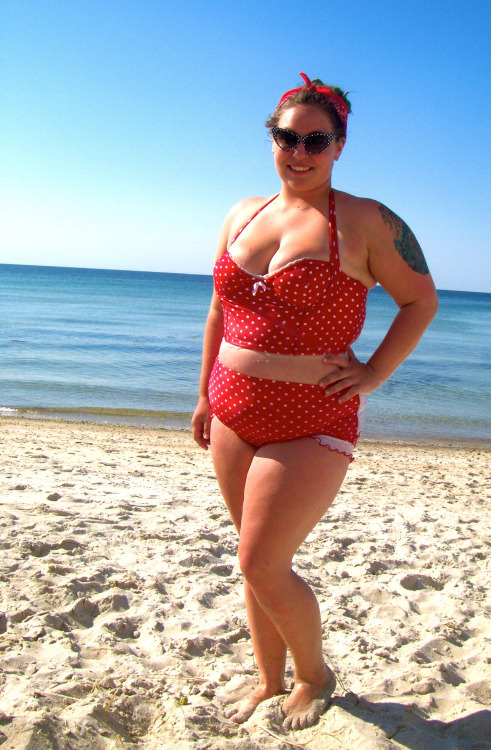
One day I want little girls to google “pretty girls eat” and see pictures of beautiful women like this.
Women who are not only beautiful, but so much more. (and if you follow them you KNOW that they all eat!)
Fuck “pretty girls don’t eat” Because we do. And we should remind each other of that until every lost girl who has had the misfortune of believing such a terrible lie can be shown the truth:
PRETTY GIRLS EAT.
HEALTHY girls eat.
STRONG girls eat.
DETERMINED girls eat.
CONFIDENT girls eat.
SMART girls eat.
HAPPY girls eat.
PRETTY. GIRLS. EAT.
OMG I NEVER SAW THIS WTF THIS IS BEAUTIFUL
Brb crying. I wish something like this would have been around when I was dealing with eating disorders. This is beautiful.
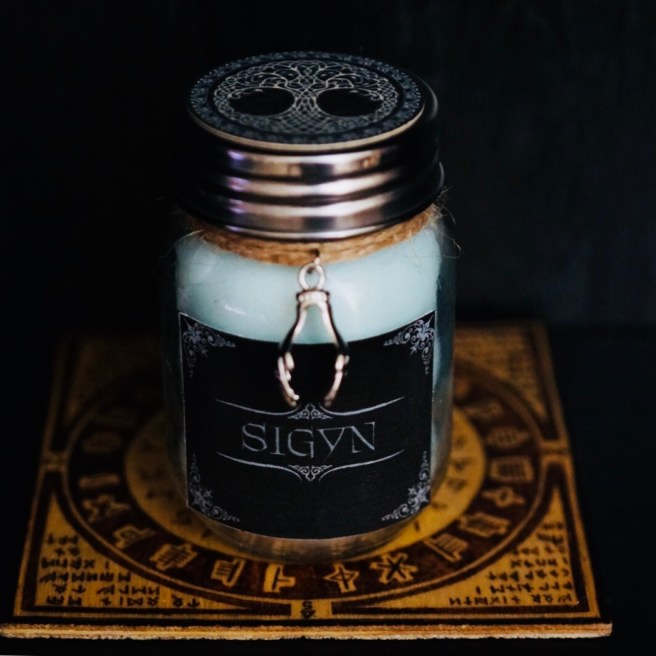
Our Sigyn Candle is the newest addition to the Devotional Mason Jar Collection. Coming in a soft baby blue and generously scented with Juniper berry and sweet pea.






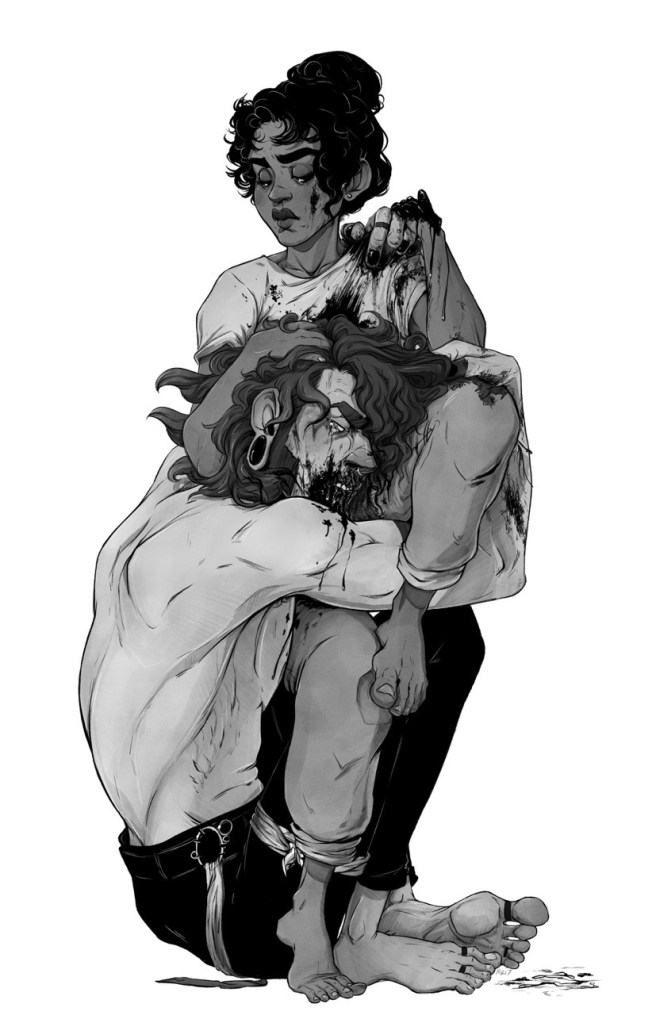
 Holding the Bowl