here is what i don’t understand:
if an average healthy person is in a lot of pain and this pain is temporary but excruciating, their doctors, ER or otherwise, will give them strong medication, usually narcotics, whose strength will match the pain felt.
but when someone with chronic pain experiences pain above and beyond their normal everyday pain and this extra pain is temporary and excruciating, their doctors will give them weak medication, rarely narcotics, that the patient takes on a regular basis for less excruciating circumstances.
now if the chronic pain patient asks the doctors for something stronger, the doctors discourage them. they say things like ‘it’s dangerous to get used to narcotics.’ or ‘you can’t rely on narcotics for chronic pain.’
we chronic pain patients are forced to deal with more pain than the average healthy person everyday. but why does that disqualify me from receiving adequate treatment when my pain level goes above my extremely high tolerance?
the doctors need to respect us. we have more experience dealing with our pain than they do.
Category: Uncategorized
So I’ve been looking into some Norse gods, and found some interesting information about one of Sigyn’s best known kennings, “Incantation Fetter”: in that context, ‘fetter’ means either to control or to break, and ‘incantation’ of course refers to magic.
So Sigyn’s name means “Victory Woman” and her most famous nickname basically translates to “Cursebreaker”.
People can spout off all they want about Sigyn being useless, boring, etc etc, but I’d say she must have kicked some serious ass to earn those kind of monikers from a warrior culture like the Norse.
Eh, not quite. The kenning in question is galdrs hapt, which is found in Þorsdrapa stanza 3. “Hapt” does mean fetter, but it means to tie to bind something, like you see in the First Merseberg Charm. So she doesn’t break curses, she’s skilled at galdr.
The First Merseberg Charm is Old High German, not Norse. That’s not even relevant. “Might be cognates” does not mean “exactly the same”.
Well yes. But in this case, they actually are from the same root word. Proto-Germanic haftaz. Which is a cognate with Old High German hafta, Old Norse hapt/haptr, Middle Low German hacht, Old English hæft.
#There’s always got to be one #doesn’t there #And linking to Wikipedia? Really?
Your tags are not endearing. I would recommend not assuming that, if people don’t respond with a scholarly essay and citation list like some of the stuff I usually write, that they are a clueless newb.
As I said, cognate does not mean exactly the same.
As for “clueless newb”, I’m not the one using Wikipedia as a source. If you’re going to go around telling people they’re wrong, at least try producing some evidence more credible than a Wikipedia article about something in a different language. That’s like pointing at a French document to tell me I’m mistranslating a Italian phrase. Hey, they’re both descended from Latin so that makes them the same, right? Wrong.
You say I’m wrong, it’s on you to prove it. With evidence that is actually relevant and from a reputable source.
Petra Mikolić. “The God-Semantic Field in Old Norse Poetry”. Page 57.
Don’t bother replying. I have no interest in speaking to you again.
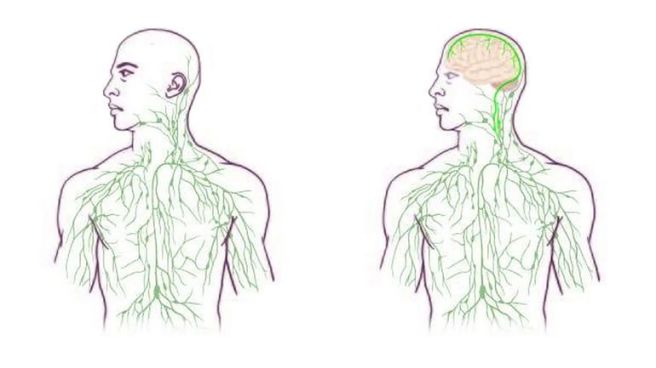
Missing link found between brain, immune system — with major disease implications
In a stunning discovery that overturns decades of textbook teaching, researchers at the University of Virginia School of Medicine have determined that the brain is directly connected to the immune system by vessels previously thought not to exist.
That such vessels could have escaped detection when the lymphatic system has been so thoroughly mapped throughout the body is surprising on its own, but the true significance of the discovery lies in the effects it could have on the study and treatment of neurological diseases ranging from autism to Alzheimer’s disease to multiple sclerosis.
“Instead of asking, ‘How do we study the immune response of the brain?,’ ‘Why do multiple sclerosis patients have the immune attacks?,’ now we can approach this mechanistically – because the brain is like every other tissue connected to the peripheral immune system through meningeal lymphatic vessels,” said Jonathan Kipnis, a professor in U.Va.’s Department of Neuroscience and director of U.Va.’s Center for Brain Immunology and Glia. “It changes entirely the way we perceive the neuro-immune interaction. We always perceived it before as something esoteric that can’t be studied. But now we can ask mechanistic questions.“
He added, “We believe that for every neurological disease that has an immune component to it, these vessels may play a major role. [It’s] hard to imagine that these vessels would not be involved in a [neurological] disease with an immune component.”
Kevin Lee, who chairs the Department of Neuroscience, described his reaction to the discovery by Kipnis’ lab: “The first time these guys showed me the basic result, I just said one sentence: ‘They’ll have to change the textbooks.’ There has never been a lymphatic system for the central nervous system, and it was very clear from that first singular observation – and they’ve done many studies since then to bolster the finding – that it will fundamentally change the way people look at the central nervous system’s relationship with the immune system.”
Even Kipnis was skeptical initially. “I really did not believe there are structures in the body that we are not aware of. I thought the body was mapped,” he said. “I thought that these discoveries ended somewhere around the middle of the last century. But apparently they have not.”
The discovery was made possible by the work of Antoine Louveau, a postdoctoral fellow in Kipnis’ lab. The vessels were detected after Louveau developed a method to mount a mouse’s meninges – the membranes covering the brain – on a single slide so that they could be examined as a whole. “It was fairly easy, actually,” he said. “There was one trick: We fixed the meninges within the skullcap, so that the tissue is secured in its physiological condition, and then we dissected it. If we had done it the other way around, it wouldn’t have worked.”
After noticing vessel-like patterns in the distribution of immune cells on his slides, he tested for lymphatic vessels and there they were. The impossible existed.
The soft-spoken Louveau recalled the moment: “I called Jony [Kipnis] to the microscope and I said, ‘I think we have something.’”
As to how the brain’s lymphatic vessels managed to escape notice all this time, Kipnis described them as “very well hidden” and noted that they follow a major blood vessel down into the sinuses, an area difficult to image. “It’s so close to the blood vessel, you just miss it,” he said. “If you don’t know what you’re after, you just miss it.
“Live imaging of these vessels was crucial to demonstrate their function, and it would not be possible without collaboration with Tajie Harris,” Kipnis noted. Harris is an assistant professor of neuroscience and a member of the Center for Brain Immunology and Glia. Kipnis also saluted the “phenomenal” surgical skills of Igor Smirnov, a research associate in the Kipnis lab whose work was critical to the imaging success of the study.
The unexpected presence of the lymphatic vessels raises a tremendous number of questions that now need answers, both about the workings of the brain and the diseases that plague it.
For example, take Alzheimer’s disease. “In Alzheimer’s, there are accumulations of big protein chunks in the brain,” Kipnis said. “We think they may be accumulating in the brain because they’re not being efficiently removed by these vessels.” He noted that the vessels look different with age, so the role they play in aging is another avenue to explore.
And there’s an enormous array of other neurological diseases, from autism to multiple sclerosis, that must be reconsidered in light of the presence of something science insisted did not exist.
Image:
The lymphatic system map: old (left) and new.
This is really big. This is really big news in medicine and I suspect in mental health as well. Consider the recent discoveries around the association between mental health and the immune system;
- In 2013 they confirmed Narcolepsy is an immune disorder.
- People with Post Traumatic Stress Disorder are shown to have a hyperactive immune system.
- P.A.N.D.A.S. is a recent term for a disorder used to describe the mental changes in children after Strep/Staph Infection.
There are still so many things we are finding out about the nature of disease and the human body – especially the brain.
Interestingly this agrees with what a lot of non western medical modalities have said for centuries, big stuff
guys this is real! source: http://www.sciencedaily.com/releases/2015/06/150615094258.htm

In Norse mythology, Sigyn (Old Norse “victorious girl-friend”) is a goddess and is the wife of Loki. Sigyn is attested in the Poetic Edda, compiled in the 13th century from earlier traditional sources, and the Prose Edda, written in the 13th century by Snorri Sturluson. In the Poetic Edda, little information is provided about Sigyn other than her role in assisting Loki during his captivity. In the Prose Edda, her role in helping her husband through his time spent in bondage is stated again, she appears in various kennings, and her status as a goddess is mentioned twice. Sigyn may appear on the Gosforth Cross and has been the subject of an amount of theory and cultural references.

A quarter of the 462 people who were shot and killed by police so far this year were in the middle of an emotional or mental health crisis, according to the Washington Post. Most of these 124 people were armed at the time of the shootings, though the cops who shot them weren’t responding to a crime. Most of the time, relatives were calling 911 for help dealing with a loved one who was behaving erratically. At least 50 of the people shot were suicidal.
Training will help reduce the number of police killings – but accountability is crucial too

a good thing to do for your friends with anxiety disorders: if you have a question you need to ask them or something you need to tell them, explain the subject of the question/the statement in the same message as your opening one!
so basically: instead of saying “can i ask you a question?” and sending just that (which, as a person with an anxiety disorder, makes my anxiety go into hyperdrive) go “can i ask you a question about ___?”
it’s a little thing but honestly few things make me anxious like “i have a question for you” or “there’s something i need to tell you” without immediate explanation. thanks!

If you know someone who’s depressed, please resolve to never ask them why. Depression isn’t a straightforward response to a bad situation; depression just is, like the weather. Try to understand the blackness, lethargy, hopelessness, and loneliness they’re going through. Be there for them when they come through the other side.
It’s hard to be a friend to someone who’s depressed, but it’s one of the kindest, noblest, and best things you’ll ever do.
Stephen Fry (via onlinecounsellingcollege)