Most adult children of toxic parents grow up feeling tremendous confusion about what love means and how it’s supposed to feel. Their parents did extremely unloving things to them in the name of love. They came to understand love as something chaotic, dramatic, confusing, and often painful—something they had to give up their own dreams and desires for. Obviously, that’s not what love is all about.

Loving behavior doesn’t grind you down, keep you off balance, or create feelings of self-hatred. Love doesn’t hurt, it feels good. Loving behavior nourishes your emotional well-being. When someone is being loving to you, you feel accepted, cared for, valued, and respected. Genuine love creates feelings of warmth, pleasure, safety, stability, and inner peace.

Susan Forward, Toxic Parents, p381 (via mxnotmrdarcy)

This also applies to survivors of abusive relationships.

(via rapeculturerealities)

So real

(via kimberlyxjane)

I read this and all I can think about are my niece and nephew. 

(via fuckyeahlgbtqblackpeople)
Alcoholism is when your drinking causes serious problems in your life, yet you keep drinking. You also may have a physical dependence on alcohol. This means that you need more and more alcohol to feel drunk. Stopping suddenly may cause withdrawal symptoms.

Alcohol abuse is when your drinking leads to problems, but you are not physically dependent on alcohol. These problems may occur:

  • At work, school, or home
  • In your personal relationships
  • With the law
  • From using alcohol in dangerous situations, such as drinking and driving

If you have a drinking problem, you may:

  • Continue to drink, even when your health, work, or family are being harmed
  • Drink alone
  • Become stirred up, excited, or tense when drinking
  • Become hostile when asked about your drinking
  • Make excuses to drink
  • Miss work or school, or don’t perform as well because of drinking
  • Stop taking part in activities you enjoy because of alcohol
  • Need to use alcohol on most days to get through the day
  • Don’t eat a lot or eat poorly
  • Not care about how you dress or if you are clean
  • Try to hide alcohol use
  • Shake in the morning or after periods when you have not had a drink

Symptoms of alcohol dependence include:

additional details

Resources and information for those with (or family/loved one with) alcoholism… 

dianesdreams:

butt-fish:

mayra-quijotesca:

trustisforfools:

mrspiritual:

musicalpandas:

gainingconfidencexo:

havocados:

emorenita:

why aren’t these being reblogged more often?
i rather see these than “keys in hand”

Fatality

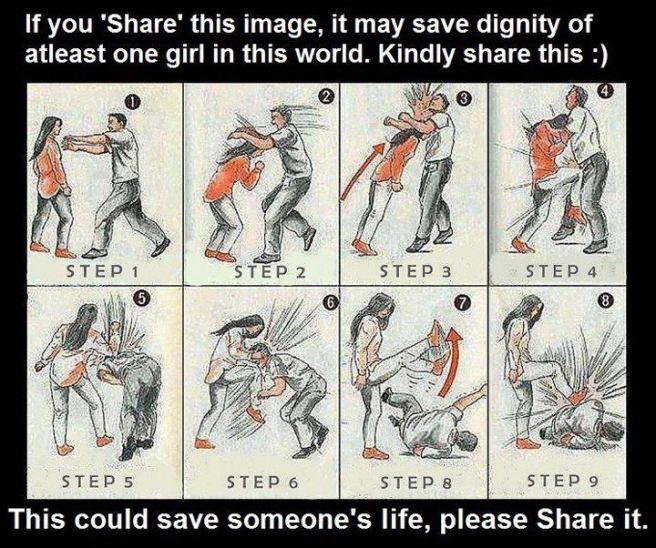
Umm so since I’m stupid could someone kindly explain each step for me like step 3 am i head butting him in the face or the chest? 

I think it depends on the height of the person, but I suppose the head is a more effective target. I hope this helps 🙂

Step 1: Step back the moment he reaches for you.

Step 2: Duck!

Step 3: Head butt him in the chin. It’s very important that it is the chin and not the chest because it is much more uncomfortable and disorienting to have your teeth bang together especially if it cuts his tongue (which it will if it is in the way). More than likely height won’t matter. He will be leaning forward from the missed attempt at grabbing you.

Step 4: Knee him in the balls.

Step 5: When he doubles over, jab him on his back. I believe at the base of the neck just above the shoulder blades would be best. I’m not an expert, but this seems like the best place, imo.

Step 6: Don’t lose contact. Bring your other hand over and slam your hands against the sides of his heads as hard as possible. Right on the ears is the best place; it is extremely disorienting if done correctly. Then take his head and bring it down on your knee as you bring your knee up. It’s very important that you avoid the nose because if you knee his nose it will definitely break and more than likely the bones will stab his brain killing him, so aim for his mouth instead.

Step 7: Keep your knee up and bring your foot out to kick him over. Personally, I don’t like the image because it looks like she kicked him with her toes. You do not want to do that. Instead kick him with the ball or heel of your foot and put power behind it with a push.

Step 8: He is on the ground. You could probably stop here and he would get the picture, but if you really want to…Your leg is still in the air from the kick. With all your force slam the edge of your your heel on his side. It will be more effective if you lower your body first by bending at the knee of the leg your weight is on. Done right, you can break a rib or two.

reblogging again for that^

Reblogging for the steps in the image and the explanation in the comments. I don’t so much like the explanation on the image proper, but I appreciate the thought behind it (here, have a self-defense thing, it could save you) and so I’m passing it on.

cup your hands and slam them against his ears and if done correctly and with enough force you can make him deaf.

Personally, I’d elbow him in the kidneys instead of at the base of the neck.  Aim for either side of the spine at about waist-level.  Get him hard enough and he’ll be pissing blood.  This area is also quite tender and would likely hurt him more (and you less) than an elbow to the neck.  

Attachment Disorder

onlinecounsellingcollege:

Attachment disorder is where a child or adult is unable to form normal healthy attachments. This is usually due to detrimental early life experiences – such as neglect, abuse, separation from their parents or primary caregivers (after six months of age and before three years of age), frequent change of caregivers, and lack of responsiveness from their caregivers.

Symptoms vary depending on age. In adults, they fall under one of two categories – either avoidant or anxious/ ambivalent personalities. These are summarized below.

1. Avoidant

· Intense anger and hostility

· Hypercritical of others

· Extremely sensitive to criticism, correction or blame

· Lacks empathy

· Sees others as untrustworthy and unreliable

· Either sees themselves as being unlovable or “too good” for others

· Relationships are experienced as either being too threatening or requiring too much effort

· Fear of closeness and intimacy

· Compulsive self-reliance

· Passive or uninvolved in relationships

· Find it hard to get along with co-workers and authority figures

· Prefers to work alone, or to be self employed

· May use work to avoid investing in relationships

2. Anxious/ Ambivalent

· Demonstrates compulsive caregiving

· Problems with establishing and maintaining appropriate boundaries

· Feels they give they give more than they get back

· Feels their efforts aren’t noticed or appreciated

· Idealizes people

· Expects their partner to repeatedly demonstrate their love, affection and commitment to them, and the relationship

· Emotionally over-invests in friendships and romantic relationships

· Are preoccupied with close relationships

· Overly dependent on their partner

· Believes that others are out to use them or to take advantage of them

· Fears rejection

· Is uncomfortable with anger

· Experiences a roller coaster of emotions – and often these are extremes of emotion

· Tends to be possessive and jealous; finds it hard to trust

· Believes they are essentially flawed, inadequate and unlovable.