
There is no shame in needing—and asking for—help.
Category: Uncategorized
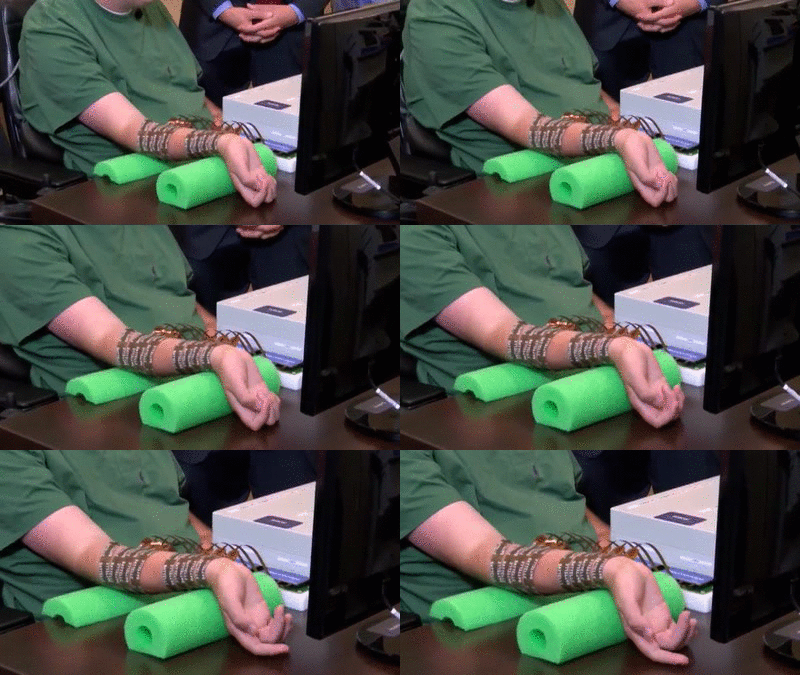
New device allows brain to bypass spinal cord, move paralyzed limbs
For the first time ever, a paralyzed man can move his fingers and hand with his own thoughts thanks to a new device. A 23-year-old quadriplegic is the first patient to use Neurobridge, an electronic neural bypass for spinal cord injuries that reconnects the brain directly to muscles, allowing voluntary and functional control of a paralyzed limb.
w h a t
People With Down Syndrome Are Pioneers In Alzheimer’s Research
Alzheimer’s researchers are increasingly interested in people like McCowan because “people with Down syndrome represent the world’s largest population of individuals predisposed to getting Alzheimer’s disease,” says Michael Rafii, director of the Memory Disorders Clinic at UCSD.
Down syndrome is a genetic disorder that’s best known for causing intellectual disability. But it also causes Alzheimer’s. “By the age of 40, 100 percent of all individuals with Down syndrome have the pathology of Alzheimer’s in their brain,” Rafii says.
People With Down Syndrome Are Pioneers In Alzheimer’s Research
In the name of the love Sigyn and Loki have for Their lost sons, remember Vali. In the name of the love between Narvi and Vali, who some said were as close as twins, remember Him. Remember Him as you remember all children torn too soon from their families. Remember Him in the name of all, who, like Vali himself, have suffered from the horrors that have befallen them.
Honoring Vali, Northern Paganism (via tinydragongina)
The UK Government has issued some new guidance “aimed at anyone who needs to communicate with or write about disabled people and disabilities.”, it is based on the social model of disability which is preferred by most activists in the UK:
Consider these guidelines when communicating with or about disabled people.
Language guidelines
Not everyone will agree on everything but there is general agreement on some basic guidelines.
Collective terms and labels
The word ‘disabled’ is a description not a group of people. Use ‘disabled people’ not ‘the disabled’ as the collective term.
However, many deaf people whose first language is BSL consider themselves part of ‘the deaf community’ – they may describe themselves as ‘Deaf’, with a capital D, to emphasise their deaf identity.
Avoid medical labels. They say little about people as individuals and tend to reinforce stereotypes of disabled people as ‘patients’ or unwell.
Don’t automatically refer to ‘disabled people’ in all communications – many people who need disability benefits and services don’t identify with this term. Consider using ‘people with health conditions or impairments’ if it seems more appropriate.
Positive not negative
Avoid phrases like ‘suffers from’ which suggest discomfort, constant pain and a sense of hopelessness.
Wheelchair users may not view themselves as ‘confined to’ a wheelchair – try thinking of it as a mobility aid instead.
Everyday phrases
Most disabled people are comfortable with the words used to describe daily living. People who use wheelchairs ‘go for walks’ and people with visual impairments may be very pleased – or not – ‘to see you’. An impairment may just mean that some things are done in a different way.
Common phrases that may associate impairments with negative things should be avoided, for example ‘deaf to our pleas’ or ‘blind drunk’.
Words to use and avoid
Avoid passive, victim words. Use language that respects disabled people as active individuals with control over their own lives.
Avoid
handicapped, the disabled
afflicted by, suffers from, victim of
confined to a wheelchair, wheelchair-bound
mentally handicapped, mentally defective, retarded, subnormal
cripple, invalid
spastic
able-bodied
mental patient, insane, mad
deaf and dumb; deaf mute
the blind
an epileptic, diabetic, depressive, and so on
dwarf; midget
fits, spells, attacks
Use
disabled (people)
has [name of condition or impairment]
wheelchair user
with a learning disability (singular) with learning disabilities (plural)
disabled person
person with cerebral palsy
non-disabled
person with a mental health condition
deaf, user of British Sign Language (BSL), person with a hearing impairment
people with visual impairments; blind people; blind and partially sighted people
person with epilepsy, diabetes, depression or someone who has epilepsy, diabetes, depression
someone with restricted growth or short stature
seizures
Some tips on behaviour
- use a normal tone of voice, don’t patronise or talk down
- don’t be too precious or too politically correct – being super-sensitive to the right and wrong language and depictions will stop you doing anything
- never attempt to speak or finish a sentence for the person you are talking to
- address disabled people in the same way as you talk to everyone else
- speak directly to a disabled person, even if they have an interpreter or companion with them
Source https://www.gov.uk/government/publications/words-to-use-and-avoid-when-writing-about-disability/inclusive-language-words-to-use-and-avoid-when-writing-about-disability
Depression is humiliating. It turns intelligent, kind people into zombies who can’t wash a dish or change their socks. It affects the ability to think clearly, to feel anything, to ascribe value to your children, your lifelong passions, your relative good fortune. It scoops out your normal healthy ability to cope with bad days and bad news, and replaces it with an unrecognizable sludge that finds no pleasure, no delight, no point in anything outside of bed. You alienate your friends because you can’t comport yourself socially, you risk your job because you can’t concentrate, you live in moderate squalor because you have no energy to stand up, let alone take out the garbage. You become pathetic and you know it. And you have no capacity to stop the downward plunge. You have no perspective, no emotional reserves, no faith that it will get better. So you feel guilty and ashamed of your inability to deal with life like a regular human, which exacerbates the depression and the isolation.
Depression is humiliating.
If you’ve never been depressed, thank your lucky stars and back off the folks who take a pill so they can make eye contact with the grocery store cashier. No one on earth would choose the nightmare of depression over an averagely turbulent normal life.
It’s not an incapacity to cope with day to day living in the modern world. It’s an incapacity to function. At all. If you and your loved ones have been spared, every blessing to you. If depression has taken root in you or your loved ones, every blessing to you, too.
Depression is humiliating.
No one chooses it. No one deserves it. It runs in families, it ruins families. You cannot imagine what it takes to feign normalcy, to show up to work, to make a dentist appointment, to pay bills, to walk your dog, to return library books on time, to keep enough toilet paper on hand, when you are exerting most of your capacity on trying not to kill yourself. Depression is real. Just because you’ve never had it doesn’t make it imaginary. Compassion is also real. And a depressed person may cling desperately to it until they are out of the woods and they may remember your compassion for the rest of their lives as a force greater than their depression. Have a heart. Judge not lest ye be judged.
Pearl (via psych-facts)
This is seriously the most accurate description of depression. Wow.
(via fake-that-smile-babe)

July for Loki
So back in June when I was doing my Litha ritual, I believe I had a sort of incident with Loki, where he revealed/ introduced his wife Sigyn to me and sort of encouraged me to honor Her as well. It was very sweet and very overpowering; I could absolutely feel the love He has for Her. So in exchange for this… vision I guess I could call it, I offered to dedicate one of the offering days in July to Sigyn. This is the prayer I designed for Her.
Please, please, please, if you work with Sigyn or know anything more about her, and see something offensive or wrong with this, please tell me! I am just staring in my honoring of Sigyn (and Loki for that matter) and don’t want to dedicate anything to Her that is glaringly incorrect. Does this prayer jive with anyone else’s experience with Her?
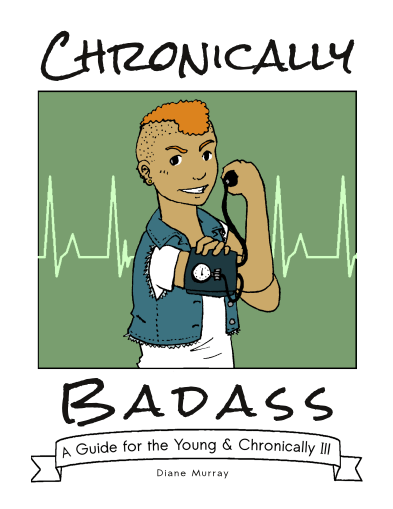
I have a really exciting Spoonie Living announcement for y’all! When I started on my 6-month medical leave from work, one of my goals was to create a zine for new spoonies, to help them hit the ground running as they begin their chronic illness experience. I’m calling it Chronically Badass, and it’s finally done!
Here’s what I cover inside:
- Spoon theory
- Getting answers
- Working with doctors
- Work & school
- Friends & family
- Reactions
- Mental health
- Coping strategies
- Online communities
- Mobility
It’s free for download right here (although you’re welcome to donate if you like), so be sure to check it out!
Please also reblog and spread the word so others can find and benefit from this zine.
Is there any way to get this without a credit card? I’d love to read it, but not sure how to get it without having a card.
Gosh, absolutely! If you set the amount to $0, the credit card thing will disappear—give it a shot 🙂
Just read this and loved it!
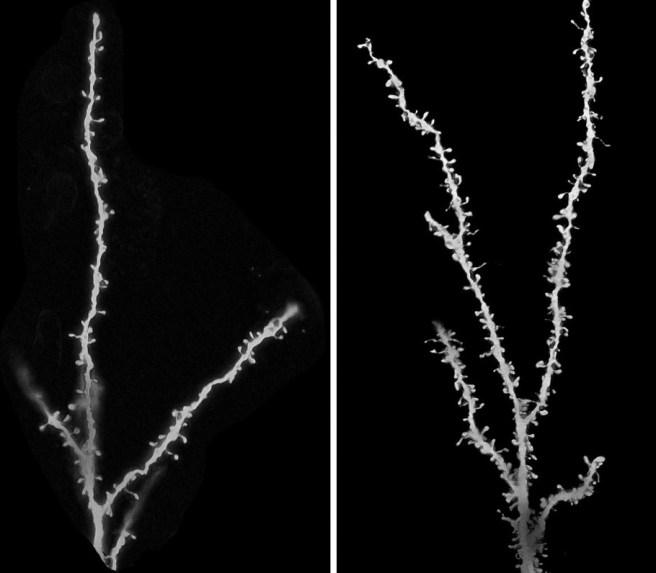
NEW YORK, NY (August 21, 2014) — Children and adolescents with autism have a surplus of synapses in the brain, and this excess is due to a slowdown in a normal brain “pruning” process during development, according to a study by neuroscientists at Columbia University Medical Center (CUMC). Because synapses are the points where neurons connect and communicate with each other, the excessive synapses may have profound effects on how the brain functions. The study was published in the August 21 online issue of the journal Neuron.

Sigyn, Devoted Lady and Wife
Surrounded by gillyflowers/wallflowers, which symbolize loyalty in adversity
 Holding the Bowl