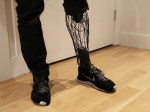
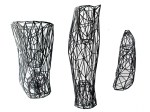
3-D Printed Prosthetics That Look Fit for a Sci-Fi Warrior
Most badass prosthetic limbs ever!

Devotional blog dedicated to the Goddess Sigyn offering support to those who are "holding the bowl" within difficult relationships.
3-D Printed Prosthetics That Look Fit for a Sci-Fi Warrior
Most badass prosthetic limbs ever!
No, but think about the psychology of Sigyn and Loki at his binding. He probably doesn’t get a lot of visitors. He’s in a cave and chained up. There’s nothing to see or touch. And there’s an acid faucet over his body.
If Sigyn leaves, he’s going to be in social isolation, sensory deprivation, and physical agony. Keeping her goodwill is pure survival. He cannot afford to be anything except what she wants from him.
So his first act on being released is to lead the destruction of the universe and I wonder
just what has she been whispering to him, all these centuries?
(I love Sigyn, but I hardly think she’s the Marian symbol of saintly forbearance and forgiveness I sometimes she her painted as. She’s a mother who unjustly lost a child, for Hel’s sake!)

a masterpost to help you feel better and get through the day.
distract yourselfstatic noise / background sounds (helps you focus / feel less overloaded – I can’t study without this stuff)
simply noise
my noise
rainy mood
nature sounds
jazz and rain
rainy cafelots of things to do
writing, painting, makeup, body care, even movies master post
musical squares
lucid dream
learn a new language
make your own mind palace!!
draw a nebula
make your own font
learn something new
fun sites to visit
bubble wrap game
answer questions to buy rice to help end hunger!
get a hug from a nice person
microwave mug snackswatch something
ultimate teen movie master post 80s – today
bbc sherlock
granada sherlock holmes
pretty little liars
hannah montana
ellen best momentslisten to music
tom hiddleston’s song of the day masterpost
my personal “tunes” tagwhen you are sadadisri’s tag
abby’s tag
cierra’s tag
my taganxiety
play with sand
chill out
zen garden (video)
managing stress
social anxiety tips
anti anxiety masterpost
the quiet place
the dawn room
tour of the stars
identifying your type of anxiety
how to cope with a panic attack
anti anxiety foods
make a thought diary
dealing with panic attacks and anxiety (video)
mental illness help appsdepression
how to overcome emotional numbness
coping with depression
natural depression treatments
which antidepressant should you ask for?
depression test (not 100% accurate)insomnia
tips to beating insomnia
understanding insomnia
when to fall asleep according to sleep cycles (helps you feel more awake later)
tips for falling asleep quicklyself harm
alternatives to self harm
if you already have, here’s how to care for injuries
understand self harm and how to stop
butterfly project (self harm prevention)
tips for stopping cutting
how to fade and cover scars
how to explain scars (avoid talking about visible scars)
just relapsed? read this.
need to see blood? cut a white screen.eating disorders
different eating disorders explained
why you should try to recover
feeling bloated?
preventing relapse
why you need to eat
learn to love your body
recovering from bulimia
don’t put yourself down
how to boost your confidence
self love
loose weight the healthy way (blogilates youtube – great workout, healthy eating, and self improvement channel)suicidal
countries (outside of US) suicide hotline list
suicide hotline list (includes US as well as other countries)
talk with someone or help someone!
online suicide prevention – talk it out online
how to help someone who is suicidal
reasons to live
100 reasons NOT to commit suicideabuse
healthy vs. unhealthy relationship boundaries
abuse hotlines
understand that sexual abuse is not your fault
understand that physical abuse is not your fault
how to move on from sexual abuse
understanding domestic violence and abuse
how to escape an abusive relationship safely
after silence (support for victims of abuse)
do you think someone you love is being abused?
healing and overcoming abuse
speaking out after abuseptsd
help guide for ptsd
help guide for ptsd 2 (similar to 1 with more extensive self-help tips)
how to help someone with ptsd
10 tips for understanding someone with ptsd
coping with ptsdasking for help
telling people how you are feeling
how to tell someone about your anxiety
how to ask for helprestoring your faith in the world
random acts of kindness caught on film (video)
real life heroes (video)
giving servers $200 tips (video)
paying for people’s groceries (video)
faith restoring
in case you forgot the world is a gorgeous place (video)other master posts that may be helpful (:
1 2 3 4 5 6Most importantly, remember that YOU ARE LOVED.
Feel free to message me at any time for any reason.


*breathing rhythm changes*
A mason jar candle for Sigyn (FiberWytch). Even though I associate blues with Her in my practice, I’m still suffering from I have a mighty need.



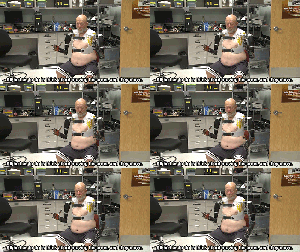
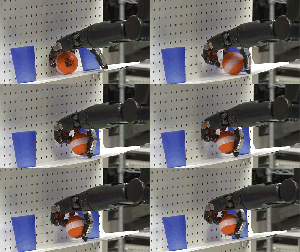
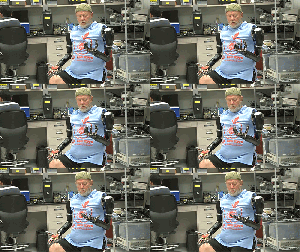
Man Successfully Controls 2 Prosthetic Arms With Just His Thoughts
Les Baugh is the first bilateral shoulder-level amputee to wear two Modular Prosthetic Limbs at once, according to the researchers.
For more on the incredible science behind this prosthetic innovation go here.
(GIF Source: JHU Applied Physics Laboratory)
GOD I LOVE TECHNOLOGY sometimes I really regret not going into this kind of field
DARPA: Bringing you the cyborgs of tomorrow, today.


So I decided as there was no statues of Sigyn that I would search down something that spiritually rang with me on eBay. The statue above is of Lenox’s porcelain princess collection, this one being Rapunzel but it felt right. (This is a personal thing, I am not saying Sigyn is ONLY blonde hair/blue eyed, white or anything else like that…)
Its going to be my gift to myself when I get settled into my new home away from the abusive crap in my life right now. That way I can finally have an alter to Sigyn as I have one to Guan Yin and the Virgin Mary…
Sometimes disabled people are wrong perceived as angry or hostile when they move like disabled people. It works something like this:
- The most efficient way to do things is often not the socially accepted way to do things
- People with disabilities often have to do things in an efficient way to be able to do them
- In order to be perceived as calm and polite, people are often expected to move in a slow, careful way without making sudden or loud motions
- That’s easy for most people without disabilities, and can be difficult or impossible for people with disabilities
- Sometimes people with disabilities don’t have the motor coordination or strength to move in expected ways. Sometimes pain or illness makes them too exhausted to have the energy to move in expected ways. Sometimes, they have to move efficiently to be able to move at all.
- People with disabilities who have to move in loud, sudden, forceful, or jerky ways are often wrongfully perceived as expressing anger, frustration, or aggression.
- When people make loud, jerky, or sudden motions, they tend to be perceived as rude, angry, or aggressive
- People with disabilities don’t always have the coordination to make the movements in expected ways
- Sometimes, they have to be efficient in order to do the thing.
- This often gets perceived as angry when it isn’t
- This can lead to people with disabilities who are just trying to live their lives being perceived as hostile and excluded
- When a person with a disability is moving in a jerky, sudden, or loud way, it’s important to consider the possibility that it’s disability-related rather than angry
Some concrete examples:
Dropping things:
In most social contexts, it’s socially expected that people who need things to be on the ground put them there without making a sudden noise
- This generally means using your arms to slowly lower the thing to the ground
- People with disabilities often do not have the strength or motor coordination needed to lower things this way
- Sometimes, people who can’t rely on muscles to lower things need to drop them and rely on gravity
- (And some people have to rely on gravity some of the time, eg: when they’re tired, at the end of a long day, when they’re in a particularly draining environment, when they’ve already had to lift and drop the thing several times that day.)
- Gravity only goes one speed, and dropped objects tend to make noise
- Dropping a heavy object rather than lowering it slowly is usually perceived as a sign of anger (and for people without disabilities, it’s generally intended as one).
- People with disabilities who drop things are often not intending it as an expression of anger.
- Often, they drop things because they need them to be on the ground and have no other realistic way of getting them there.
- If a person with a disability is dropping heavy things rather than lowering them, it’s important not to automatically assume that they are doing this out of a show of emotions
- Consider seriously the possibility that they’re dropping things because they need to lower them, and due to disability are not able to do so in the socially expected way.
Another example: Plugging things in:
- The socially expected way to plug things in is to slowly push the plug into the outlet using a steady pressure
- That requires a particular kind of strength and muscle control
- Some people with disabilities can’t do that
- Some people with disabilities have to rely on momentum.
- Relying on momentum involves one sudden forceful movement.
- That can look like punching, and can be perceived as excessive force
- Most people without disabilities only plug things in with that kind of force when they are angry or frustrated
- People with disabilities often plug things in that way because it’s the only way they can do it
- If a person with a disability uses a lot of force to plug things in, don’t assume it’s a display of emotion.
- Consider seriously the possibility that they’re doing it that way because that’s how their body works
In general:
- Some socially expected movements are complicated and difficult
- Sometimes people with disabilities can’t do it in the polite way
- Sometimes, we have to do it in a way that’s more efficient
- That’s often perceived as rude, inconsiderate, or threatening, when it’s really just limited ability to move in expected ways
- No amount of social skills training or knowledge of socially expected behavior will make it physically possible to move in all expected ways
- This can result in people with disabilities being perceived as angry or displaying rage when all they’re doing is moving
- It’s important not to automatically assume that people with disabilities who move oddly are doing it to display anger. It might just be that that’s the only reasonable way for them to do something.
- If you understand this, you’ll be much more able to relate to people with disabilities and include people
- (People with disabilities, like everyone else, sometimes display anger and frustration in physical ways. But they are routinely wrongly perceived as doing so. It is possible, and important, to learn to tell the difference).
tl;dr People with disabilities are often perceived as displaying rage or aggression when they’re just moving. This is because socially expected ways of moving are often very inefficient in ways that aren’t too difficult for most nondisabled people, but can be difficult or impossible for people with disabilities. It’s important to learn to tell the difference between people with disabilities moving efficiently and people with disabilities displaying anger. Scroll up for details and examples.
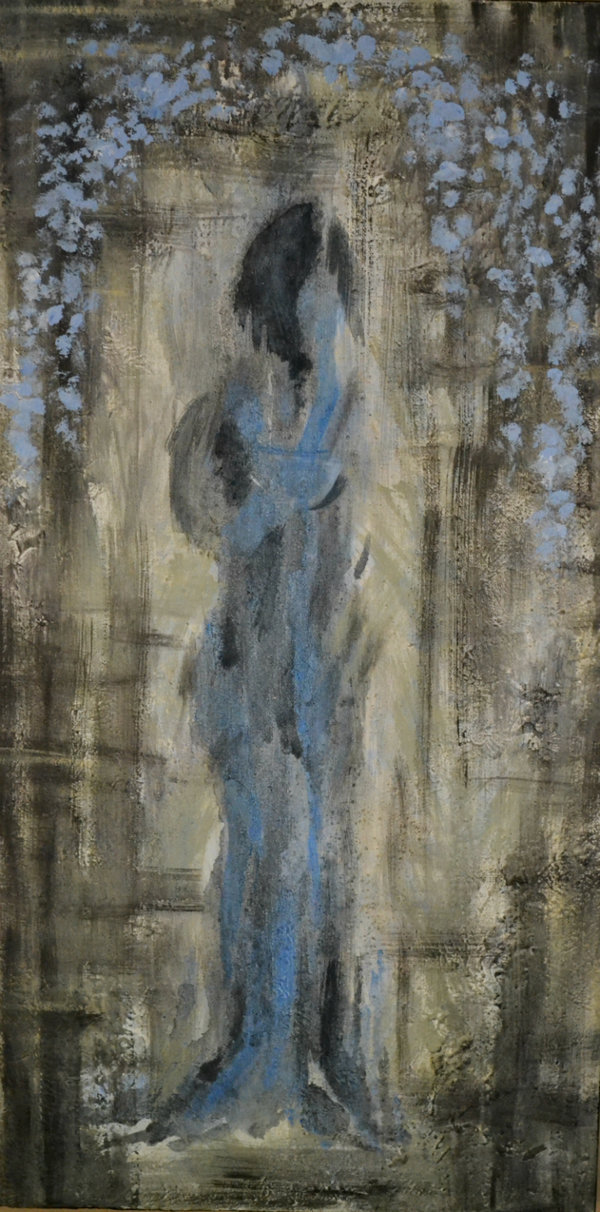
LF011 by xLokisFirex
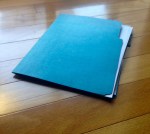
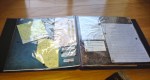
How to make your very own I Don’t Suck file:
It can be general or specific—A lot of my clients make general files with notes from loved ones or former students/clients/bosses of theirs or other supports. Or magazine clippings that remind them of goals or qualities they have. I am currently making one that is therapy related as a way to transition from my most recent job and prepare for my move abroad. It has notes from clients, supervisees and evaluations.
What you need: It can be as low maintenance as a file folder stuffed with notes or as high maintenance as a well-crafted scrapbook. What’s important is that you have a place to go when you need a pick-me-up.
You can gather things to build it—don’t have what you’re looking for? Start gathering!
- If you have a friend or family member you trust to be supportive of you, see if they’d be willing to write you a note about what they like about you.
- Next time you’re looking at a magazine or reading a blog and see something that resonates with you—save it for your file. Truth resonates, and you can’t recognize something that you don’t have, so if there is something you read or see that you admire and relate to, there’s something of you that’s in it.
- Write yourself some affirmations when you’re feeling good—make your own or use song lyrics or quotes.
-latest After Trauma post
 Holding the Bowl