
That we go numb along the way is to be expected. Even the bravest among us, who give their lives to care for others, go numb with fatigue, when the heart can take in no more…. Perhaps the noblest private act is the unheralded effort to return: to open our hearts once they’ve closed.’
Author: Sephira
Born and raised primarily in Northern Virginia, my family and I moved to North Carolina in 2006. Married for over 20 years, my husband and I have two boys and a gaggle of cats.
For me, writing is a great stress reliever. I can let my mind wander and let my emotions run free in a way that is generally not possible in my normal everyday life. My writings run the gamut in terms of style and genre – for instance my first novel is a historical romance set in the Civil War, but some of the other things I have in the works are fantasy or thrillers, among other things.
It probably goes without saying, but my poetry is somewhat eclectic in nature, and again while some may feel the need to stick with a particular form, I tend to write just whatever comes to mind. Let the winds of inspiration lead me on…
I’m always interested in comments and feedback. So please feel free to share your thoughts with me!
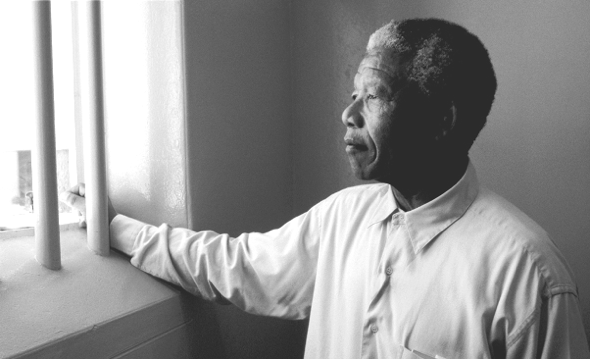
“I learned that courage was not the absence of fear, but the triumph over it. The brave man is not he who does not feel afraid, but he who conquers that fear.” – Nelson Mandela
Today is Nelson Mandela Day, marked by his birthday. This is the first Mandela Day since his death last December.
Sometimes you need to remind yourself that you were the one who carried you through the heartache. You are the one who sits with the cold body on the shower floor, and picks it up. You are the one who feeds it, who clothes it, who tucks it into bed, and you should be proud of that. Having the strength to take care of yourself when everyone around you is trying to bleed you dry, that is the strongest thing in the universe.
I absolutely needed to read that.
Is this dysphoria?
notyourqueertheoryposterchild:
I think there is a lot of confusion amongst the transgender community about what constitutes gender dysphoria. Everyone is going to have a different experience, and while there will almost always be commonalities, you can’t make sweeping statements and expect everyone to fall under that definition. Websites with lists of symptoms like ‘depression’, ‘anxiety’, and ‘low self esteem’ really don’t help much – they all seem to imply you know it if you are gender dysphoric, but from spending even an hour in the FTM tag on Tumblr you’d know that’s clearly not the case for plenty of young people.
I would define gender dysphoria as feelings of discontent, dissociation or depression regarding a person’s biological sex. I would also tack on a disclaimer stating that these feelings shouldn’t solely be caused by society or other people – if your only source of discomfort with your gender comes from ‘the way society sees me as [gender]’ then you need to seriously rethink whether you need medical transition.
However, this definition doesn’t explain how ‘feelings of discontent, dissociation or depression’ could manifest, so here’s a list of possibilities. I’m going to use the term sex-typical to mean characteristics due to your biological sex, such as prominent hips or breasts for FTM people, or broad shoulders or facial hair for MTF people.
Discontent:
- feeling ashamed or embarrassed by your body, specifically by sex-typical features
- not being able to fit into the type of clothes you want to wear because of your sex-typical body shape
- feeling like you are not living the life you should be
- feeling uncomfortable in gender-specific spaces such as bathrooms or women’s or men’s support groups
Dissociation:
- surprise or discomfort when sex-typical traits are touched/bumped (eg forgetting you have breasts, then holding something to your chest and feeling them)
- inability to mentally picture your body in sexual situations
- a sense of disconnect or lack of understanding about your emotional responses
- inability to relate to discussions of what is expected of people your gender (eg talking about ‘one day, when you’re a mum/dad’)
- not feeling close to other people of your biological sex (note: this doesn’t mean ‘I’m not like the other girls, they’re all popular and into fashion and I’m edgy and different’, I’m talking about a severe lack of understanding or disconnect from the majority of men/women)
- (FTM specific) forgetfulness with regards to menstrual periods
Depression:
- long term feelings of anxiety or depression about your sex-typical characteristics OR with no recognisable cause
- desire to self-harm or cause harm to/remove your genitals
- in sexual people, a lack of sex drive due to discomfort with your genitals or feelings of shame, embarrassment or depression during/after sex
- extreme discomfort or disgust with sex-typical bodily functions (eg growing facial hair for MTF people or menstrual periods for FTM people)
- a sense of fatalism or resignation towards a future living as your birth gender – feeling like there’s no hope for the future or that there is nothing to look forward to
Standard disclaimer that I’m only trying to provide helpful information, this is in no way definitive, your personal experience may be different, and so on. This isn’t supposed to act as a diagnostic chart, but rather to give you something to think about if you’re still not sure. Medical transition is a huge step, and if you don’t currently experience gender dysphoria, the changes induced by HRT could well kick start it back towards your biological sex. So please, think long and hard about where your feelings are coming from, what’s causing them, and whether medical transition will help, before jumping into something with irreversible and potentially unwanted effects.
Here is a handy link that helps describes some differences between dysmorphia and dysphoria:http://amydentata.com/2012/03/06/the-difference-between-dysphoria-and-negative-body-image/
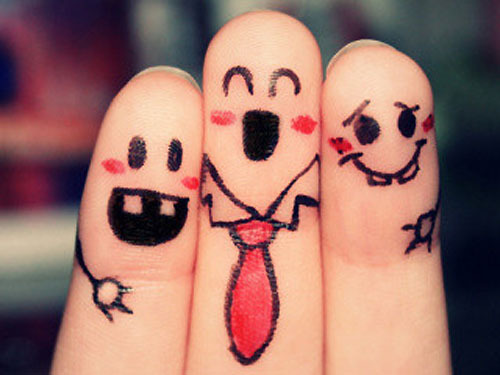
If your friends feel like family, there’s a good reason for it
The truism that friends are the family you choose may be more accurate than you might suppose.
A study published on Monday found that people are apt to pick friends who are genetically similar to themselves – so much so that friends tend to be as alike at the genetic level as a person’s fourth cousin.
The findings were based on an examination of about 1.5 million markers of genetic variations in a group of nearly 2,000 people who had taken part in a long-running health study based in Massachusetts. The researchers compared people identified as friends to those who were not.
The study showed people were most similar to their friends in olfactory genes, which involve the sense of smell, and were least similar in relation to immune system genes.
“Olfactory genes have a straightforward explanation: People who like the same smells tend to be drawn to similar environments, where they meet others with the same tendencies,” said one of the researchers, James Fowler, a professor of medical genetics and political science at the University of California, San Diego.
The study, published in the scientific journal Proceedings of the National Academy of Sciences, follows research released in May that found that people tended to choose spouses who have similar DNA.
Image: [x]
How to Take Control of Negative Emotions
1. Don’t take every thought and feeling seriously. Both of those tend to be patterned and habitual. Thus, they are not necessarily accurate and reliable.
2. Don’t blow small things out of proportion. Take control of your thinking and keep things in perspective. Don’t allow yourself to dwell on negatives, or critical thoughts.
3. Accept that we’re all hit by negative emotions. It’s a fact of life – and is unavoidable.
4. Work on strategies that work for you, and that help distract you from the way you feel.
5. Deliberately think about more positive things – like what is going well, or the things you’re thankful for – then shrug your shoulders and move on with your day.
6. Notice your triggers – the things that bother you, attack your self esteem and your self confidence – so you recognise the patterns and can plan how best to cope.
It’s Different for Girls with ADHD
When you live in total squalor—cookies in your pants drawer, pants in your cookies drawer, and nickels, dresses, old New Yorkers, and apple seeds in your bed—it’s hard to know where to look when you lose your keys. The other day, after two weeks of fruitless searching, I found my keys in the refrigerator on top of the roasted garlic hummus. I can’t say I was surprised. I was surprised when my psychiatrist diagnosed me with ADHD two years ago, when I was a junior at Yale.
In editorials and in waiting rooms, concerns of too-liberal diagnoses and over-medication dominate our discussions of Attention Deficit Hyperactivity Disorder, or ADHD. The New York Times recently reported, with great alarm, the findings of a new Center for Disease Control and Prevention study: 11 percent of school-age children have received an ADHD diagnosis, a 16 percent increase since 2007. And rising diagnoses mean rising treatments—drugs like Adderall and Ritalin are more accessible than ever, whether prescribed by a physician or purchased in a library. The consequences of misuse and abuse of these drugs are dangerous, sometimes fatal.
Yet also harmful are the consequences of ADHD untreated, an all-too-common story for women like me, who not only develop symptoms later in life, but also have symptoms—disorganization and forgetfulness, for instance—that look different than those typically expressed in males. While the New York Times’ Op-Ed columnist Roger Cohen may claim that Adderall and other “smart” drugs “have become to college what steroids are to baseball,” these drugs have given me, a relatively unambitious young adult who does not need to cram for tests or club until 6 a.m., a more normal, settled life.
The idea that young adults, particularly women, actually have ADHD routinely evokes skepticism. As a fairly driven adult female who had found the strength to sit through biology lectures and avoid major academic or social failures, I, too, was initially perplexed by my diagnosis. My peers were also confused, and rather certain my psychiatrist was misguided. “Of course you don’t have ADHD. You’re smart,” a friend told me, definitively, before switching to the far more compelling topic: medication. “So are you going to take Adderall and become super skinny?” “Are you going to sell it?” “Are you going to snort it?”
The answer to all of those questions was no. I would be taking Concerta, a relative of Ritalin. Dr. Ellen Littman, author of Understanding Girls with ADHD, has studied high IQ adults and adolescents with the disorder for more than 25 years. She attributes the under-diagnosis of girls and women—estimated to be around 4 million who are not diagnosed, or half to three-quarters of all women with ADHD—and the misunderstandings that have ensued about the disorder as it manifests in females, to the early clinical studies of ADHD in the 1970s. “These studies were based on really hyperactive young white boys who were taken to clinics,” Littman says. “The diagnostic criteria were developed based on those studies. As a result, those criteria over-represent the symptoms you see in young boys, making it difficult for girls to be diagnosed unless they behave like hyperactive boys.”
ADHD does not look the same in boys and girls. Women with the disorder tend to be less hyperactive and impulsive, more disorganized, scattered, forgetful, and introverted. “They’ve alternately been anxious or depressed for years,” Littman says. “It’s this sense of not being able to hold everything together.”
Further, while a decrease in symptoms at puberty is common for boys, the opposite is true for girls, whose symptoms intensify as estrogen increases in their system, thus complicating the general perception that ADHD is resolved by puberty. One of the criteria for ADHD long held by the Diagnostic and Statistical Manual, published by the American Psychiatric Association, is that symptoms appear by age 7. While this age is expected to change to 12 in the new DSM-V, symptoms may not emerge until college for many girls, when the organizing structure of home life—parents, rules, chores, and daily, mandatory school—is eliminated, and as estrogen levels increase. “Symptoms may still be present in these girls early on,” says Dr. Pat Quinn, cofounder of The National Center for Girls and Women with ADHD. “They just might not affect functioning until a girl is older.” Even if girls do outwardly express symptoms, they are less likely to receive diagnoses. A 2009 study conducted by atThe University of Queenland found that girls displaying ADHD symptoms are less likely to be referred for mental health services.
In “The Secret Lives of Girls with ADHD,” published in the December 2012 issue ofAttention, Dr. Littman investigates the emotional cost of high IQ girls with ADHD, particularly for those undiagnosed. Confused and ashamed by their struggles, girls will internalize their inability to meet social expectations. Sari Solden, a therapist and author of Women and Attention Deficit Disorder, says, “For a long time, these girls see their trouble prioritizing, organizing, coordinating, and paying attention as character flaws. No one told them it’s neurobiological.”
Often, women who are finally diagnosed with ADHD in their twenties or beyond have been anxious or depressed for years. A recent study published in the Journal of Consulting and Clinical Psychology found that girls with ADHD have high rates of self-injury and suicide during their teenage years, at last bringing attention to the distinct severity of ADHD in females. In Pediatrics, a large population study found that the majority of adults with ADHD had at least one other psychiatric disorder, from alcohol abuse to hypomanic episodes to major depression. This poses a particular threat to females, for whom ADHD diagnoses tend to come later in life.
For the two decades prior to my diagnosis, I never would have suspected my symptoms were symptoms; rather, I considered these traits—my messiness, forgetfulness, trouble concentrating, important-document-losing—to be embarrassing personal failings. Matters really deteriorated in college, when I was wrongfully allowed a room of my own, leaving me with no mother to check up on “that space between your bed and the wall,” where moldy teacups, money, and important documents would lie dormant. I maintained a room so cluttered that fire inspectors not only threatened to fine me 200 dollars if I didn’t clean, they insisted it was the messiest room they had ever seen (boys’ included!) in their twenty years of service. Throughout college, I would lose my ID and keys about five times a semester. I’d consistently show up for work three hours early or three hours late. I once misplaced my cellphone only to find it, weeks later, in a shoe.
“Often, if girls are smart or in supportive homes, symptoms are masked,” Solden says. “Because they’re not hyperactive or causing trouble for other people, they’re usually not diagnosed until they hit a wall, often at college, marriage, or pregnancy. A lot of things that are simple and routine to other people—like buying groceries, making dinner, keeping track of possessions, and responding to emails—do not become automatic to these women, which can be embarrassing and exhausting.”
As a recent college graduate cautiously negotiating adulthood in New York City, I am both embarrassed and exhausted by my struggles to keep track of objects and time. While the stakes have become significantly higher—credit cards, passports, and cameras have slipped through my fingers—medication has minimized the frequency of these incidents.
I can’t say that I know what part is ADHD, what part is me, or whether there’s a difference. I can say that ADHD medication (in conjunction with SSRIs) has granted me a base level of functionality; it has granted me the cognitive energy to sit at my jobs, to keep track of my schedule and most possessions, and to maintain a semblance of control over the quotidian, fairly standard tasks that had overwhelmed me—like doing laundry, or finding a sensible place to put my passport.
Medication is certainly not a cure-all, but when paired with the awareness granted by a diagnosis, it has rendered my symptoms more bearable—less unknown, less shameful. And while I’m certain I’ll continue to misplace and forget objects, I have discovered the virtues of a little self-love, a lot of self-forgiveness, and even using different drawers to store different things.
The drawer thing, though, is a work in progress. The next time I misplace my keys, the fridge will be the first place I look.
—Maria Yagoda
“One of the best examples,” Jackson said, “ is that at the end of WWII some librarians decided that they wanted to put books on tape for people who lost their vision. Those were the first audiobooks. And today, there’s Audible.com, there’s Amazon, there are so many uses for audiobooks outside of those who are visually impaired.”
There are dozens more examples. Under Armor recently acquired the patent for a one-handed zipper. NPR added transcripts to their site for the hearing-impaired, and their traffic increased 7%. Inclusivity is a good business move.
I survived because the fire inside me burned brighter than the fire around me.
Joshua Graham (via outdoor-anarchy)
 Holding the Bowl