
(Medical Xpress)—Research led by the University of Adelaide has resulted in new insights into clinical depression that demonstrate there cannot be a ‘one-size-fits-all’ approach to treating the disease.Explores the hypothesis (arrived at through recent studies) that depression is more influenced by immune system responses than previously thought and that it may respond differently to any given treatment at various phases in the cycle of the immune system’s reactions.
Guise, this is important.
Author: Sephira
Born and raised primarily in Northern Virginia, my family and I moved to North Carolina in 2006. Married for over 20 years, my husband and I have two boys and a gaggle of cats.
For me, writing is a great stress reliever. I can let my mind wander and let my emotions run free in a way that is generally not possible in my normal everyday life. My writings run the gamut in terms of style and genre – for instance my first novel is a historical romance set in the Civil War, but some of the other things I have in the works are fantasy or thrillers, among other things.
It probably goes without saying, but my poetry is somewhat eclectic in nature, and again while some may feel the need to stick with a particular form, I tend to write just whatever comes to mind. Let the winds of inspiration lead me on…
I’m always interested in comments and feedback. So please feel free to share your thoughts with me!
I read those myths about Sigyn holding the bowl of poison over Loki to keep it from spilling on him and everyone focuses on Loki getting venom on his face and ignores the fact that with holding a heavy-ass bowl out at arm’s length all freaking day, girl’s arms have gotta be jacked as hell.
Mary Lambert – Secrets
Yes girl! Love it ❤
This song feels like it was written for me. The first line caught my attention IMMEDIATELY because I have Bipolar Disorder, and I actually teared up listening to this up-beat song because I related to it so much!
y’all don’t understand how much I needed this song this week
(Source: https://www.youtube.com/)
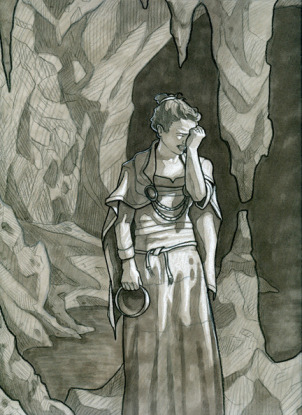
Part of the “Binding of Loki” by Sam Flegal.
Read about the process he went through for finding the best way to convey the emotions of the moment here.
How to Escape from an Abusive Relationship
It’s important to have a safe exit plan from an abusive relationship. The following tips might help you with this:
• Make a note of the phone numbers for your local women’s shelters.
• Confide in someone you genuinely trust (a good friend, a colleague at work, or a family member. Develop a code so they can help you if you are in an emergency (like a word you can text to them.)
• If your partner harms you, go to the emergency department and ask the staff to document your visit, and your reason for seeking medical attention.
• Journal each threat or abusive incident (with dates). If possible photograph any injuries.
• Prepare your escape in advance. Plan where you will go, and how you will get there.
• If you have a car, keep it backed in the driveway, with plenty of gas, and the keys close at hand, so that you can make a quick escape. Hide an extra set of car keys in case your partner steals and hides yours.
• Set money aside, either in a secret bank account or with a trusted friend or family members.
• Leave a packed bag with a friend or family member. This should contain an extra set of keys, essential ID (birth certificates, social security card, credit card, bank information, important phone numbers, passport, medical records etc), some clothes and any medications. If possible, avoid making use of neighbors or mutual friends.
• Know your partner’s schedule, and plan ahead for safe times to leave.
• Be especially alert to securing help through your computer or phone. Delete your internet browsing history, any websites you’ve checked out for resources, and all your old emails. If you called for help just before you left the house, dial another number afterwards in case your partner hits redial.
• Leave a false trail behind. For example, call hotels or rental agencies that are several hours away from the place you are planning on moving to.
Funding Sources for Home Modifications
Funding Sources for Home Modifications
In order to care for our children safely and easily, it is often necessary to make modifications to our homes, including the installation of lifts, elevators, or ramps, and the modification of bathrooms, bedrooms, kitchens, and other rooms. All home modifications are expensive, and the specialized equipment often needed by children with complex medical needs can make projects even more costly.In this article, I hope to provide a general overview of the funding sources available for home modification projects. As is often the case with funding products or services in the special needs market, funding for home modification is a patchwork of local, state, and federal sources that unfortunately vary dramatically from place to place. I will attempt to point you in the right direction to find local sources, and provide information about federal and charity funding options…


These are from a wonderful book called The Art Of Comforting. Check it out and learn how to be better at supporting people going through difficult things.



Kids with Autism, Sensory Processing Disorders Show Brain Wiring Differences
Researchers at UC San Francisco have found that children with sensory processing disorders have decreased structural brain connections in specific sensory regions different than those in autism, further establishing SPD as a clinically important neurodevelopmental disorder.
The research, published in the journal PLOS ONE, is the first study to compare structural connectivity in the brains of children with an autism diagnosis versus those with an SPD diagnosis, and with a group of typically developing boys. This new research follows UCSF’s groundbreaking study published in 2013 that was the first to find that boys affected with SPD have quantifiable regional differences in brain structure when compared to typically developing boys. This work showed a biological basis for the disease but prompted the question of how these differences compared with other neurodevelopmental disorders.
“With more than 1 percent of children in the U.S. diagnosed with an autism spectrum disorder, and reports of 5 to 16 percent of children having sensory processing difficulties, it’s essential we define the neural underpinnings of these conditions, and identify the areas they overlap and where they are very distinct,” said senior author Pratik Mukherjee, MD, PhD, a professor of radiology and biomedical imaging and bioengineering at UCSF.
SPD Gains Recognition as Distinct Condition
SPD can be hard to pinpoint, as more than 90 percent of children with autism also are reported to have atypical sensory behaviors, and SPD has not been listed in the Diagnostic and Statistical Manual used by psychiatrists and psychologists.
“One of the most striking new findings is that the children with SPD show even greater brain disconnection than the kids with a full autism diagnosis in some sensory-based tracts,” said Elysa Marco, MD, cognitive and behavioral child neurologist at UCSF Benioff Children’s Hospital San Francisco and the study’s corresponding author. “However, the children with autism, but not those with SPD, showed impairment in brain connections essential to the processing of facial emotion and memory.”
Children with SPD struggle with how to process stimulation, which can cause a wide range of symptoms including hypersensitivity to sound, sight and touch, poor fine motor skills and easy distractibility. Some SPD children cannot tolerate the sound of a vacuum, while others can’t hold a pencil or struggle with emotional regulation. Furthermore, a sound that is an irritant one day can be tolerated the next. The disease can be baffling for parents and has been a source of much controversy for clinicians who debate whether it constitutes its own disorder, according to the researchers.
“These kids, however, often don’t get supportive services at school or in the community because SPD is not yet a recognized condition,” said Marco. “We are starting to catch up with what parents already knew; sensory challenges are real and can be measured both in the lab and the real world. Our next challenge is to find the reason why children have SPD and move these findings from the lab to the clinic.”
Examining White Matter Tracts in the Brain
In the study, researchers used an advanced form of MRI called diffusion tensor imaging (DTI), which measures the microscopic movement of water molecules within the brain in order to give information about the brain’s white matter tracts. The brain’s white matter forms the “wiring” that links different areas of the brain and is therefore essential for perceiving, thinking and action. DTI shows the direction of the white matter fibers and the integrity of the white matter, thereby mapping the structural connections between brain regions.
The study examined the structural connectivity of specific white matter tracts in16 boys with SPD and 15 boys with autism between the ages of 8 and 12 and compared them with 23 typically developing boys of the same age range.
The researchers found that both the SPD and autism groups showed decreased connectivity in multiple parieto-occipital tracts, the areas that handle basic sensory information in the back area of the brain. However, only the autism cohort showed impairment in the inferior fronto-occipital fasciculi (IFOF), inferior longitudinal fasciculi (ILF), fusiform-amygdala and the fusiform-hippocampus tracts – critical tracts for social-emotional processing.
“One of the classic features of autism is decreased eye-to-eye gaze, and the decreased ability to read facial emotions,” said Marco. “The impairment in this specific brain connectivity, not only differentiates the autism group from the SPD group but reflects the difficulties patients with autism have in the real world. In our work, the more these regions are disconnected, the more challenge they are having with social skills.”
Kids with isolated SPD showed less connectivity in the basic perception and integration tracts of the brain that serve as connections for the auditory, visual and somatosensory (tactile) systems involved in sensory processing.
“If we can start by measuring a child’s brain connectivity and seeing how it is playing out in a child’s functional ability, we can then use that measure as a metric for success in our interventions and see if the connectivities are changing based on our clinical interventions,” said Marco. “Larger studies to replicate this early work are clearly needed but we are encouraged that DTI can be a powerful clinical and research tool for understanding the basis for sensory neurodevelopmental differences.”
 Holding the Bowl