Relationships and Sex With an Ostomy
(Source: https://www.youtube.com/)

Devotional blog dedicated to the Goddess Sigyn offering support to those who are "holding the bowl" within difficult relationships.
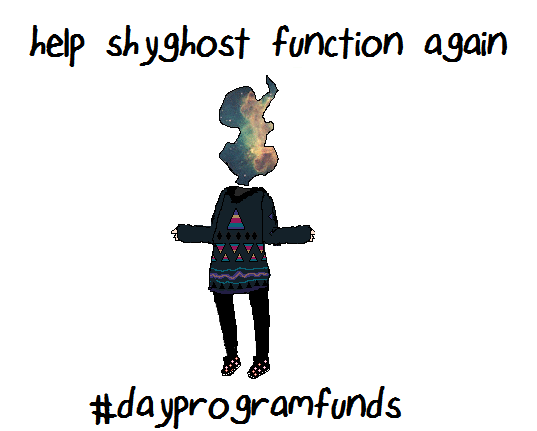
hi. i’m shyghost. i’m 21 years old and i was in university studying to become a music educator. i also have bipolar ii, adhd, anxiety, and borderline personality disorder.
last year, my depressive episode was so extreme that i was unable to function at all. i barely made it through the school year, and needed to be hospitalized in a behavioral facility in april. over the summer, we attempted to change my meds to get me balanced again, but even with medication updates, i was not well enough to go back to school for this past fall semester.
i’m still trying my hardest to recover, but the next step that would be extremely helpful and worthwhile for me would be to join a day program. the day program is specifically for young adults in my situation who need to be rehabilitated and reintroduced to functioning as a member of society again.
but the problem is, my insurance doesn’t cover the program, and it’s 100 dollars a day. and my therapist told me the only way it would be beneficial to me was if i went for about 6 months or so.
if that wasnt bad enough, soon my health insurance plan is going to be switched and my copays are going to increase from $5 to $20. so now, each month, i’ll need $120 just to pay for my medication alone, not including therapy or psychiatrist appointments.
these expenses are making me so nervous because as of right now i’m unable to work anywhere. :/// i can’t help to pay for myself.
i really hate doing this; i feel undeserving of asking for help, but i know that the faster i can get better, the faster i can move on with my life and get a job to pay for my medications on my own.
until then, i really need help. .___.
i put a donate button on my blog, or if you’d prefer you can send money to my paypal account email: sam-hark@hotmail.com.
i understand there are many people who are in financial situations as well, and i understand that not everyone has spare #money to lend out. if you can’t #donate, please reblog this if you can, if only to spread the word a little bit. please. anything helps.
i’m desperate. this has been happening on and off for years and i just want to be able to function again.
thank you so much for reading this. i’ll be tagging this #dayprogramfunds for my followers if they want to block it.
To all my fellow depressives, getting hit hard by the suddenly shorter, colder days? I’m with you. I’m on an unshakeable schedule when it comes to Seasonal Activated Depression (SAD – aww. Nice acronym. But wouldn’t Feeling Under-Cheerful, Killing The Happy Inside Syndrome be more accurate?)
Leading up to Halloween? Couldn’t be happier. The second after midnight on the 31st? The gloom & grey come down like a mildewy theatre curtain.
Please don’t forget, these next few months, until the spring kicks in and we can all start skateboarding on the serotonin rainbow of summer – you CAN get through this. One way is to go regularly help someone else. In a big or small way. Talk to someone regularly, or bring someone food or just your company. One selfish benefit of charity is it gives you a free vacation from inside your own head. Don’t worry – all that gorgeous nonsense & noise you’ve got rattling around inside your skull will politely wait until you come back.
And now I’m going to give you a weird piece of advice that’s always worked for me.
Read something Russian. Novel, short story, play, poem. Especially Pushkin or Dostoyevsky. Holy moley did those guys live train wreck lives, and they lived them in a state of near-constant, tomb-like winter.
They didn’t write happy stuff, those Russians. But man did they sling some defiant word-bricks at the darkness, as if to say, to their own depression and madness, “I own YOU. You’re merely renting space within my mind & soul. You REALLY want to stake a claim to my headspace? Then you’re gonna have to share it with some darkness of my OWN creation. I’m gonna give you a roommate called CRIME & PUNISHMENT that’ll
send you screaming out onto the Russian steppes.”Read something Russian. Remind your depression that you have access to ancient, arctic gloom-blasts, and that if you can’t make it leave your head, you can sure as shit frighten it into being a polite guest until the snow melts.
Patton Oswalt – To all my fellow depressives, getting hit… | Facebook




The Bionic Mind: Building Brain Implants To Fight Depression, PTSD
The next step is much more sophisticated: a “closed-loop” system, with sensors in the brain, and feedback. So it can pick up when brain activity is going off course, try to correct it in real-time, and then tell whether the correction has worked.
If that sounds sort of like your phone’s GPS system, well, it is, says Dr. Emery Brown, an MIT computational neuroscientist who’ll be working on the algorithms for the brain implant.If you’re trying to get from Boston to Providence and you go off course, your GPS picks up your error and points you back to the right road, he says. With the brain implant, “If I see that your brain activity is starting to move back into that state indicative of you not feeling well, toward a depressed state or toward fears associated with PTSD, then I’m going to stimulate to correct that. It’s wholly analogous, and in fact, the paradigm really follows precisely the paradigm used to build GPS.”
First, though, scientists need to learn how to recognize which patterns of brain activity — which “neural signatures” — indicate depression and PTSD.
victorybringer-archive-blog-blog:
Sigyn, The Bride of Loki,
She that holds venom, yet poisons none.
She that heals what does not bleed.
She that might feel for all pain that she sees.
Here are 10 things that you can stop doing that may help relieve some of the stress involved in living with an alcoholic.
It’s typical for alcoholics to try to blame their drinking on circumstances or others around them, including those who are closest to them. It’s not unusual to hear an alcoholic say, “The only reason I drink is because you…” Don’t buy into it. If your loved one is truly an alcoholic, they are going to drink no matter what you do or say. It’s not your fault. They have become dependent on alcohol, and nothing is going to get between them and their drug of choice.
When alcoholics promise they will never drink again, but a short time later are back to drinking as much as always, it is easy for family members to take the broken promises and lies personally. You may tend to think, “If they really love me, they wouldn’t lie to me.” But if they have become truly addicted to alcohol, their brain chemistry may have changed to the point that they are completely surprised by some of the choices they make. They may not be in control of their own decision making.
Many family members of alcoholics naturally try everything they can think of to get their loved one to stop drinking. Unfortunately, this usually results in leaving the alcoholic’s family members feeling lonely and frustrated. You may tell yourself that surely there is something that you can do, but the reality is not even alcoholics can control their drinking, try as they may.
Make no mistake about it, alcoholism, or alcohol dependence, is a primary, chronic and progressive disease that sometimes can be fatal. You are not a healthcare professional. You are not a trained substance-abuse counselor. You just happen to love someone who is probably going to need professional treatment to get healthy again. That’s the alcoholic’s responsibility, not yours. You can’t cure a disease.
There is a joke in recovery circles about an alcoholic in denial who screams, “I don’t have a problem, so don’t tell anyone!” Alcoholics typically do not want anyone to know the level of their alcohol consumption because if someone found out the full extent of the problem, they might try to help! If family members try to “help” the alcoholic by covering up for their drinking and making excuses for them, they are playing right into the alcoholic’s denial game. Dealing with the problem openly and honestly is the best approach.
It usually begins with some small incident that family members brush off with, “They just had too much to drink.” But the next time, the behavior may get a little bit worse and then even worse. You slowly begin to accept more and more unacceptable behavior. Before you realize it, you can find yourself in a full-blown abusive relationship. Abuse is never acceptable. You do not have to accept unacceptable behavior in your life. You do have choices.
One problem in dealing with an alcoholic is that what might seem like a reasonable expectation in some circumstances, might be totally unreasonable with an addict. When alcoholics swear to you and to themselves that they will never touch another drop, you might naturally expect that they are sincere and they won’t drink again. But with alcoholics, that expectation turns out to be unreasonable. Is it reasonable to expect someone to be honest with you when they are incapable of even being honest with himself or herself?
The key to dealing with alcoholism in the family is staying focused on the situation as it exists right now, today. Alcoholism is a progressive disease. It doesn’t reach a certain level and remain there for very long; it continues to get worse until the alcoholic seeks help. You can’t allow the disappointments and mistakes of the past affect your choices today, because circumstances have probably changed.
Often, well-meaning loved ones, in trying to “help,” will actually do something that enables alcoholics to continue along their destructive paths. Find out what enabling is and make sure that you are not doing anything that bolsters the alcoholic’s denial or prevents them from facing the natural consequences of their actions. Many an alcoholic has finally reached out for help when they realized their enabling system was no longer in place.
After years of covering up for the alcoholic and not talking about “the problem” outside the family, it may seem daunting to reach out for help from a support group such as Al-Anon Family Groups. But millions have found solutions that lead to serenity inside those meetings. Going to an Al-Anon meeting is one of those things that once you do it, you say, “I should have done this years ago!”
There may be very little you can do to help the alcoholic until he or she is ready to get help, but you can stop letting someone’s drinking problem dominate your thoughts and your life. It’s okay to make choices that are good for your physical and mental health.


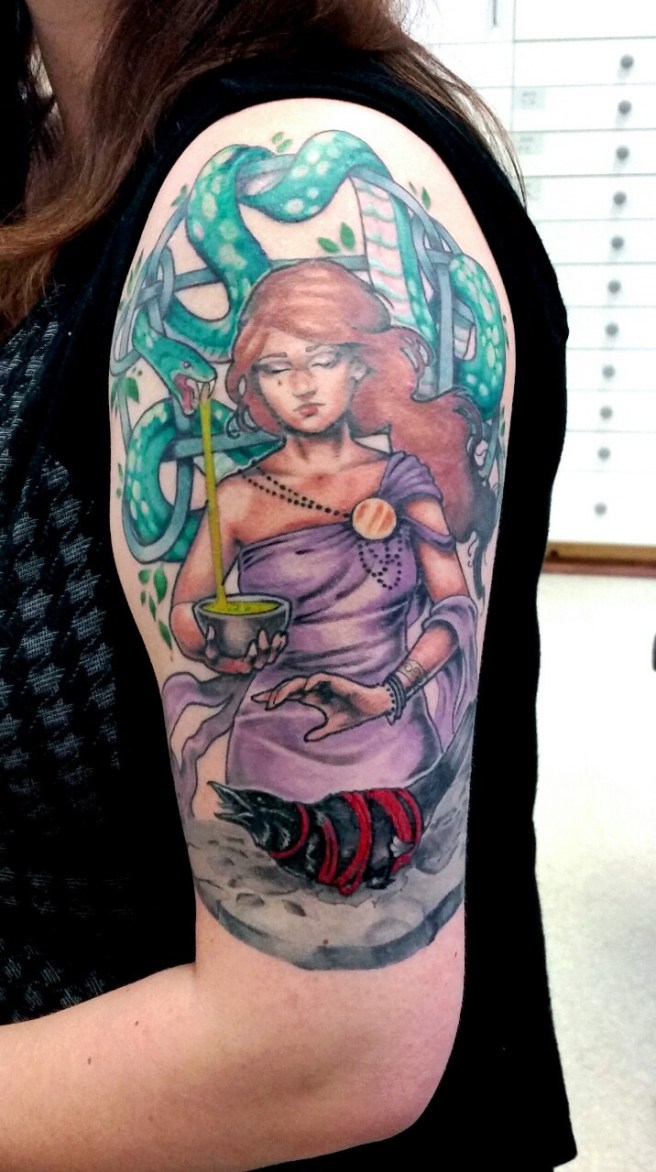

 Holding the Bowl