Author: Sephira
Born and raised primarily in Northern Virginia, my family and I moved to North Carolina in 2006. Married for over 20 years, my husband and I have two boys and a gaggle of cats.
For me, writing is a great stress reliever. I can let my mind wander and let my emotions run free in a way that is generally not possible in my normal everyday life. My writings run the gamut in terms of style and genre – for instance my first novel is a historical romance set in the Civil War, but some of the other things I have in the works are fantasy or thrillers, among other things.
It probably goes without saying, but my poetry is somewhat eclectic in nature, and again while some may feel the need to stick with a particular form, I tend to write just whatever comes to mind. Let the winds of inspiration lead me on…
I’m always interested in comments and feedback. So please feel free to share your thoughts with me!
I wear glasses. Can I manage without glasses? Well, yes, probably. I could squint a lot, constantly move up close to anything I want to see, take the bus or a taxi if I want to go anywhere. I could just accept that I’ll never be able to see eagles flying in the sky or whales jumping out of the ocean.
But why? Why try so hard to manage life when I could just put on a pair of glasses? No one would ever suggest a near-sighted person should just work harder. No one would say ‘Maybe that’s just your normal’ to someone that needs glasses. They would say ‘Let’s go to the eye doctor and get you a prescription so you’re able to see again.’
You shouldn’t have to try so hard.
My doctor (paraphrased), when I expressed doubts about going back on an anti-depressant. (via
(via squidilydink)
This is such a good analogy because nobody thinks about it like this. If you wear glasses, you literally need constant use of a medical aid to experience the world like most people do. If it were anything besides glasses, that would be considered a disability. But needing glasses is an extremely common, visible, and accepted form of disability to the point that we don’t even consider it one, we just accept that some people need glasses and that’s perfectly normal and there’s nothing wrong with needing to rely on them.
That is how all disabilities and illnesses should be seen, and how we should look at treatment for them. You have a problem, and you need help dealing with it, and there’s nothing wrong with either of those things. That’s perfectly normal and that’s okay.
(via ninjarobotclone)
Reblogging myself bc ^^that^^ was such a beautiful addition. ~JJ
(via teachthemhowtothink)

spoon theory: a low-spoons-friendly summary
it’s sort of ironic that the original article on spoon theory costs so many spoons to read, so i decided to write a brief summary for people who need it
- spoon theory is an analogy
- in it, spoons = energy
- you get [x] number of spoons a day ([x] amount of energy), & doing things costs [x] number of spoons ([x] amount of energy)
- for example, you get 10 spoons today; getting up costs 1, making food costs 2, making a phone call costs 2, watching a tv episode costs 2, etc
- the purpose of spoon theory is to explain to abled/healthy people what being disabled/chronically ill is like, in a way they might find easier to understand
- it highlights how little energy disabled/chronically ill people have when compared to abled healthy people, how much more energy things can cost, & how careful they have to be in prioritising what they spend that energy on
- disabled/chronically ill people also use it as a way of talking about their energy levels
- if you say “i’m low on spoons”, you’re not just saying you’re low on energy; you’re saying you’re low on energy because you’re disabled/chronically ill
- for this reason, abled healthy people don’t get to say “i’m low on spoons”
also worth noting:
- creator of spoon theory has said it is okay to apply it to mental illness as well.
- your benchmark on whether you’re “sick enough” to use spoons is your own, so if you feel like it applies, it can apply.
Yay for this! 🙂
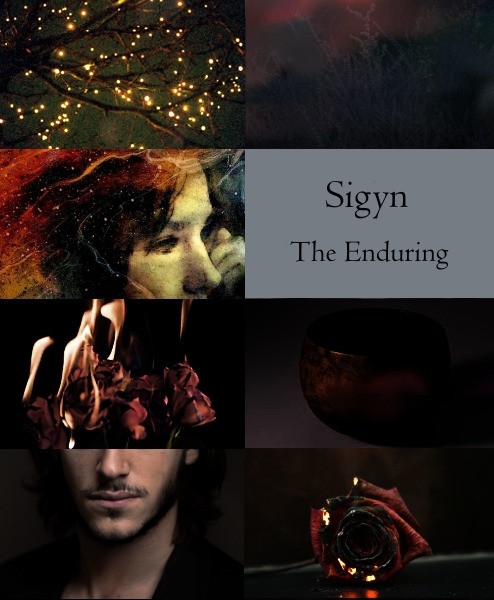
I’ve always thought that Odin gives me wisdom, Thor gives me strength, Sigyn is patience and compassion, and Loki gives me wit and free spirit.
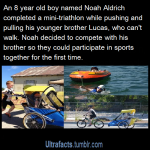

For 8-year-old Noah Aldrich, his 6-year-old sibling, Lucas, is more than a brother; he’s a best friend.
Noah completed a mini-triathlon in Boise, Idaho, all while alternately pushing and pulling Lucas, who, as a result of a rare genetic condition, cannot walk, talk or eat on his own. The duo finished in a time just over 54 minutes. And while Lucas had a smile on his face for hours afterward, many adults at the finish line couldn’t contain their tears.
(Source) Follow Ultrafacts for more facts
This is the sweetest thing ever

This is wonderful and I’m going to share this with my oncologist.
My mom would have loved this while she was in chemo. Signal boost!
signal boost the shit out of this. anything to make their lives easier! ❤


one-cup-of-anxiety-to-go-please:
Sigyn, Goddess of fidelity
And through it all she offers me protection
A lot of love and affection
Whether I’m right or wrong
And down the waterfall
I know that life won’t break me
When I come to call, she won’t forsake me
I’m loving Angels instead~ Angel