
Sometimes disabled people are wrong perceived as angry or hostile when they move like disabled people. It works something like this:
- The most efficient way to do things is often not the socially accepted way to do things
- People with disabilities often have to do things in an efficient way to be able to do them
- In order to be perceived as calm and polite, people are often expected to move in a slow, careful way without making sudden or loud motions
- That’s easy for most people without disabilities, and can be difficult or impossible for people with disabilities
- Sometimes people with disabilities don’t have the motor coordination or strength to move in expected ways. Sometimes pain or illness makes them too exhausted to have the energy to move in expected ways. Sometimes, they have to move efficiently to be able to move at all.
- People with disabilities who have to move in loud, sudden, forceful, or jerky ways are often wrongfully perceived as expressing anger, frustration, or aggression.
- When people make loud, jerky, or sudden motions, they tend to be perceived as rude, angry, or aggressive
- People with disabilities don’t always have the coordination to make the movements in expected ways
- Sometimes, they have to be efficient in order to do the thing.
- This often gets perceived as angry when it isn’t
- This can lead to people with disabilities who are just trying to live their lives being perceived as hostile and excluded
- When a person with a disability is moving in a jerky, sudden, or loud way, it’s important to consider the possibility that it’s disability-related rather than angry
Some concrete examples:
Dropping things:
In most social contexts, it’s socially expected that people who need things to be on the ground put them there without making a sudden noise
- This generally means using your arms to slowly lower the thing to the ground
- People with disabilities often do not have the strength or motor coordination needed to lower things this way
- Sometimes, people who can’t rely on muscles to lower things need to drop them and rely on gravity
- (And some people have to rely on gravity some of the time, eg: when they’re tired, at the end of a long day, when they’re in a particularly draining environment, when they’ve already had to lift and drop the thing several times that day.)
- Gravity only goes one speed, and dropped objects tend to make noise
- Dropping a heavy object rather than lowering it slowly is usually perceived as a sign of anger (and for people without disabilities, it’s generally intended as one).
- People with disabilities who drop things are often not intending it as an expression of anger.
- Often, they drop things because they need them to be on the ground and have no other realistic way of getting them there.
- If a person with a disability is dropping heavy things rather than lowering them, it’s important not to automatically assume that they are doing this out of a show of emotions
- Consider seriously the possibility that they’re dropping things because they need to lower them, and due to disability are not able to do so in the socially expected way.
Another example: Plugging things in:
- The socially expected way to plug things in is to slowly push the plug into the outlet using a steady pressure
- That requires a particular kind of strength and muscle control
- Some people with disabilities can’t do that
- Some people with disabilities have to rely on momentum.
- Relying on momentum involves one sudden forceful movement.
- That can look like punching, and can be perceived as excessive force
- Most people without disabilities only plug things in with that kind of force when they are angry or frustrated
- People with disabilities often plug things in that way because it’s the only way they can do it
- If a person with a disability uses a lot of force to plug things in, don’t assume it’s a display of emotion.
- Consider seriously the possibility that they’re doing it that way because that’s how their body works
In general:
- Some socially expected movements are complicated and difficult
- Sometimes people with disabilities can’t do it in the polite way
- Sometimes, we have to do it in a way that’s more efficient
- That’s often perceived as rude, inconsiderate, or threatening, when it’s really just limited ability to move in expected ways
- No amount of social skills training or knowledge of socially expected behavior will make it physically possible to move in all expected ways
- This can result in people with disabilities being perceived as angry or displaying rage when all they’re doing is moving
- It’s important not to automatically assume that people with disabilities who move oddly are doing it to display anger. It might just be that that’s the only reasonable way for them to do something.
- If you understand this, you’ll be much more able to relate to people with disabilities and include people
- (People with disabilities, like everyone else, sometimes display anger and frustration in physical ways. But they are routinely wrongly perceived as doing so. It is possible, and important, to learn to tell the difference).
tl;dr People with disabilities are often perceived as displaying rage or aggression when they’re just moving. This is because socially expected ways of moving are often very inefficient in ways that aren’t too difficult for most nondisabled people, but can be difficult or impossible for people with disabilities. It’s important to learn to tell the difference between people with disabilities moving efficiently and people with disabilities displaying anger. Scroll up for details and examples.
Month: January 2015
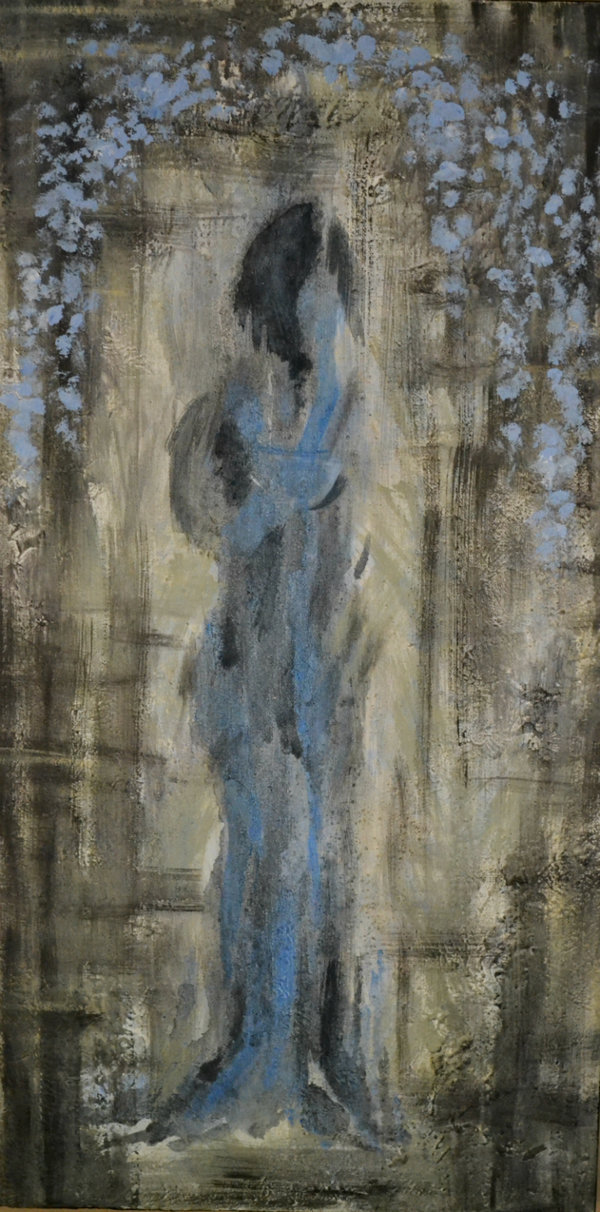
LF011 by xLokisFirex
How to make your very own I Don’t Suck file:
It can be general or specific—A lot of my clients make general files with notes from loved ones or former students/clients/bosses of theirs or other supports. Or magazine clippings that remind them of goals or qualities they have. I am currently making one that is therapy related as a way to transition from my most recent job and prepare for my move abroad. It has notes from clients, supervisees and evaluations.
What you need: It can be as low maintenance as a file folder stuffed with notes or as high maintenance as a well-crafted scrapbook. What’s important is that you have a place to go when you need a pick-me-up.
You can gather things to build it—don’t have what you’re looking for? Start gathering!
- If you have a friend or family member you trust to be supportive of you, see if they’d be willing to write you a note about what they like about you.
- Next time you’re looking at a magazine or reading a blog and see something that resonates with you—save it for your file. Truth resonates, and you can’t recognize something that you don’t have, so if there is something you read or see that you admire and relate to, there’s something of you that’s in it.
- Write yourself some affirmations when you’re feeling good—make your own or use song lyrics or quotes.
-latest After Trauma post
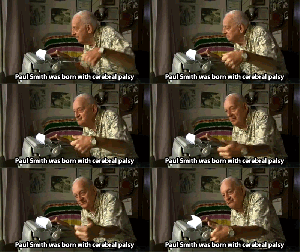
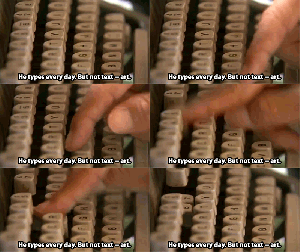
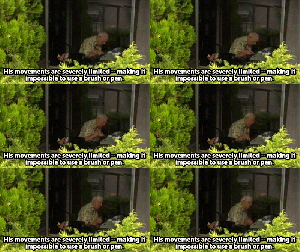
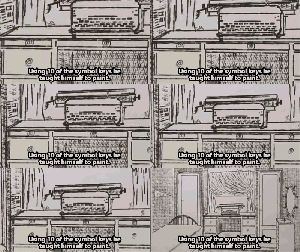





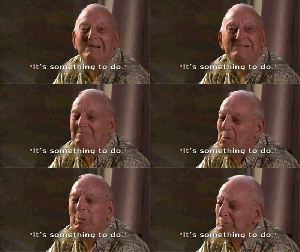
This Man With Severe Cerebral Palsy Created Mind-Blowing Art Using Just A Typewriter
Last year, 22-time Emmy award-winning reporter John Stofflet posted this news video he created for KING-TV in 2004, featuring Paul Smith and his artistic talents.
Sigyn Project – Day 14
Hearth and Home
By Brandie FlowersThe fire crackles within the huge stone fireplace. The flames dance as a small blond woman checks the stew she is brewing. It is the larger pot than she usually uses. Loki had asked her to make more than normal for his other two sons and daughter and his second wife where showing up today. He wanted them to meet. Sigyn checked the bread in the oven build in the wall next to the fireplace. She smiles the bread looks like it is almost there.
She looks around her home. It looks beautiful and lived in. It is clean but does not look as if dirt is unwelcome within her home. She has two sons and a husband dirt is always trailing about in her home. She still had not figured out how they trailed dirt around the way they did. It was a great puzzle for she did not trail dirt why did they?
She started on the pies she wanted to cook next. The pie was a berry pie; blueberry, strawberry, raspberry. She smiled at it as she finished off the crust trapping the almost overflowing berries within the pie itself. She placed it to cook next to the bread that was almost done.
She once again checked the table. She had it set for who was coming plus a few plates. Loki’s family would sometimes come by unannounced during dinner and Sigyn wanted them to feel welcome and wanted and not like intruders. She felt a tugging on her skirt.
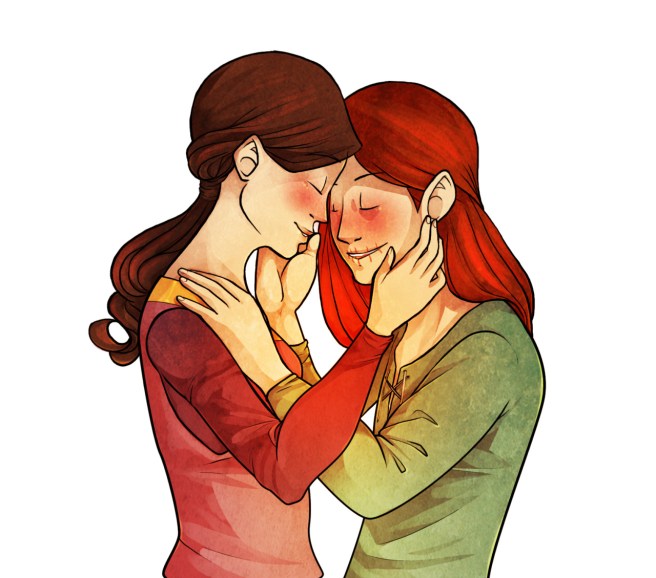
“They should be here soon.” She smiled down at the little red curly haired girl in her care. Her hair was wild and untamable no matter what her and Sigyn’s tried to get it to behave. “Maybe a braid?” The little girl nodded. Sigyn followed the little girl over to the chair and footstool. She sat in the chair and the girl sat on the foot stool. The two wrestled with the girl child’s hair. She got it to braid with much fussing and trying. The little girl stood and hugged her. They looked at each other and smiled.
“My hair gives me just as much trouble.” She smiled at her foster child. “My hair is just as curly.”
They both giggle and than sit for there really was noting to do until the guests arrived.
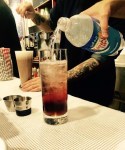

A bar has opened that doesn’t serve alcohol, and it’s surprisingly successful.
Brillig Dry Bar in Ann Arbor, Michigan doesn’t serve alcohol, but owner Nic Sims is counting on customers not caring.
She hasn’t had a drink in 20 years, and she wanted to create a space where people—including, but not limited to, recovering alcoholics—could gather to have fun and socialize without worrying about drinking. In other words, she wants Brillig Dry Bar to have “a bar-like convivial atmosphere, with snacks and drinks and conversation, without it being a bar,” she told MLive.com.
Sims runs the bar as a pop-up out of her husband’s coffee shop, Mighty Good Coffee. She serves interesting non-alcoholic drinks, like Brooklyn Egg Creams, Pomegranate-Rosemary Sodas, and Vegan Pumpkin Chillers, as well as snack plates with meats, cheeses, and cookies.
Though some detractors have accused Sims of being anti-alcohol, the bar’s opening night last Friday was packed. According to BuzzFeed, “Brillig’s first customers included former drinkers, pregnant women, Muslims, teenagers, and college kids.”
The next pop-up will be December 26.
This sounds super cool.

Dear CP: Relationships with Disabilities…
Congratulations, CP!
You’ve cleared the dating hurdle and are now in a committed relationship. This is the “honeymoon” faze where I bet you are using plenty of pet names, cuddling, and taking so many pictures that you are blowing up your friends Facebook feeds.
Don’t lie, I know you would!
Every love song reminds you of them and things seem perfect. It is going good for now and you should enjoy it because before you know it, that pesky “disability” thing is going to wedge its way in again.I can picture it now….
I am out in public with my super cute, abled, boyfriend. Maybe we are out on a date, or just out shopping, or running errands. We will be holding hands and smiling at each other, minding our own business, when suddenly someone approaches. They look between the both of us and smile cautiously before turning to my boyfriend to say:
“It’s so nice of you to be her caretaker. That is wonderful of you!” My hand tightens around his, fire rising to my face. He looks back to me before responding.
“Actually, I am her boyfriend and I am very lucky.”
The stranger appears embarrassed, confused, and flabbergasted.
“Oh… well… um,” they will mutter some excuse of an apology then make a quick but painful exit.CP, you know what really makes being in a relationship hard when I’ve got you riding shotgun the whole time?
When abled people can’t comprehend that, yes, this attractive, abled person is in fact my boyfriend.
Many still don’t understand how a relationship between a disabled person and an abled person could possibly work. Some even find it completely wrong and disturbing for the disabled to date abled people, or for them to date at all!
Suddenly, I am thrown back into the same whirlwind of questions.
How could you be in a relationship?
What would you be able to offer?
Who would be attracted to you?
Why not date someone who is disabled?
But isn’t he more of a caretaker than a boyfriend?
It’s like I can never escape it, CP! I am constantly having to explain and justify my relationships and my decision not to date within the disabled community.
Sometimes I feel more like a broken record than a person with a disability.Honestly, it is very heartbreaking and damaging.
CP, you hear these questions repeated over and over and suddenly they become….
How can I be in a relationship?
This relationship can’t be real.
What can I possibly have to offer?
They are more a caretaker than a boyfriend.
Who is going to find me attractive?
My disability is not attractive.
Over.
And.
Over.Now I am feeling completely worthless and insecure while I second guess everything in my life. Now I am crying to my boyfriend and he has to and reassure me that yes, I am worthy. Yes, I am attractive. Yes, this relationship is real. It will take a while but, eventually, I will calm down and realize the truth all over again.
At least until the next “incident.”
And while he is staying up all night comforting me and listening to me cry, his heart will break because he can reassure me a thousand times, but he cannot erase all the ableism in the world and he cannot make my disability go away.
He can only help me to realize that I am deserving enough of this relationship.If I am being honest, being in a disabled-abled relationship means that you do things a little different than others but, that doesn’t make the relationship any less meaningful.
So what’s it like being with someone who is disabled?
Well, it depends on the person and the disability, but it is just like any other relationship.
You hold hands.
You kiss.
You stay up all night texting.
Your heart skips a beat when you think of their smile.
You learn all their favorite things.
The only difference is that learning about me and my body also means that they learn about you.Hi, I am really happy to see you, please ignore my involuntary shaking.
I kicked you? No, I am not mad, that’s just my muscle tone.
LOL, that joke was really funny! Ooops, I just drooled a little bit.
I also have this thing called a startle reflex.
Spazzing, it’s ok.Kind of like meet the parents, or meet the child, except it’s more like meet the disability!
CP, this is my boyfriend.
Boyfriend, this is CP.
We are kind of a package deal.CP, I know you make things in life a little difficult and different, but are things really as bad as people make it seem?
Think about it….
I have CP so my boyfriend helps me carry things and open doors.
But when boyfriends open doors and carry bags for their abled girlfriends, it’s called being a gentlemen.
Why is it ok to do these things as a gentlemen, but as soon as it’s to help someone with a disability it is seen as a burden?
Because one is a choice and one is a need?
Wake up! You should WANT to do these things for people whether they have a disability or not. It’s polite and shows you care, and does it really impact your life that drastically?
Seriously, try being the disabled one in a relationship first.
The truth is, there is nothing special about this situation. If I wasn’t in a relationship, I would find a way to carry my own things and open my own doors. What do you think I did before I was in a relationship?
But I do appreciate the help, and I will expect my partner to offer that help if I need it.Now, I am not going to lie and say that having CP is always easy, because it’s not. And I am not going to say that CP will never put stress on a relationship, or cause a few disagreements, but what relationship doesn’t have a few minor issues here and there?
But why does that make my relationship troubles any different than the typical relationship?
Because abled people believe that a disability is an unfortunate burden?
CP, when people think a disability is some embarrassing flaw, they tend to regard any future boyfriend of mine as “Someone very special” or even a hero!
I can hear them now…..
“Oh, she’s your girlfriend? Wow! You are such a strong person to deal with this every day. It is wonderful of you to love her… you are such an inspiration to everyone!”
Ugh! Inspiration barf!
There is nothing special or inspirational about my relationships!
The only difference in my relationships is that one of us has CP and the other one doesn’t!
There is nothing heroic about my boyfriend behaving like a decent human being and treating me like I am equal.
Yes, I applaud him for not being an able-minded idiot, but he is not some badass superman that swoops down and rescues me from my “unfortunate fate.”
He is human and so am I.People think that being in a disabled-abled relationship is so different from a “normal” relationship, but I am about to show you the truth.
In a disabled relationship you may have to carry bags and open doors.
In an abled relationship you open doors and call it gentlemen behavior.
In a disabled relationship you may have to help your partner into a car.
In an abled relationship you’d call this a caring act.
In a disabled relationship you may have to assist your partner with eating.
In an abled relationship you feed your partner and call it romantic.
In a disabled relationship you may have to assist your partner in the shower.
In an abled relationship you shower with your partner and call it sexy.Not all these things necessarily happen in every disabled-abled relationship, but it’s important to realize that while you may need to help your partner with some of these daily things, they happen in every other relationship as well. The only difference is your point of view. So maybe you should change the way you think…
Your partner needs help eating?
Make it a romantic dinner for two, maybe add some flirty eye contact!
Your partner needs you to carry something heavy?
Remember it is polite to help. I am sure they will thank you. You may even earn yourself a kiss.
Your partner needs help in the shower?
Join them and explore your intimacy! Who doesn’t like a sexy, steamy, shower for two?
But remember, in these situations, your partner never “owes” you anything for your help! If you need to be rewarded for good behavior, than you are not mature enough for this relationship!CP, being in a disabled-abled relationship is nothing special. It is not unheard of, or wrong. It is not inspirational and it does not make anyone a hero. It is just like a “normal” relationship. It is unique to the individuals and has its ups and downs. It should be loving and caring and, despite what others think, not focus on the needs of the persons disability. No two people are exactly alike, just like no two relationships are exactly alike. A disability is not a flaw and is not a burden. It is a unique characteristic of the person you love.
Dear CP:
Relationships are difficult.
Whether you have a disability or not.~Love:
Me
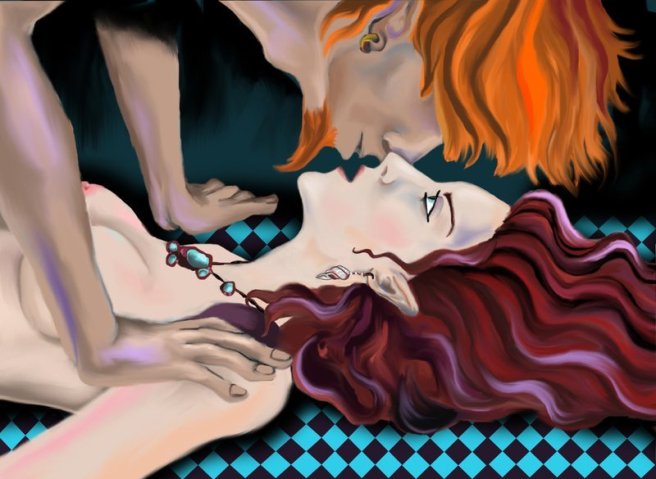
 Holding the Bowl