
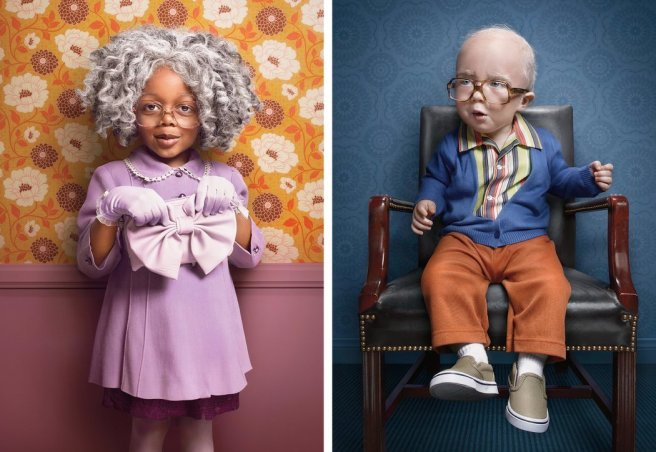
What if Age Is Nothing but a Mind-Set?
One day in the fall of 1981, eight men in their 70s stepped out of a van in front of a converted monastery in New Hampshire. They shuffled forward, a few of them arthritically stooped, a couple with canes. Then they passed through the door and entered a time warp. Perry Como crooned on a vintage radio. Ed Sullivan welcomed guests on a black-and-white TV. Everything inside — including the books on the shelves and the magazines lying around — were designed to conjure 1959. This was to be the men’s home for five days as they participated in a radical experiment, cooked up by a young psychologist named Ellen Langer.
The subjects were in good health, but aging had left its mark. “This was before 75 was the new 55,” says Langer, who is 67 and the longest-serving professor of psychology at Harvard. Before arriving, the men were assessed on such measures as dexterity, grip strength, flexibility, hearing and vision, memory and cognition — probably the closest things the gerontologists of the time could come to the testable biomarkers of age. Langer predicted the numbers would be quite different after five days, when the subjects emerged from what was to be a fairly intense psychological intervention.
The men in the experimental group were told not merely to reminisce about this earlier era, but to inhabit it — to “make a psychological attempt to be the person they were 22 years ago,” she told me. “We have good reason to believe that if you are successful at this,” Langer told the men, “you will feel as you did in 1959.” From the time they walked through the doors, they were treated as if they were younger. The men were told that they would have to take their belongings upstairs themselves, even if they had to do it one shirt at a time.
Each day, as they discussed sports (Johnny Unitas and Wilt Chamberlain) or “current” events (the first U.S. satellite launch) or dissected the movie they just watched (“Anatomy of a Murder,” with Jimmy Stewart), they spoke about these late-‘50s artifacts and events in the present tense — one of Langer’s chief priming strategies. Nothing — no mirrors, no modern-day clothing, no photos except portraits of their much younger selves — spoiled the illusion that they had shaken off 22 years.
At the end of their stay, the men were tested again. On several measures, they outperformed a control group that came earlier to the monastery but didn’t imagine themselves back into the skin of their younger selves, though they were encouraged to reminisce. They were suppler, showed greater manual dexterity and sat taller — just as Langer had guessed. Perhaps most improbable, their sight improved. Independent judges said they looked younger. The experimental subjects, Langer told me, had “put their mind in an earlier time,” and their bodies went along for the ride.
 Holding the Bowl