
Devotional blog dedicated to the Goddess Sigyn offering support to those who are "holding the bowl" within difficult relationships.
Anonymous asked grumpylokeanelder:Can you tell us more about Angrboda and Sigyn?Dear Anon,That’s a rather broad question. Since you don’t have a specific focus, I’m just going to ramble some general information. This is your blanket UPG warning, as there’s just not a lot of concrete lore information on either of them.
That we go numb along the way is to be expected. Even the bravest among us, who give their lives to care for others, go numb with fatigue, when the heart can take in no more…. Perhaps the noblest private act is the unheralded effort to return: to open our hearts once they’ve closed.’
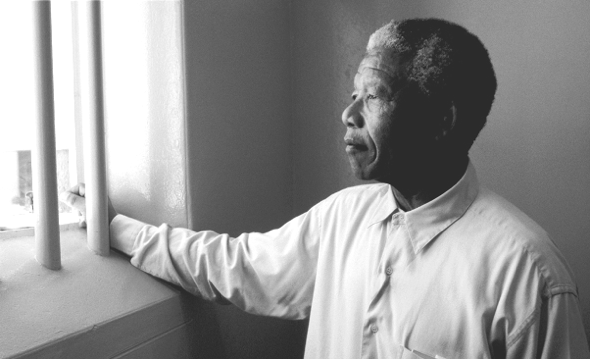
“I learned that courage was not the absence of fear, but the triumph over it. The brave man is not he who does not feel afraid, but he who conquers that fear.” – Nelson Mandela
Today is Nelson Mandela Day, marked by his birthday. This is the first Mandela Day since his death last December.
Sometimes you need to remind yourself that you were the one who carried you through the heartache. You are the one who sits with the cold body on the shower floor, and picks it up. You are the one who feeds it, who clothes it, who tucks it into bed, and you should be proud of that. Having the strength to take care of yourself when everyone around you is trying to bleed you dry, that is the strongest thing in the universe.
I absolutely needed to read that.
notyourqueertheoryposterchild:
I think there is a lot of confusion amongst the transgender community about what constitutes gender dysphoria. Everyone is going to have a different experience, and while there will almost always be commonalities, you can’t make sweeping statements and expect everyone to fall under that definition. Websites with lists of symptoms like ‘depression’, ‘anxiety’, and ‘low self esteem’ really don’t help much – they all seem to imply you know it if you are gender dysphoric, but from spending even an hour in the FTM tag on Tumblr you’d know that’s clearly not the case for plenty of young people.
I would define gender dysphoria as feelings of discontent, dissociation or depression regarding a person’s biological sex. I would also tack on a disclaimer stating that these feelings shouldn’t solely be caused by society or other people – if your only source of discomfort with your gender comes from ‘the way society sees me as [gender]’ then you need to seriously rethink whether you need medical transition.
However, this definition doesn’t explain how ‘feelings of discontent, dissociation or depression’ could manifest, so here’s a list of possibilities. I’m going to use the term sex-typical to mean characteristics due to your biological sex, such as prominent hips or breasts for FTM people, or broad shoulders or facial hair for MTF people.
Discontent:
- feeling ashamed or embarrassed by your body, specifically by sex-typical features
- not being able to fit into the type of clothes you want to wear because of your sex-typical body shape
- feeling like you are not living the life you should be
- feeling uncomfortable in gender-specific spaces such as bathrooms or women’s or men’s support groups
Dissociation:
- surprise or discomfort when sex-typical traits are touched/bumped (eg forgetting you have breasts, then holding something to your chest and feeling them)
- inability to mentally picture your body in sexual situations
- a sense of disconnect or lack of understanding about your emotional responses
- inability to relate to discussions of what is expected of people your gender (eg talking about ‘one day, when you’re a mum/dad’)
- not feeling close to other people of your biological sex (note: this doesn’t mean ‘I’m not like the other girls, they’re all popular and into fashion and I’m edgy and different’, I’m talking about a severe lack of understanding or disconnect from the majority of men/women)
- (FTM specific) forgetfulness with regards to menstrual periods
Depression:
- long term feelings of anxiety or depression about your sex-typical characteristics OR with no recognisable cause
- desire to self-harm or cause harm to/remove your genitals
- in sexual people, a lack of sex drive due to discomfort with your genitals or feelings of shame, embarrassment or depression during/after sex
- extreme discomfort or disgust with sex-typical bodily functions (eg growing facial hair for MTF people or menstrual periods for FTM people)
- a sense of fatalism or resignation towards a future living as your birth gender – feeling like there’s no hope for the future or that there is nothing to look forward to
Standard disclaimer that I’m only trying to provide helpful information, this is in no way definitive, your personal experience may be different, and so on. This isn’t supposed to act as a diagnostic chart, but rather to give you something to think about if you’re still not sure. Medical transition is a huge step, and if you don’t currently experience gender dysphoria, the changes induced by HRT could well kick start it back towards your biological sex. So please, think long and hard about where your feelings are coming from, what’s causing them, and whether medical transition will help, before jumping into something with irreversible and potentially unwanted effects.
Here is a handy link that helps describes some differences between dysmorphia and dysphoria:http://amydentata.com/2012/03/06/the-difference-between-dysphoria-and-negative-body-image/

If your friends feel like family, there’s a good reason for it
The truism that friends are the family you choose may be more accurate than you might suppose.
A study published on Monday found that people are apt to pick friends who are genetically similar to themselves – so much so that friends tend to be as alike at the genetic level as a person’s fourth cousin.
The findings were based on an examination of about 1.5 million markers of genetic variations in a group of nearly 2,000 people who had taken part in a long-running health study based in Massachusetts. The researchers compared people identified as friends to those who were not.
The study showed people were most similar to their friends in olfactory genes, which involve the sense of smell, and were least similar in relation to immune system genes.
“Olfactory genes have a straightforward explanation: People who like the same smells tend to be drawn to similar environments, where they meet others with the same tendencies,” said one of the researchers, James Fowler, a professor of medical genetics and political science at the University of California, San Diego.
The study, published in the scientific journal Proceedings of the National Academy of Sciences, follows research released in May that found that people tended to choose spouses who have similar DNA.
Image: [x]
1. Don’t take every thought and feeling seriously. Both of those tend to be patterned and habitual. Thus, they are not necessarily accurate and reliable.
2. Don’t blow small things out of proportion. Take control of your thinking and keep things in perspective. Don’t allow yourself to dwell on negatives, or critical thoughts.
3. Accept that we’re all hit by negative emotions. It’s a fact of life – and is unavoidable.
4. Work on strategies that work for you, and that help distract you from the way you feel.
5. Deliberately think about more positive things – like what is going well, or the things you’re thankful for – then shrug your shoulders and move on with your day.
6. Notice your triggers – the things that bother you, attack your self esteem and your self confidence – so you recognise the patterns and can plan how best to cope.
 Holding the Bowl